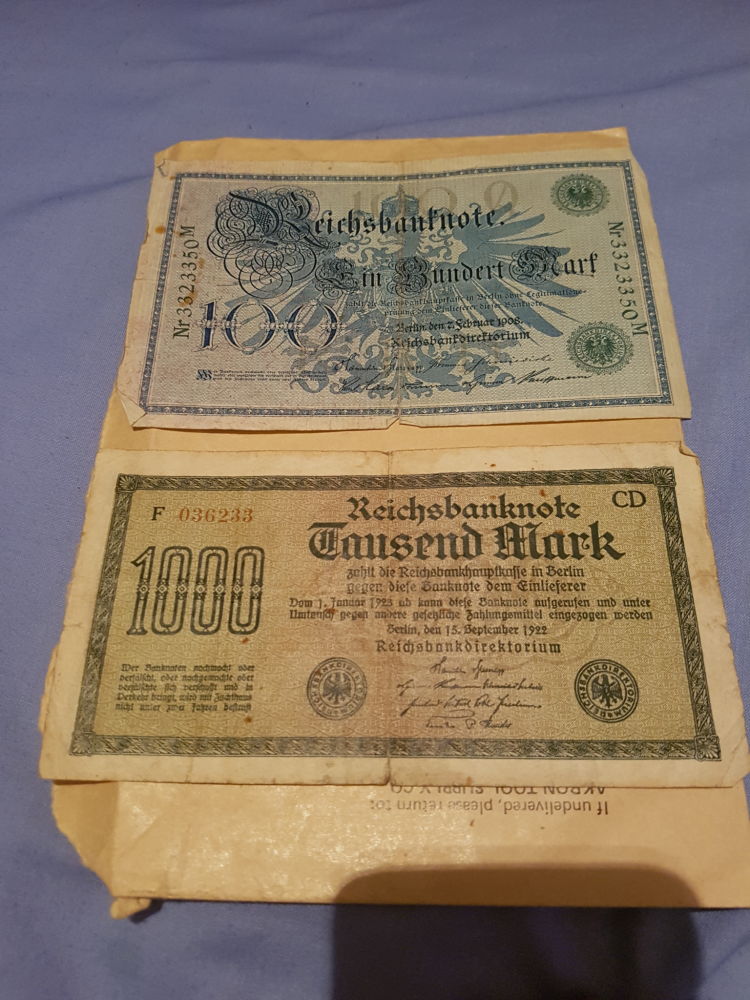
As for the German 100 mark note, the Germans have made an extensive list of the variations of these notes.
According to that study, your note (date 1908, green serial, series M, "Unterdruck" letter Q) is #161 out of #163 - which means it's one of the final runs issued (well after 1908). As you may expect, it's the earlier types and variants that are the better ones.
In addition to this, the amount of notes printed is estimated at over 4.6 million. That's the sixth highest amount out of 163 variations, where over 130 of them had a million or less printed.
This makes it one of the most common variants.
Pricing:
- this variant is listed in lightly circulated problem-free condition for 4 euros. Yours is stained and torn (bottom margin) which is quite a problem if the note is this common. I'd say in this condition it's below 1 euro *
- - -
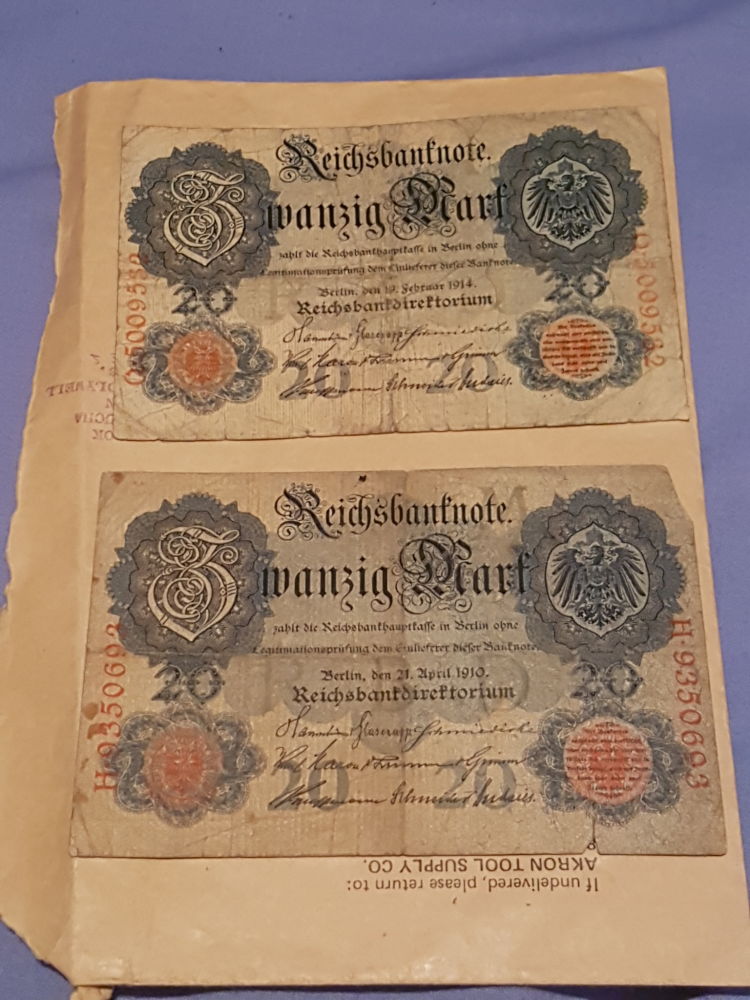
Your 20 mark note (date 1914, series Q, "Unterdruck" letter F) is the very last variant issued. I haven't found such a detailed list for this type as for the 100 mark, though.
The other 20 mark (date 1910, series H, "Unterdruck" letter M) is on the list as well.
Pricing:
- this variant of the 1914 note is listed in lightly circulated condition for 5 euros. I must say that yours is particularly heavily worn, especially for being the last variant issued (so in theory it should have circulated for the shortest time). I'd say below 1 euro *
- this variant of the 1910 note is listed in decent problem-free circulated condition for 3 euros. If yours has a corner missing, as it appears, then I'm afraid it has no value.
- - -
Your 1000 mark note was not printed by the same institution as the above ones. During the hyperinflation period, printing of the notes was done by private firms. The "CD" in the corner is the symbol of the firm that printed the note. The German catalog has a list of them.
There were several distinct types (the differences are: serial number length and color, paper color, and watermark).
In general, this is a common note.
Pricing:
- an average circulated "CD" 1000 mark with no stains or tears is listed for 2 euros. This one is far worse. I'd expect below 1 euro *
- - -
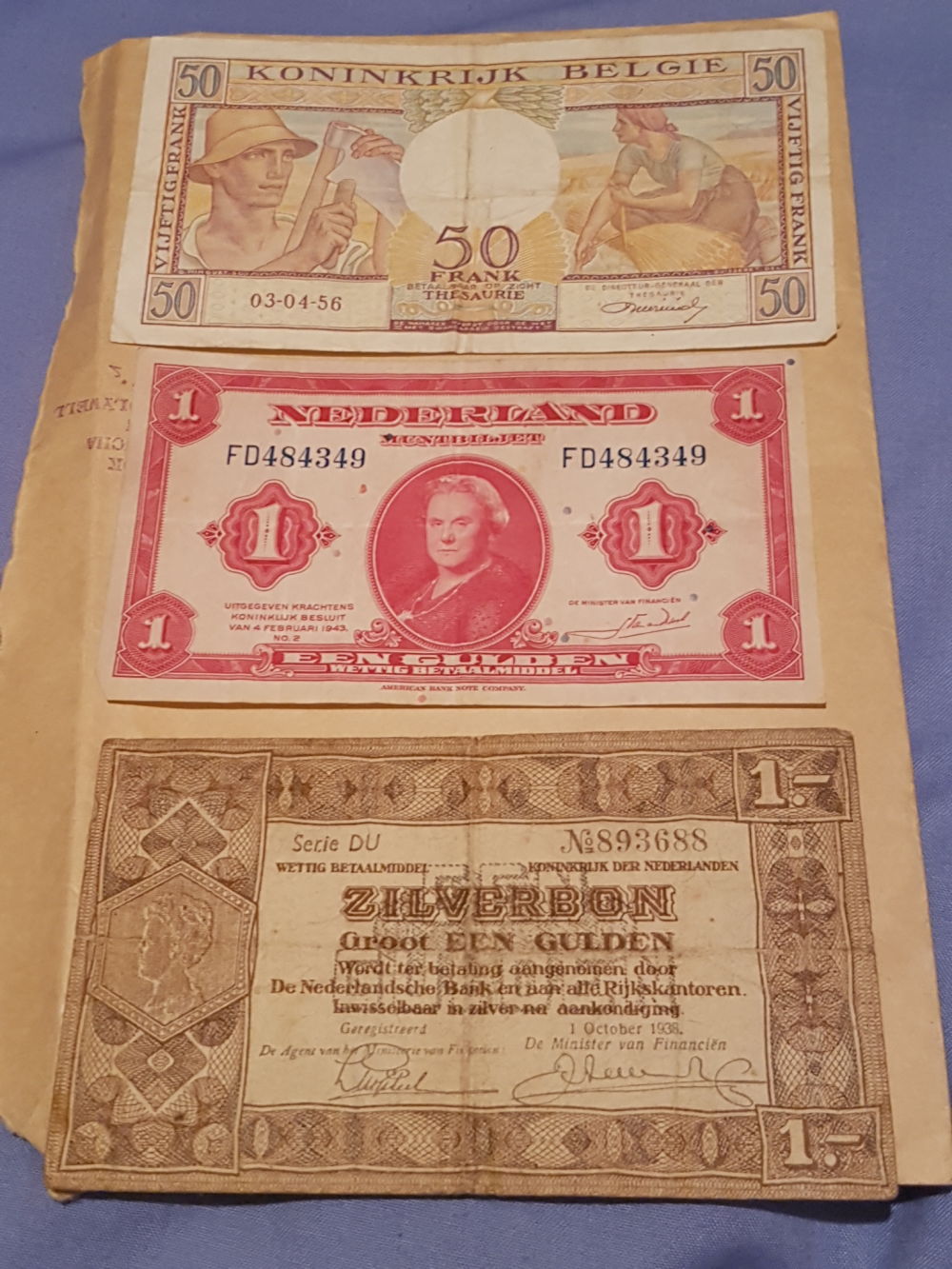
The Dutch note (the one that says "Zilverbon"), I've researched it and it's cataloged as
P-61.
Pricing:
- this type is listed at 20 euros for a note in perfect condition. In average circulated condition the price would be around 4 euros *
- - -
The other Dutch note (the red one that seas "Nederland Muntbiljet") is cataloged as
P-64. The random red or blue dots are supposed to be there.
Pricing:
- this one seems to be a little better than the previous notes. I've found worse ones listed at 5-8 euros, and better ones from 15 euros up, so I'd guess a top value of 10 euros *
* Note: considering the fact that my assessment is based on buy-it-now listings at MA-Shops, that it's probably the top price you may expect, be prepared for less though.












 Posted 05/11/2017 4:43 pm


 Also nice that you got to discover your great grandfather's stash.


