

Coin Community Family of Web Sites
Specializing in Modern Numismatics Coin, Banknote and Medal Collectors's Online Mall Royal Canadian Mint products, Canadian, Polish, American, and world coins and banknotes. Vancouvers #1 Coin and Paper Money Dealer Shop CCF Members on eBay! Shop for APMEX Bullion on eBay!300,000 items to help build your collection!


Username:
Password:
Save Password
Forgot your Password?


This page may contain links that result in small commissions to keep this free site up and running.

Welcome Guest! Registering and/or logging in will remove the anchor (bottom) ads. It's Free!

1795 Half Milling

To participate in the forum you must log in or register.
Author Previous TopicReplies: 7 / Views: 1,263Next Topic  
New Member

United States
6 Posts
 Posted 04/17/2008  6:41 pm Show Profile   Bookmark this topic Add guildar to your friends list Get a Link to this Message Number of Subscribers
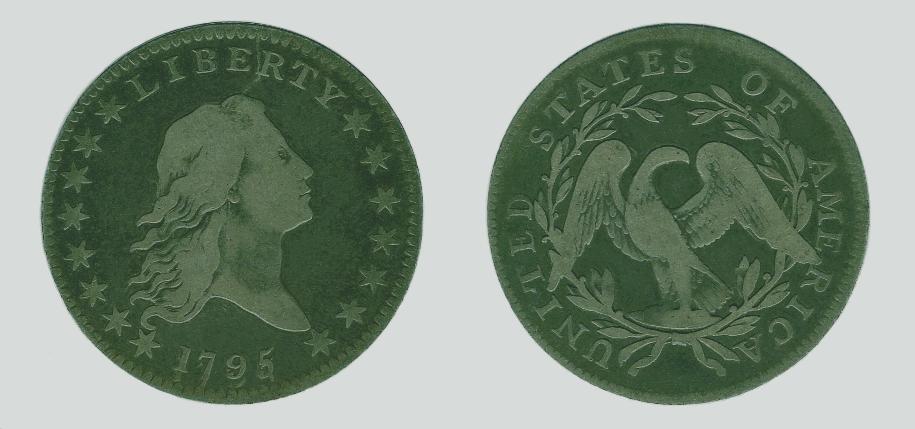
I need some expert help. I have owned this coin for a long time. Does anybody know why the reverse milling looks like this? There is no damage - it just disappears and flattens out. The edge and rim is perfect.

1795-Half-Milling
Bedrock of the Community
Bryan1315's Avatar
United States
14454 Posts
 Posted 04/17/2008  7:08 pm  Show Profile   Bookmark this reply Add Bryan1315 to your friends list Get a Link to this Reply
I don't know about the reverse but that date looks very strongly doubled, does it look like that in hand or a picture anomaly
New Member
United States
6 Posts
 Posted 04/17/2008  7:18 pm  Show Profile   Bookmark this reply Add guildar to your friends list Get a Link to this Reply
This is the recut date variety (2 leaves). It looks like that in hand. The date was first cut very low, then moved up. I used to collect bust halves.
Pillar of the Community
Amazon99's Avatar
United States
2443 Posts
 Posted 04/17/2008  7:38 pm  Show Profile   Bookmark this reply Add Amazon99 to your friends list Get a Link to this Reply
I can't help you with your question but that's a GREAT looking coin and I like the recut date. Good luck!
Pillar of the Community
hunter20ga's Avatar
United States
1173 Posts
 Posted 04/17/2008  8:10 pm  Show Profile   Bookmark this reply Add hunter20ga to your friends list Get a Link to this Reply
First let me say "Great Coin!"

Then...I can only speculate about the milling. As I understand it, minting equipment and technique were quite crude in the late 18th century relative to today. As a result, a die might be misaligned...in this case the reverse die. If it was misaligned, one edge would be a bit lower, the opposite side would be a bit high. The planchet below the "high side" would end up weakly struck. That could account for the lack of milling in the strike.

Another thought...if the die became "filled" with debris/grease, it again would result in a significant loss in detail.

All speculation on my part...someone will come along who really knows the minting process and can give you a more definitive answer.
Bedrock of the Community
Conder101's Avatar
United States
17884 Posts
 Posted 04/18/2008  1:48 pm  Show Profile   Bookmark this reply Add Conder101 to your friends list Get a Link to this Reply
I would agree, I think the dies were not quite parallel. The weak reverse denticals would match up with the denticals below the date which are also slightly weak. No notice the denticals above LIBERTY. They are much stronger. So I think the dies were a little closer there and a little further apart down at the date.
New Member
United States
6 Posts
 Posted 04/18/2008  2:45 pm  Show Profile   Bookmark this reply Add guildar to your friends list Get a Link to this Reply
Thanks to everyone for the nice comments. I got out my old Overton book and actually looked at the guides to attribution. There he talks about smooth areas on the reverse of early halves and states these are caused by variations in the thickness of planchets from one side to the other. In other words, there was not enough metal to fill the die in that area. I don't know why I didn't think of that before. It can also happen on badly cracked dies. Why just the reverse? The reverse had less pressure applied than the obverse. This was probably just a result of how the early screw presses were designed. Obviously, uniformity of the impression was not the goal.
Pillar of the Community
Jaobler's Avatar
United States
6381 Posts
 Posted 04/19/2008  12:28 pm  Show Profile   Bookmark this reply Add Jaobler to your friends list Get a Link to this Reply
Hello Guildar,

Welcome to the forum!


I'm with Amazon and Hunter: you have a beautiful coin there! The rim inconsistencies are perfectly normal and don't detract one bit from the quality of this piece.

So, you "used" to collect bust halves? It looks like you still have at least one! If you have others, please feel free to post them. I'd love to see what else you might have decided to keep!
  Previous TopicReplies: 7 / Views: 1,263Next Topic  

To participate in the forum you must log in or register.


Disclaimer: While a tremendous amount of effort goes into ensuring the accuracy of the information contained in this site, Coin Community assumes no liability for errors. Copyright 2005 - 2026 Coin Community Family- all rights reserved worldwide. Use of any images or content on this website without prior written permission of Coin Community or the original lender is strictly prohibited.
Contact Us  |  Advertise Here  |  Privacy Policy / Terms of Use

Coin Community Forum © 2005 - 2026 Coin Community Forums
It took 0.36 seconds to rattle this change. Forums
