issue 15
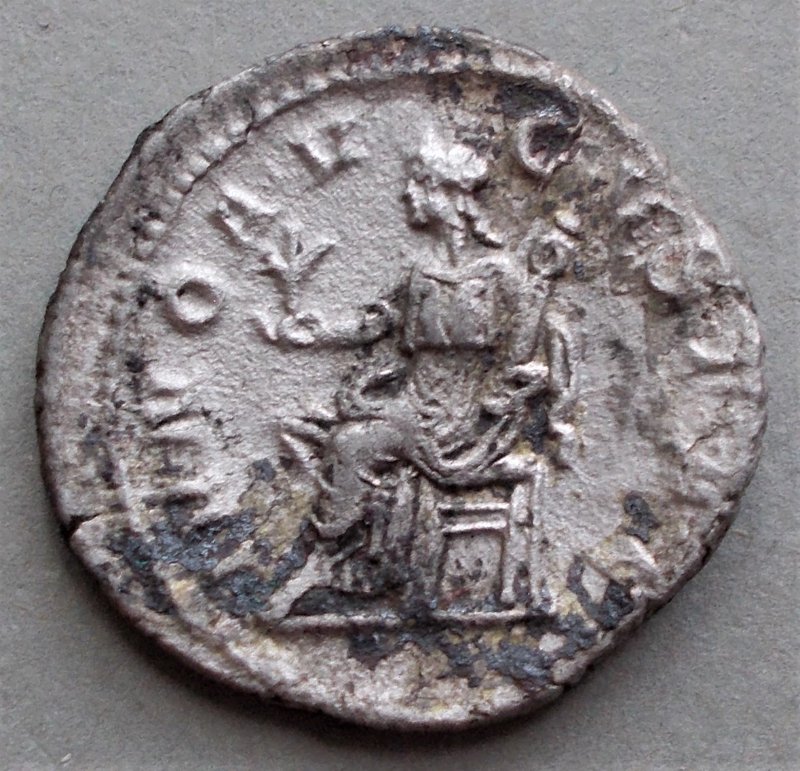
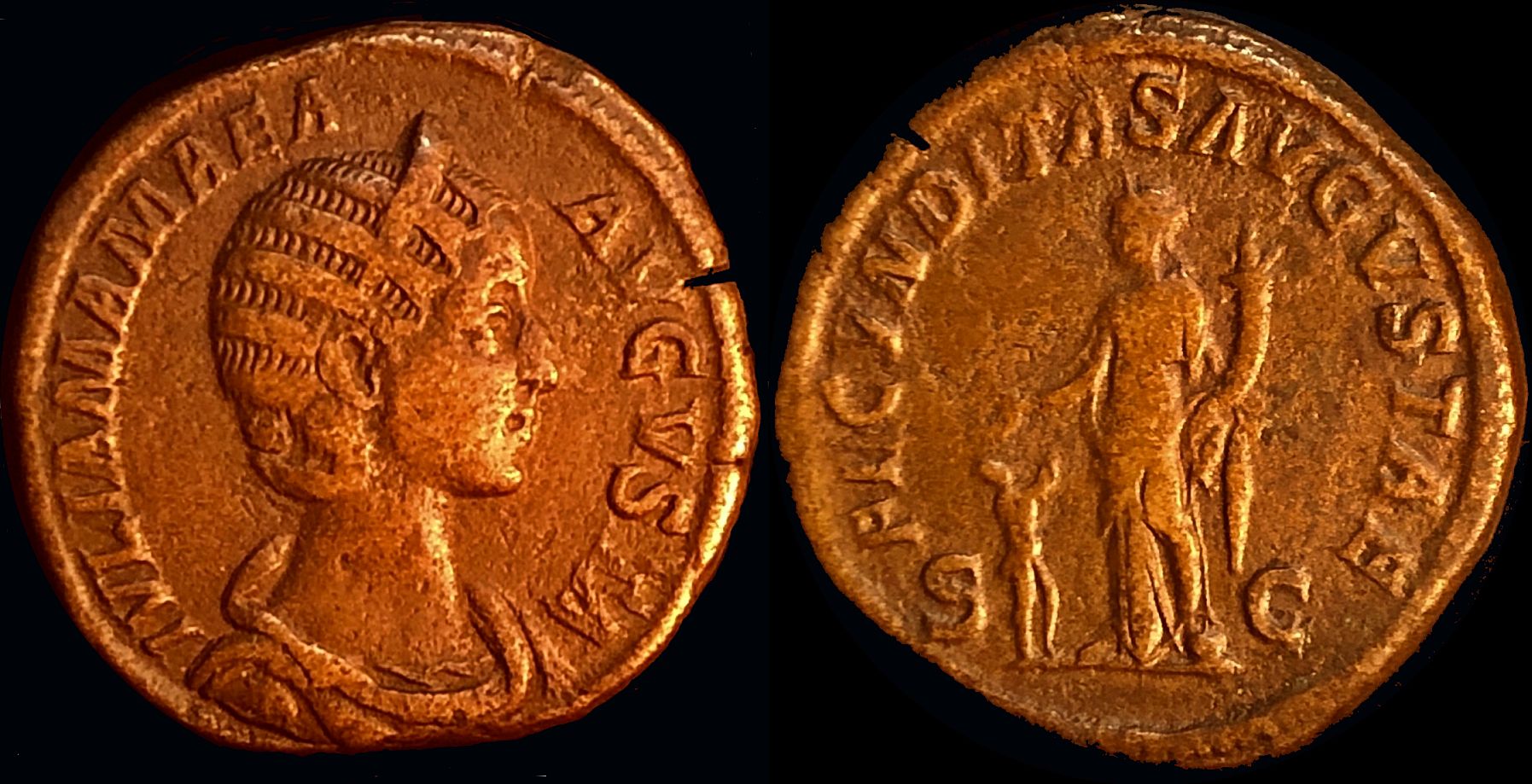
FECVND AVGVSTAE
Fecunditas seated left, stretching out hand to child before her, left elbow rests on back of chair.
RSC 6;
BMCRE 913-915;
RIC 332

Julia Avita Mamaea was the second daughter of Julia Maesa (
q.v.), sister of Julia Soaemias Bassiana, and niece of empress Julia Domna. She was born and raised in Emesa (modern Homs, Syria). She was the mother of Marcus Julius Gessius Bassianus Alexianus, the given name of Roman Emperor Severus Alexander, and she served as regent of Rome during his minority, yet held the title
de facto throughout his reign. Severus Alexander was the exact opposite of his degenerate cousin, Elagabalus, and gave all the signs of turning out to be a responsible emperor. Both he and his mother were under the control of the powerful Maesa until she died in A. D. 226. At this time Mamaea, last of the strong Severan women, took over the role of dominating and directing the man who occupied the throne. Unlike her sister Soaemias, Julia Mamaea was described as virtuous and reportedly never involved in scandals. She was attentive to the education of her son, Alexander, whom she prepared adequately for becoming emperor of Rome after his elevation to the purple in 222. Alexander thought much of his mother's advice and followed what she told him to do.
Severus Alexander never managed to escape her maternal domination, though at first Julia ruled very effectively. She reversed all Elagabalus' scandalous policies, chose 16 distinguished senators as advisers and relied heavily on the famous Lawyer Ulpian, who was also from Syria. During this interval she also called on Origen, the Alexandrian Christian leader, to provide her with instruction in Christian doctrine. However, things began to change in 225 when Alexander married, for soon Mamaea became madly jealous of her son's wife, Barbia Orbiana, whose father had been made Caesar or co-ruler with Alexander. Julia had Barbia exiled to North Africa after two years of marriage, and had her father executed, all without objection from Alexander. Instead, upon the advent of later adulthood, Alexander confirmed his esteem for his mother and named her
consors imperii (imperial consort). It was in this arrangement that she accompanied her son in his campaigns: a custom that had started with Julia Domna. However, after an inconclusive expedition to repel a Persian invasion in 232, mother and son were sent north to deal with a German attack. Here Alexander so alienated the Rhine legions by his lack of military prowess (and his inflexibility towards pay) that the troops proclaimed Maximinus Thrax as emperor in 235. Troops which had been dispatched to kill Alexander found him clinging to his mother in a tent. Mother and son were butchered together, thus bringing the Severan dynasty to a bloody end.
The coinage of Julia Mamaea was produced in several series alongside that of Severus Alexander. Six of his reverse types were shared by her. Here is a list of the main series for denarii:
all from the mint at Rome
222 issue 1 - IVNO CONSERVATRIX (43-48)
223 issue 3 - VENVS GENETRIX (152-153)
224 issue 4 - VENER-I-FELICI (189)
225 Special marriage issue - (Medallion only for Mamaea)
226 issue 6 - VESTA (w/Palladium) (381-387)
227 issue 7 - VESTA (scepter) (440-443)
228 issue 9 - FELICI-TAS PVBLICA (stg) (#483-485)
(also medallions series)
228 - special issue - AEQUITAS PVBLICA (Medallion only)
229 issue 10 (#483ff continued)
230 issue 11 - FELICI-TAS PVBLICA (std) (658-659)
231 issue 12 - VENVS VICTRIX (713-717)
231 issue 13A&B - IVNO AV-GVSTAE (755-758)
231 issue 14 - PIETAS-AVGVSTAE (821-822)
232 issue 15 - FECVND-AVGVSTAE (std) (913-915)
(stg) (917-919)
{I have added the
BMCRE numerical listings for the denarii in these listings to give a sense of scale to the varieties. Not sure how to distinguish issue 9 from issue 10, except possibly by inscription (cf
BMCRE VI p.68)}
Obverse inscriptions on silver:
denarii and quinarii - IVLIA MAMAEA AVG
medallions (doub den) - IVLIA MAMAEA AVGVSTA
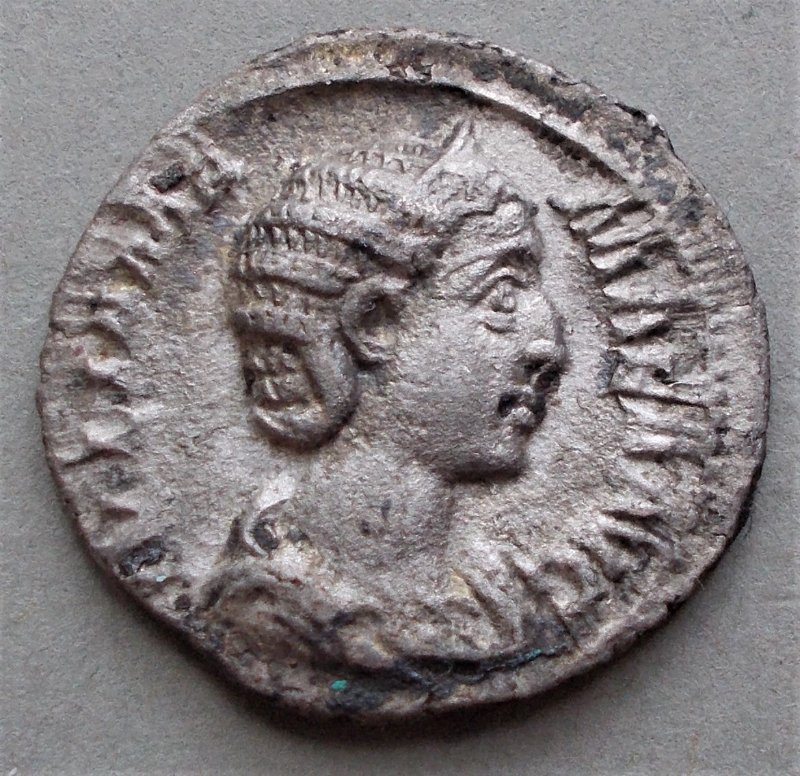
Though many issues of medallions took place very few of any type survived, and they are regarded as extremely rare. They feature her bust wearing a stephane and positioned on a crescent (after the fashion of an antoninianus).
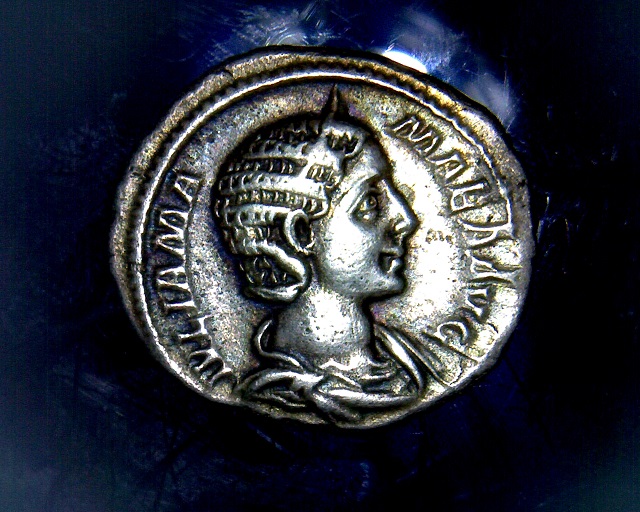
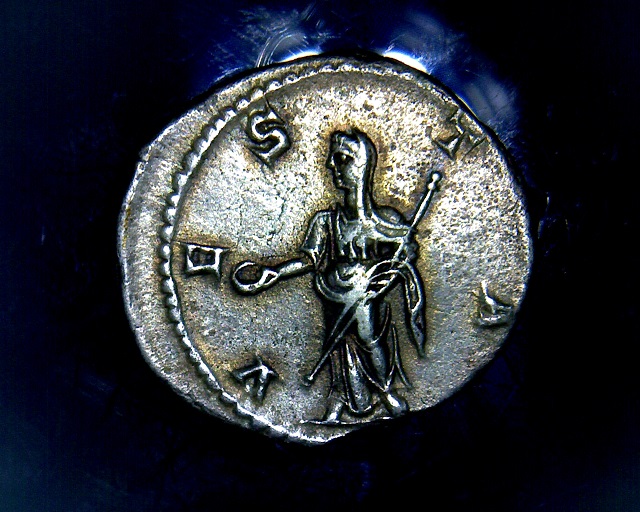
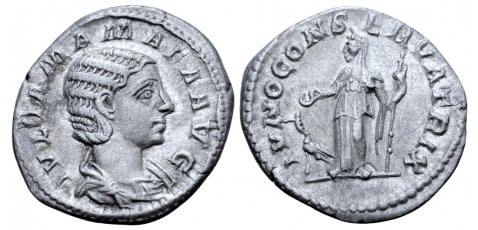
For most silver there are two bust types differentiated by the presence or absence of a stephane at the top of her head. This feature gives rise to the use of two break patterns for the inscription, which runs without a break when she is bareheaded, and with a MA - MA break when she wears the stephane. So far I have only observed the bareheaded, unbroken legend on the first issue, as illustrated by the three coins here:
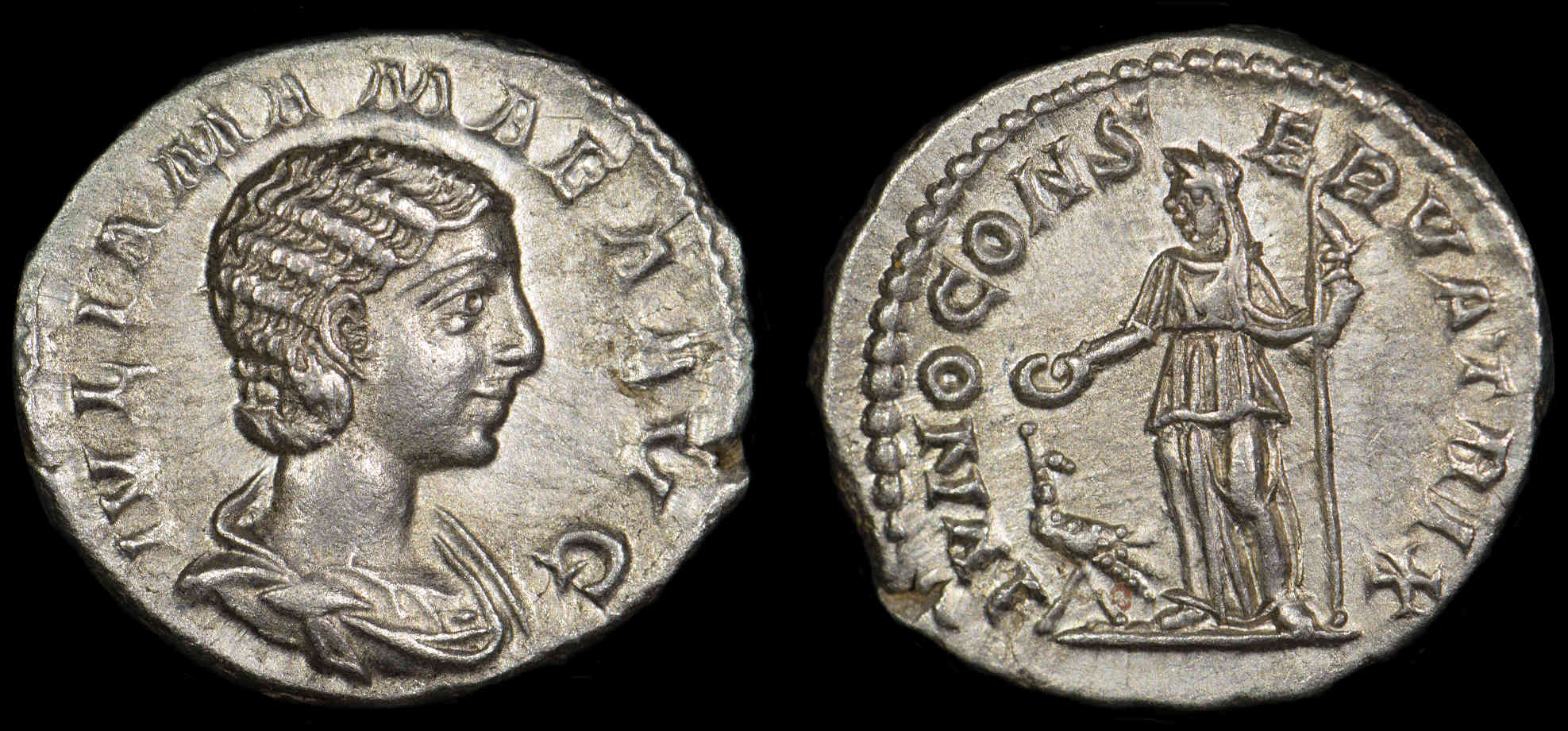
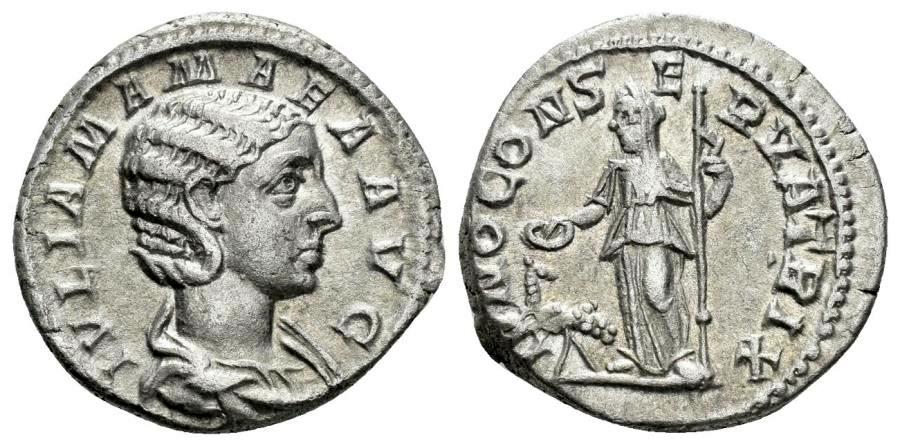
Juno diademed and veiled, stg. half-left, holding patera and scepter; at feet, peacock stg half-left turning head back to catch drops out of patera.
issue 1
RSC 35;
BMCRE 43-48,
RIC 343
These three are differentiated by reverse break pattern
den1
IVNO CONSER - VATRIX
den3
IVNO CONS-ERVATRIX
den5
IVNO CONS-E-RVATRIX

All the remaining issues seem to have the stephane and broken obverse legend. Here is another example from the 12th issue:
issue 12
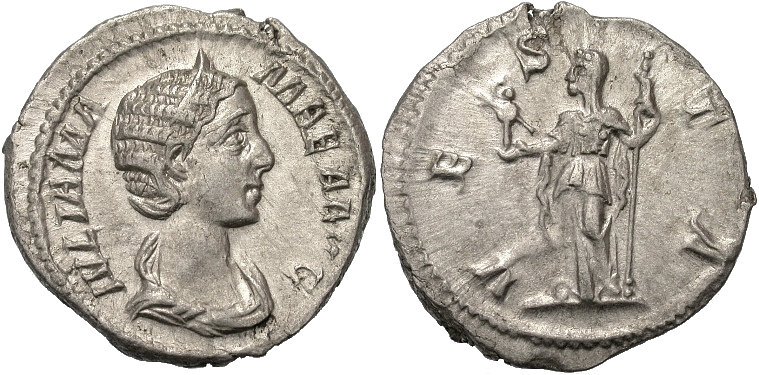
VENVS V - I - CTRIX
Venus stg half-left or front hd. l. holding helmet and sceptre, at feet l. shield.
RSC 76;
BMCRE 713-7;
RIC 358

More to come.







 Posted 05/24/2017 3:47 pm