| Author |
 Replies: 9 / Views: 1,404 Replies: 9 / Views: 1,404 |
|
|
New Member
United States
8 Posts |
On obverse and reverse. Have any ideas of what this might be? 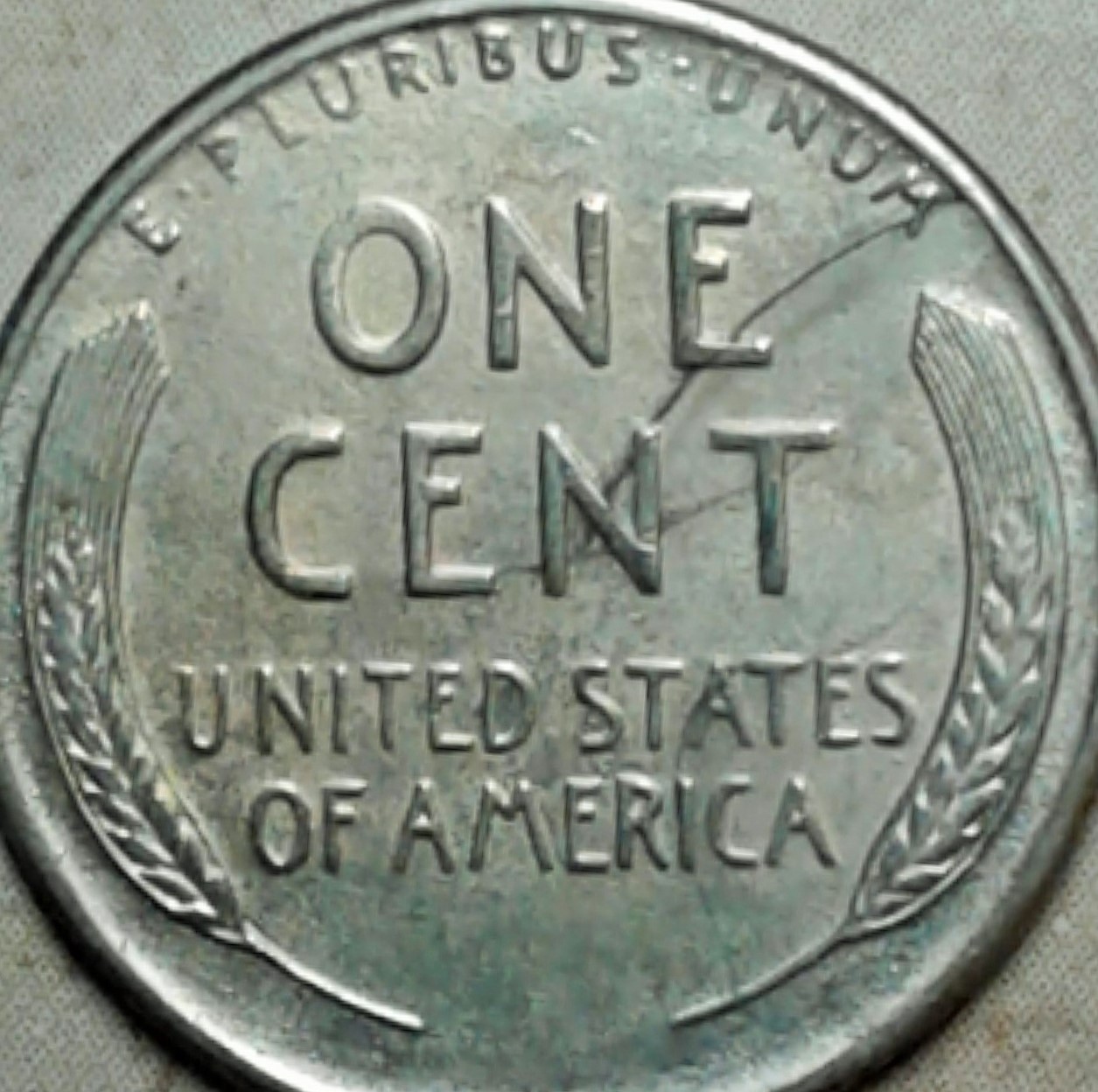 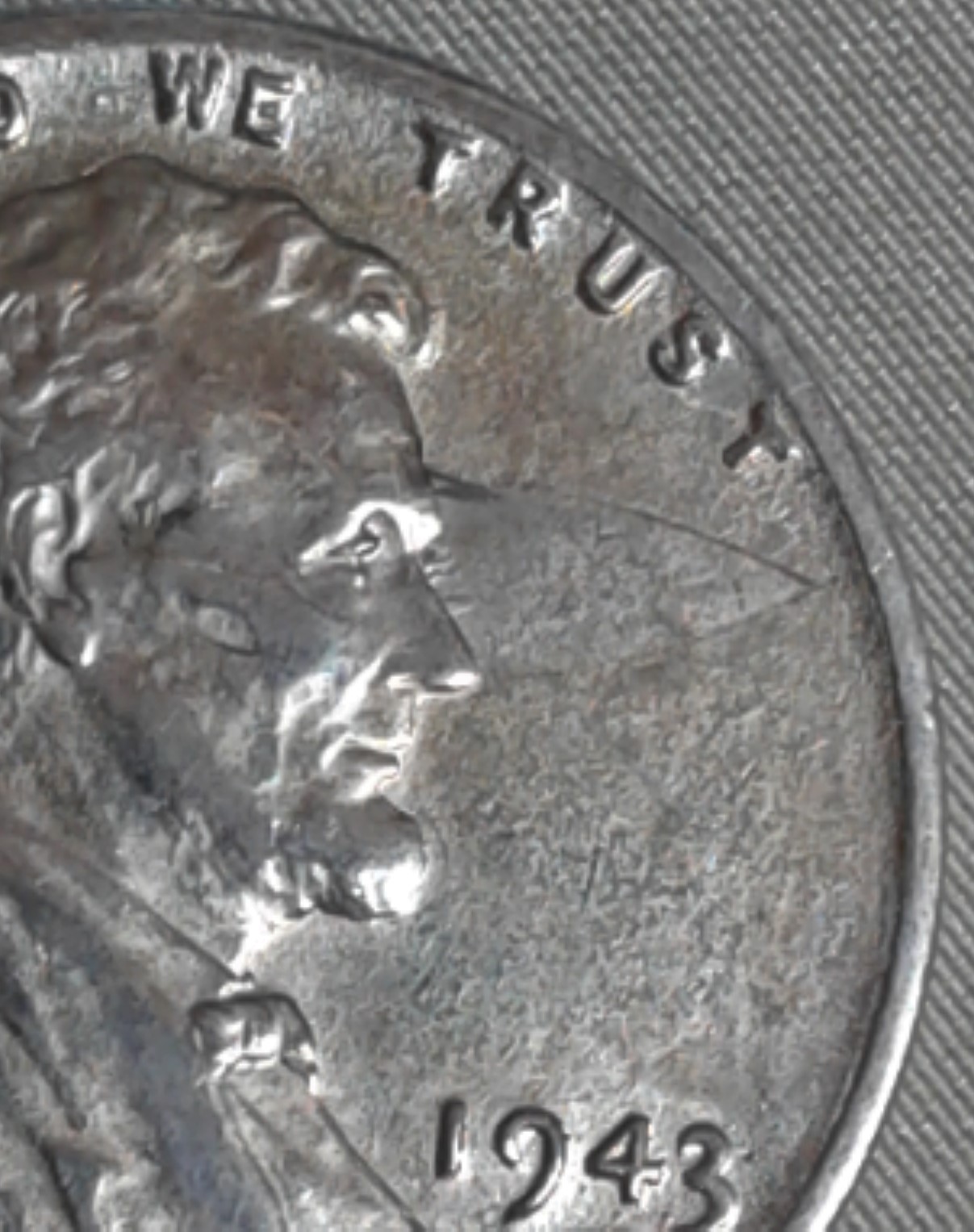 |
|
|
|
Pillar of the Community
United States
3344 Posts |
The planchets were steel with a zinc coating. Looks like some of the zinc delaminated prior to the strike?
"Nummi rari mira sunt, si sumptus ferre potes." - Christophorus filius Scotiae
|
|
Pillar of the Community
United States
3344 Posts |
And  "Nummi rari mira sunt, si sumptus ferre potes." - Christophorus filius Scotiae
|
|
Rest in Peace
United States
17900 Posts |
 with delamination prior to strike. Rather neat.
|
|
Pillar of the Community
United States
2775 Posts |
Not real sure what I'm seeing here. Is it raised, incused or even with field level?  Thanks, Doug. |
|
Bedrock of the Community
United States
12437 Posts |
I do not see anything that would indicate a lamination, the zinc plating would be too thin for that to happen. The black lines look like some sort of staining.
|
|
Valued Member
United States
57 Posts |
Hello everyone, I'm also new to the forum. So please bare with me. I have a 1942 Wheat penny that is circulated and weighs 3.30 grams. The thickness when compared to another 1942 Wheat penny is the same. Although, the other 1942 penny weighs 3.07 grams. I'm thinking it probably weighs a tad bit more because of the wear. Please let me know what your thoughts are and thank you for your time. |
|
Rest in Peace
10197 Posts |
Obverse looks like a scratch(?) if its incuse(an "Innie"), also is either damage or a lamination error on cheek. Reverse is a die crack from rim 1 o'clock to center, lower leg E (CENT).
Reason "steelies" had so many errors, the dies wore down/broke often because steel planchets are harder than copper, dies being steel upon steel...quick wear.
|
|
Valued Member
United States
373 Posts |
It look's inner to me. It is below the letter's if I am looking correctly.
goldnugget
|
|
Pillar of the Community
United States
1101 Posts |
to CCF. |
| |
Replies: 9 / Views: 1,404 |
|










 Posted 06/16/2017 2:01 pm


