| Author |
 Replies: 14 / Views: 2,361 Replies: 14 / Views: 2,361 |
|
|
New Member
United States
41 Posts |
|
|
|
|
Pillar of the Community
 United States
2843 Posts |
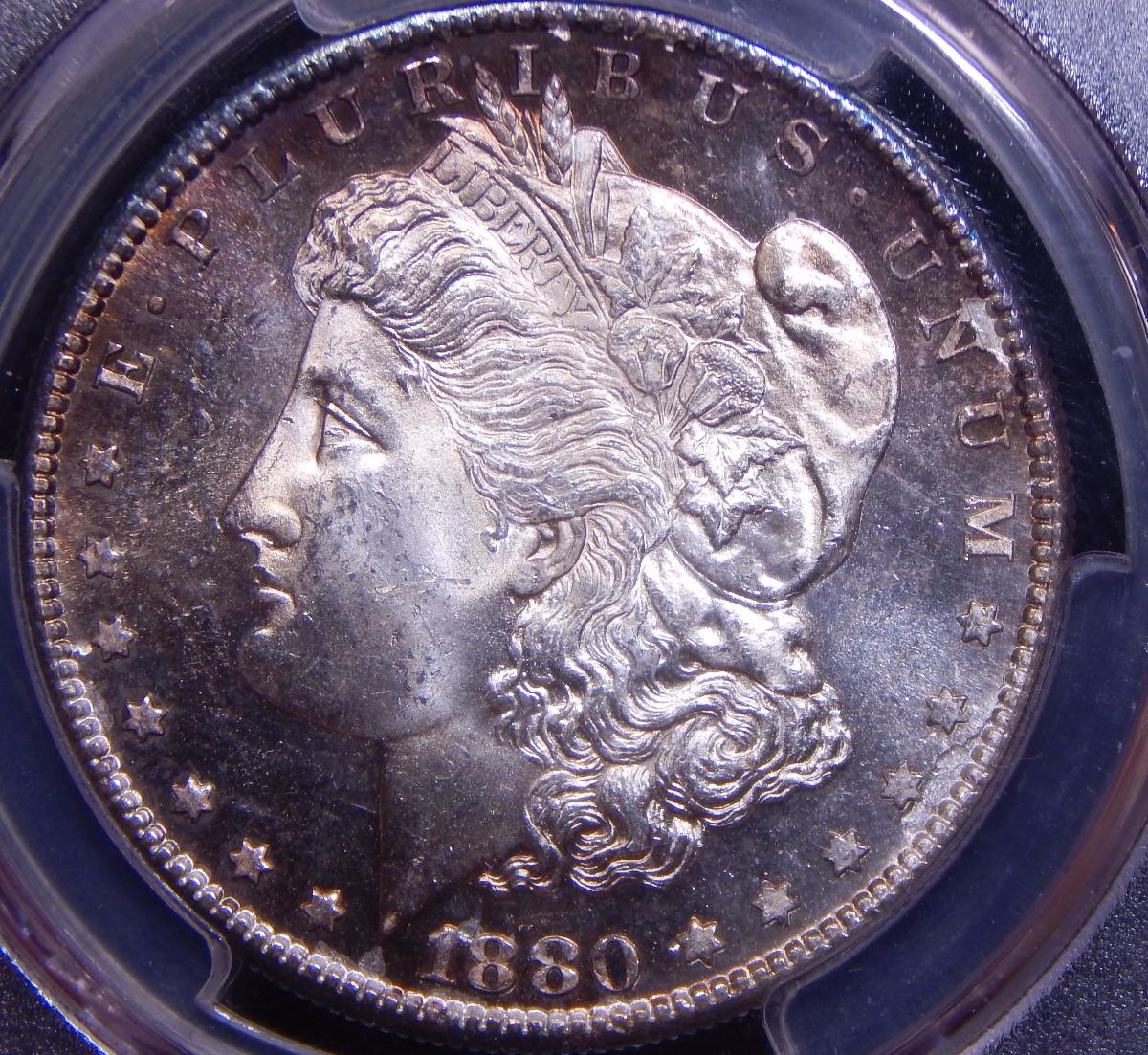
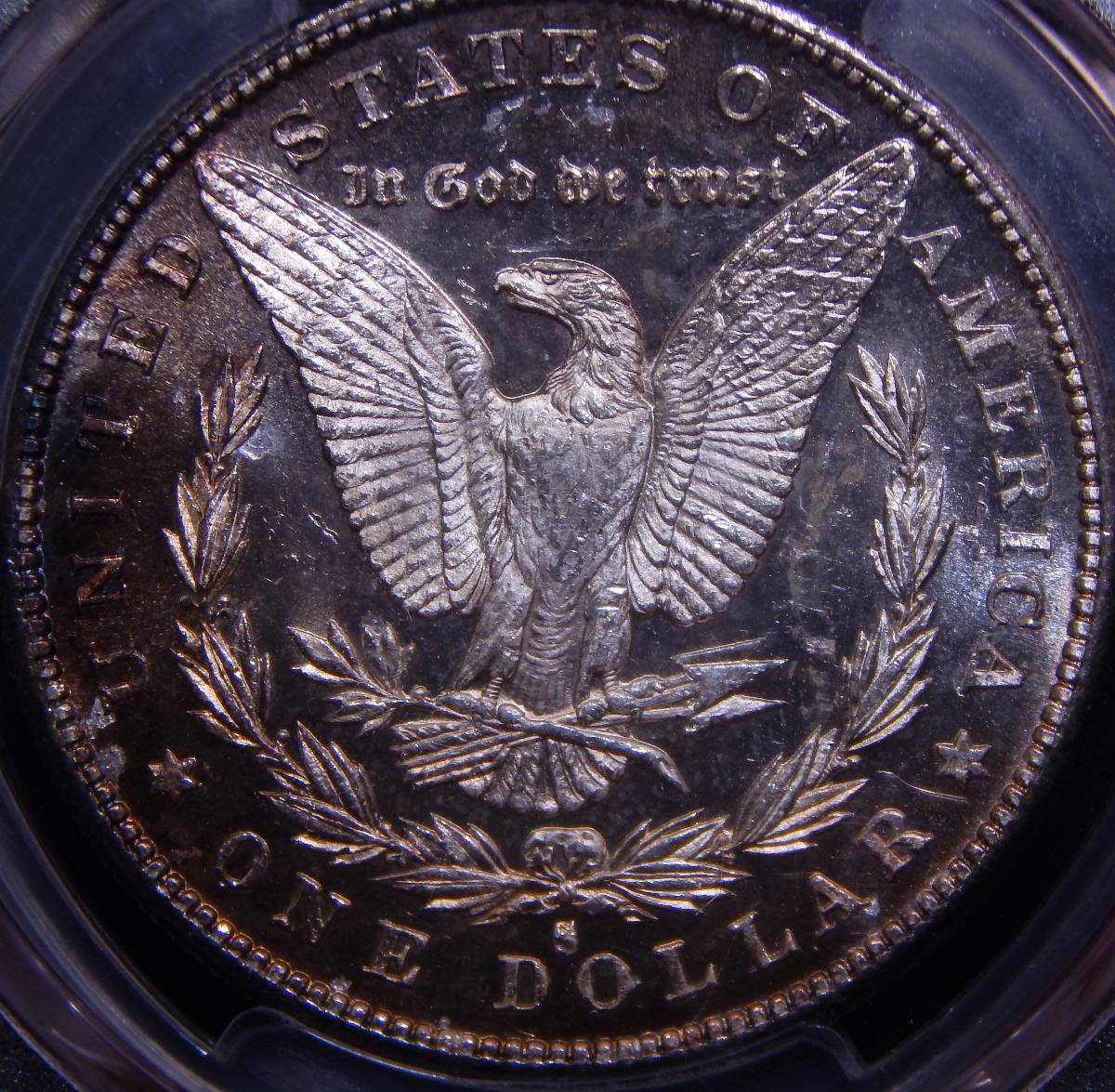
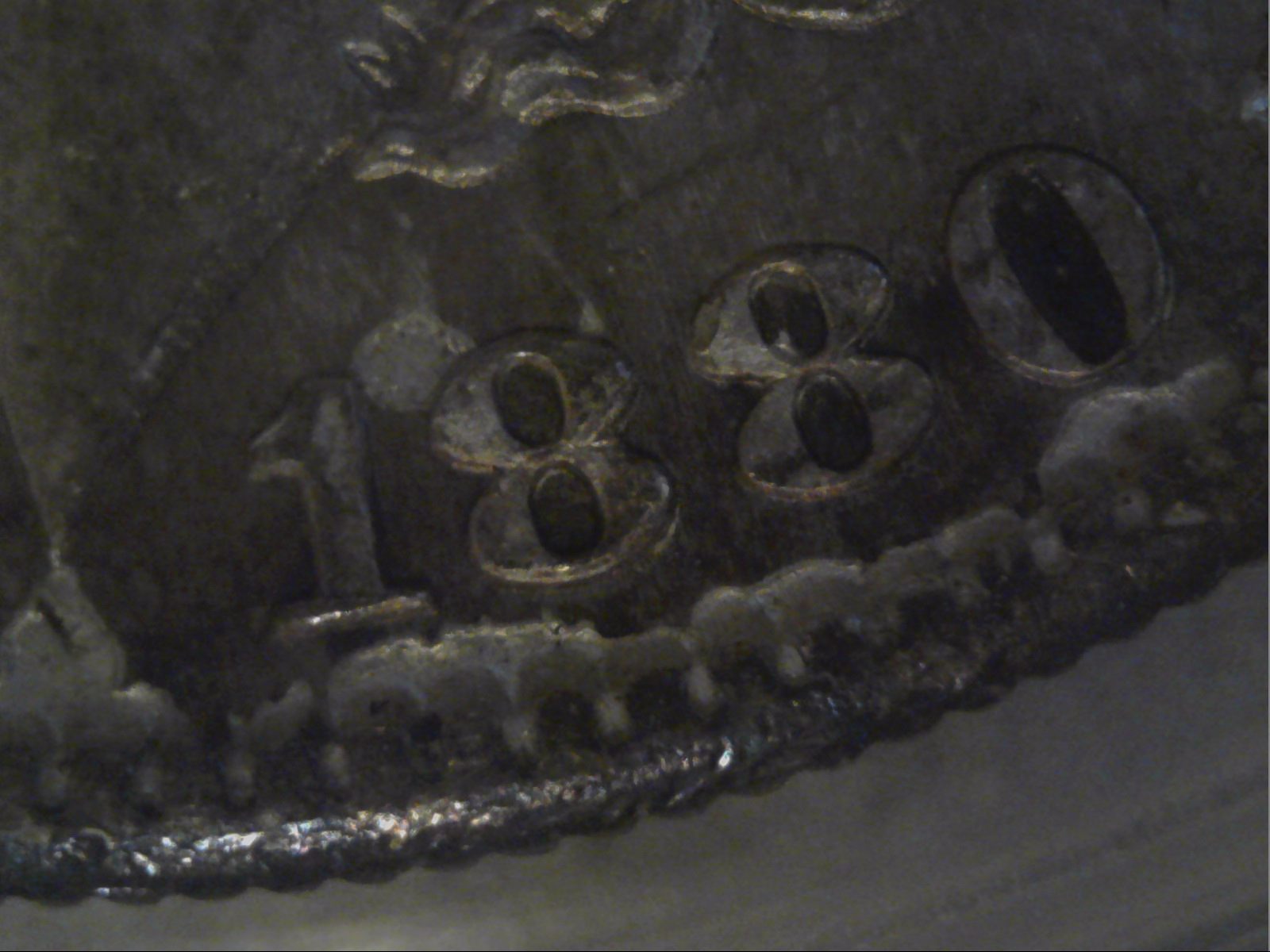
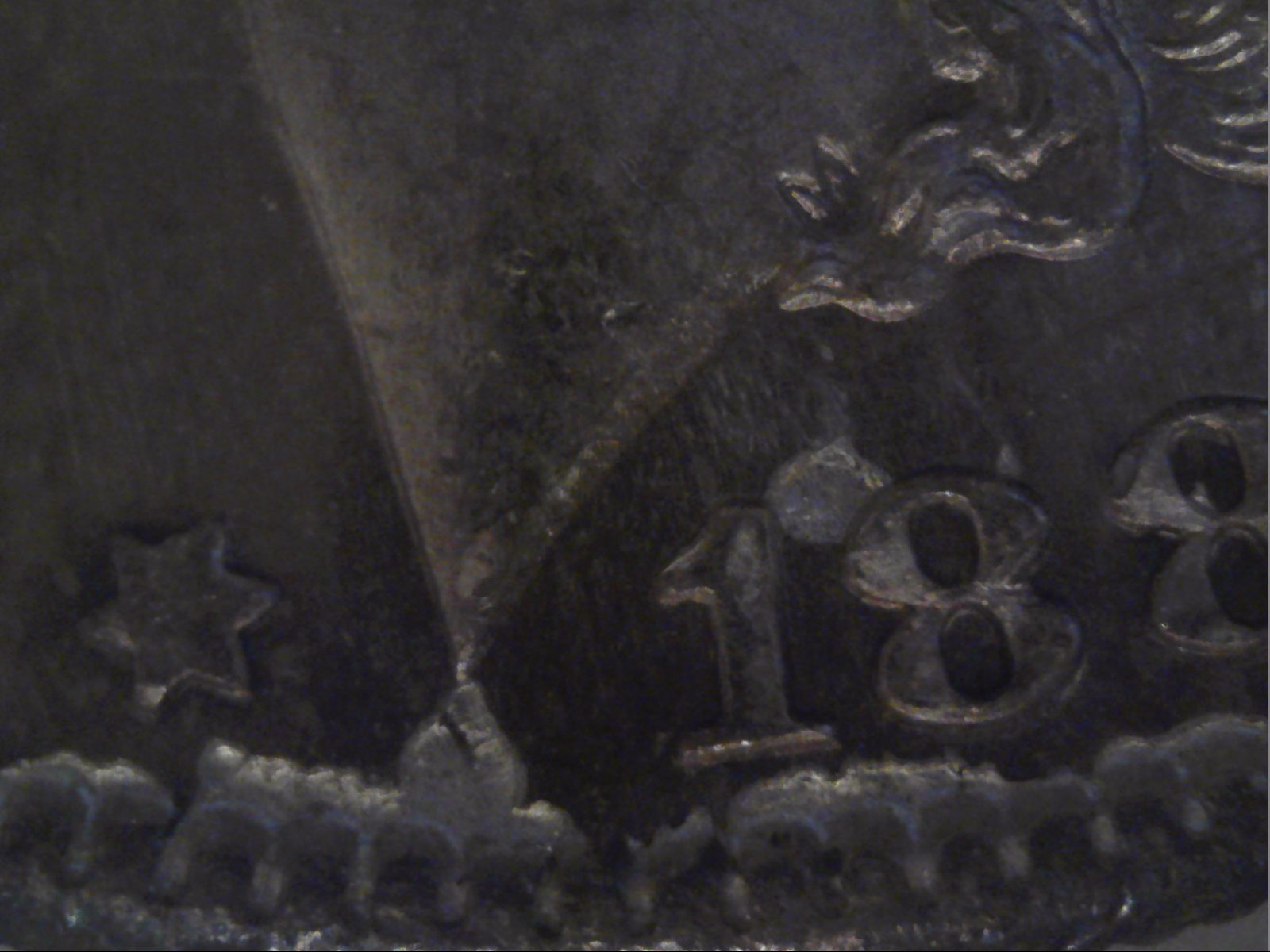
Having little to no depth perception in the photos, that looks like uneven toning. The S mint mark may have taken a hit or the die may have been damaged.
|
|
Valued Member
United States
199 Posts |
looks like lamination to me
|
|
Pillar of the Community
United States
1314 Posts |
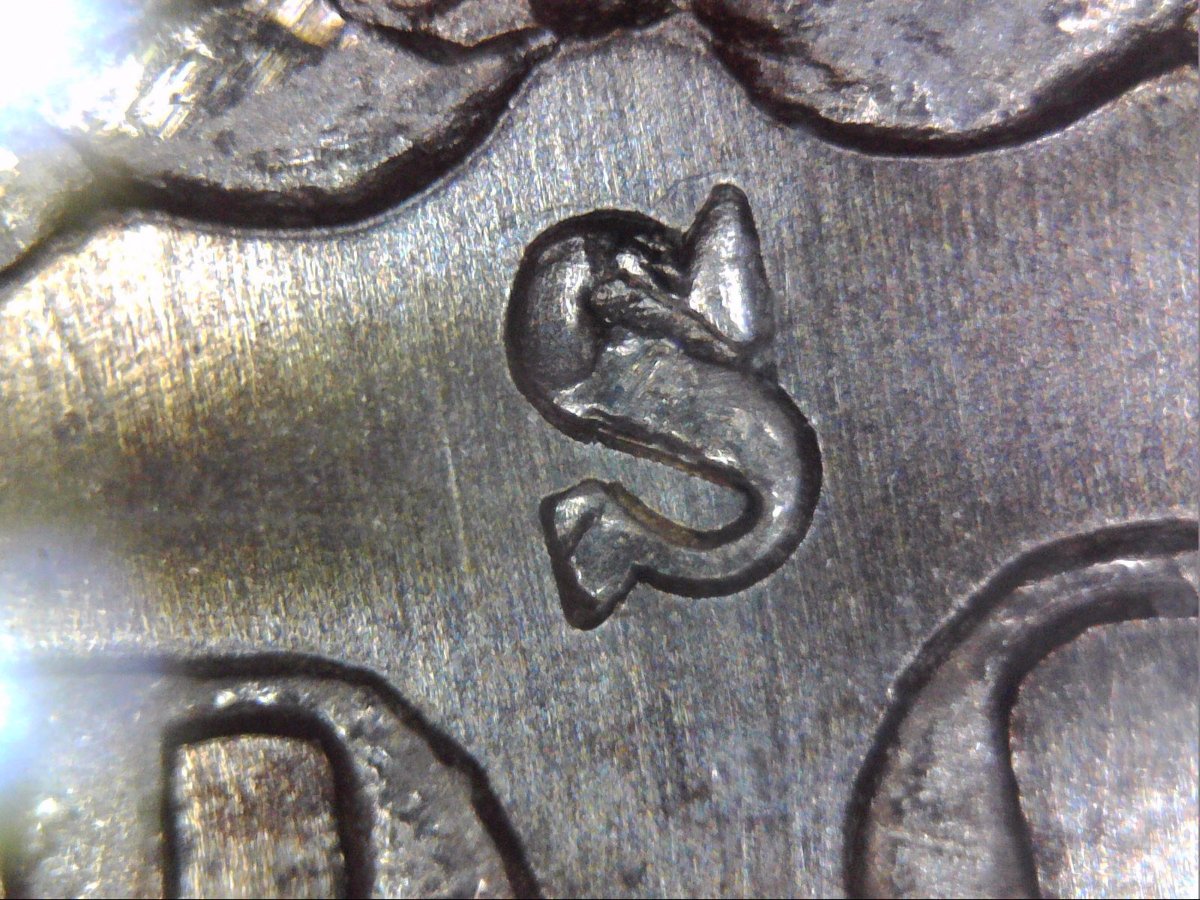
The mint mark appears to be doubled in the die.
The globby stuff might be jeweler's solder when the coin was in a pendant.
|
|
Pillar of the Community
United States
7390 Posts |
Looks like solder to me. What's it say on the label? Does it have a grade?
|
|
New Member
 United States
41 Posts |
First: No tampering; it is graded 64+ by PCGS. I'd show the numbers, but people tend to copy them these days for valuable or interesting ones.
After looking harder, I think it is some kind of odd clashed die with the extra metal (silver, or I am not sure)
If you look at all the irregularities, on either side, mark where they would be on a clock. then add 6 hours. Then go to the other side (if you started on obv., go to reverse). "6 hours later" there is always something there that matches up (not perfectly -- clashes never do) with the anomaly on the first side.
What if the metal is from a vvlds? Can we use the S/S to determine the stage? The thing is, the earlier the die stage, the better-looking the coin (usually), and I doubt a 64+ would have been given to a coin struck on a die so used...
Also, on our right: the 2nd, 3rd and 4th star appear to be doubled. On our left: the last two stars also appear to be doubled.
|
|
New Member
United States
41 Posts |
Also: There is a lot of heavy die polish in and around the junction of the wings and legs, (even our left arrows somewhat and then again on our right shoulder. There seems to be corresponding die polish at her far-right cheek. Also: She appears to have a doubled ear. I've done a side-by-side with another 1880-s PCGS MS 63. This coin is on the left. Also: IGWT on the reverse appears to be doubled. Side-by-side again.Left side again.  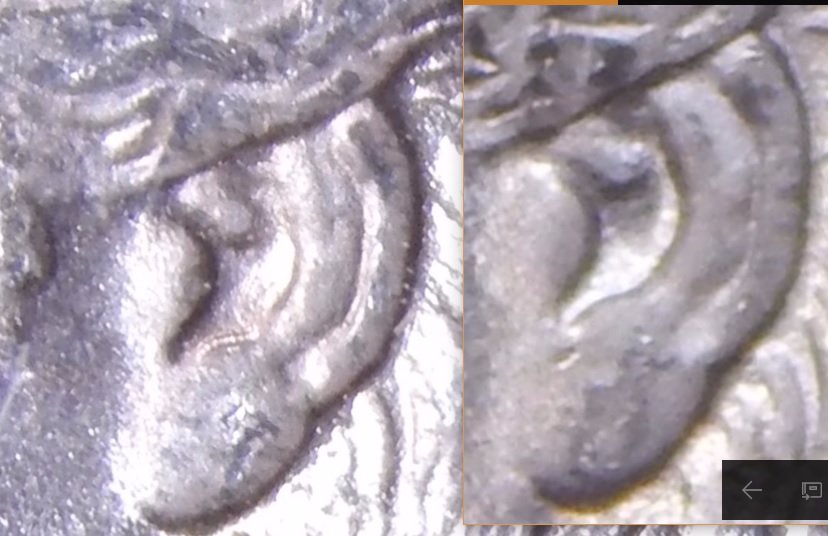 I'm stumped, and not an expert, but... is this clashed rogue die polish and or metal that was supposed to be polished, but then halfway through, they decided, "Nah, too much" and stopped? It sounds really really odd, I Know, but it fits. At least to me. |
|
New Member
United States
41 Posts |
An interesting coin should be worth the time of whomever finds it interesting, but I know I am new here, so I posted the coin in the holder, in case a small few of the community was thinking I was pulling their leg. 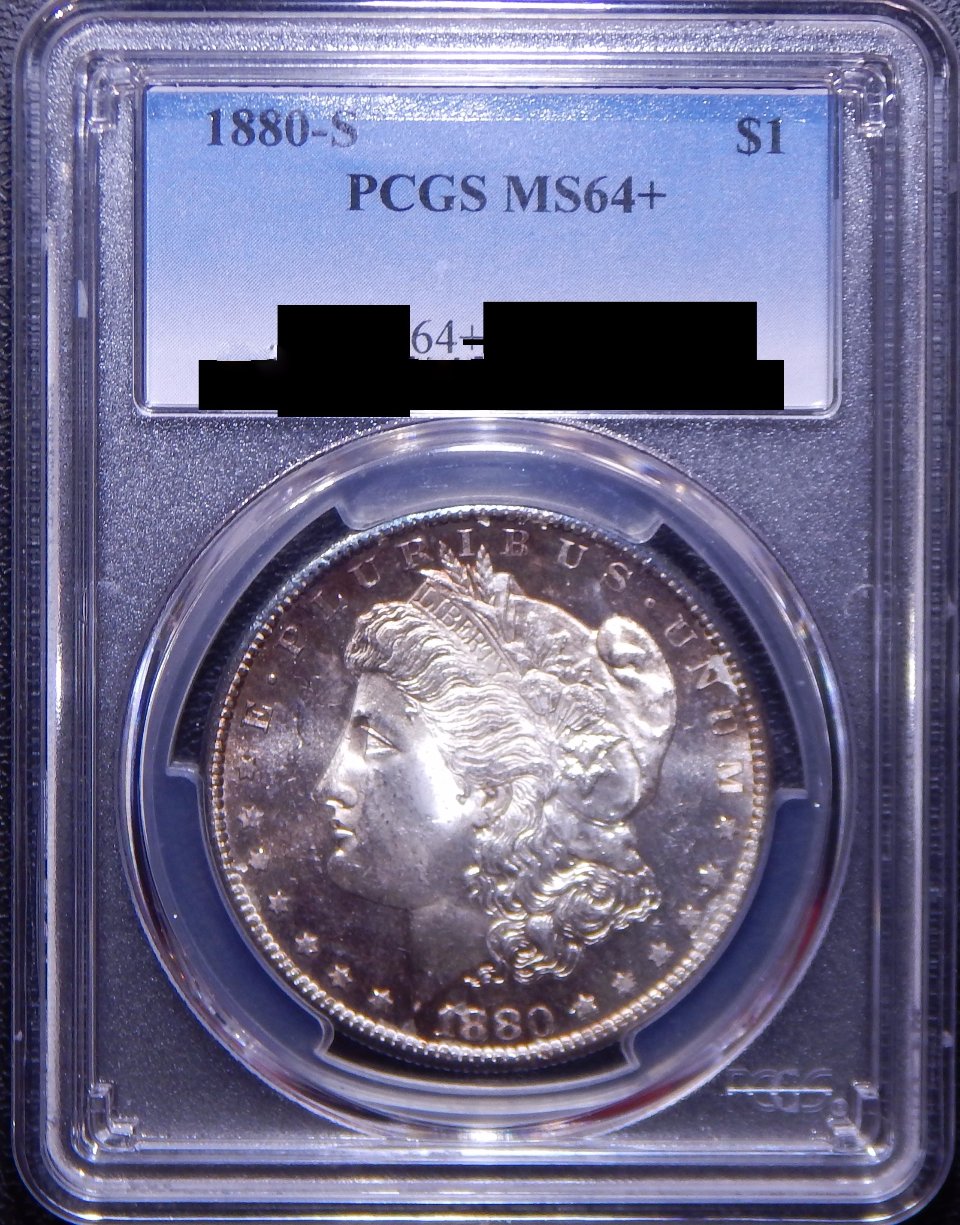 |
|
Pillar of the Community
United States
2843 Posts |
Whenever I encounter a newer member, I am met with the following problem. Is this member new to CCF, but an experienced collector with knowledge that exceeds mine? Or a casual/beginner collector that can learn a lot. Nobody likes being treated as if they don't know something that they really do know. Jay- forgive my splaining if you already know this. You suggest a die clash on your coin. This does not seem possible. Allow me to explain technically a die Clash is a condition of the die, the coin would really be described as "struck by a clashed die". This condition happens when the obverse die or the hammer comes together with the reverse die or the Anvil with no planchette in between to receive the blow. This results in some of the detail of one or both dies being imparted on to the opposite die. In most cases die clashes occur on the same devices for the same coin. When they use those dies, often after an attempt to polish or sand out the damage, traces of the opposing die are remaining on the die and and are therefore struck on the new coin that's fed into the machine. Common examples would be the Lincoln Memorial putting Abraham Lincoln in "prison" with the columns of the memorial showing up on either side of Lincoln's face, parts of the e pluribus unum show up under the Indians chin on a Buffalo nickel and profiles of many of the faces may show up in the fields of the reverse of that coin. There are many more examples. I see no indication on your coin that the deposits are in place to be die clashes at all. EDIT I stand my ground that this looks like uneven toning to me. Can you share any picture that shows that this metal is actually raised? Edited by BigSilver
06/29/2017 09:07 am
|
|
Pillar of the Community
United States
1970 Posts |
No, clashed dies would be seen as raised lines usually, not blobs.
|
|
New Member
United States
41 Posts |
"Jay- forgive my splaining if you already know this" I forgive you! No, I am no expert at varieties or errors, but it's the only way I could explain the placement lining up. You're right, clashed dies usually occur in the middle of the coin, like the famous "Bugs Bunny" and other Franklin clashes. This happens all the time in Iranian coinage, for some reason also. The reason I put forth the idea is because when one die transfers something (usually an appreciable image) to the other side, it lines up accordingly (unless the coin is medal alignment), but the image is not exactly as it should be. Maybe it is struck-through with metal or debris in the die? I really don't know! I didn't ask, by the way, for a mint error or variety. I just sent it in. The ear is lightly doubled, and the mintmark is, can we agree on that? Maybe there is some VAM of which these deposits are a rare feature in some really early or late stage. As far as my knowledge (first all things are relative), but for this board: I'd say I am Intermediate in American Coins (in terms of knowing key dates, history, and being able to grade correctly), Beginner-Intermediate in VAMS and errors. I like them though, which I why I appeal to those more knowledgeable than me here!. Ancients not withstanding (unless they're east-Asian), I'd say I am quite knowledgeable in foreign coins but no renowned expert. Do you have any ideas as to why they line up like that? |
|
New Member
United States
41 Posts |
Here's a clashed die for you. 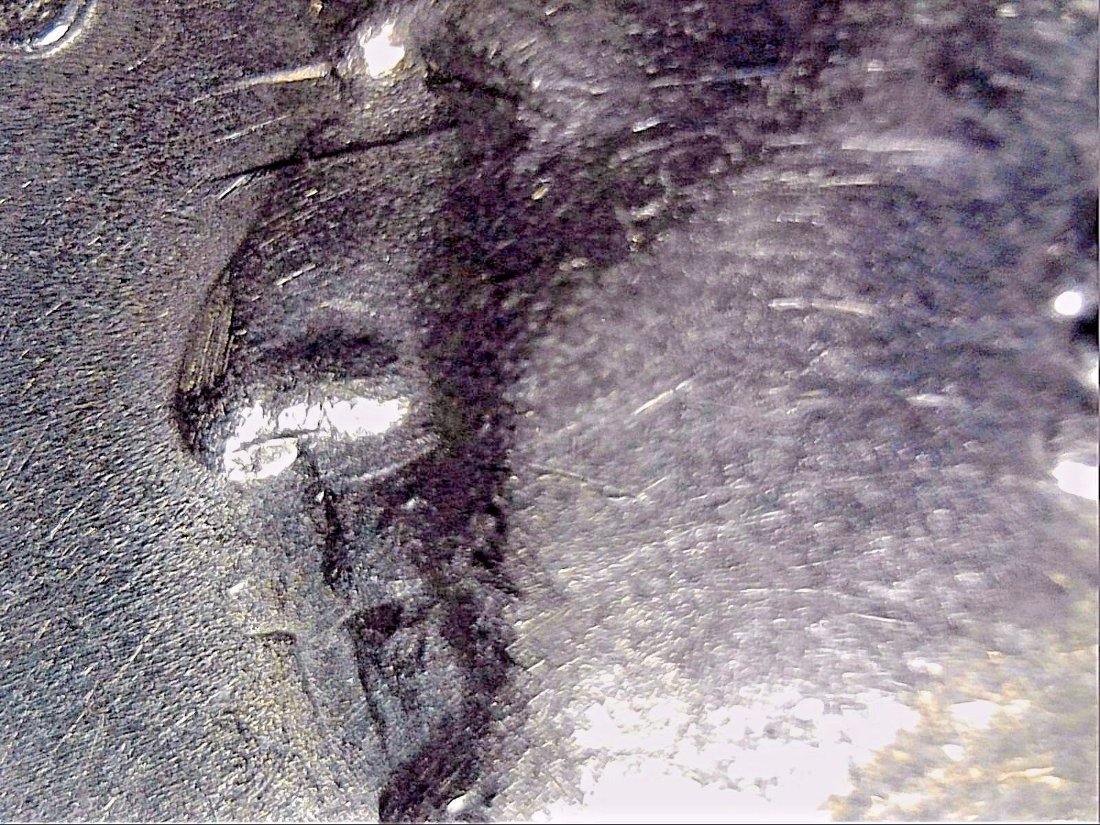 Maybe I am reading into the fact that they line up so well, so as to seem like a clashed die. If it was once or twice, or three times even, I'd say it's not. But pick any Desposit, and look for something on the other side in its place. It's always there. |
|
New Member
United States
41 Posts |
I think I figured it out. It's a LDS, VLDS, or VVLDS of VAM 37 B -- Damaged Denticles. http://www.vamworld.com/1880-S+VAM-37BSo far, there are just 3 stages, and the later the die stage, the more damage. However, those stages have no doubled ear (if you cannot see it, it is due to the necessary evil -- the image optimizer). At VAM world, when sending a Morgan for attribution, it says to post to the board first. But, VAMworld has a rather dwindling message-board. I am thinking of possibly sending this and a few others that I was either wrong about, or were unreported -- like this. http://goccf.com/t/291325Does anyone have any experience sending Van Allen and Mallis/ their team Morgans? |
|
Pillar of the Community
United States
3076 Posts |
send it to messydesk, avid vamworld attributionist .... I know you mean well but your photo's are missing some of the most basic things......like the basic clashings of front and back not just a MS64 listing.... asyou are new and excited as we all are lol EVEN NOW the reason we recheck some of the most basic things are that they could tend to lead to other possibilities, thats why the fundamentals are the basis of where we turn to to provide absolute identification....your pictures are kind of disfuntional.....the picurres are grreat!! ecept when I look at the OBverse, I see no neck clashing.....you can't have nose and head clashing without the neck..clashing. not no neck clashing..1 example is the VAM 1878 VAM 33a.. neck is clearly seen you have to look for the nose and chin clashing.the neck is a no brainer.... .100 or more examples are KNOWN, FIRST and formost... when I was new to vaming I posted the things....I thought were important.. they were to a point but the critical facts were not here..as is yours....discolorization over the date plays into question the VAM 37B.......the denticle impresstions buy some means are not seen but discolorred...they almost look like a Cud but the denticles are in full view .....I will tell you thins, the your coin is from a used die.not a new but not far gone but getting close..the grains upon the surface are far from new.. it is the discolorization that has my mind going.....as your points of interest or the colored areas can not be Cuds....the denticles are CLEAR...not over run and now part of the Cud. It's the pictures produced in the order presented...I could just be retarded and haven't a clue but I just can't see that the coin has no real VAM-WAM points you must understand.......most coins start from the most basic outrageous abnormalities......the doubling..the clashing.....the clashes with die rotaIONS.....ECT EST,/enough.......ONCE I LIVED here at this site to help people understand vams......NOT CHASE AROUND searching for VAM POOP AS far as sending it into VAN ALLEN go for it...your pictures don't lend me an ear to your cause but thats ok.... |
|
Rest in Peace
United States
10625 Posts |
Quote:
send it to messydesk, avid vamworld attributionist I agree with Gene's advice. If you want to find out what VAM it is Messydesk is the go to man. http://www.varslab.com/Edited by dave700x
07/02/2017 08:36 am
|
| |
Replies: 14 / Views: 2,361 |
|







 Posted 06/27/2017 6:52 pm





