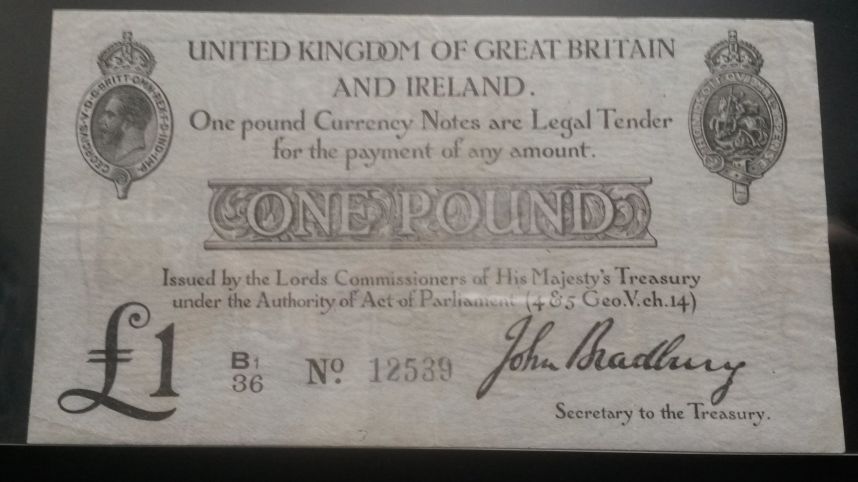
Issued one day after Britain declared war on Germany. Gold standard suspended; fiat money created. Of course immediately printed more fiat then gold. Over inflation ensued.
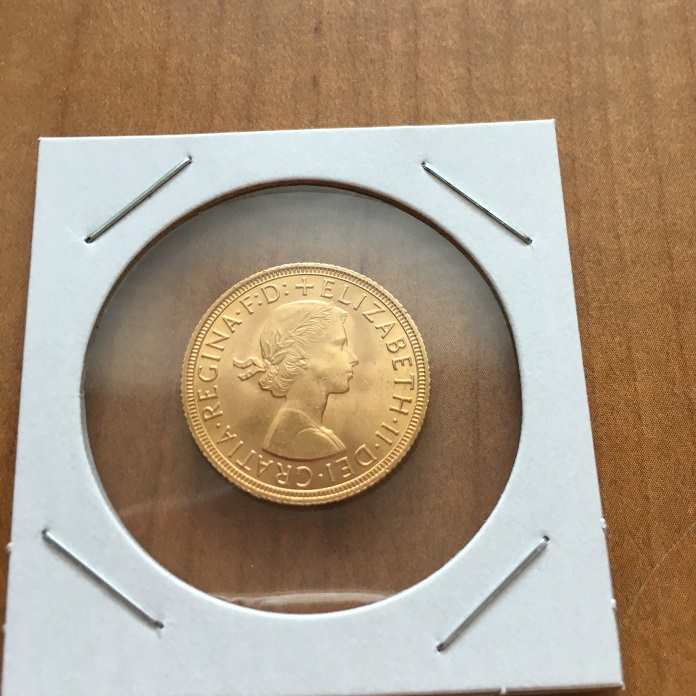
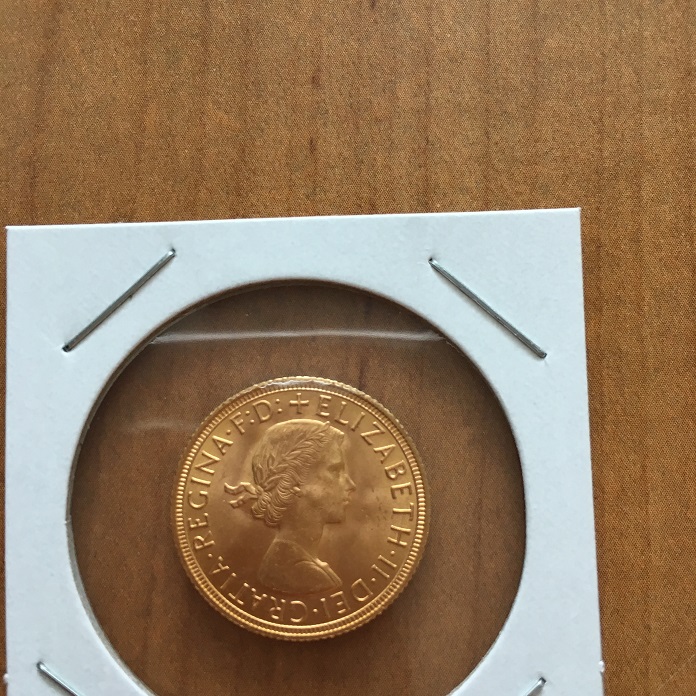
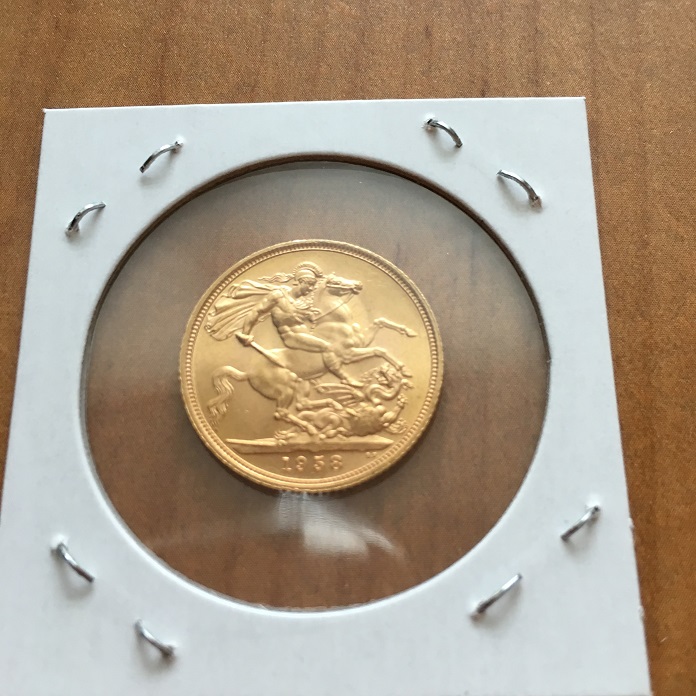
Royal Mint did continue to mint sovereigns until 1917, all gold coins soon withdrawn from circulation.
Holder of this note was entitled to obtain on demand during office hours at the Bank of England payment in gold coin of notes face value. (but they took away and stopped minting gold coins and there was more notes then gold backing it!?)
Here's my favorite part:
Provisos (b) and (c) to subsection (1) of section twenty-four of the Post Office Act,
1908, shall not apply to any such postal orders.
This subsection shall have effect only until His Majesty by proclamation revokes the
same, and any proclamation revoking this subsection may provide for the calling in
or exchange of any postal orders affected thereby.
2. Currency notes may be issued to such persons and in such manner as the
Treasury direct, but the amount of any notes issued to any person shall, by virtue
of this Act, and without registration or further assurance, be a floating charge in
priority to all other charges, whether under statute or otherwise, on the assets of
that person.
3. The governor and company of the Bank of England and any persons concerned
in the management of any Scottish or Irish Bank of issue may, so far as temporarily
authorised by the Treasury and subject to any conditions attached to that
authority, issue notes in excess of any limit fixed by law; and those persons are
hereby indemnified, freed, and discharged from any liability, penal or civil, in
respect of any issue of notes beyond the amount fixed by law which has been made
by them since the first day of August nineteen hundred and fourteen in pursuance
of any authority of the Treasury or of any letter from the Chancellor of the
Exchequer, and any proceedings taken to enforce any such liability shall be void.
4. Any bank notes issued by a bank of issue in Scotland or Ireland shall be legal
tender for a payment of any amount in Scotland or Ireland respectively, and any
such bank of issue shall not be under any obligation to pay its notes on demand
except at the head office of the bank, and may pay its notes, if thought fit, in
currency notes issued under this Act:
Provided that notes which are legal tender under this section shall not be legal
tender for any payment by the head office of the bank by whom they are issued for
the purpose of the payment of notes issued by that bank.







 First Page


 Posted 07/26/2017 06:39 am