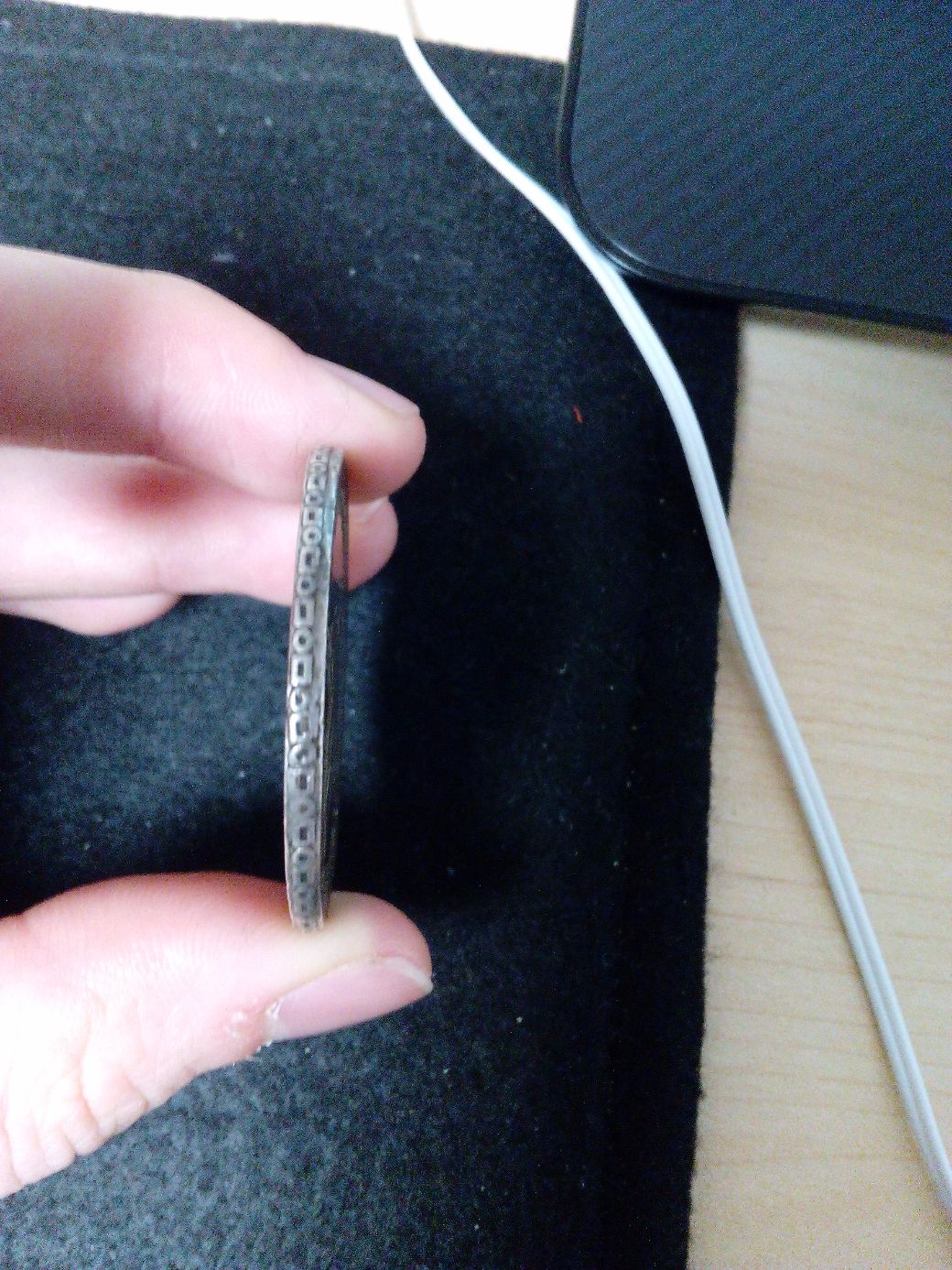
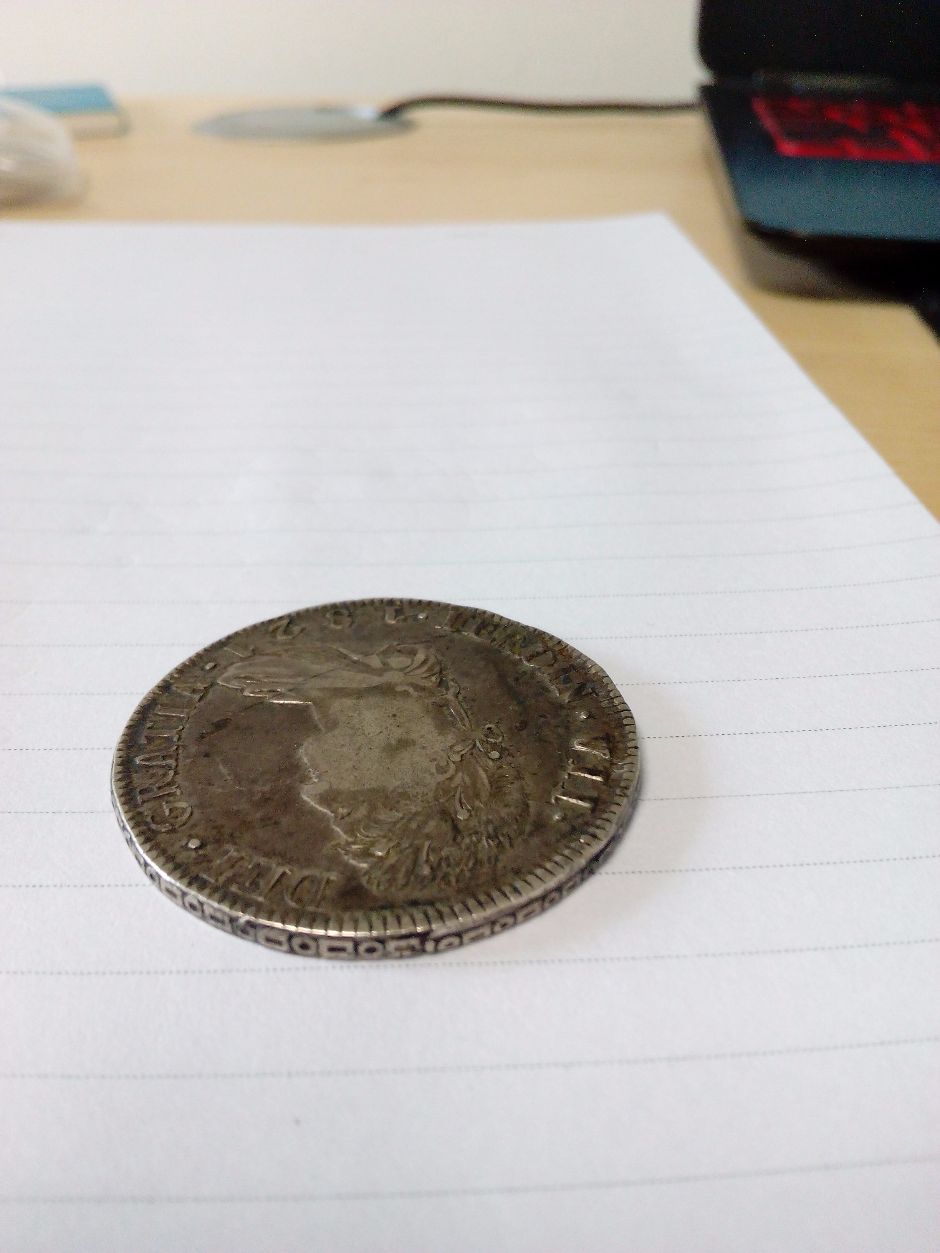
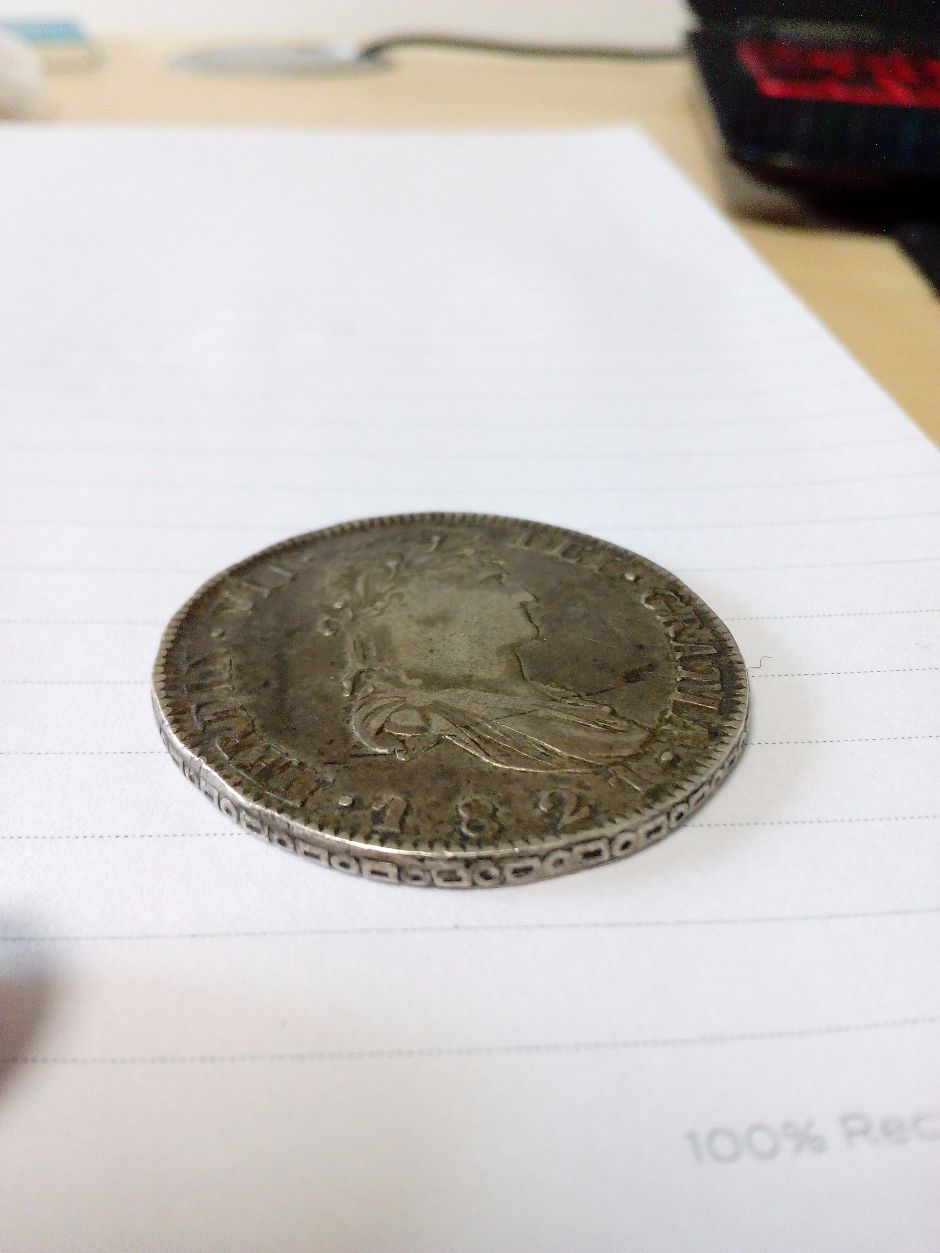
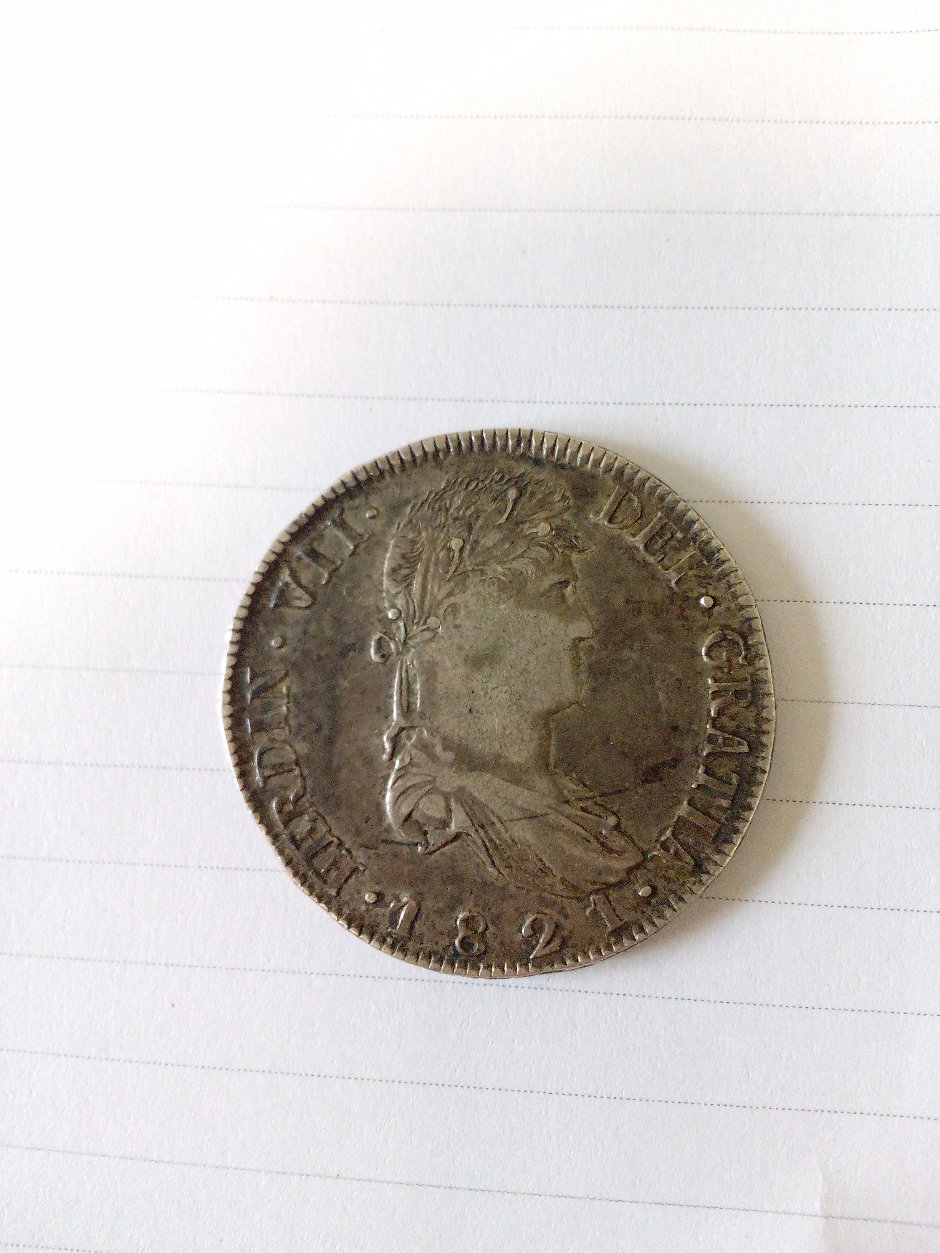
stonewall There is a clear second overlap. However, I can not determine if that lap is correct or not.
I copied your pictures to show the lap in both cases.
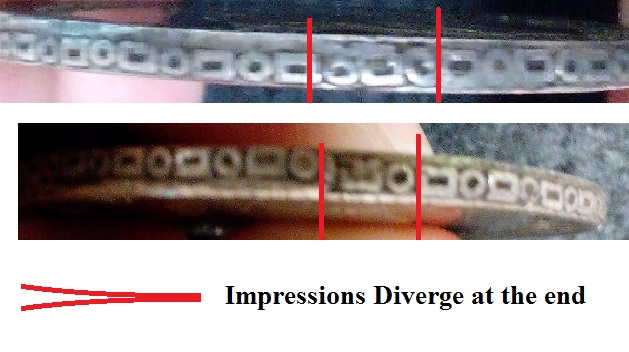
I re-oriented both photographs and attempted to make them the same size. I many not have succeeded very well. But at least viewed this way - the overlap can be easily seen.
The edge mill (similar to a Castang machine) places the edge design onto opposite sides of a blank simultaneously. This means that certain physical characteristics MUST be present.
1. The overlaps must be EXACTLY opposite one another a few degrees off and the coin must be a counterfeit.
2. The overlaps must be EXACTLY the same length or the coin is counterfeit.
3. Overlaps are always paired. Therefore 2, 4, 6 or any other even number are theoretically possible but NOT an odd number.
4. The priority of the overlaps must be correct.
To determine these features from pictures alone there are a few things that must be available.
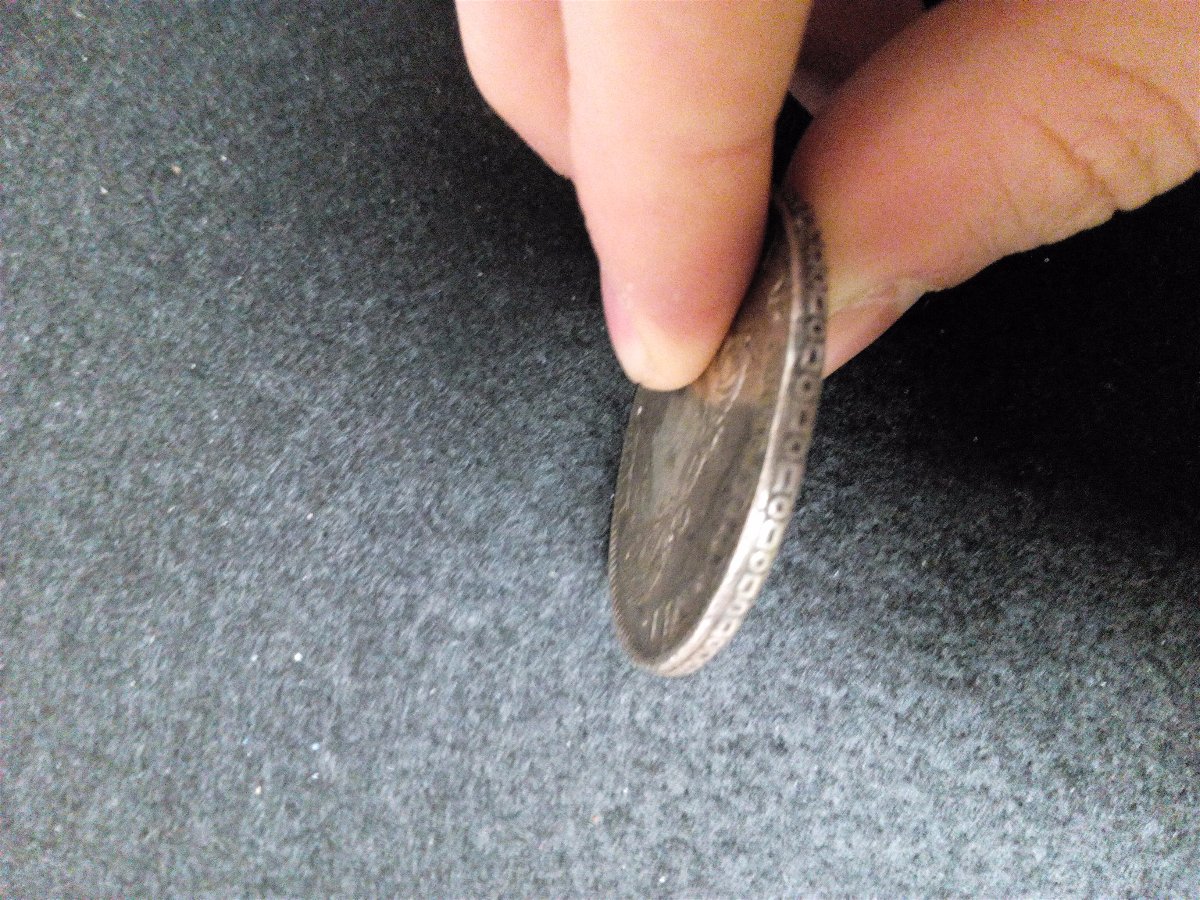
1. A portion of one face (the same face) must be visible in each edge picture.
2. The center of the overlap must be positioned at the dead center of the picture - not shifted to the side of the picture.
3. Both pictures must be taken at the same scale or else a fixed length scale must be present on both pictures. Take picture from the same distance with the same settings on the same camera.
You can also see in your photos that the overlap has a divergence of the patterns as the mill looses grip on the blank. You should be able to determine the priority of the overlaps this way. Remember that the very first point of contact will be covered by the last point of contact made by the opposing die. So if you follow the impression of either die half way around the coin - one end will be covered while the other end covers the other die impression.
These are fairly easy to see once good pictures are available.
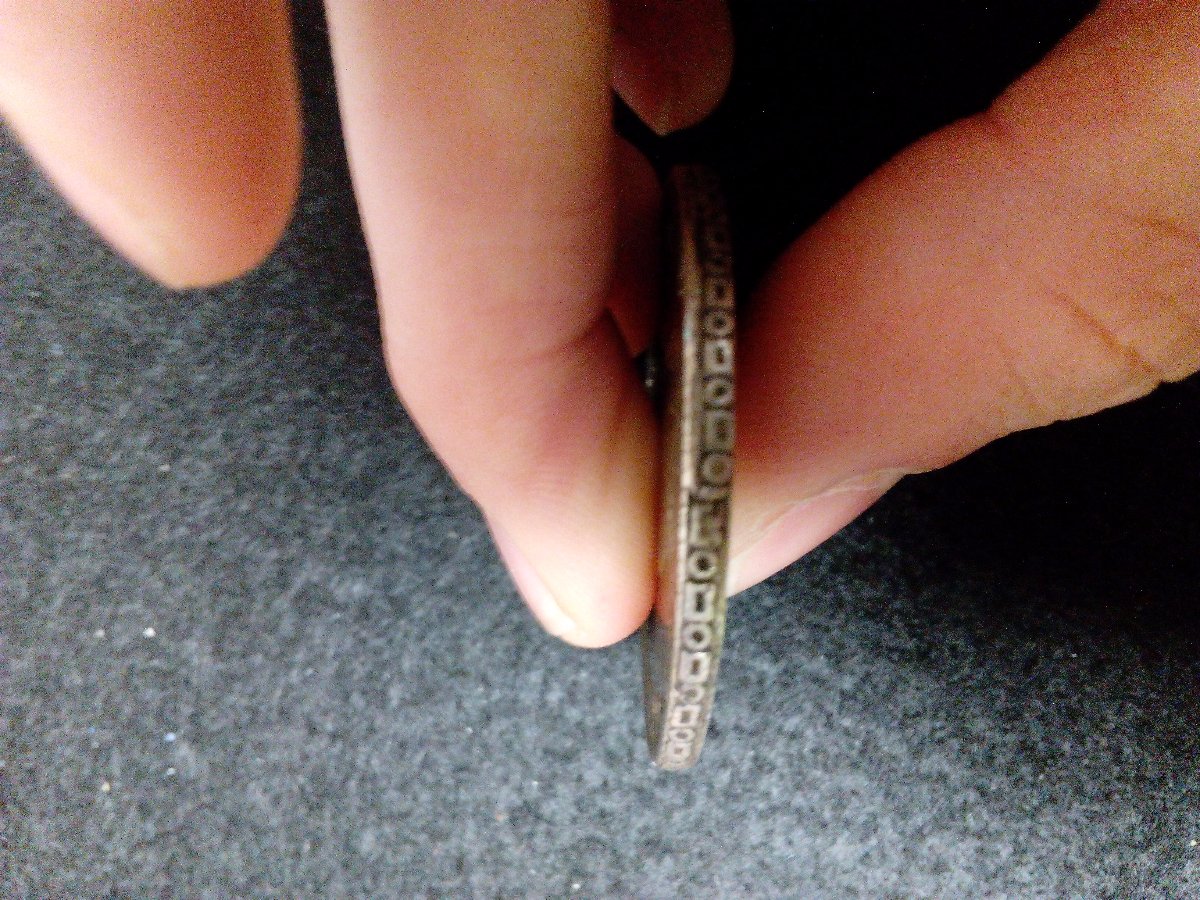
Here is a picture of an edge that is taken correctly.
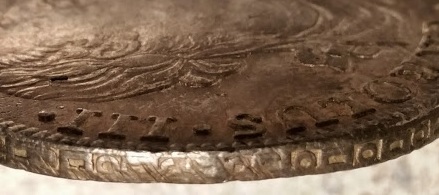
On this picture the overlap can be seen clearly. On my PC I can enlarge this picture to about 10x as large.
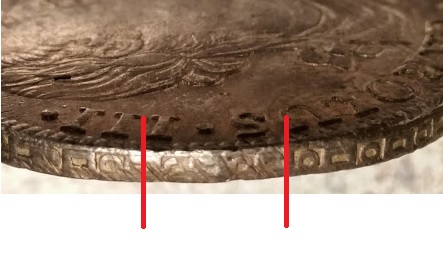
Next it is easy to transfer these locations to a picture of the face.
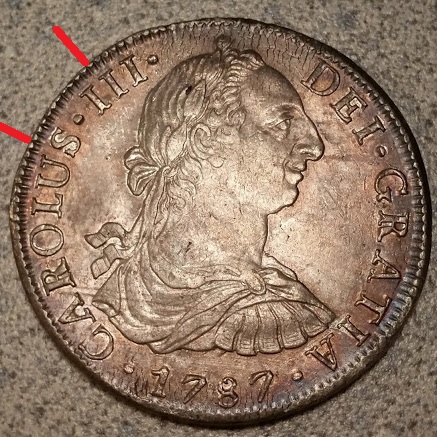
So for the edge to be correct - you now know exactly where to look for an overlap.
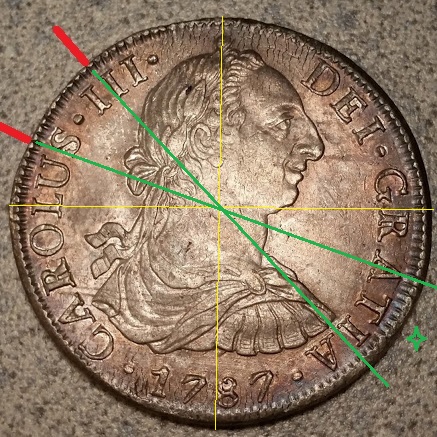
In this case the coin is a Boston type Class 2 Silver Circulating Counterfeit. There is no overlap present.
But that is the method.











 Posted 10/10/2017 03:25 am