| Author |
 Replies: 45 / Views: 14,671 Replies: 45 / Views: 14,671 |
|
|
|
Pillar of the Community
Belgium
1185 Posts |
Hi realeswatcher,
you were right, I was wrong - Delmonte (The Silver Benelux) mentions 1577 (and 1585 and 1586 (R3)) as years between the very common 1576 and 1589 dates
|
|
Valued Member
United States
82 Posts |
|
|
Pillar of the Community
Belgium
1185 Posts |
@sjkrose
congrats with great purchase, regular planchet, sharp strike, little post strike wear
few pieces have the regular inner and outer circles and thin adjacent lines
do you see the die variant of your coin, when compared to the pieces posted by jgenn and wonghinghi?
|
|
New Member
United States
12 Posts |
|
|
Pillar of the Community
Belgium
1185 Posts |
Quote:
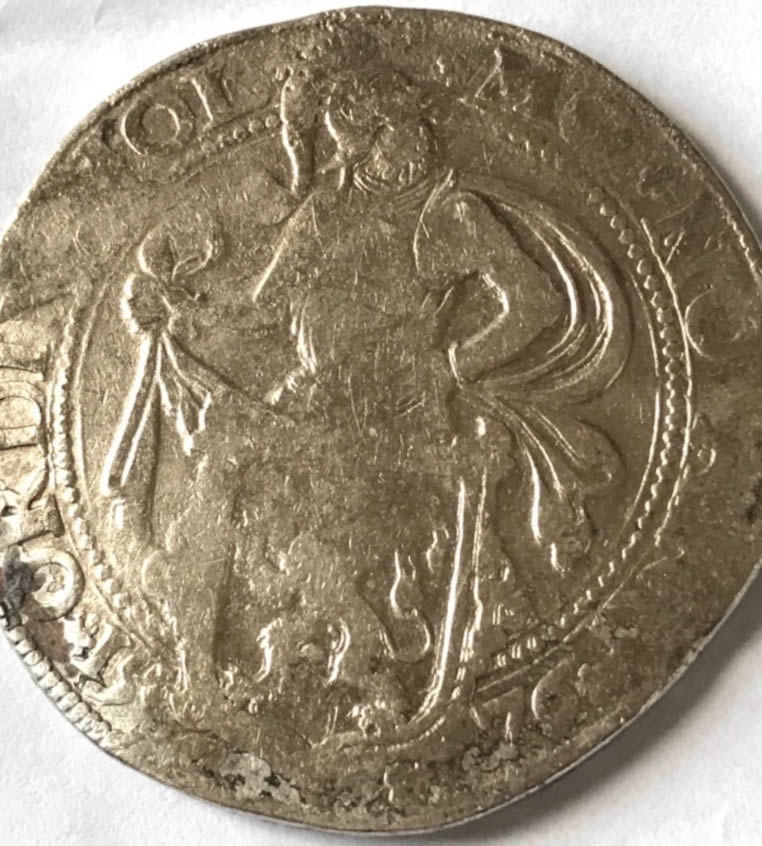
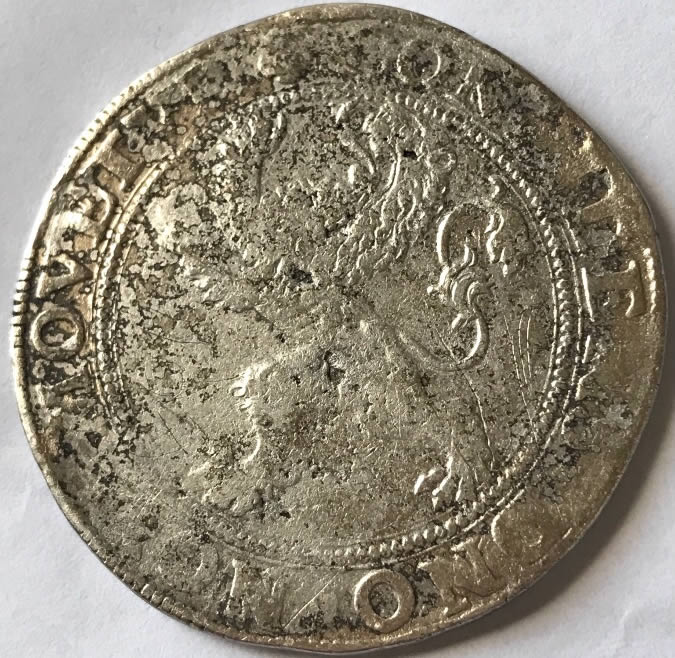
I wonder is my 1576 Daalder authentic ? it would help to show focused pictures of the entire OBV and REV sides of your coin |
|
Pillar of the Community
Belgium
1185 Posts |
Quote:
HOWEVER, I do know that there is a 1577 (I believe Holland) date for the leeuwendaalder quite happy to be able to show an example, not easy to find one ! added this week to my collection of early LD some weaker parts in the legend, for instance HOL from Holland but the 77 of the date is fine  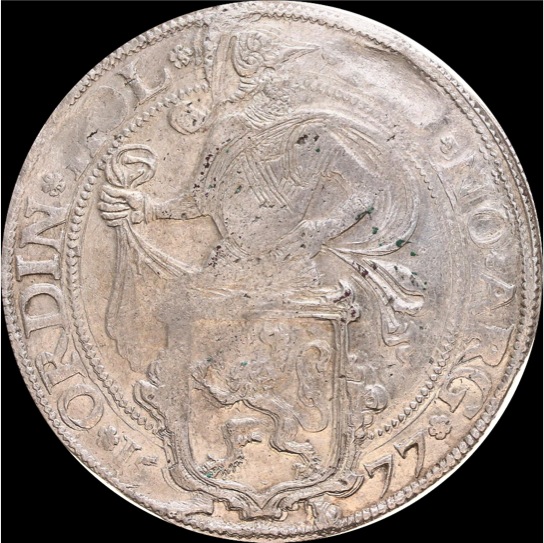 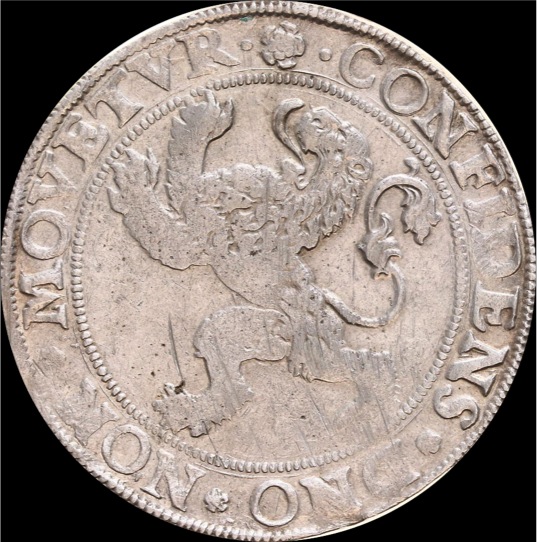 |
|
Pillar of the Community
Australia
653 Posts |
Just over the weekend I picked up a 1637 Lion Daalder , West Friesland province. Interestingly today's XRF analysis showed Silver 94-95% and Cu 4-5% (both sides of the coin measured). From my internet research I note that Leeuwendaalders generally have 75% Silver. How to explain this higher Silver content?  Squire |
|
Pillar of the Community
United States
1156 Posts |
Search this forum for "copper leaching" to find some answers.
edit: best to let the more knowledgeable do the commenting. colonialjohn?
Edited by jgenn
10/23/2018 3:52 pm
|
|
Pillar of the Community
United States
1156 Posts |
Although this paper describes experiments to replicate Roman silver-copper coin alloys, it concludes that silver surface enrichment can be a result of the fabrication of the blank. |
|
Bedrock of the Community
Australia
21792 Posts |
With a very unconvincing patina, the picture suggests that this coin may have been cleaned with acid.
If that is the case, the copper in the surface has be preferentially attacked, thus resulting in surface enrichment of the silver in the alloy.
A raise in the percentage of silver in the surface layer from 75% to 95% should be reasonably expected.
I would suggest that this coin should be tested for authenticity:
provenance,
specific gravity
accurate weight
style
check with a good data base for fake coin records.
A good professional should be able to check at least some of these for you, most probably for a fee.
With only a cursory inspection of posted on screen pictures here, it looks to be OK to me.
|
|
Pillar of the Community
Australia
653 Posts |
Thanks for your response jgenn and sel_69I I should have attached a photo of the coin. I got this because it had an appeal to me. A powerful design "in the raw". It was also relatively cheap. The Daalder has been cleaned beforehand and this was advertised by the reputable dealer from where I purchased the coin. I note the strange edge to the coin. From searching the Internet there is some mention of these coins having been illegally "shaved" for their silver. Feedback would be appreciated Squire 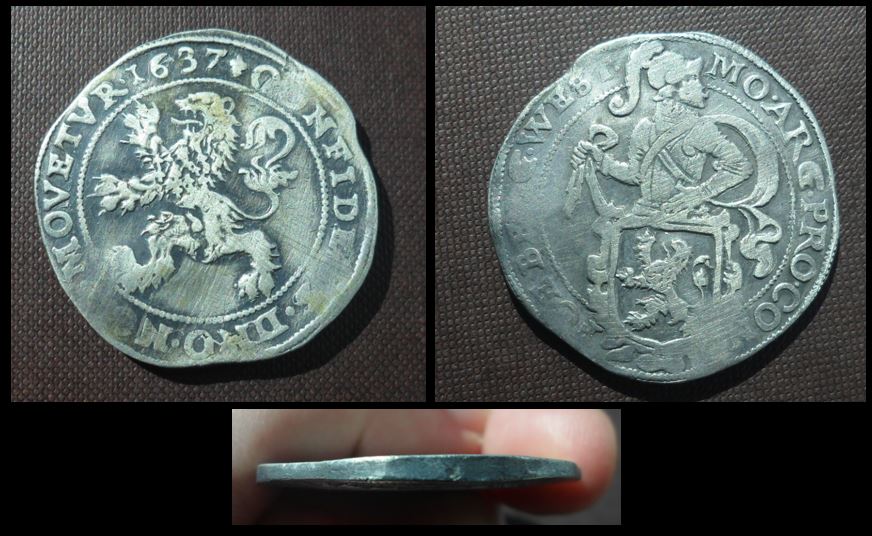 |
|
Pillar of the Community
Hong Kong
1270 Posts |
Quote:
@kyp1891
When I bounce it, the ring sound is not long like what we found on modern silver dollar. I got the same experience on this kind of old silver coins. It looks well to your coin so I think it is real. |
|
Pillar of the Community
Belgium
1185 Posts |
Quote:
Feedback would be appreciated although the coin is a typical 1637 West-Frisian design (other example: https://veiling.veilinghuisderuiter...89ba58ba339)I agree that the very high silver content and the strange patina does one hesitate whether or not it is genuine; difficult to say from pictures in any case, the 16th and 17th century leeuwendaalders were hand made, so the planchet form and planchet thickness, as well strike depth should be irregular for the clipping issue, it would be good to know the weight of your coin |
|
Pillar of the Community
 2087 Posts |
I can't comment on the coins shown, all I am doing is reflecting on my experience of buying my first Lion Thaler ( more on my wording later)
I went hunting for an example some years ago.. I paid quite a reasonably( not exorbitant) price for one on MA-shops. I was in discussions, online, with another collector and he suggested I email the Utrecht coin museum,( I can't recall its true name). I ended up finding out my Lion thaler was a fake and that there were a considerable number of highly deceptive fakes around. I sent mine back tot eh seller and with assistance from the museum found a genuine example. I was really sad when they closed that museum down.
NOw I am going to ask a question. Why do so many of you call the coin "Lion daalder"? The Netherlands name is "leeuwendaalder" Which is a single word. "Lion Daalder" is, therefore, half a translation. I think it's better to either call it by its Dutch name or fully translate the word.
You may think I am picky but given the importance of the coin to USA numismatic History "Lion Dollar" seems to be much more USA appropriate term.
The history: The leeuwendaalder was the first coin of importance in the American colonies. It was used extensively before the Spanish Dollar displaced in. In Colonial America, the coin was nicknamed "Dog dollar". As had occurred in the Arabic speaking world at the same time "Kalb Real"). The Lion on the coin was so poorly executed it looked to many much more like a dog. Despite the claims( unsupported in research) that term "Dollar" was first used in Scotland in actual fact, it is much more likely( above 95%) the word Dollar was actually a Colonial-Americanization ( forgive me for inventing terms) of Daalder. in German-speaking countries, the coin is called Lowenthaler, in UK influenced countries it is called Lion Thaler. Only in the USA is it called LIon Daalder.
To sum up I think given that Dollar is an American coin name. And that it was first used(ever) to refer to the leeuwendaalder The correct term for the coin in the USA should be "Lion Dollar"
Edited by austrokiwi
12/17/2018 02:33 am
|
|
Pillar of the Community
Belgium
1185 Posts |
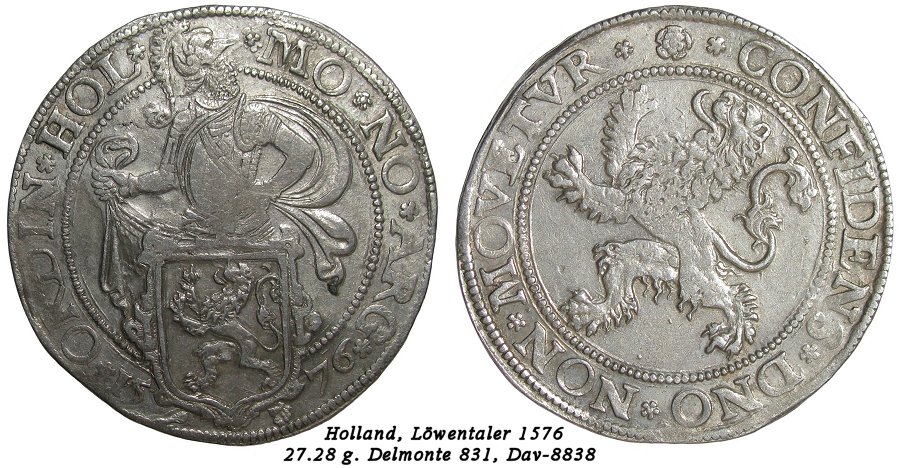
@austrokiwi, you rightly mention Leeuwendaalder as the preferred name for these coins - Lion Dollar is interesting as it refers to the history of the coin in the colonial America What few people know is that the leeuwendaalder played two important roles in the monetary history of the Netherlands 1) tax collection to support the war effort of the Dutch rebels against the Spanish throne - 1575-1579 This role of the leeuwendaalder is unknown to most collectors. Perhaps it is the most interesting aspect historically as it may have influenced more than in details the outcome of the Dutch revolt and the rise of the Dutch Republic. Mid 1575 the situation of the Dutch rebels facing far superior Spanish army was difficult. One of the greatest concerns was to raise sufficient funds for the wages of the rebel troops (including 1000 Scottish soldiers). The resolution of 25 august 1575 of the States of Holland approved the coinage of a large silver piece with face value of 32 stuivers in which silver content was only 29 stuivers. By melting the then standard Philipsdaalders and Bourgondische kruisdaalders and reconverting those into leeuwendaalders a 10% tax was taken. The estimation of the total income of this operation is approximately 1 million guilders which was substantial but not enough to support the war effort (In "The Dutch Revolt" Geoffrey Parker estimated the daily wages of the Dutch rebel army at about 8000 guilders). The pacification of Ghent made an end to the monetary policy of Holland. 2) Dominating large silver piece for international trade (1585 - mid 17th century) much larger quantities of the leeuwendaalder were produced during the following decades, not only by Holland but also by the other provinces of the Dutch republic in order to meet the increasing demand for this currency in the international trade originally used in the "Oostvaart", the trade route from the Netherlands via the Sond passage into the East Sea, in order to buy grains in Poland and the Baltic states. We know very well how important this trade was as there is a register for tolls payed by all ships passing the Sond. Specifically the leeuwendaalder gained enormous popularity in the trade with the Ottoman empire (the Levant trade). For an interesting analysis see http://www.helsinki.fi/iehc2006/pap.../Bulut16.pdf Around 1960 important leeuwendaalder coin hoards were found in Lebanon and Syria, and this sparked interest for international collectors. Other interesting by-products are the Maltese counterstamps on Leeuwendaalders and the Italian and contemporary imitations. After 1620 the role of the leeuwendaalder diminished because other popular currencies, like the Patagon and Ducaton from the Spanish Netherlands or the Nederlandse Rijksdaalder and silver Ducaat from the Northern provinces. The last leeuwendaalders were issued early in the 18th century. I agree with you that the connection of the leeuwendaalder to the American dollar is of interest, and that the presence of imitations on the market is a shame. The "Geldmuseum" in Utrecht closed its doors in 2013, which is a pity; however the National Numismatic Collection can be looked into: https://www.dnb.nl/over-dnb/nationa...e-collectie/below is an other example of an early type Leeuwendaalder (type 1b) issued during the first half of 1576 - this type played a role in the tax collection effort 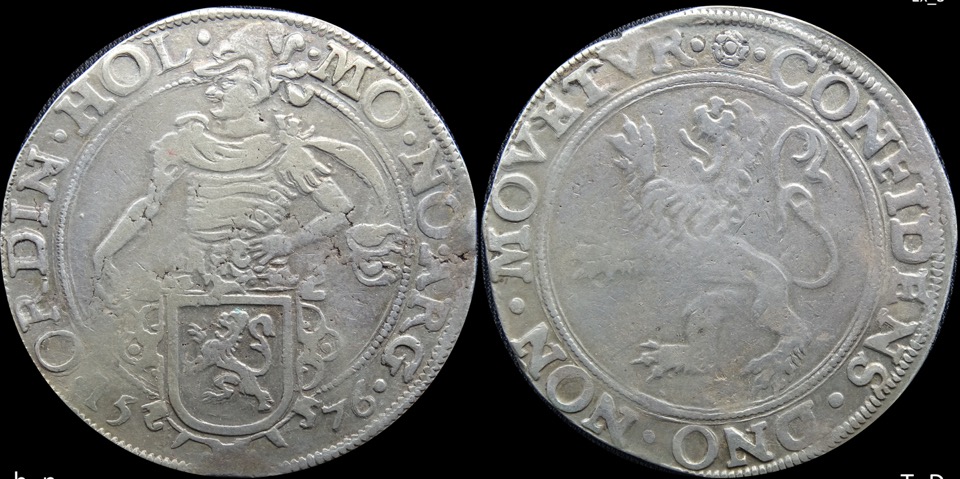 Edited by 1c5d7n5m
12/18/2018 5:46 pm
|
| |
Replies: 45 / Views: 14,671 |






 First Page
 Previous Page


 Posted 01/07/2018 7:55 pm