











 Posted 05/13/2008 8:44 pm


pfflyer - Kurt asked me to take a look at this one.
To be very brief, I believe the coin is REAL and that the weight is not really a problem in this case. For the details, see below.
The 1821 is a high mintage issue that was counterfeited extensively and was used in the US. It is listed in Riddell's Monograph as the #112 in the REAL section. Riddell reported it was debased and typically underweight with an average worth of about 70 cents. It would not have circulated as a dollar but would have been discounted.
I have several counterfeit versions of this identical coin as well as a couple that I believe are real. In this case, the counterfeit dies are usually crude enough to spot easily and the copper content is VERY high. They are known in Sheffield plate (silver over copper and silver over white metal). I own one suspect that is made with good dies - but it could simply be a mint made fraud (debased by mint employees).
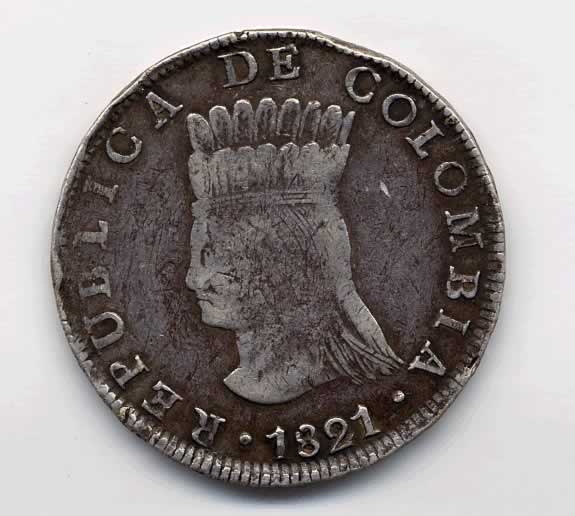
If you combine wear visible on this coin with possible lost metal on the rim (Is the rim design intact all around?) and the fact that Riddell reports his average example as 0.4 grams light - then you don't have as serious a problem as you might expect. The coin by your measurements is 1.6 grams under but only 1.2 grams under Riddell. That is clearly within the range of possible looses by wear.
When dealing with mints like Columbia (especially Columbia) the planchet quality was low and the densities are NOT consistent. SG is not likely to help a lot in this case. There are copies alloyed with Platinum as the "waste" metal so higher than normal densities are possible in forgeries. The real coins are often seen with a streaky delamination on the surfaces that I do see here. The alloy was not well controlled. In other locations - this streaking would make it more likely to be a counterfeit, but not in Columbia.
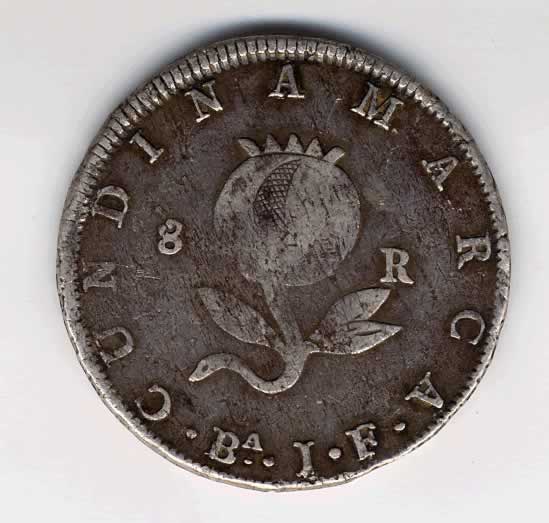
The obverse die is an extremely close match to the original listed in Riddell - the reverse die is different with significantly variant letter spacings.
This strike is actually quite good. Most originals do not have the cross hatch detail visible on the pomegranate.
To be very brief, I believe the coin is REAL and that the weight is not really a problem in this case. For the details, see below.
The 1821 is a high mintage issue that was counterfeited extensively and was used in the US. It is listed in Riddell's Monograph as the #112 in the REAL section. Riddell reported it was debased and typically underweight with an average worth of about 70 cents. It would not have circulated as a dollar but would have been discounted.
I have several counterfeit versions of this identical coin as well as a couple that I believe are real. In this case, the counterfeit dies are usually crude enough to spot easily and the copper content is VERY high. They are known in Sheffield plate (silver over copper and silver over white metal). I own one suspect that is made with good dies - but it could simply be a mint made fraud (debased by mint employees).
If you combine wear visible on this coin with possible lost metal on the rim (Is the rim design intact all around?) and the fact that Riddell reports his average example as 0.4 grams light - then you don't have as serious a problem as you might expect. The coin by your measurements is 1.6 grams under but only 1.2 grams under Riddell. That is clearly within the range of possible looses by wear.
When dealing with mints like Columbia (especially Columbia) the planchet quality was low and the densities are NOT consistent. SG is not likely to help a lot in this case. There are copies alloyed with Platinum as the "waste" metal so higher than normal densities are possible in forgeries. The real coins are often seen with a streaky delamination on the surfaces that I do see here. The alloy was not well controlled. In other locations - this streaking would make it more likely to be a counterfeit, but not in Columbia.
The obverse die is an extremely close match to the original listed in Riddell - the reverse die is different with significantly variant letter spacings.
This strike is actually quite good. Most originals do not have the cross hatch detail visible on the pomegranate.


