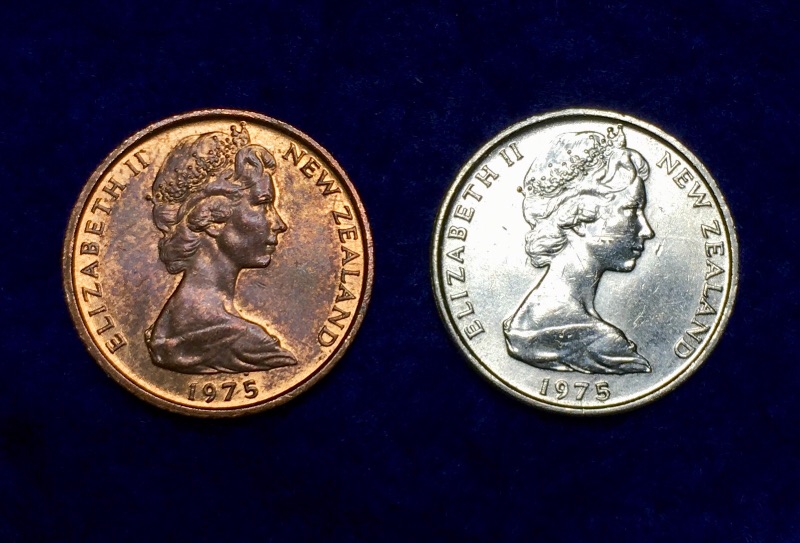
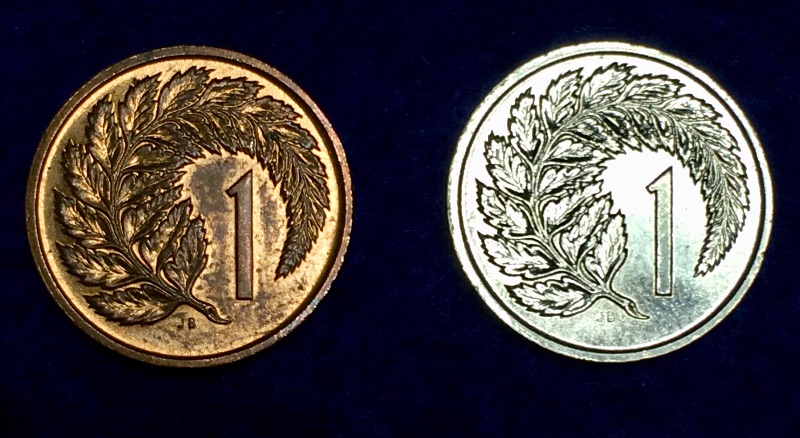
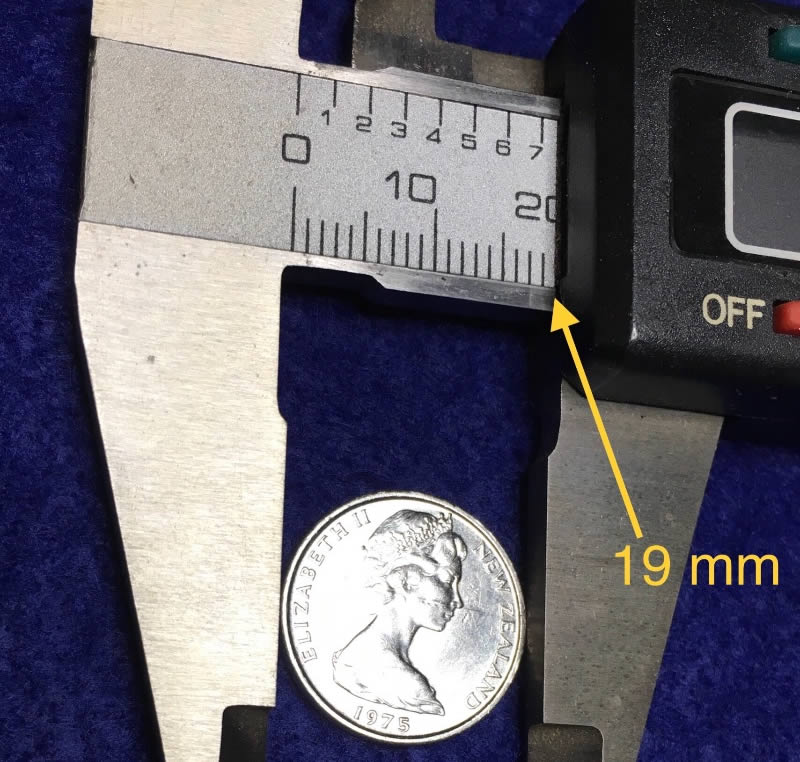
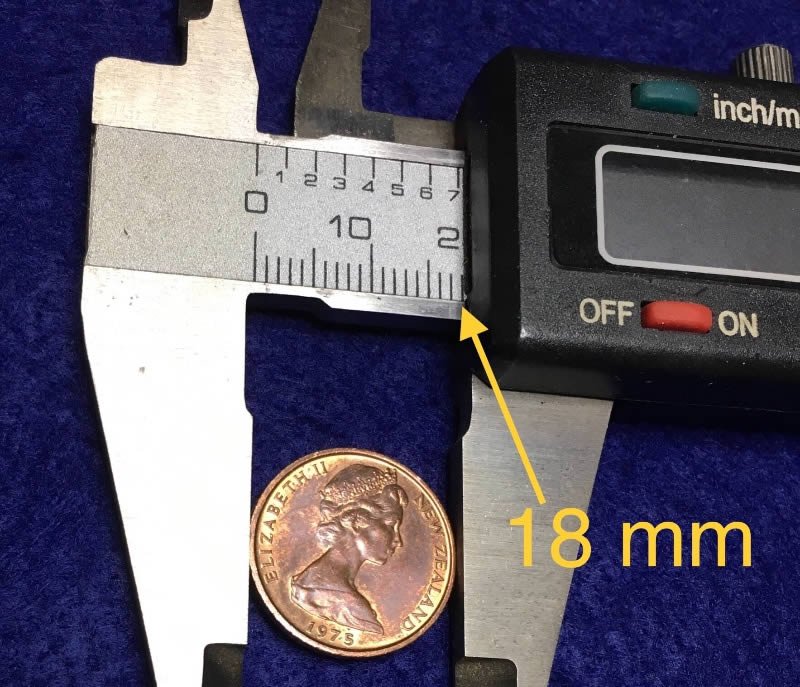
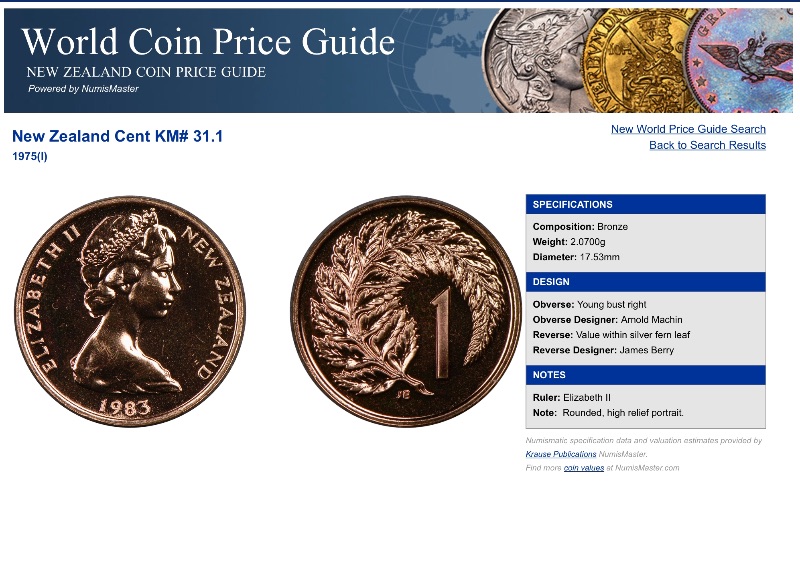
It's incredibly unlikely that a "wrong planchet" just happens to have exactly the same weight as the correct planchet. Magnetic steels have a density somewhere between 7.75 and 8.05 g/cm3; copper (the cent is nearly pure copper) has a density around 8.96 g/cm3. So a steel planchet the same size as a New Zealand cent would be 10% lighter.
Steel is also much harder than copper; a coinage press calibrated for striking bronze coins is not going to make much of an impression on a steel disc.
Solid nickel would be an even worse contender; although the density of nickel is quite close to copper, nickel is much tougher than bronze and would not strike up well at all on a coinage press set up for striking bronze coins. I don't think
The Royal Mint was striking any pure nickel coins in 1975, either.
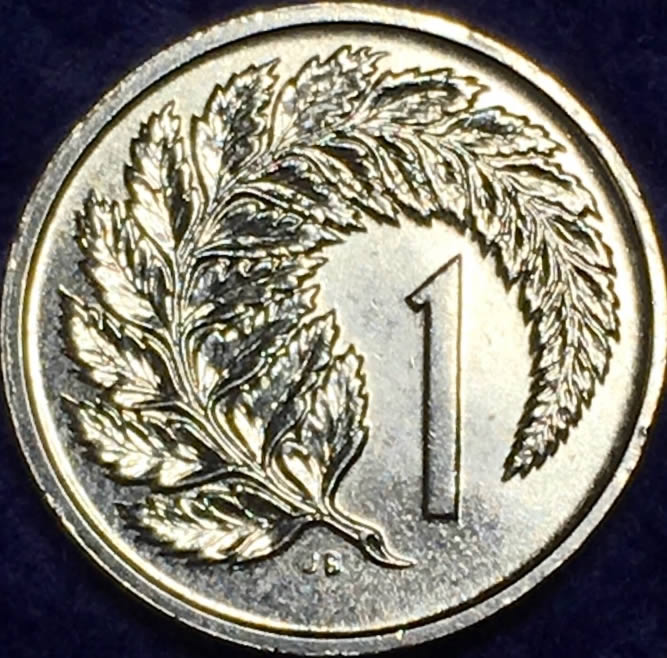
The bright, shiny appearance makes me think it is nickel, rather than steel. Steel would probably be showing signs of oxidation and rust by now, if it had been sitting in a bulk coin lot for years.
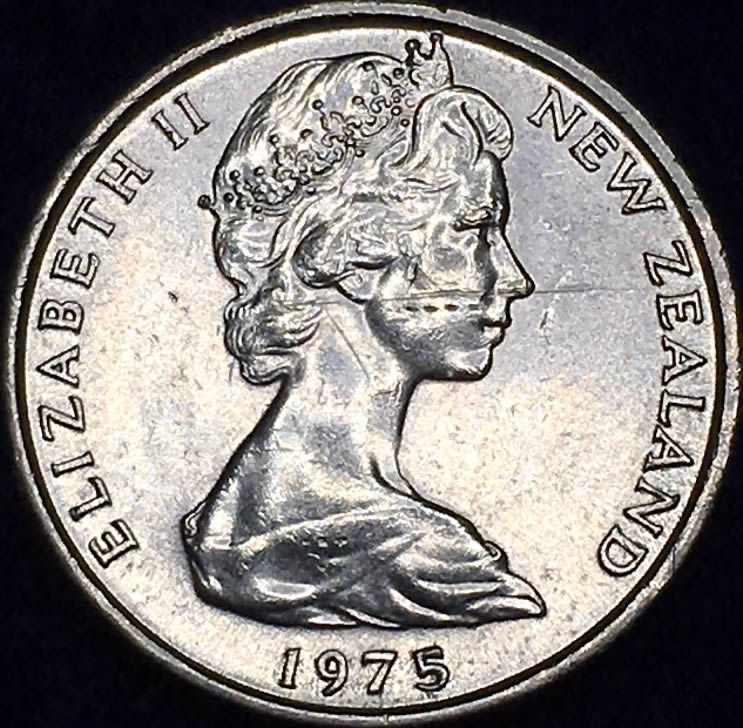
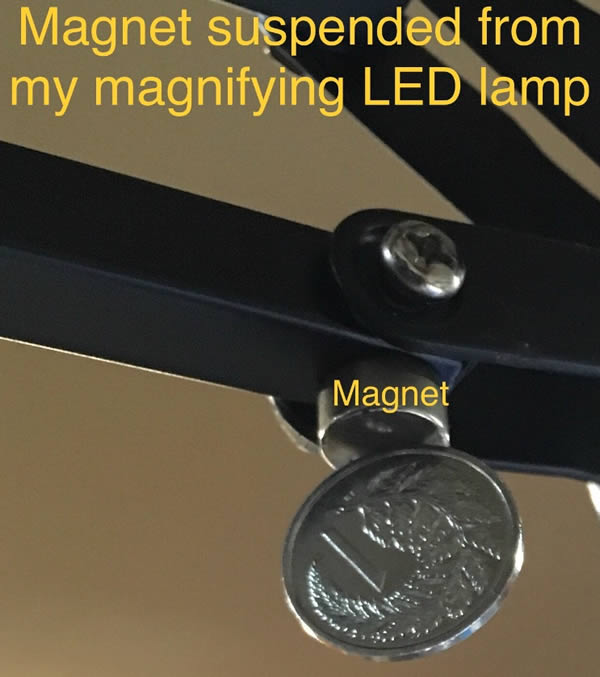
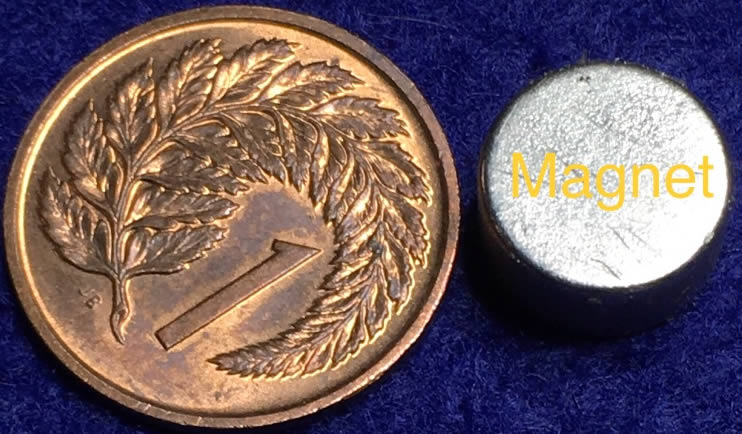
A thin plating of nickel is still the most likely explanation for the magnetism. Your magnet looks like it might be one of those super-strong rare-earth magnets; these are a poor choice for "detecting magnetism" as a great many things not attracted to a normal magnet are attracted to these. Compare how well the coin sticks to the magnet with something else of similar size that you know is made of iron or steel. Ideally you'd also want to compare it with something you know is just nickel-plated bronze.
As for the scratches, well, if the coin were scratched before it was plated, then the metal inside the scratches would be plated, too.
All of this is not saying that a "foreign planchet" is impossible, just improbable; a "plated coin" is still the more probable explanation.
In 1975, I believe
The Royal Mint, London was striking New Zealand circulating coins.
The Royal Mint were striking coins for numerous British and ex-British countries and territories in the 1970s and there are certainly a few multinational mix-ups originating from the London mint and dating from this same time period (like the Canada-NZ mule and the Bahamas-NZ mule).
Don't say "infinitely" when you mean "very"; otherwise, you'll have no word left when you want to talk about something really infinite. - C. S. Lewis












 Posted 11/08/2017 11:06 pm


 It is a curiosity.


