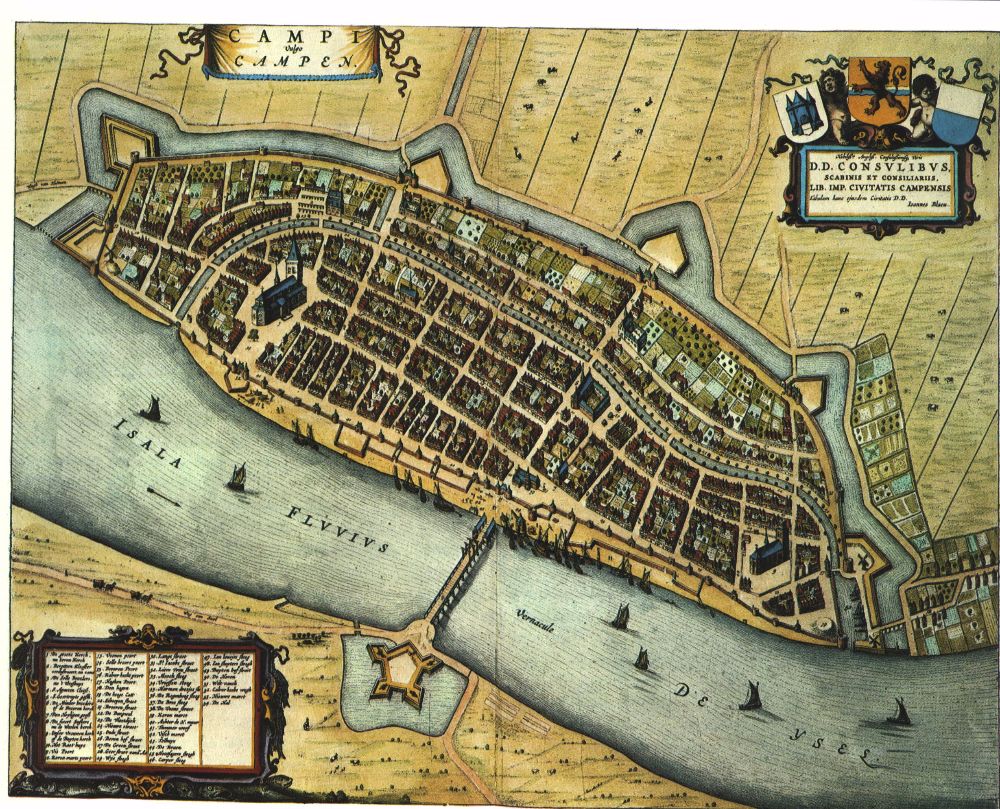
Kampen is a city and municipality in the province of Overijssel, Netherlands. A member of the former Hanseatic League, it is located at the lower reaches of the river IJssel.
Kampen has one of the best preserved old town centres of the Netherlands, including remains of the ancient city wall (of which three gates are still standing) and numerous churches.
Middle Ages
By 1150, there were already wooden buildings on the site where Kampen is currently located. The name Kampen, however, is not mentioned until 1277. The city has had city rights since 1236. As a result of its convenient location on the busy trade route between the Zuiderzee and the Rhine, Kampen quickly developed from simple settlements into a prosperous trading town, to become one of the most powerful and leading cities of northwestern Europe. In the 14th century, Kampen exchanged with the bishop of Utrecht, Jan van Arkel, the Mastenbroek polder against the right to increase the IJsseldelta.
The silting up of the IJssel brought a gradual end to the prosperity of Kampen from 1430 on. For a long time Kampen did not want to sign a union and make economic and political concessions to other cities, as was usual in the Hanseatic League. When the County of Holland went to war with the Hanseatic League this situation came to an end: the city was forced to choose a side in the war. Kampen was originally more oriented toward the Baltic trade and commerce with the hinterland of the Rhine, and therefore in 1441 formally joined the Hanseatic League. The city had much influence in the League; despite loud protests from the other towns in lower reaches of the IJssel and from other Hanseatic cities, the League agreed in 1448 to build a bridge over the river. This project was accomplished in just five months. With this bridge Kampen hoped to be able to develop closer relationships with the hinterland.
On 11 August 1572 Kampen was conquered from the Spaniards by Willem van den Bergh, a brother of William of Orange. After the massacre of Zutphen on 15 November, the city voluntarily surrendered to the Spanish. In 1578, the city changed ownership again after the Siege of Kampen, led by George van Lalaing. Due to its right to increase the IJsseldelta, Kampen was owner of the growing Kampereiland. From 1500 the islands were leased. The rents were so large that the city did not need to raise taxes.
The Franco-Dutch War, fought by the Republic of the United Netherlands against the Kingdom of France, Sweden, the Bishopric of Münster, the Archbishopric of Cologne and the Kingdom of England, marked a definitive end to the enormous power of the city.
Kampen only became well known again in the 19th century. The city was difficult to reach from the sea, because the surrounding wetlands became silted up and shallow. During the preceding centuries, the watercourse of the river IJssel was dredged several times, but the costs were relatively high and within a few years, the river silted up again. As the IJssel had several delta-like mouths here, the main route of the river shifted several times. In the 19th century, a new strategy was put in place to counter this problem: some watercourses were darned to allow for more water at a higher speed through one or two main routes. This had the advantage that less sand and silt were deposited and resulted in a river course that "swept itself clean". A key figure in this story is city architect Nicolaas Plomp, who, besides his work for the current IJssel front of the city of Kampen, was also involved in hydraulic engineering. Due to the emerging industry in the 19th century and the importance of roads and railways for the economy, highways and paved roads were constructed to replace transportation over sand and mud roads.
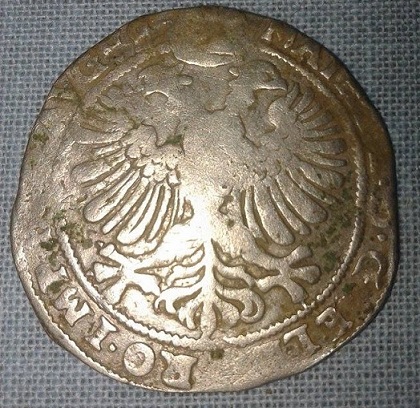
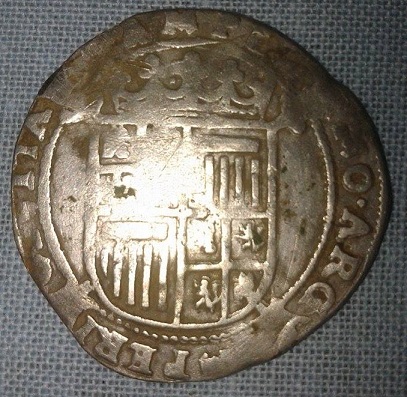
Kampen, Arendschelling without a year Emperor Matthias (1612 - 1619)
Obv: Spanish Royal coat of arms with crown & cross
Legend: MO.ARG.IMPERI. CIVITA.CAMPEN
Rev: Double headed crowned eagle
Legend: MATHI.I.D.G.ELEC. RO.IMP.SEM.AVGV
Mint: Kampen
Diameter: 30mm
Mass: 4 gram







 Posted 11/18/2017 08:30 am





