| Author |
 Replies: 9 / Views: 4,322 Replies: 9 / Views: 4,322 |
|
|
Valued Member
Canada
125 Posts |
Hey All, So recently I discovered I have a bit of a PVC nightmare with my collection (see thread here http://goccf.com/t/300455) and my one and only ancient coin has some light damage to it. I have been told to clean my modern coins with an acetone wash but I was not sure if that was OK to do to an ancient coin. I think the coin I have is Roman from around 330 AD but I cannot confirm that. I was actually hoping to do some research on it which is why I took my collection out and saw the PVC apocalypse. Can anyone shed some light on this for me please? Thanks! |
|
|
|
Moderator
 United States
23731 Posts |
Can you post a picture of the coin?
|
|
Valued Member
 Canada
125 Posts |
I will try and take a picture tonight and post it. Thanks!
|
|
Rest in Peace
10197 Posts |
Sure it is a PVC problem and not a common Bronze Disease? Either one is permanent damage causing and needs to be dealt with. Acetone will remove organic type substances such as plastic/petroleum disorders and may solve your immediate problem. No, iacetone/xylene isn't harmful to ancients, but make sure you research the two different problems before you stop. You may want to rethink your storage...  Edited by Crazyb0
11/16/2017 3:24 pm
|
|
Valued Member
Canada
125 Posts |
Quote:
Sure it is a PVC problem and not a common Bronze Disease? Yes unfortunately. I showed the symptoms on the link I posted in my OP and everyone agrees that is the case. I used cheap holders and sheets when I was young and naive and it mucked up a lot of my collection. It is not just with the Roman coin that it did that. But yes, I am investing in mylar holders and sheets now so this does not happen again! |
|
Moderator
Australia
16985 Posts |
To answer the question: yes, acetone is perfectly safe to use on an ancient coin.
You do not see acetone discussed much on the ancient coin forums, because by and large, it doesn't actually do anything, good or bad, to the surface of an ancient coin. But it will readily remove:
- the "green goo" that forms on coins stored in PVC and similar heavily plasticized coin holders.
- ink and paint. On certain ancient coins that have been in collections for a long time, the previous owners have painted ID numbers on them in ink. Most collectors of ancient coins today appreciate finding this "old provenance" on their coins and do not want to remove it, so be aware, acetone will remove those numbers.
- certain kinds of artificial toning. Some "fake patinas" are painted on using PVA or acryilic resin glue, which will dissolve in acetone. Dellers Darkener and similar petroleum-jelly-based products will also come off. Many people who claim "acetone ruined my coins" actually mean "acetone removed the fake patina I didn't know my coin had".
Don't say "infinitely" when you mean "very"; otherwise, you'll have no word left when you want to talk about something really infinite. - C. S. Lewis
|
|
Valued Member
Canada
125 Posts |
Thanks for the insite Sap :) I really appreciate that. I had no idea that ancient coins had all that on them potentially. I only have the one coin but I have been perusing this part of the forum and think it could be fun to start collecting ancients as 1) I love history and 2) I feel like there is so much more research and potential fun to have collecting these coins. Of course I can't roll hunt for them but that is an OK trade off :D Here are the pics of my coin. I have no idea what it is. On the coin holder I wrote "Constans (Flavius Julius)" but I am not sure why. I suppose I did research once upon a time and figured that was the emperor whose bust adorned this coin. And yes the coin is actually black or at least very close to it. That is how I originally bought it 10 years ago. It weighs between 1 and 2 grams (I only have a scale that can weigh in full grams) and is 1.9 cm in diameter. Anywho, here it is: 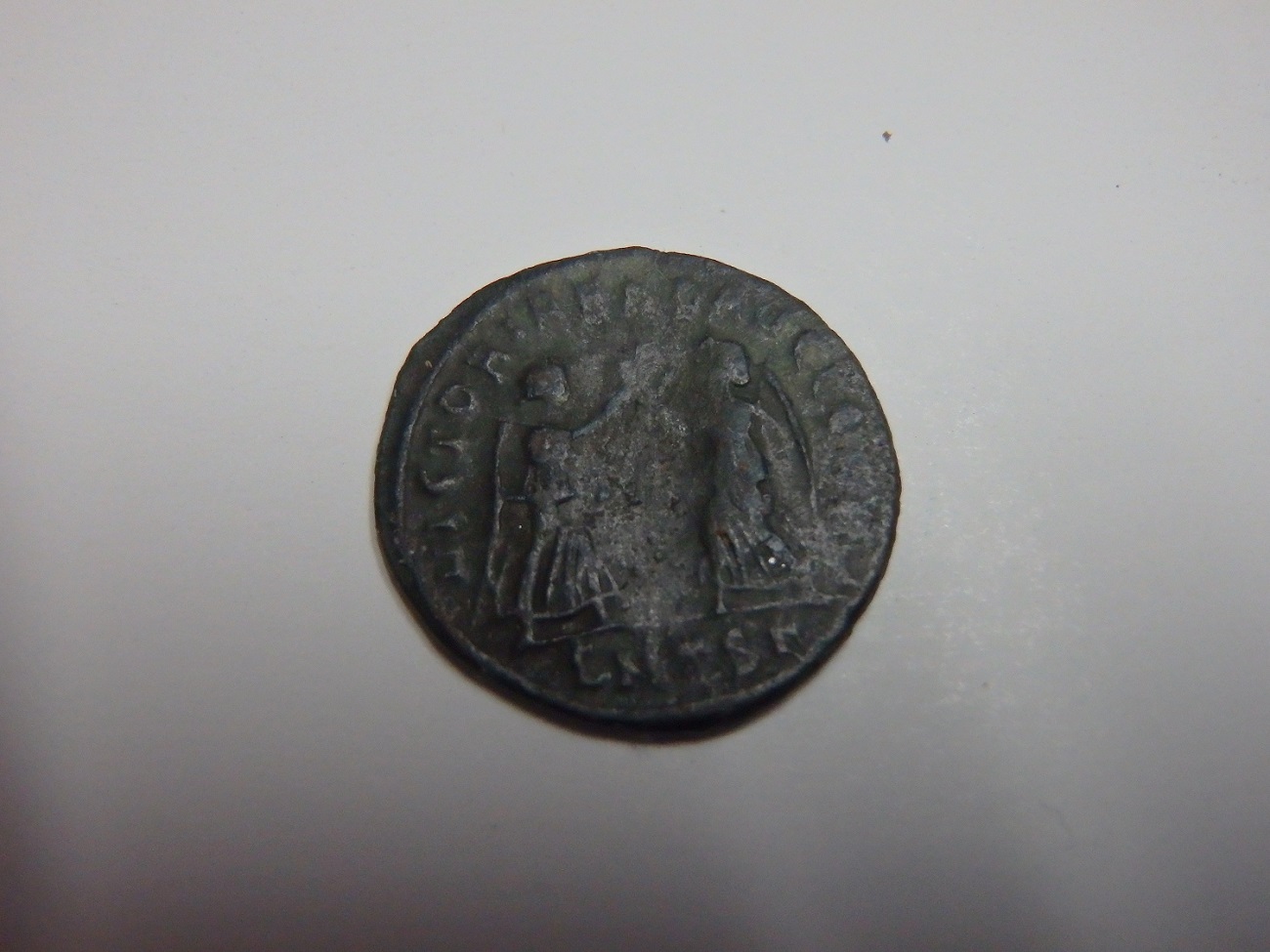 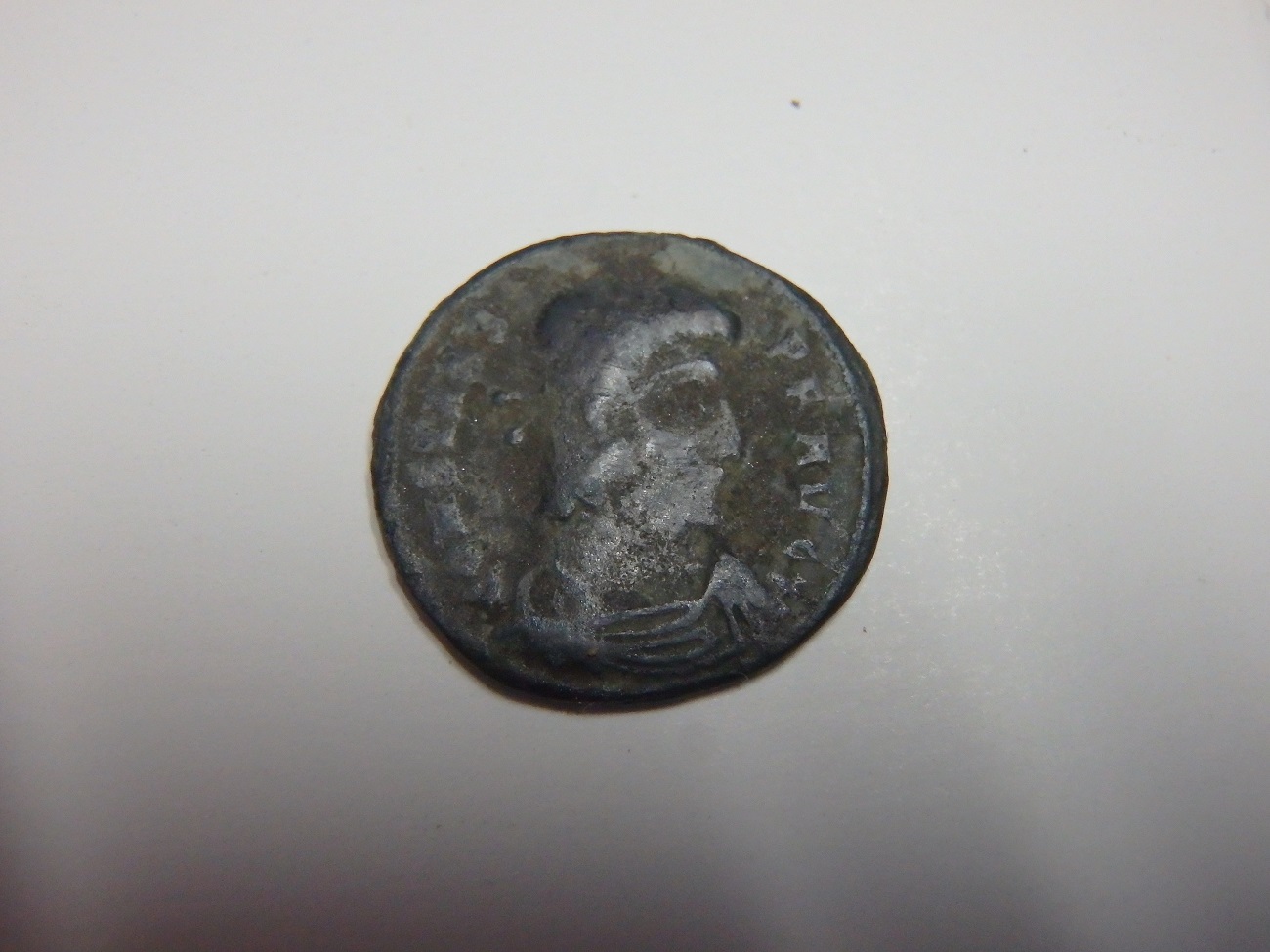 Thanks folks! |
|
Bedrock of the Community
Australia
21789 Posts |
Ancient bronze coins are sometimes protected with RENWAX.
I have even heard of museums using this product.
Besides protecting the coin, it also gives the coin a nice 'patina'.
I assume that Renwax would be easily removed with acetone.
My personal feeling is that I would prefer the keep the protection and appearance, and would be encouraged to keep it that way, for risk that the appearance after cleaning may be disappointing, and protection would be lost.
Somewhat artificial I suppose, but I guess that in certain cases, it is better to not be a purist.
I have used a spray acrylic lacquer on a silver proof coin, then encased it to protect the lacquer.
Acrylic lacquer also easily removed with acetone.
I assume that acrylic lacquer could also be used on ancient coins, but I have never done this.
|
|
Moderator
United States
34542 Posts |
@arvan, I'm so glad that you are considering a move toward collecting ancients. I agree with @sap that a bath in acetone wouldn't harm this coin. Once the PVC residue has been removed, I personally would stop the conservation effort and just keep the coin with this nice dark patina. You could strip it down to bare copper/bronze, but I personally think that looks kinda ugly.
"If you climb a good tree, you get a push."
-----Ghanaian proverb
"The danger we all now face is distinguishing between what is authentic and what is performed."
-----King Adz
|
|
Valued Member
Canada
125 Posts |
Thanks sel and Spence! I am learning more and more from you folks :D
I think the hardest challenge with collecting ancients will be identification and learning how information is laid out on them. There are so many different formatting styles and abbreviations to learn! My head was spinning looking at a few forum posts haha.
Thanks again for your help and encouragement!
|
| |
Replies: 9 / Views: 4,322 |
|







 Posted 11/16/2017 3:10 pm





