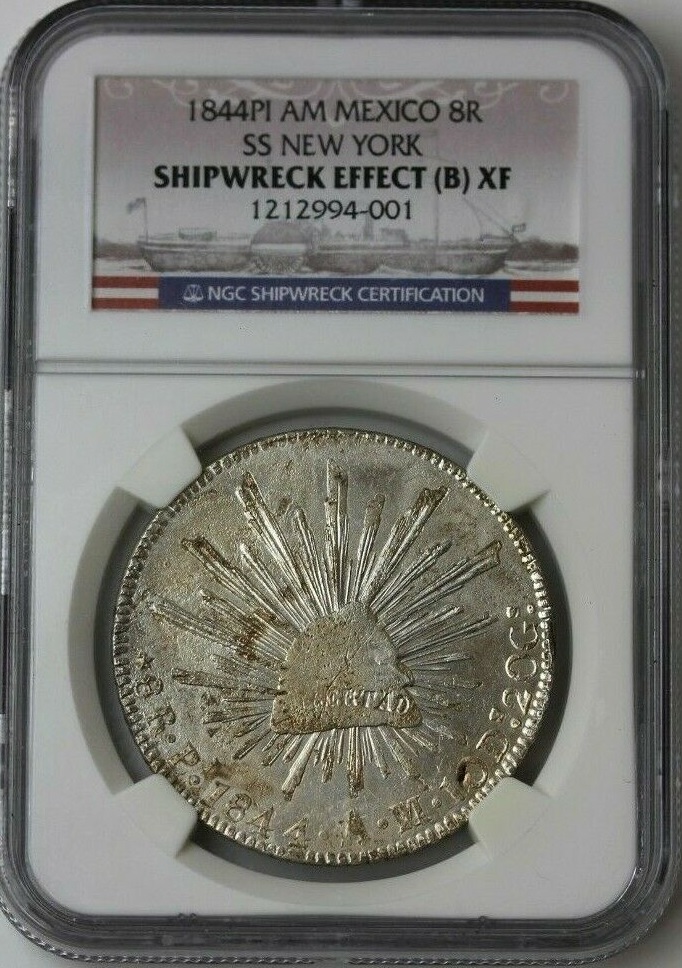
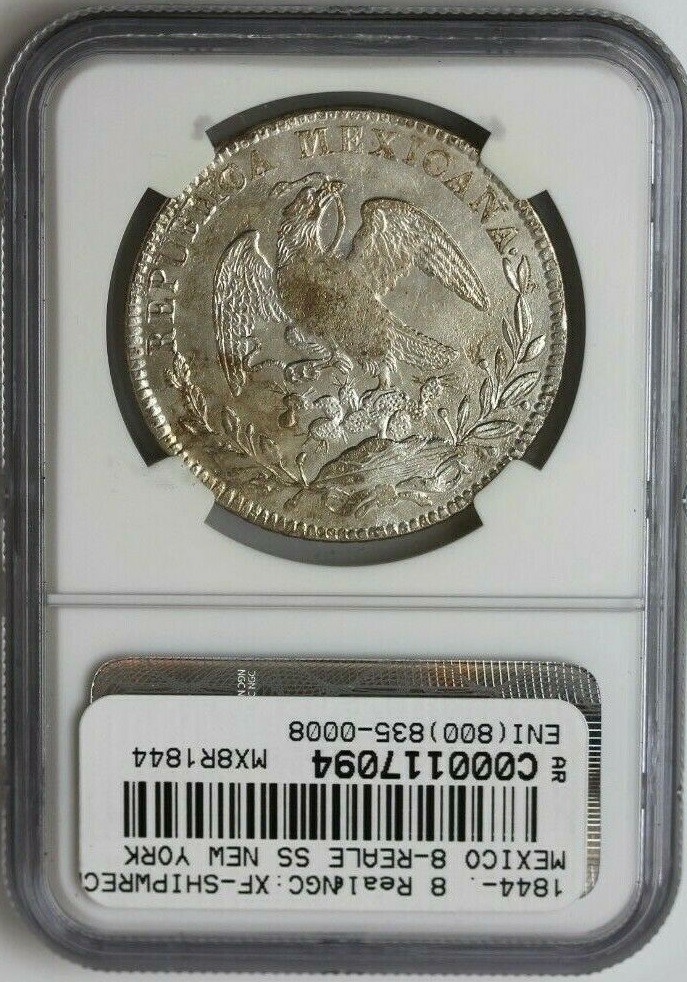
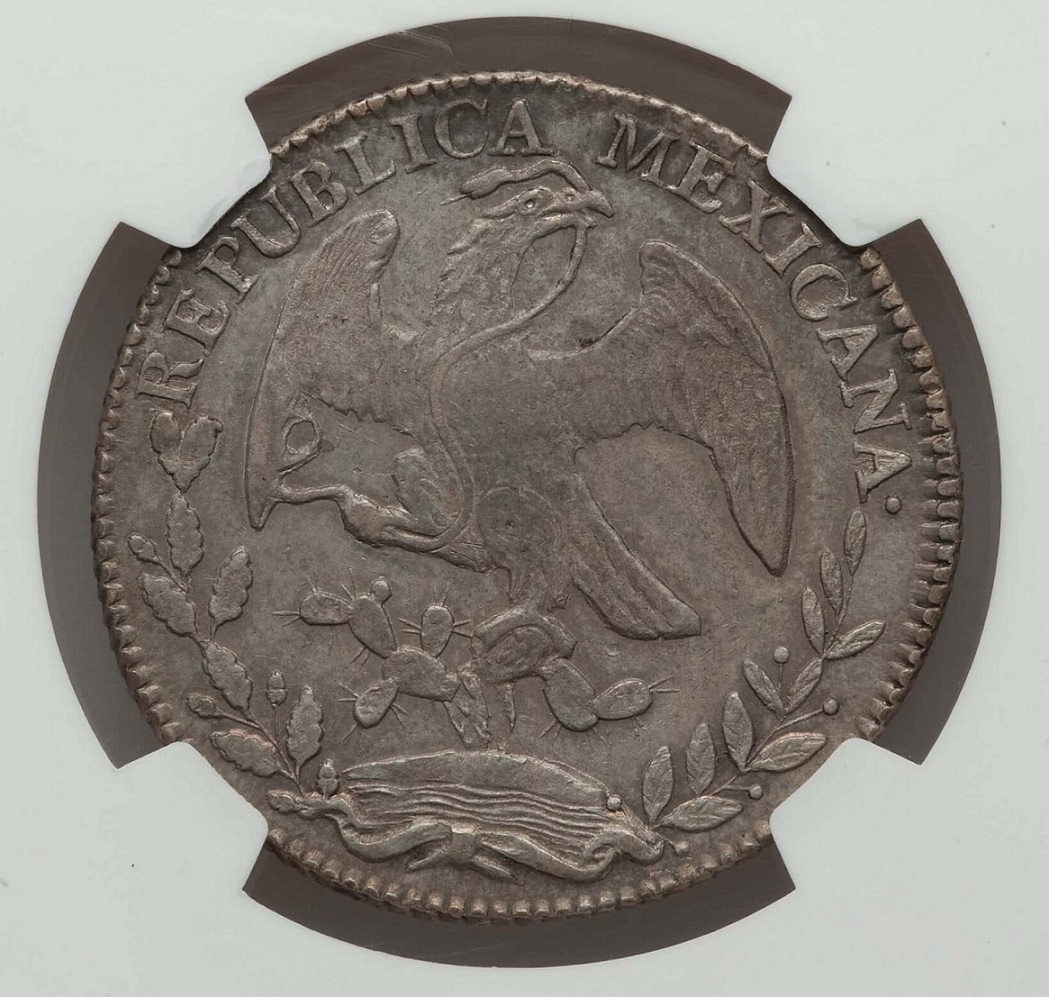
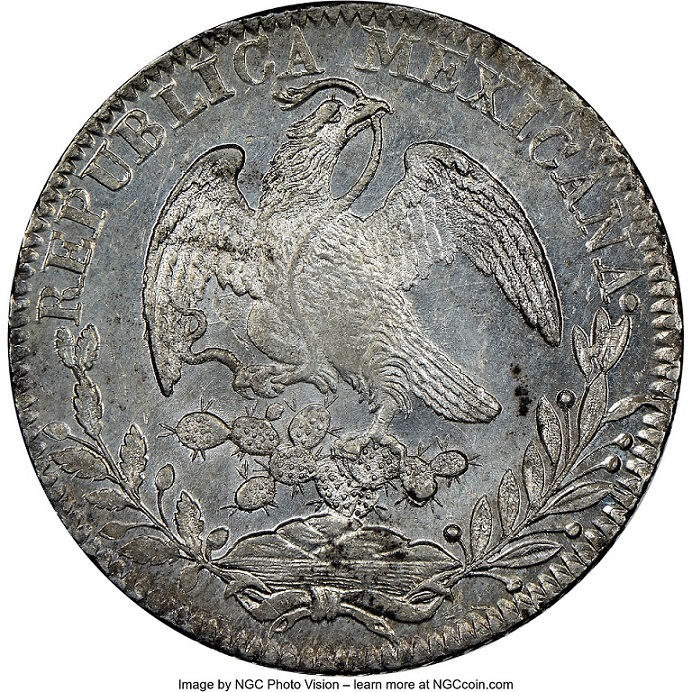
When discussion of rates of counterfeits in circulation in various eras - the thing we must look for is "contemporary data". For the period of the US Hard Times there is a unique resource in this regard, the "Monograph of the Silver Dollar, Good and Bad" by John L. Riddell the melter and refiner of the New Orleans mint.
The statistics Riddell employed are rough estimates based on his experience. He indicated that
MORE THAN 90 % of silver
DOLLARS in circulation bear the
MEXICAN stamp.
I emphasize three points that are at times overlooked or misunderstood by the casual reader. The facts are:
1. The 90% figure was a bottom limit to his estimate.
2. He was referring to Dollar coins ONLY.
3. He was referring to MEXICAN 8 reales - the Cap and Ray variety only.
The third point may be debatable, however, I am of the opinion that Riddell used his terminology more specifically in relation to origins than do we. He placed Colonial Dollars in distinct sections of his book and his terms for Royal issues are distinctly different (Hispano-Mexican) than those for First Empire and Republican issues (Mexican). I am of the opinion that the rebel issues cast or struck during the period of the War for Independence are treated as Mexican dollars.
In an earlier thread I began discussing the use of datable hoards and wrecks as a way of checking "roughly" the rates of counterfeit coins then in circulation. The suggestion that shipments of dollars from a bank would tend to contain fewer counterfeits than was experienced in local circulation was made. I would agree in general with that statement and advise that it would necessarily be a lower limit.
Because of my focus on Mexican Cap and Ray 8 reales, I selected the wreck of the SS New York in 1846. I did this for a few different reasons:
1. The wreck happened in 1846 which is only one year after Riddell's publication. I thought that similar timing would contribute to scientifically valid test because any results could be compared with what Riddell's book said. If they were in the same ball park the theory would be supported and if the results were way off - it would mean the theory needed to be revised (perhaps abandoned).
2. The vessel was a steam packet that traveled routinely between Galveston and New Orleans - so we are dealing with a similar location. A shipment from New Orleans would be perfect since that was the local area used by Riddell. Historical records could be used to ascertain the point of origin.
3. The coins recovered from the wreck were reported to contain a distribution that included US, French, Netherlands, Prussian, Colombian and Spanish issues. This too could be recovered from the salvers.
So I started researching the wreck. I confirmed the fact that the ship routinely operated on a weekly schedule between Galveston and New Orleans. I also confirmed that the vessel set sail from Galveston. So it was a return run to New Orleans. This effectively eliminates part of the "scrubbing rate" that could be attributed to the US mint and metropolitan banks. I view the wreck contents as more representative of rates of counterfeits in general circulation than a trip made in the opposite direction.
From this point on my research was very disappointing. The only published list of coins recovered from the wreck seems to be for the gold coins. There rather complete statistics were documented including individual identification and even grading data. There were 15 issuing entities involved and about 400 coins in total. There was an estimate of "about 4,000 silver coins" but few details.
I contacted the salvers and no reply was received. There online site has no data. Next I contacted the firm chosen to handle the coins initially. No luck there either. I did discover that many of the silver coins were in very low grades and many were encased in Lucite along with other recovered items. No estimate of the number was available.
The coins sold as numismatic items were all certified by NGC, so I contacted them. No individual photographs of the coins were made and NO LIST was available. Some undated and non-attributable coins were encapsulated. So how many coins did NGC encapsulate ? Very disappointing.
Most of the earliest sales of the coins were performed by Stack's and Bowers so I found those records on line. Unfortunately only the coins were photographed - not the NGC grading capsules.
So I turned to sales by Heritage,
ebay, Sixbid and other venues. Here I found some valuable data and for many cases clear pictures.
If you are familiar with NGC you will know that the number assigned to a certification has two parts. The first 7 digits are an invoice number and the last 3 are a coin by coin listing from line on the invoice. Using that knowledge, I started a spreadsheet of coins that have appeared in sales in photos. I discovered in a few days that there were dozens of invoices with up to 123 individual coins listed on an invoice. They do seem to be grouped into clusters. Gold coins appear on distinct invoices from silver.
US coins are not mixed with world coins. Mexican coins appear to be on distinct invoices. Within Mexican invoices there appears to be few mixed denominations or varieties. Portrait coins seem to appear on their own invoices, Cap and Ray on another group.
I am still working at determining a complete list but I focus interest on Mexican Cap and Ray 8 reales.
Once I have a number I can go to the NGC website and confirm the designation. Say I have line #036 on an invoice. I next look at the same invoice # 001. If both items are Mexican C&R 8Rs can we assume that all 36 coins are the same type. Unfortunately NGC does not allow unlimited access to their confirmation data base. Usually you get 8-10 tries then you lock out. VERY FRUSTRATING. I have asked them directly for a list as I asked for photos but have gotten no reply as of yet.
My project so far has discovered 102 individual certification numbers. These coins have photos in all but one case. Assuming that there are no blank lines on the invoices - I estimated that an invoice with a line number of 110 or 6 would have no fewer than that number of coins. This number produced a likely inventory of a minimum of 1,418 coins.
I believe based on a trail and error test that the Mexican Cap & Ray 8Rs can be estimated by using a block approach. I start by checking coin 001 from each invoice, then check 025, 050, 075, 100 etc. Once I get a NO RETURN - I take the last number with associated data and add 10 so 075, 085, 095 and then "wiggle in" to find the last entry. If all of the intermediate points identify C&R 8Rs - I believe it is safe to assume the coins in between are the same.
So far I have verified just two invoices completely (due to NGC limits).
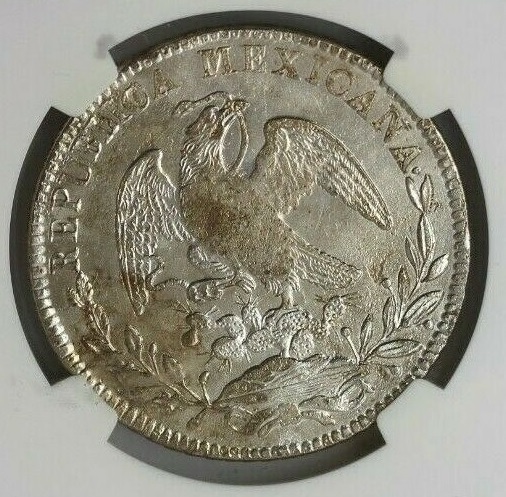
I have reached a point where I can state as fact that I have reviewed 35 C&R 8Rs from their photographs, 2 are counterfeit coins listed in Riddell's book. I purchased one of the two. I estimate a minimum of 285 C&R 8Rs were on the invoices.
So with 12% of the number reviewed, the rate of counterfeits is 5.7%. This is very preliminary of course.
Anyone who can think of a better method or may have an inside contact at NGC let me know.










 Posted 11/17/2017 01:43 am