| Author |
 Replies: 17 / Views: 5,177 Replies: 17 / Views: 5,177 |
|
New Member
Bulgaria
7 Posts |
Hello, I registered in this forum trying to find any information about a coin I found at home. I understand that it's an Austro-Hungarian 4 Gold Ducat from 1913 but what is this little thing looking like a crown next to the (4), was it added later, does it mean something? I did not find this on any other 1913 ducat image on the internet? 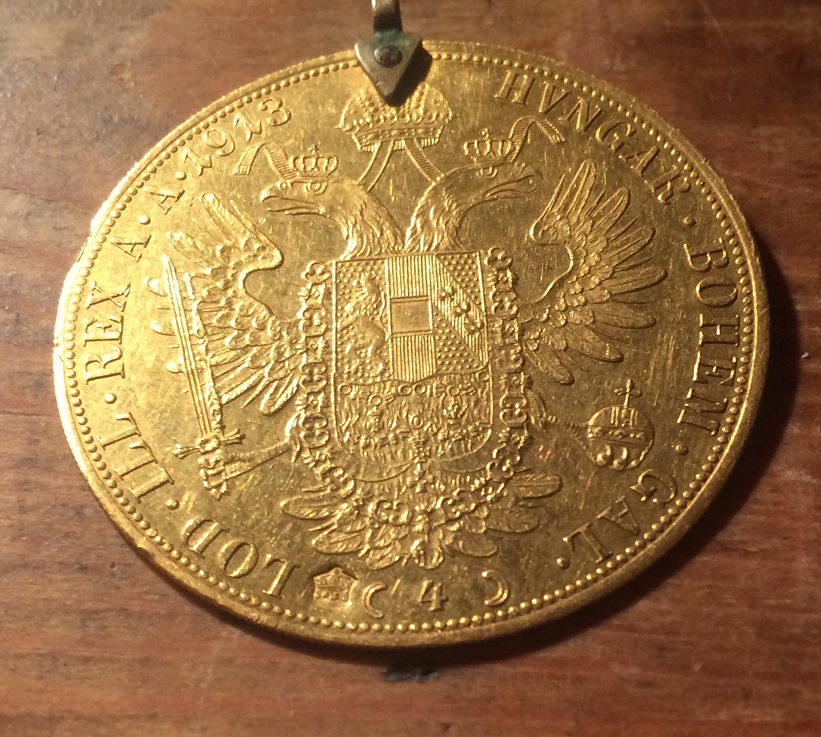 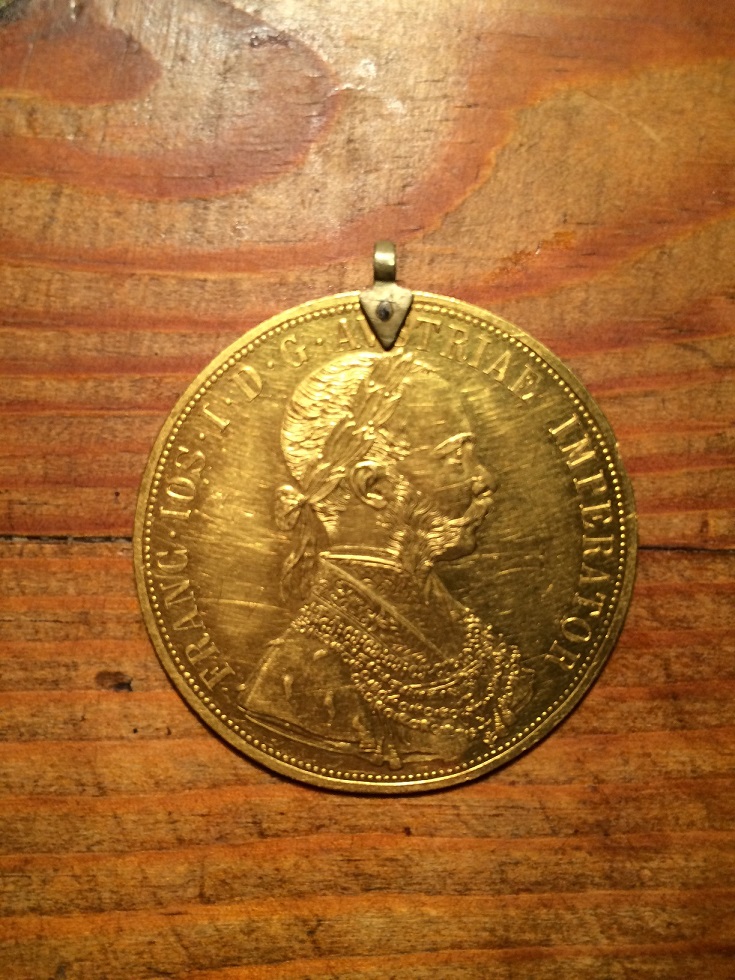 *** Moved by Staff to a more appropriate forum. *** *** Moved by Staff to a more appropriate forum. ***Edited by draxter
11/19/2017 6:29 pm
|
|
|
|
Bedrock of the Community
Australia
21789 Posts |
I am definitely NOT an expert with these, but I suspect that it may be a jeweler's copy, but almost certainly in good quality gold.
Compare with Google Images of
'Austria 4 ducats coin', looking for minor design detail differences.
Many genuine gold 4 ducats coins found their way into neck pendant bezels.
Genuine examples weigh 13.96 grams and I expect that this one may well weigh within a half gram of that.
The counter stamp is most probably of jeweler origin.
That is perhaps why details of the counter stamp are difficult to find on a coin related site.
Have a close look at the counter stamp, with a 10x loupe, and tell us what you find.
|
|
Pillar of the Community
United Kingdom
2139 Posts |
Please post the highest resolution photo of just the counterstamp.
|
|
New Member
 Bulgaria
7 Posts |
Thank you for the answers.This is the best pic of the counterstamp that I was able to make. It is definitely a crown and there are two letters/digits bellow but I cannot identify them. 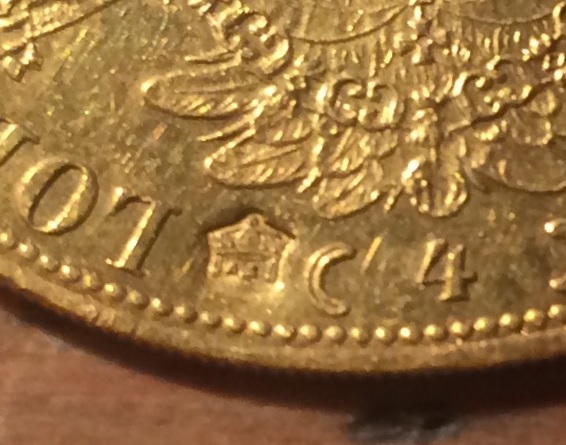 |
|
Moderator
 United States
195203 Posts |
 to the Community! |
|
Pillar of the Community
United States
5362 Posts |
The crown on the counterstamp is Hungarian seen on the minor coinage of the Kingdom dated prior to WWI.
The stamp may be a proofing mark and in my opinion that might make this one of the numerous bullion gold coins created in the 1950-1965 time frame for export to the US, These were produced to evade the restrictions on the import of gold following 1933. Most of these forgeries were 999 fine gold and were intended for use as raw materials for jewelers in the US. The details were usually sometimes weaker than normal and there were often small errors in the design as the result of the transfer process.
Since the coin was mounted in jewelry and likely has a hole or damage under the clasp as well as edge damage. This one is a bullion value item whether or not it is a replica.
|
|
Bedrock of the Community
Australia
21789 Posts |
I agree with Swamperbob.
I didn't know about what was done to get around post 1933 import restrictions. Interesting.
When I first saw the OP's pictures, I was immediately suspicious about fake.
Equally, it does not surprise me one little bit that it may me of .999 pure gold = 'jeweler's copy'. XRF should confirm.
Most bullion dealers and gold buyers have hand held XRF instruments.
|
|
New Member
Bulgaria
7 Posts |
Thank you all for the answers. Is there any image of another coin with a similar counterstamp? This crown doesn't look typically Hungarian to me.The Hungarian crown is usually depicted with a cross on top, slightly tilted to the left. Some people of my family used to work in Austria-Hungary a century ago so it is more likely that the coin was brought by them. I doubt that many coins minted in the 50s for export to the U.S could have ended up in Bulgaria. However, I understand that this one has close to no numismatic value so I am going to sell it to a bullion dealer. 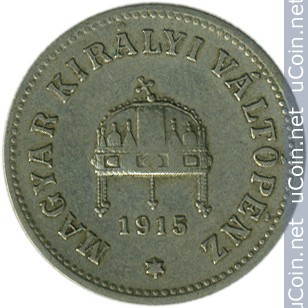 |
|
Pillar of the Community
United States
5362 Posts |
That crown you pictured is exactly the depiction of the crown that I thought was being used. The punch is kind of small to see it the cross tips. The main elements however do correspond.
|
|
Moderator
United States
34541 Posts |
Fascinating thread for me to read and learn. Thanks @draxter for posting this!
"If you climb a good tree, you get a push."
-----Ghanaian proverb
"The danger we all now face is distinguishing between what is authentic and what is performed."
-----King Adz
|
|
New Member
Bulgaria
7 Posts |
I went to sell the coin to a jeweller and he told me that the counterstamp is from the Kingdom of Bulgaria and says A1 which means that the coin is made out of 22 karat gold.
|
|
Bedrock of the Community
Canada
24885 Posts |
To the Forum. |
|
Pillar of the Community
United States
5362 Posts |
Was the jeweler able to supply a source for the information that he gave you? I am not aware of an "A1" gold classification. In about 1880, Bulgaria adopted the principles of the LMU (Latin Monetary Union) to match the European standards and they used that standard into WWI. It involved defacto bi-mentalism where silver was used internally but gold was used internationally.
There is no mention of a method of classification using terms like A1 that I could locate.
22K gold (917 fine) is significantly lower in gold content than the standard for the originals (986 fine) and further below the 999 fine standard for most jewelry counterfeits.
So did the jeweler indicate why such a copy coin was manufactured? Was it a circulating counterfeit?
I suspect, because I am always suspicious, that it might be simply a convenient story that he made up to lower the buy price by 7 or 8%.
Bob
|
|
New Member
Bulgaria
7 Posts |
Yes he was, he showed me a book where it was clearly explained. According to the jeweller, this is not a counterfeit or a copy but a coin minted in Austria-Hungary which got the A1 stamp when imported in Bulgaria. The weight when we removed the brass ring was 13.91 grams which is close to the original weight, probably few milligrams were lost due to the coin being pierced and slightly worn off. 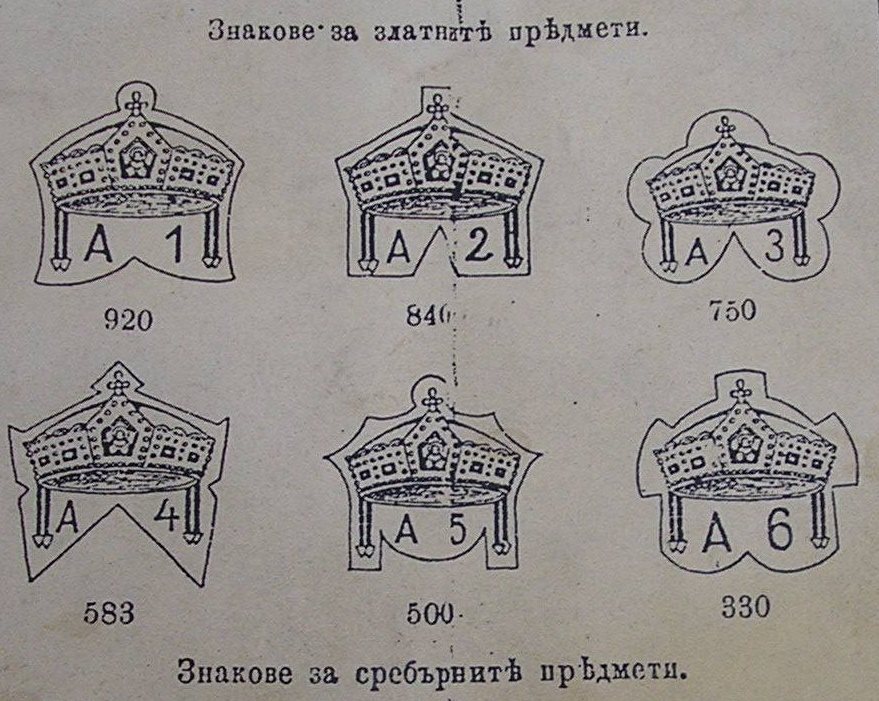 Edited by draxter
11/23/2017 07:03 am
|
|
Moderator
United States
54297 Posts |
Wonderful reference material!
I find it interesting there is no .900 or .925.
Edited by nss-52
11/23/2017 09:15 am
|
|
Valued Member
United States
264 Posts |
I am intrigued by this. While I don't doubt the veracity of the jeweler's book, I wonder if there may be another interpretation.
Krause states the gold content of a genuine coin at 0.986 fine gold. While it would not be the first time that immense catalog had a minor error, 0.920 is not a common purity for coins.
I notice that on the pageof the jeweler's book it shows several stamps with corresponding purity numbers. It is worth noting that A1 at 0.920 is the highest purity available to that marking system. I see no stamp listed for anything above 0.920. How would the jeweler mark higher purity gold?
Considering the two facts above, is it possible that the jeweler's mark was originally intended to indicate the coin was _at least_ 0.920 pure?
If anyone has further information I would be interested in learning more.
|
| |
Replies: 17 / Views: 5,177 |





 Posted 11/19/2017 9:17 pm





