| Author |
 Replies: 5,980 / Views: 455,925 Replies: 5,980 / Views: 455,925 |
|
|
|
Pillar of the Community
 United States
5029 Posts |
Great info guys. Now TNG you need the 400 year Jamestown anniversary as well - unless of course you posted that earlier. The Queen visited that year to commemorate the event as well (she also came in 1957 for the 350th)
|
|
CCF Master Historian of Commemorative Coins
United States
12554 Posts |
Collecting history one coin or medal at a time! (c) commems. All rights reserved.
|
|
Bedrock of the Community
 United States
10284 Posts |
Dee-licious!  Thanks for posting commems |
|
Pillar of the Community
Belgium
1185 Posts |
great to see the different emissions come together in this thread  |
|
Pillar of the Community
Canada
5290 Posts |
@commems, those are great looking medals.
|
|
Pillar of the Community
Canada
5290 Posts |
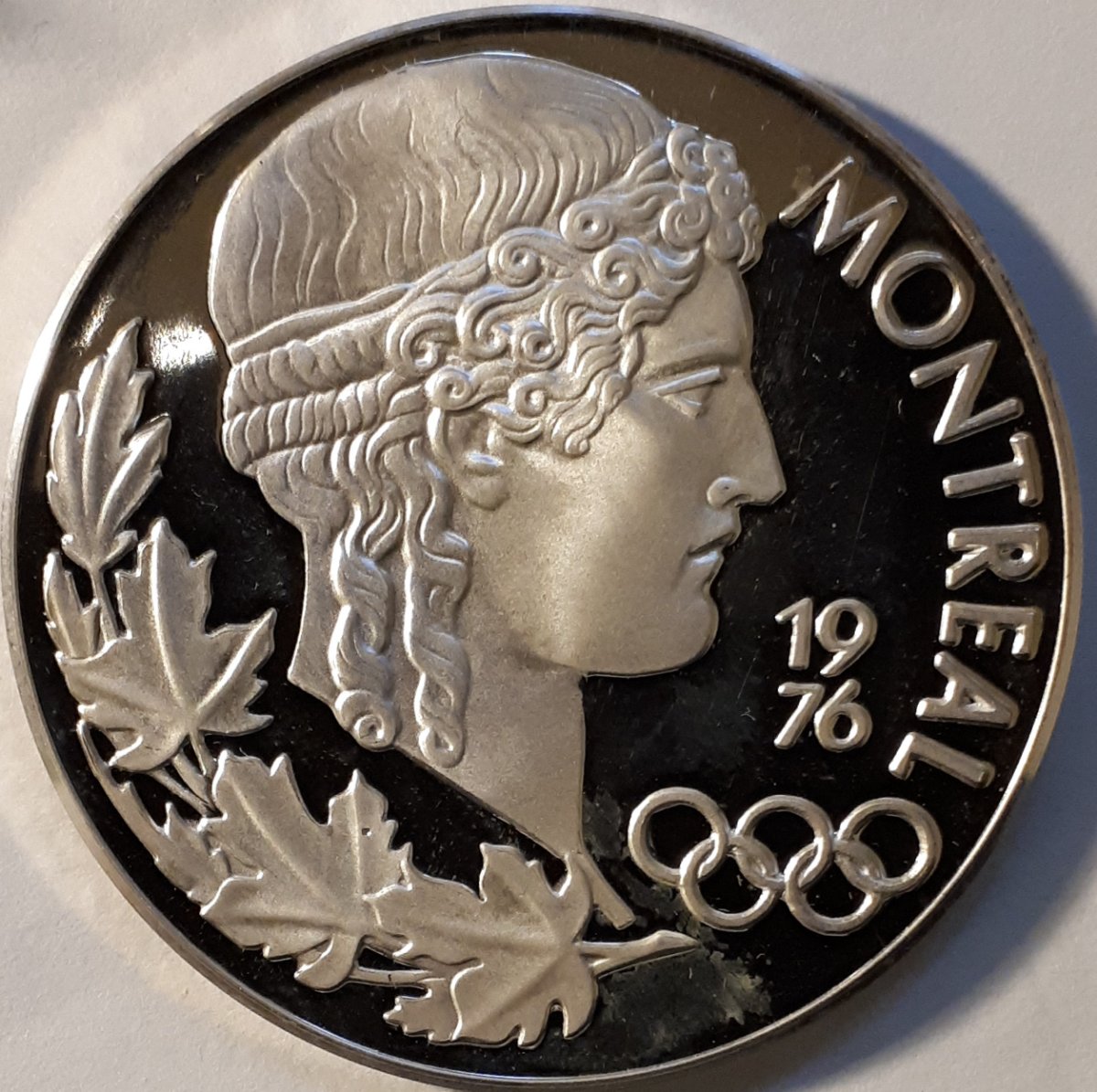 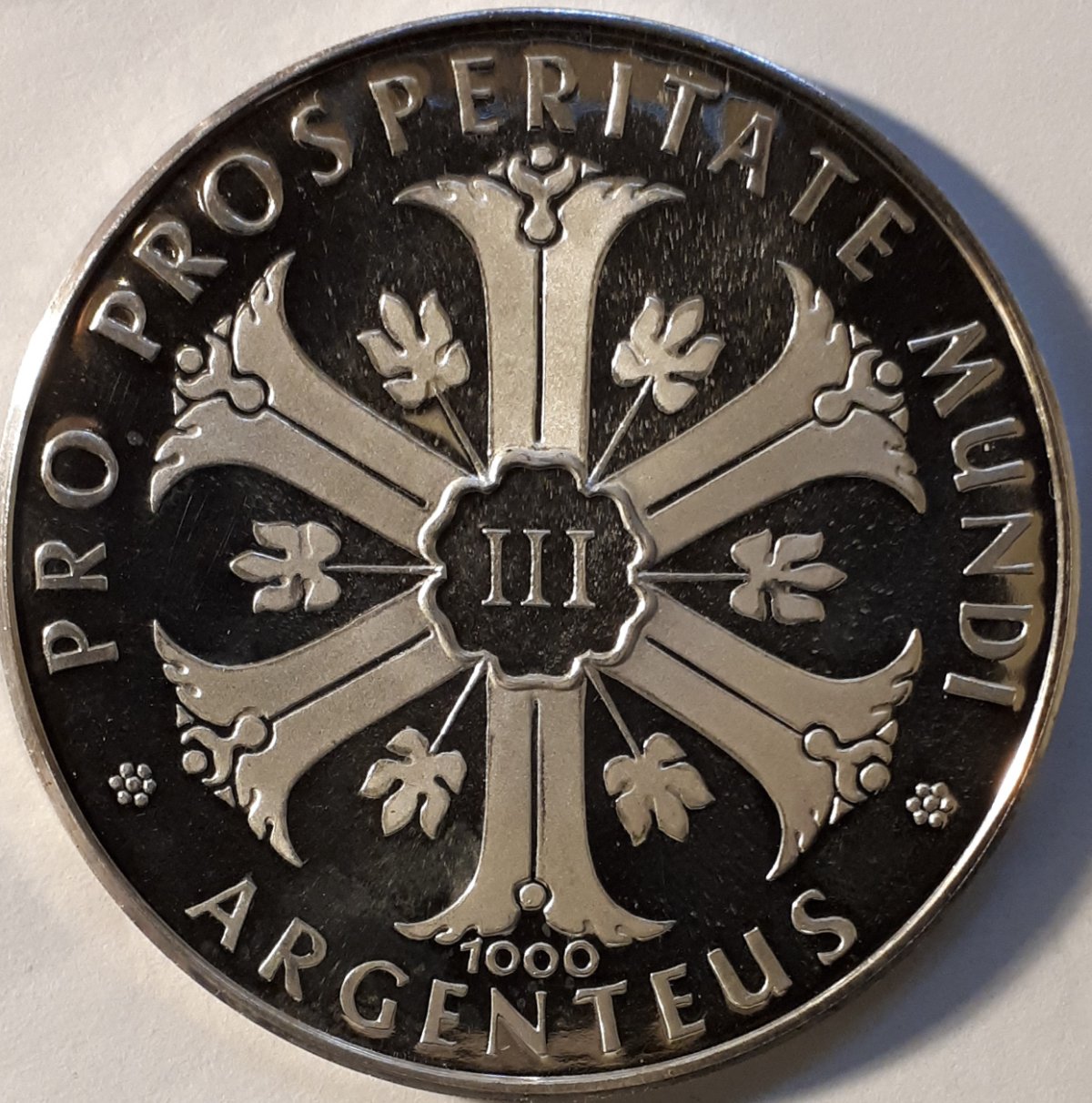 I just got this today at our local Coin show. The dealer said that he used to deal a lot in Olympic medals in 1976 and had never seen this. He also said that it was made in Austria. At 1.000 silver it wasn't much over bullion. It is large:50 mm in diameter and 1.44 oz ASW Edited by oriole
09/09/2018 7:16 pm
|
|
Bedrock of the Community
United States
10284 Posts |
oriole nice one. I've never seen one before either. But I found this sold listing. 142834384688 Thanks for the post. |
|
CCF Master Historian of Commemorative Coins
United States
12554 Posts |
The Argenteus silver piece shown above was the work of Werner Graul of Munich, Germany. He was a medalist who had a dream of creating an international currency of gold and silver. He began by creating gold medals that he called "Aureus Magnus" in the mid-1950s. A few years later, he added silver medals to his "product" line and called them "Argenteus." Pieces were issued from 1955 to 1981. Twenty years or so ago, while going through back issues of the American Numismatic Association's The Numismatist magazine from the 1960s and '70s, I came across ads for his silver medals. He described them as "The first and unique attempt to establish an International Coinage." He used the "Aureus Magnus" names for his business. I was always intrigued by the silver pieces, but not enough to seek them out. The silver medals were struck as proof pieces using 0.999 fine silver planchets. They were available in 15 gram and 45 gram sizes; they were termed "single" and "triple," respectively. I pulled out a magazine from 1969 and found the "single" pieces were being sold for $5.00 and the "triple" pieces for $10.00; discounts were offered for multi-piece orders of either size. The obverse changed from issue to issue, but a common reverse was used across issues. The design is a cross of six lilies. The inscription "Pro Prosperitate Mundi" translates as "For the Prosperity of the World." As I was typing up this response, I got curious and searched the internet for "Aureus Magnus." Sure enough, there is web site dedicated to these pieces. You can access it hear: http://www.aureus-magnus.com/. It's in German, but Google's translate feature works well on the site. @oriole: Thanks for sharing the image - it's the first time I've seen one other than those shown in the various ads I've read. Collecting history one coin or medal at a time! (c) commems. All rights reserved.
|
|
Bedrock of the Community
United States
10284 Posts |
commems! |
|
Pillar of the Community
United States
5029 Posts |
Great info commems. |
|
Moderator
United States
195559 Posts |
Quote:
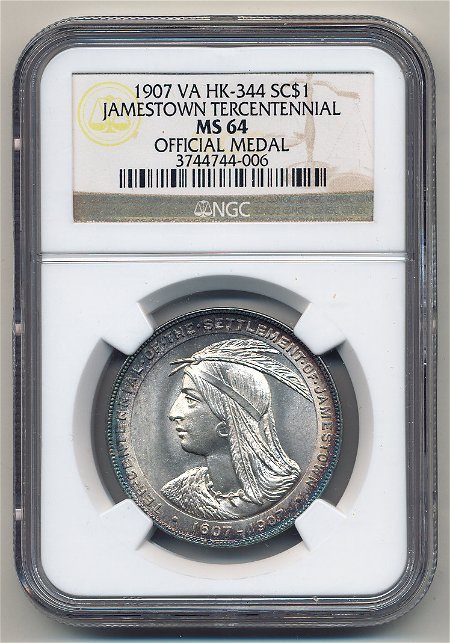
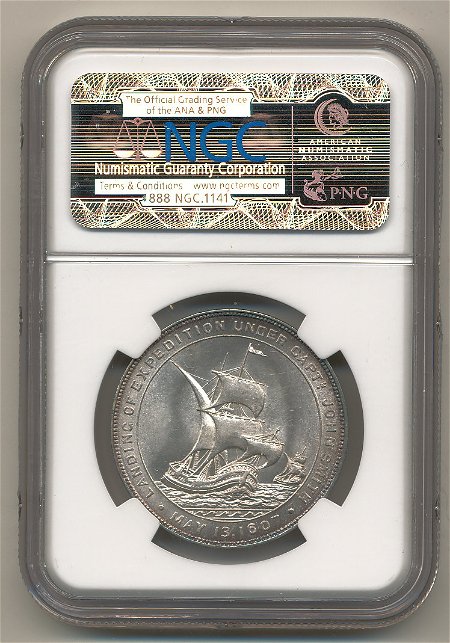
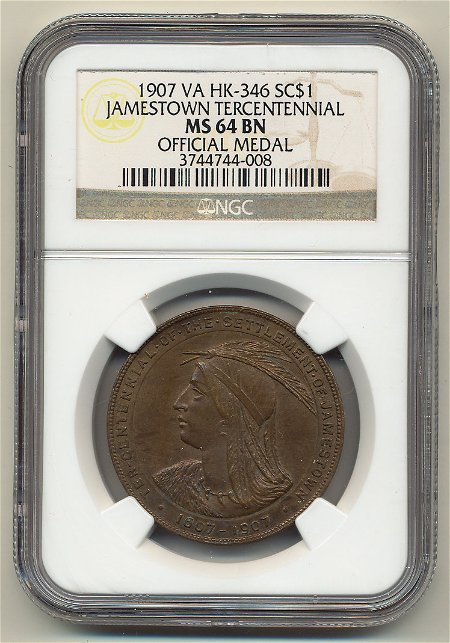
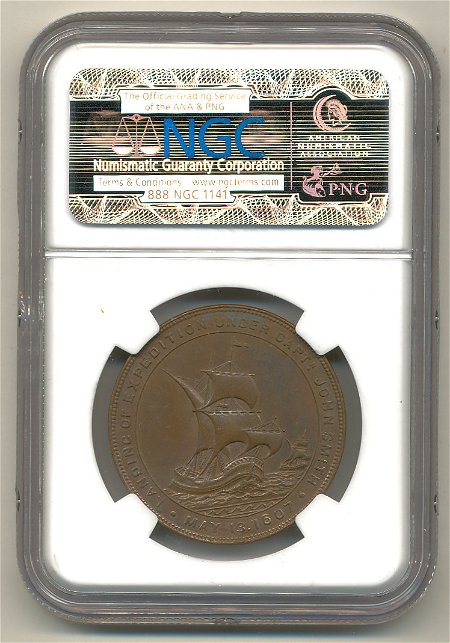
Here are two of my other Jamestown SCDs - a silver and a bronze. (I also have the silver-plated version, but don't have an image of it.) They match well with my gilt version shown above. Very nice! |
|
Pillar of the Community
Canada
5290 Posts |
@commems, I will save your write up and put it with the medals. So that is what the III means. I also got the "I" piece which is identical aside from the size and the Roman numeral "I". The dealer thought that there was a "II" piece but it appears that there was not.
As a side note, I posted this just out of general interest, not specifically looking for more information.
But there is so much knowledge here, there is a good chance that somebody knows quite a bit more, which was certainly the case here.
Edited by oriole
09/10/2018 6:10 pm
|
|
Bedrock of the Community
United States
10284 Posts |
Finished a set of 4 medals 1969 Medallic Art California Bicentennial
( images will be updated better at some point )
There was no way I was going to pay for the large California Bicentennial .999 silver medal at prices people were asking over the past year. I needed this one to complete a set of 4 medals. Most had spots and rubs I have seen and generally were fetching over 100.00 up to 125.00.  I wasn't going to post this until I had a tracking number. I just got that. So they are on the way. I had to buy two large medals in one lot and that leaves me with a large duplicate bronze. Both of which will have the original box. These are the same medals, obverse and reverse, although the top image is further away from the camera.  But I couldn't pass this up today without making a rather lowball offer. It is nicer than most I have seen and matches my others in condition. According to my calculations I bought it shipped at $16.44 per troy oz .999. And that is about as cheap as you'll get pure silver these days, plus I figure I got a free large bronze in the deal. I'm kinda gloating about this one.  More silver and finished a set.  Edited by TNG
09/12/2018 1:56 pm
|
|
Moderator
United States
195559 Posts |
Quote:
Finished a set of 4 medals
1969 Medallic Art California Bicentennial Excellent! |
|
Bedrock of the Community
United States
37102 Posts |
|
| |
Replies: 5,980 / Views: 455,925 |








 First Page
 Previous Page


 Posted 09/09/2018 1:10 pm