| Author |
 Replies: 9 / Views: 2,558 Replies: 9 / Views: 2,558 |
|
|
New Member
United States
12 Posts |
My friend just bought this piece of eight off ebay, but not sure it is real or contemporary counterfeit or modern repoduction. I helped him out by weighting the coin, magnetic slide, ring test, visual inspect the edge. It shows to be made of silver. The SG test also comes out to be 10.29 ( coin weight is 26.57, weight underwater 2.58 ). Hope my cheapie scale result is not too big different with the real weight, lol.... Since I'm also a newbie to coin collecting, I wasn't sure either. Any expert here can identify this ? Thanks a lot in advance. 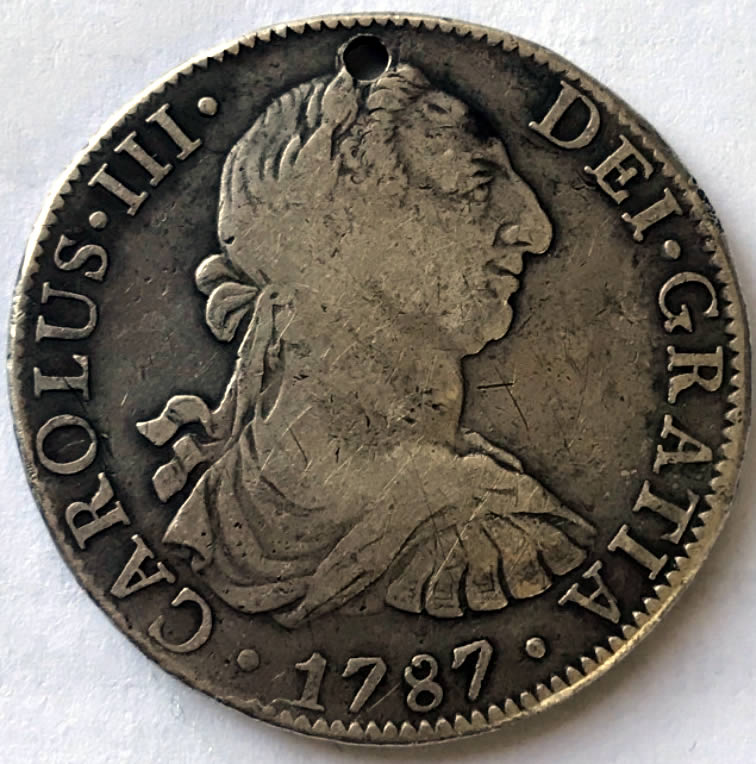 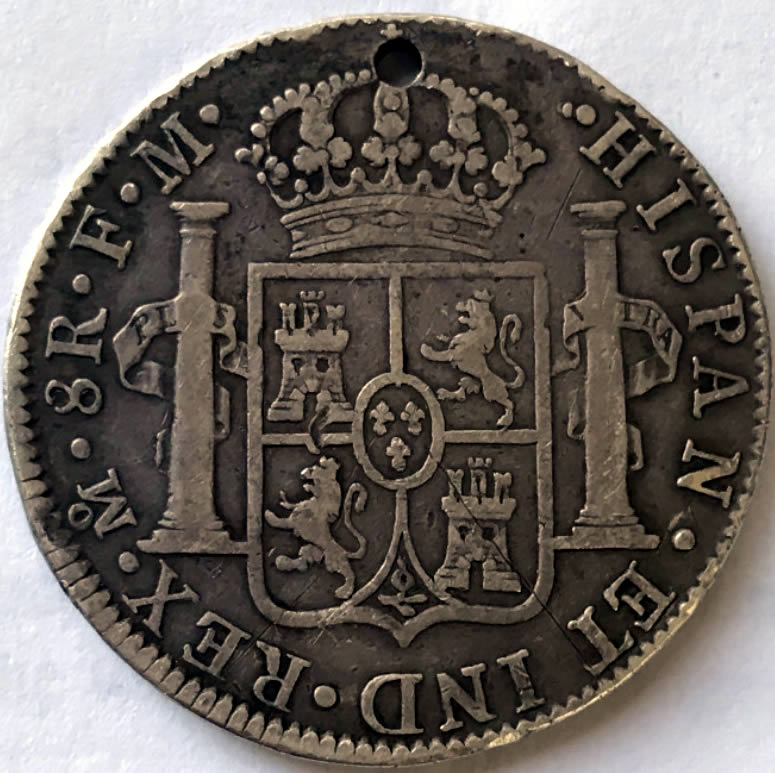 Is this the overlap that people talking about ? 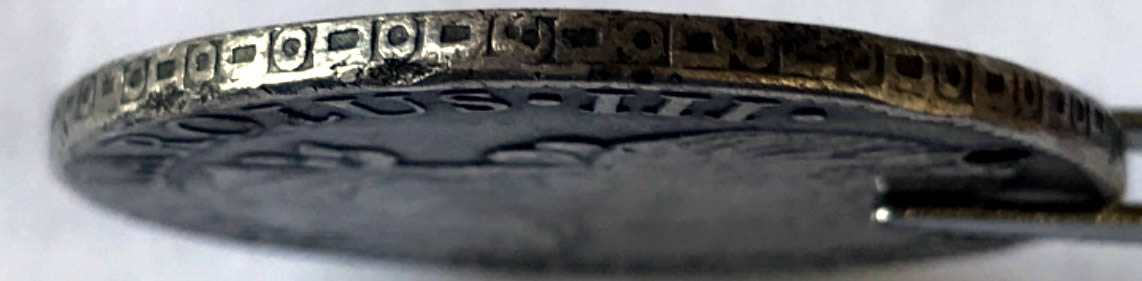 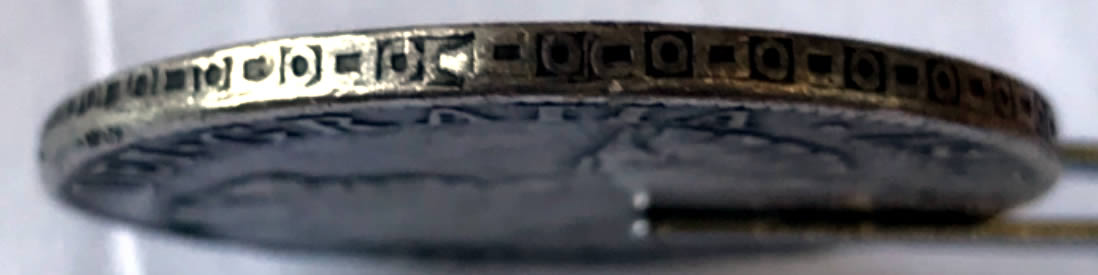 |
|
|
|
Bedrock of the Community
United States
94367 Posts |
I'm guessing it's OK, but I'm no expert here.  to the CCF! |
|
Rest in Peace
United States
17900 Posts |
I'm not an expert on this type, but it looks good to me.
|
|
New Member
 United States
12 Posts |
thank you Coinfrog and moxking
|
|
Pillar of the Community
United States
1328 Posts |
It certainly looks real to me (no pun intended). But there some experts on this forum who will hopefully comment.
|
|
Pillar of the Community
United States
1959 Posts |
I'll weigh in as another non expert and say it looks genuine to me. To bad about the hole.
|
|
Bedrock of the Community
United States
94367 Posts |
I don't think a counterfeiter would add a hole!  |
|
Pillar of the Community
United States
5362 Posts |
This is an example of a "Keyhole & Porthole" variety. I have discussed this in the past.
Notice the shape of the windows in the castles. The one on the right side of the castle (not our right) is shaped like a keyhole - round at the top with a vertical elongation below it. The left window is round. Both should be rectangular - that was standard.
It is obvious that the punch used to make the castle impressions on the working die had been damaged.
The problem comes about when you record the various dates that display this anomaly. The punch was used on dates from 1784 to 1789. Since the Mexico City mint was a high volume facility employing hundreds of dies per year, I wonder why this particular punch lasted this long.
When I first noticed this anomaly, I decided to buy a few damaged examples. I also bought drilled or otherwise damaged coins so that if I damaged them in testing there would be no great loss.
Note: Drill holes were one form of cancellation as well as a method of suspending coins. A counterfeiter would not have drilled a coin, but a banker would. Counterfeit and suspect coins were often drill cancelled to stop them from circulating. Have you ever heard the saying never take a plugged nickel?
After a brief hunt I did locate an example that had a core of copper. Since that time, I have confirmed a couple other examples with very low densities - near 9 not 10.3. However, most examples are so close to correct that density testing only confirms silver content.
I have still not categorized these coins precisely. The mix of fraudulent and silver coins makes it difficult.
It is most likely that these are Class 2 silver counterfeits made for the China trade. It is difficult to reconcile the fact that some examples are clearly not silver with any such operation. Why did the makers think they could get away with some debased examples? The only answer that comes to mind is that perhaps these are examples produced in Mexico to take advantage of the premium paid for Carolus Dollars in China. After all the Mexico City mint has retained dies and die tools for these coins.
Of course, these may be examples made for the same market in places where die duplication was possible.
|
|
New Member
United States
12 Posts |
Thank you so much for the detail reply, and thank to everybody else comments as well. So enjoying to hear this interesting history behind those piece of Eights. At first I thought the hole is punched for jewelry rather than to stop circulating by banker. I just noticed to there is a little dot next to the dot by the letter H on the reverse. What is that ? is that a sign of counterfeit ?  |
|
Pillar of the Community
United States
5362 Posts |
The extra dot is clearly a re-punched element. Re-punched elements are very common on Class 2 silver counterfeits but far scarcer on genuine Mexico City products. It does not confirm the coin is counterfeit but it adds a small amount if evidence.
|
| |
Replies: 9 / Views: 2,558 |
|





 Posted 12/05/2017 6:27 pm





