











 Posted 12/31/2017 3:15 pm


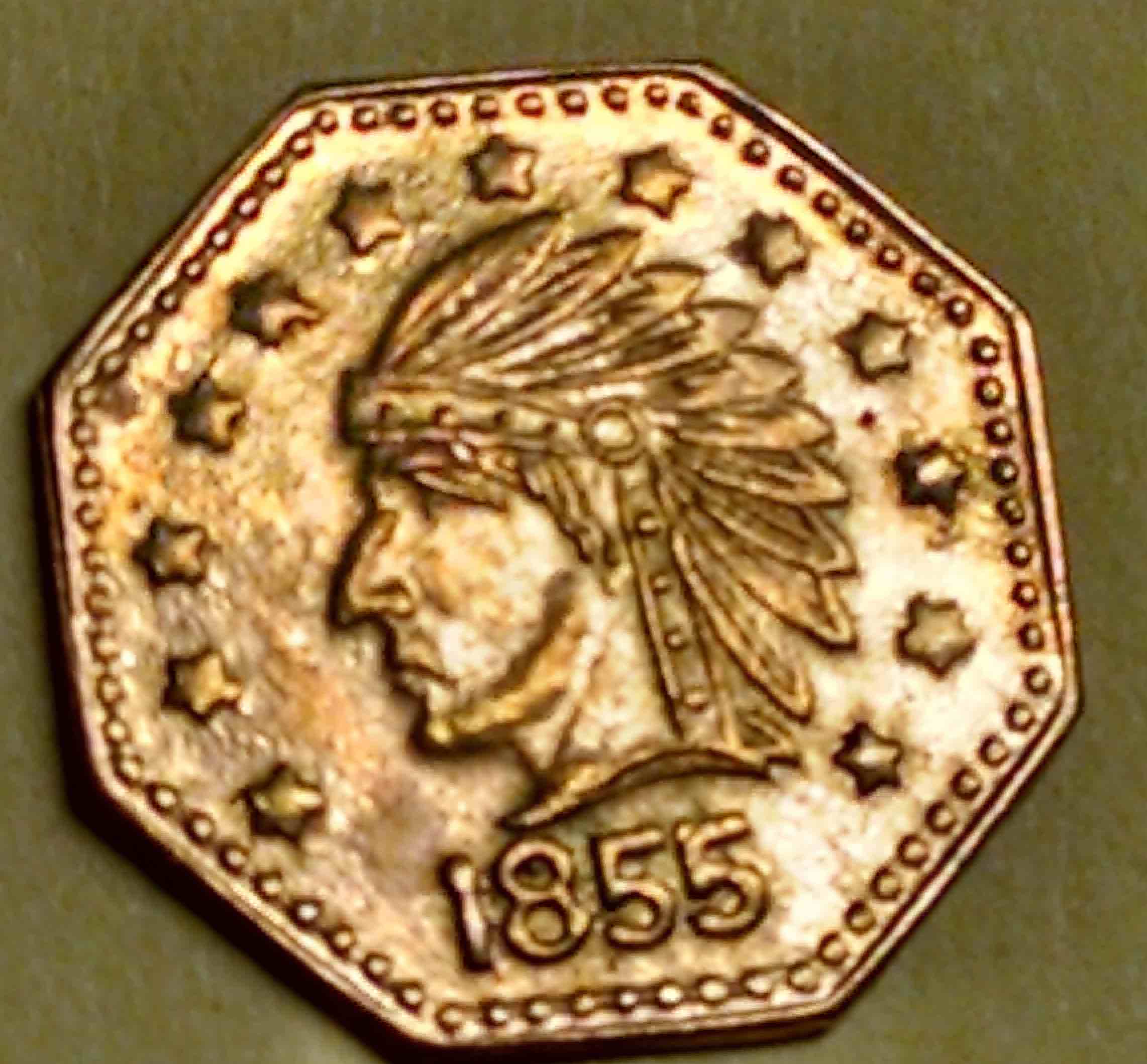
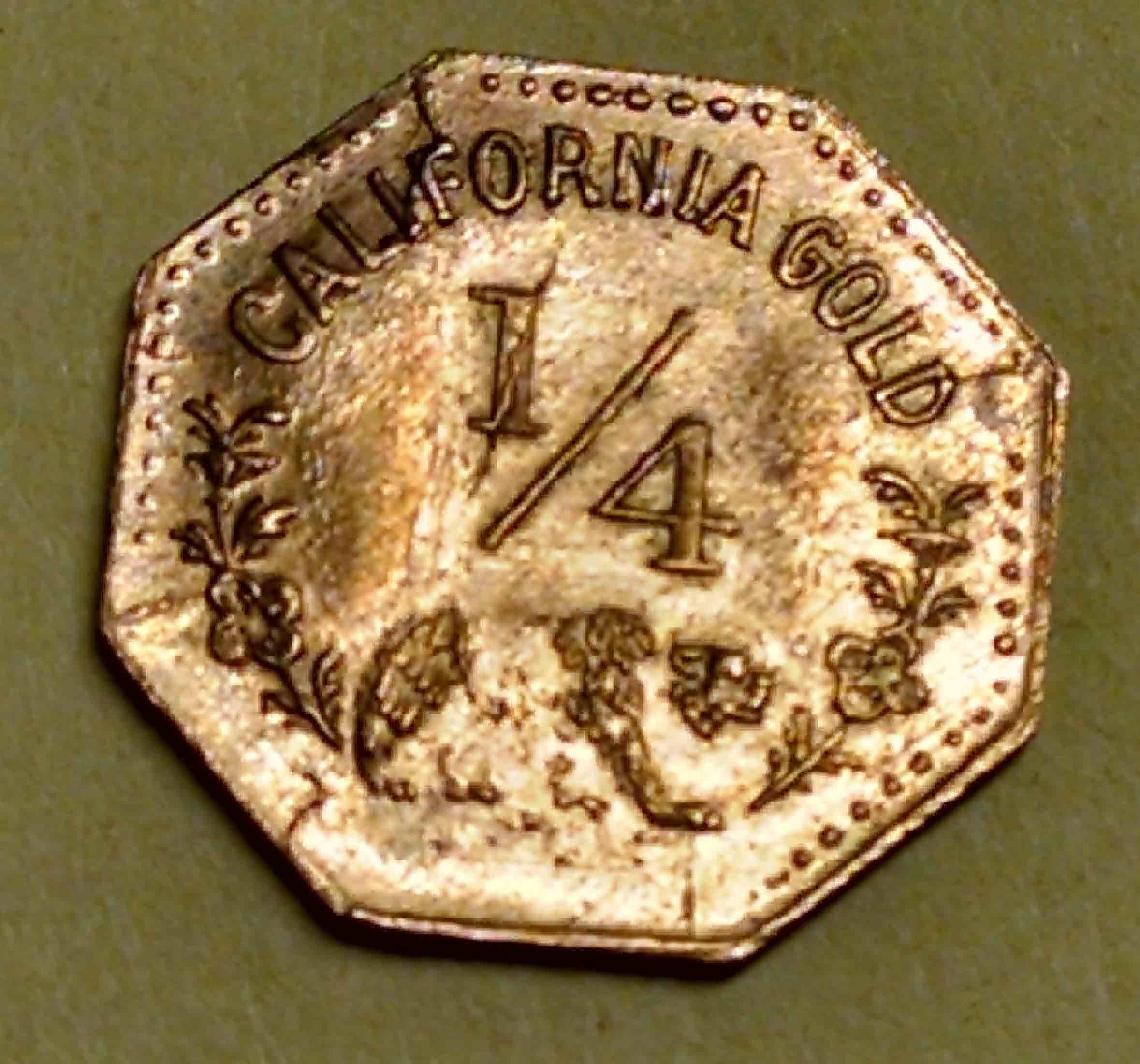
It's a token. It may or may not contain actual gold.
Yes, most of the bear issues are not "real" fractional gold, but they may still be gold nonetheless.
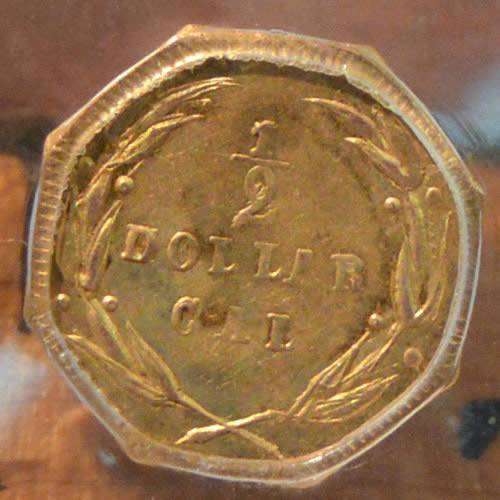
A more important diagnosis is to look for the word "dollar" or its abbreviated forms "dol.", "doll." and so on. The jewelers' copies and tokens do not have this because it would pass the piece from being a token into being a counterfeit under the law.
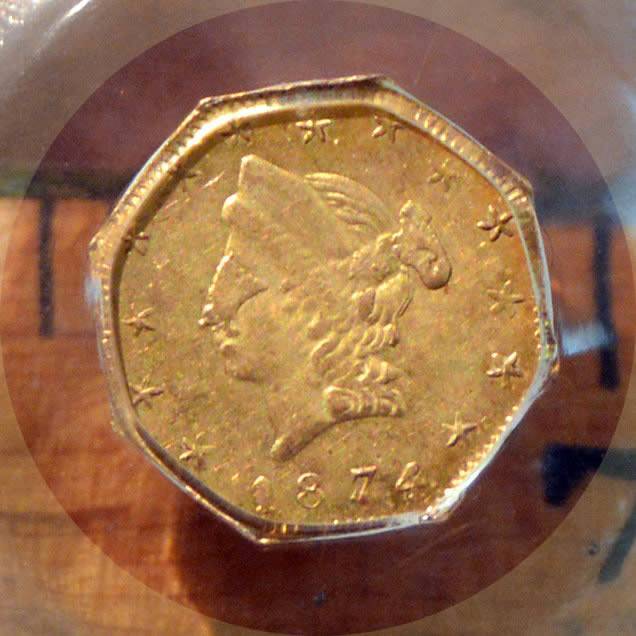
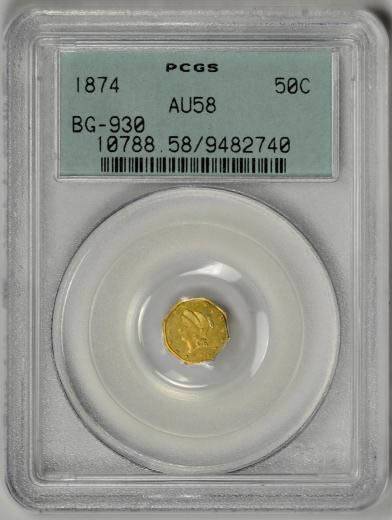
This is a "real" 1874-dated fractional 50 cent octagonal gold issue (BG-930) from my collection, graded AU58 by PCGS. Note that the reverse features "dollar" and also "cal" -- the 1874 date is likely fantasy, and these were produced well into the 1890s and early 1900s, with varying actual gold content between 3 kt to 8-10kt. The real fractional gold issues only circulated briefly, if at all, in the late 1840s and early 1850s.
Yes, most of the bear issues are not "real" fractional gold, but they may still be gold nonetheless.
A more important diagnosis is to look for the word "dollar" or its abbreviated forms "dol.", "doll." and so on. The jewelers' copies and tokens do not have this because it would pass the piece from being a token into being a counterfeit under the law.
This is a "real" 1874-dated fractional 50 cent octagonal gold issue (BG-930) from my collection, graded AU58 by PCGS. Note that the reverse features "dollar" and also "cal" -- the 1874 date is likely fantasy, and these were produced well into the 1890s and early 1900s, with varying actual gold content between 3 kt to 8-10kt. The real fractional gold issues only circulated briefly, if at all, in the late 1840s and early 1850s.
Member ANA - EAC - TNA - SSDC - CCT #890
"Most of the things worth doing in the world had been declared impossible before they were done." -- Louis D. Brandeis
"Most of the things worth doing in the world had been declared impossible before they were done." -- Louis D. Brandeis


