I received this email today and thought I'd share. Mods I don't think it goes against posting policies but if it does my apologies.
One of the questions I get a lot as an ancient collector, and one that fascinates me in this hobby is how did these coins make it from ancient hands into ours? This write up explains how.
Nomos Notes - Hoards and Other Coin Finds
(W)e have the time to talk about a subject that really is important to all those involved with ancient coins: where do they come from?
What may well be obvious to all of you, or, at least, ought to be, is that all the ancient coins we have today, whether in museums, private or public collections, or in commercial hands, ultimately must have come out of the ground (or from under water: from springs, rivers, lakes or the sea). The idea that any coins could have survived above ground since ancient times, while undoubtedly romantic, is more than just highly unlikely! Of course, the Comte du Chastel did maintain that the gold multiple of three solidi minted by Valentinian I (du Chastel 814) that was in his collection was truly in family hands since the time it was minted! He stated that the family arms were those of the city of Valenciennes, supposedly either founded or re-founded by Valentinian. In fact, the first known mention of the town apparently dates to 639 and is found in a document of the Merovingian ruler Clovis II (639-657)... se non è vero, è ben trovato!
In fact, ancient coins come from three basic sources: 1) hoards, 2) deposits, and, 3) losses. Let's see what they are.
1) Hoards. First things first, the word we are using here, 'hoard' (meaning a group of coins or objects), is very much not the same as the word 'horde' (which refers to large groups of people or animals); these two words should never be confused. In a narrowly numismatic sense, hoards are defined as groups of coins that have been consciously hidden with the intent of being recovered (on a short, medium or long term basis). As such, hoards fall into four basic groups: a) savings hoards, b) current expenses hoards, c) emergency hoards, and, finally, d) mixed or bullion hoards.
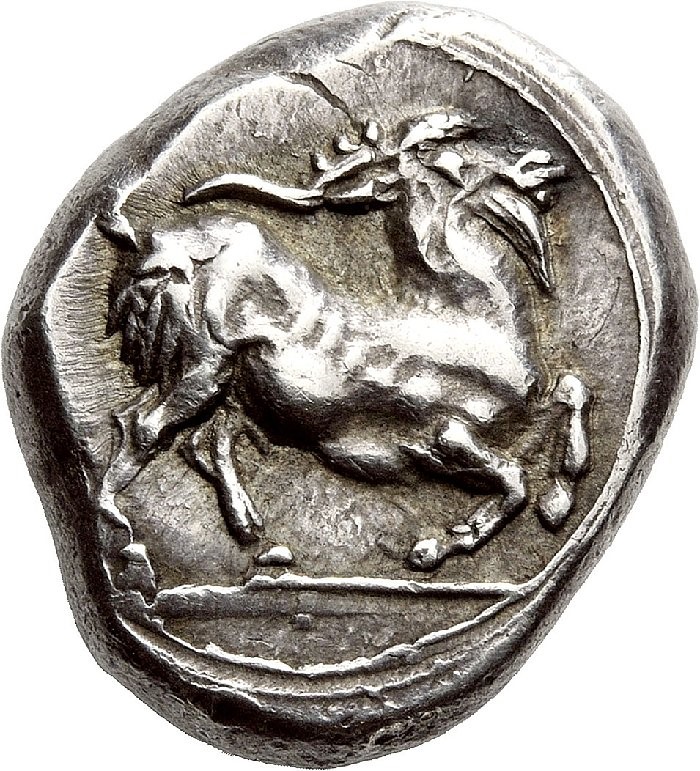
Nomos 6, 2012, 81. Paros, from the Paros Hoard of 1936 (IGCH 13). Est. 7,500 / Hammer 25,000
a) Savings hoards exist for the simple reason that most individuals in the ancient world had no access to permanent secure storage for their money, in comparison to the banks we have in modern times. For example, a landowner might keep a certain amount of his income readily available to pay for current or daily needs, while the extra would be kept for future use or as savings. This extra money could be poured into a large container and then buried; it could subsequently be reopened to receive further 'deposits'. This could go on over many years, even generations. In most cases, the coins selected for savings hoards are of the best quality the owner can find: they tend to all be of the same metal (gold or silver or bronze), though mixed hoards are known; depending on the original owner's financial status, savings hoards tend to be composed entirely of higher denomination coins, usually unmixed (you can have hoards of staters or tetradrachms or drachms or fractions or bronzes); damaged, debased, worn, or underweight coins are consciously avoided in savings hoards. Such hoards can be found in the ruins of ancient buildings, but they can also often be found in isolated locations that were somehow easily identified in ancient times (for example, a hoarder may have selected a location near a landmark that was then locally prominent, such as a distinctive tree, that subsequently disappeared).
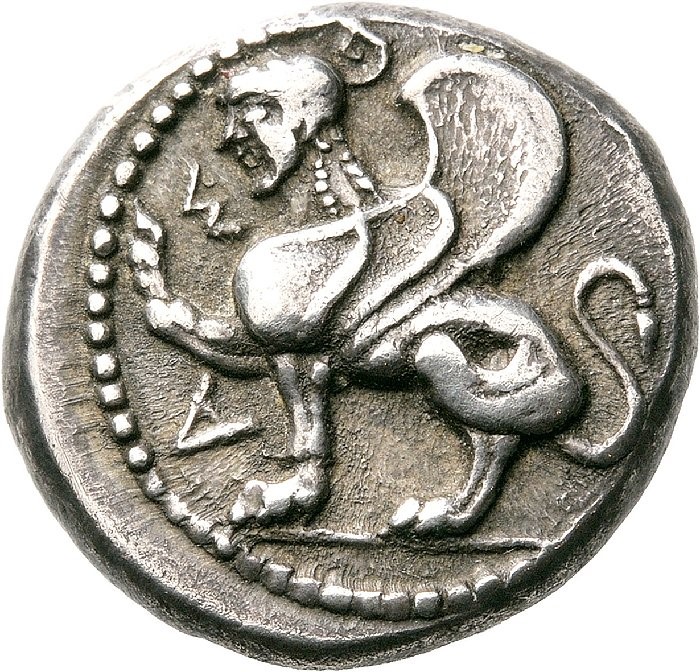
Nomos 6, 2012, 35. Samothrace, from the Kiourpet Hoard of 1930 (IGCH 696). Est 50,000 / Hammer 100,000
b) Current Expenses Hoards are groups of coins that were kept for daily use, rather than for long term savings. For example, someone might have kept his or her real assets in a savings hoard, which would have been rather inconvenient of access, while a selection of money might be hidden more conveniently to pay for things on a daily basis. Hoards like this, which can include coins in mixed metals, silver and bronze being the most common, are the kind of hoards that can be found in the ruins of a city that suffered a sudden attack (see below). One peculiarity of current expenses hoards is that they are apt to contain coins of lower quality than those found in savings hoards: debased or light weight pieces (clipped, damaged, etc.), or coins that are in some way less desirable, can turn up in these hoards because their owners want to use and get rid of them!
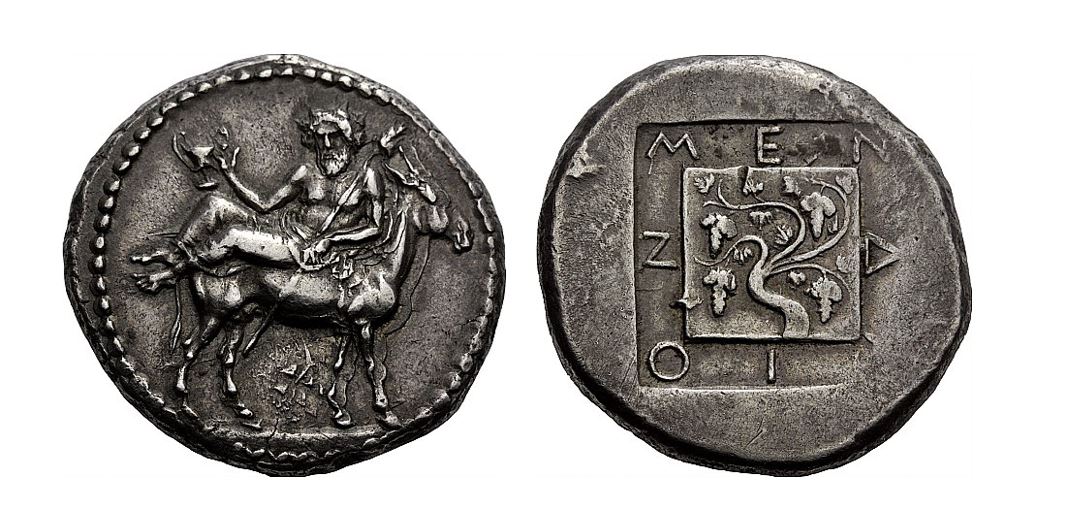
Nomos 7, 2013, 39. Mende, from the Kaliandra Hoard of 1913 (IGCH 358). Est. 35,000 / Hammer 40,000
c) Emergency Hoards are those hidden in the face of imminent danger. They can be distinguished, though not easily, from other hoards by their content, by the way they are hidden, and, in retrospect, by the evidence of destruction in the area where they were hidden. A hoard buried in fear of attack is likely to have a more 'omnivorous' character rather than a selective one. Mixed hoards, those containing coins of all metals and often including inferior pieces, are often a sign of hurried assembly and hiding, rather than of a calm process of selection. Obviously, if the enemy is at the door valuables will be just tossed willy-nilly into a sack and hidden; speed is of the essence. This also means that the container chosen may be of a less permanent type (like a sack, for example) rather than a pot or a chest: the hoarder will just use whatever is to hand and will also probably be hopeful that he or she can recover the treasure as soon as the danger passes. Another form of emergency hoard would be a military unit's pay chest hidden prior to going into battle, or at the time of an attack: hoards buried by Varus' s three legions during their losing battle with Arminius's German army fall into this class of find. Perfect examples of emergency hoards were those found on the floors of the South House in the Athenian Agora (B 17:1), which was destroyed in 267 during the Herulian sack of Athens.
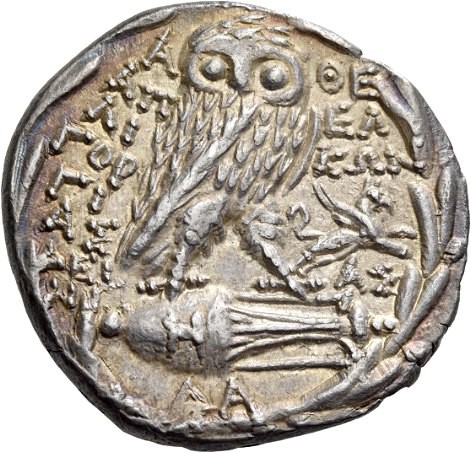
Nomos 14, 2017, 115. Athens, from the Poggio Picenze Hoard of 1954 (IGCH 2056). Est. 750 / Hammer 1,800
It should be clear that both savings and emergency hoards can vary in size, from very small numbers of coins buried by a simple individual, to gigantic hoards buried by officials or very high ranking people. Two of the very biggest I know of are the Brescello Hoard of 1714, which was buried c. 38 BC, and contained approximately 80,000 (!) Roman gold aurei (the vast majority were melted and turned into ducati by the Este rulers of Modena); and the great Niš hoard of the early 1930s, which reputedly contained something like 15 metric tons (!!) of Roman silver coins (approximately 5 million denarii)! Both of these must have been buried in the face of some imminent peril by their official custodians (who presumably were killed before being able to report where the hoards had been concealed).
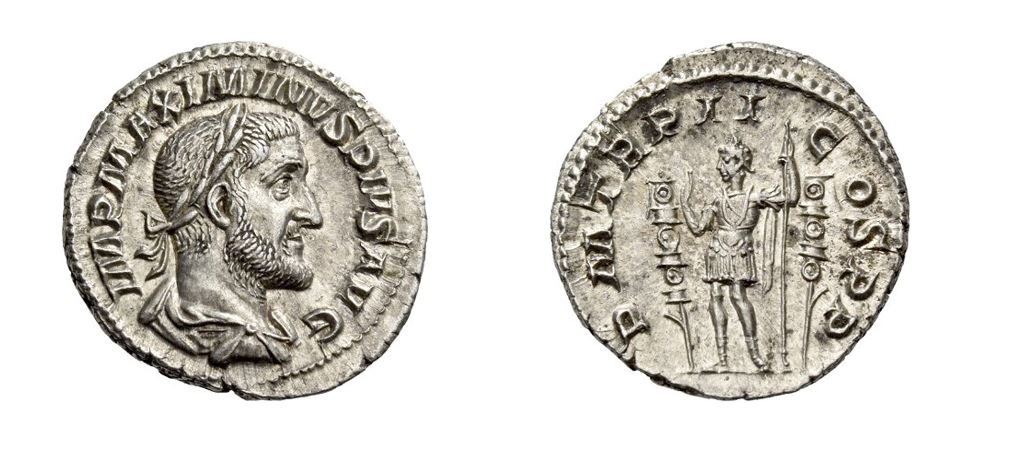
Nomos 14, 2017, 409. Maximinus I, from the Niš Hoard of the early 1930s. Est. 250 / Hammer 480
d) Mixed or Bullion Hoards. I almost forgot about these. Almost invariably composed of silver, the coins found within these hoards were not hoarded primarily as coins, but as bullion. A perfect example is a hoard that I was shown in the early 1990s that had been found in the neighborhood of Crotone in Bruttium. There were about 100 silver coins, primarily 5th century BC issues from Akragas, Gela, Velia, Kroton, Metapontum, etc., and primarily didrachms or staters. With the exception of a few pieces, the latest being a remarkable stater from Olympia (Seltman 295 = Leu 77, 2000, 221), the coins were all very worn, with some of the pieces from Akragas and Gela being practically illegible. It was a rather strange group as is, but it began to make sense when I was shown a bag of unfinished silver jewelry, mostly fibulae (they were mostly as cast, rough, untrimmed and without any incised decoration - a few were partially finished), which had been found with the coins.
The total weight of the jewelry was rather more than that of the coins. I recorded the hoard as best I could under the circumstances and when I sent the information off to a scholar friend of mine he told me something fascinating.
What I had seen was not a coin hoard per se, but a hoard of the the raw material needed for the manufacture of an ancient jewelry! He told me that a number of such hoards were known, but usually only incidentally, because after having been found, the coins would be sold via the coin trade, but jewelry would go to antiquity dealers; thus, no one realized that they had been found together. In addition, the presence of often large and heavy silver ingots of varying shape (including some that clearly showed partially melted coins on their surfaces), combined with coins in a number of other hoards (especially from Egypt, Mesopotamia and further East) showed that they also were actually thought of by their ancient owners as beings hoards of silver bullion rather than of coined money. The fact that many Greek silver coins in Eastern finds dating to the 6th, 5th and early 4th century BC are defaced by chisel cuts also shows that the coins were viewed as bullion that had to be solid silver rather than as coins, which had a face value.
Now we come to our next type of coin find, the deposit.
2) Deposits. The crucial difference between hoards and deposits is that deposits were not meant to be recovered, while hoards were. Perhaps if we termed them votive deposits it would make things clearer: the coins or other precious material they contain were meant as gifts to the gods and, as such, belonged to them and were no longer for human use. Here are some examples.
a) Foundation Deposits. In ancient times, as today, special objects are buried in the corner stones of important new buildings; in many cases these include coins and medals. In the 15th century Sigismondo Malatesta, lord of Rimini, had a variety of medals made, all bearing either his portrait or that of his wife, Isotta degli Atti, which were placed in the foundations of the buildings he erected. In Persepolis, there is the famous Apadana Deposit, which included coins as symbols of the extent of the Persian Empire.
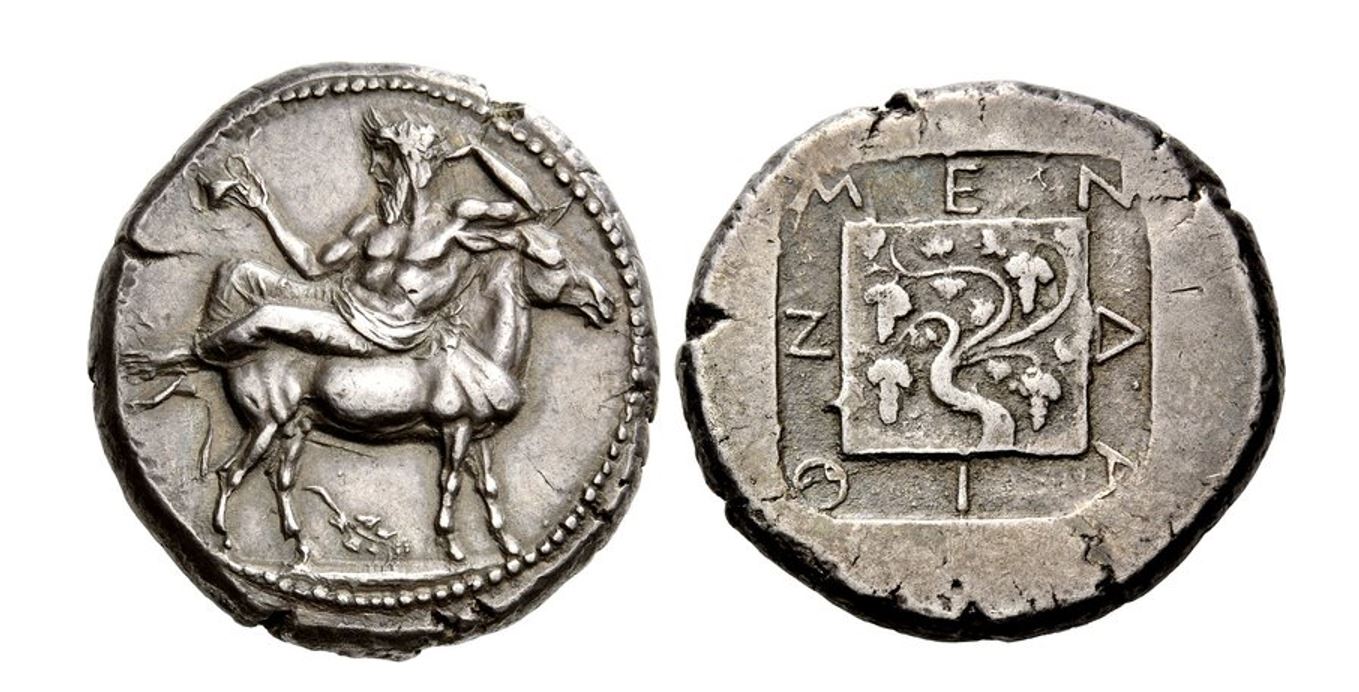
Nomos 5, 2011, 135. Mende, from the Kaliandra Hoard of 1913 (IGCH 358). Est. 20,000 / Hammer 40,000
b) Water Deposits. Precious items, including coins, were often thrown into rivers, springs and wells as offerings to the gods. Unlike at the modern Fontana di Trevi in Rome ("Three Coins in a Fountain"), into which every visitor tosses coins in a vow to return, and where employees sweep up all the coins every day for charity, coins thrown into sacred springs in ancient times often remained there until their modern discovery. A number of such 'spring hoards' or 'spring deposits' have been found. All sorts of items have been dredged from rivers as well, many of which were certainly originally thrown in as votives to the gods.
c) Land Deposits. Recently, in England, a metal detectorist discovered a hoard of Roman coins, which he instantly reported so that it could be excavated properly by an archaeological team. The excavation was carried out with great care and it was initially assumed that what was found was a savings hoard. The many thousands of coins involved were contained within a pottery jar, and it was clear that different groups of coins were poured into the jar at different times. However, what struck the excavators as particularly strange was the fact that the large jar itself was both thin and very weak; they believed that once set in the ground that jar could never have been removed since it would, in their opinion, undoubtedly have shattered. The site itself showed signs of being some sort of rural field sanctuary, so the excavators became convinced that the deposit was meant to be a permanent one.
Finally we come to losses.
3) Losses. The basic difference between losses and hoards or deposits is that unlike the latter, which were deliberately placed where they were ultimately found, losses are just that: inadvertently dropped and not recovered. While there is a tendency among some archaeologists to label any group of two or more coins a hoard or deposit, this is clearly mistaken: as I must emphasize, hoards or deposits were intentionally placed, while losses were lost by chance, or at least, deliberately discarded.
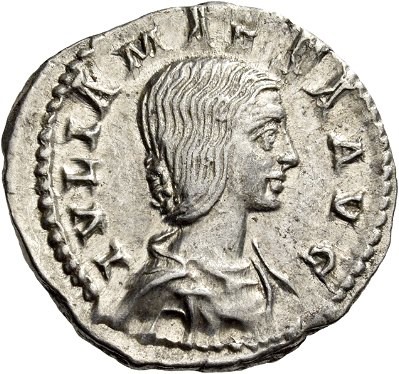
Nomos 14, 2017, 398. Julia Maesa, from the Niš Hoard of the early 1930s. Est. 200 / Hammer 160
a) Ordinary Losses. Imagine that you are a visitor to ancient Greek trade fair, held annually outside an important Peloponessian town on a convenient group of fields. As you walk around you see all sorts of goods, brought from all over the classical world: from nearby Athens as well as from Sicily and Carthage; from the Greek cities of Asia Minor, as well as from Egypt and Phoenicia; there are high quality local agricultural products like olive oil, as well as oil from Magna Graecia and, even, Spain. While you are wandering around, marveling at what you see, you remind yourself that you have a purse or a pouch in which you have bronze and silver coins to buy things that catch your fancy. Just when you are about to buy something you get jostled and your coins fall over a stand table! darn! You find most of them but some just seem to have disappeared into the ground. Or, even worse, you realize that your money pouch is gone!
Either some ancient equivalent of the modern pickpocket got it from where it was attached to your belt (remember, pockets actually did not come into use until around the 13th century), or it simply fell off from where you had it. These are just some of the explanations we have for losses: the careful modern recording of the find spots of metal detector finds, as well as those from careful excavations, has given us evidence for the presence of ephemeral market tables, or even for the places where certain types of people would gather. This is one of the good reasons why so many archaeologists hate illegal metal detectorists: they do not record precise find spots (or even any find spots!). Modern field surveys have been able to localize market areas by the way coins are found on what seem to be a grid system, shadowing ancient paths. In the Agora of Athens the presence of what must have been temporary stalls selling tourist souvenirs along the Panathenaic Way to the Acropolis is almost certain due to the scatter of minor bronze coins that were excavated along that road and in the drains that flanked it. By the way, if you go to a modern religious pilgrimage site, like Einsiedeln in Switzerland, you will find loads of shops selling religious paraphernalia in the plazas before the sanctuaries: many may decry the things sold as kitschy gimcrack, but visitors love them, and in ancient times exactly the same kind of material was sold to the ancient pilgrim.
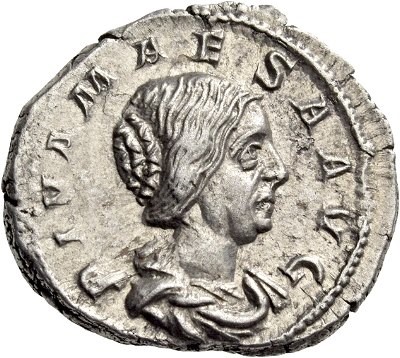
Nomos 14, 2017, 407. Diva Julia Maesa, from the Niš Hoard of the early 1930s. Est. 800 / Hammer 1,700
One of the most spectacular ways that the carefully recorded find spots can provide us with totally unexpected information comes from the site of Nemea in the Argolid. The sanctuary of Nemea ran Panhellenic games that were held every second or third year; when the stadium was excavated in modern times quite a few coins were found on the earthen banks on which the spectators stood (unlike other ancient stadia, there were no permanent seats). Of interest is the fact that while the stadium was normally cleaned and refurbished after the games were held in preparation for the forthcoming one, the state of the stadium as excavated showed that it had gone out of use after the games held in the late 4th century. As such, all the debris from the last games (broken crockery and lost items - as coins) was still on the ancient ground surface. When the find spots of all the coins were plotted it turned out that coins from certain groups (i.e., Argives, Sicyonians, et al.) were found in specific areas, thus showing that spectators from the different cities that took part in the games formed cheering sections, just like they do at modern sports events.
Small groups of coins that seem to be related but which show no signs of having been in a durable container, or having been deliberately hidden, can best be described as lost purses. High value coins, such as ancient or later gold coins, do turn up singly (studies have been done on single finds of aurei in France, for example): while if single finds of gold pieces have been consistently found in a specific field they could be explained as being from a hoard scattered by plowing, and others, if found in the right places, may be votives, many can only be losses, just like bronzes or silver pieces. The occasionally enormous numbers of surface finds that are swept up from the sties of many ancient cities are almost entirely derived from ordinary losses. What such losses provide us are snapshots of the coinage in circulation at the time the coins were lost. One of the most interesting of all lost purses was found in the burnt ruins of the Odeon of Agrippa in the Athenian Agora. The Odeon was destroyed during the Herulian sack in 267, but the purse primarily consisted of Roman Imperial bronze coins dating up to c. 144. However, since the roof of the Odeon collapsed in c. 150, but was immediately repaired and remodeled, what we must have is the purse of one of the men fixing the roof in c. 150, which by chance was lost and slipped into the roofing. So when the building was burnt down in 267 it fell to floor. This has always been a particularly intriguing example of how the date of a "hoard" can be completely different from the date of the destruction in which the coin is found.
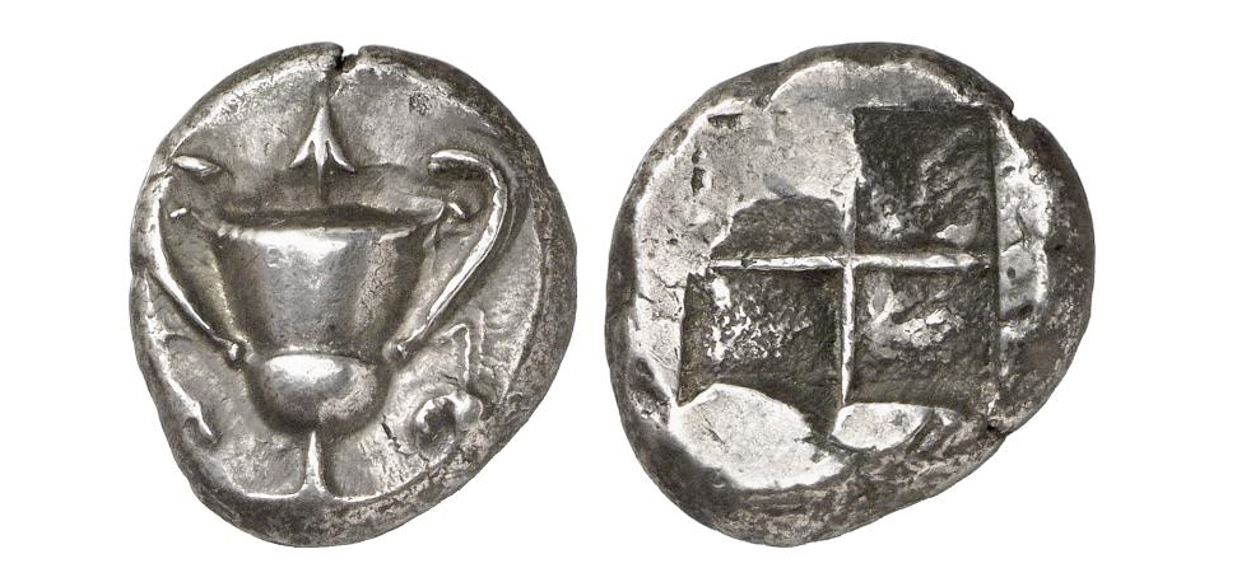
Nomos 1, 2009, 88. Naxos, Kyklades, from the Santorini Hoard of 1821 (IGCH 7). Est. 40,000 / Hammer 38,000
b) Deliberately Discarded Lossses. These are coins that are deliberately thrown away, rather than being accidentally lost. The main type of these are forgeries. Ancient coin forgeries go back to the beginning of coinage. Base metal cores were plated with gold, electrum or silver in order to deceive users. Agora 659 is an especially clever fake, which was given two test cuts prior to being plated! However, since knowingly passing a fake was a criminal offense in ancient times, once it became obvious that a coin in question was false, its then owner would simply throw it away! As a result, a surprising number of ancient fakes turn up in archaeological excavations as single finds (like those 'Limesfälschungen' from the Roman frontiers in Germany).
+++++++++++++++++++++++++++++++++++++++++++++++++++++++++++++++++++
Thus, hoards, deposits and losses are the sources for all the coins that are today in our collections whether private or in museums; on the market; or found in the ground, either as chance finds or in excavations, whether done by archaeologists in a professional way (one hopes) or by illegal diggers (ipso facto in an unprofessional way). Obviously, any coin that is dug up without any form of record loses all archaeological relevance: it is still an ancient coin, it still has some iconographic or art historical importance, it is still an historical document, but we do not know exactly where it was found - and even if we do we don't know what its context was. This is especially true for chance finds and for coins found by looters in archaeological sites: the coins that could have provided information about when they were used (and where), and that could have dated the construction of the buildings in which they are found, lose all the evidentiary value. However, it should be pointed out that single finds, whether on the surface or dug up using metal detectors, while perhaps of great archaeological importance, are often of truly negligible commercial or collecting importance. This apparently paradoxical situation is caused by the fact that the vast majority of archaeologically found single coins are damaged by corrosion to such an extent that they are effectively only of very minor commercial interest. Of course, if the soil is particularly forgiving, excavated coins can be remarkably free of corrosion: when I was digging in Dorchester long ago, where the sub-soil was of chalk, bronze coins (and objects) came out in a marvelous state with a lovely patina, and only needed to be brushed prior to being recorded. When I was working in Athens the late M. Oikonomedes, curator of the Numismatic Museum, showed me several trays of bronze coins from the then new excavations at Nikopilis in Epirus: while some had encrustations, not only were all legible but all had wonderful surfaces. On the contrary, in the Athenian Agora, from 1931 to 1990 approximately 16,500 coins were found and retained as being 'Greek', primarily Athenian but from a considerable variety of other mints (a further 4000 or so were so horribly corroded and/or worn that they could only be identified as being probably Hellenistic Greek and were discarded, probably in the very late 1940s or early 1950s prior to the reconstruction of the Stoa of Attalos). The soil of the ancient city of Athens is so hostile to metals that the vast majority of coin finds had to undergo drastic cleaning measures to enable them to be identified. Anyone viewing the plates of Agora XXVI, the publication of the Greek coins from the Agora, can easily see the rough and messy surfaces that so many of the coins have (and the coins illustrated are the best preserved). In short, well over 95-98% of the Agora Greek coins would be of little interest to collectors or commerce (and the illustrations are all taken from plaster casts for clarity - the actual coins are by no means as clear).
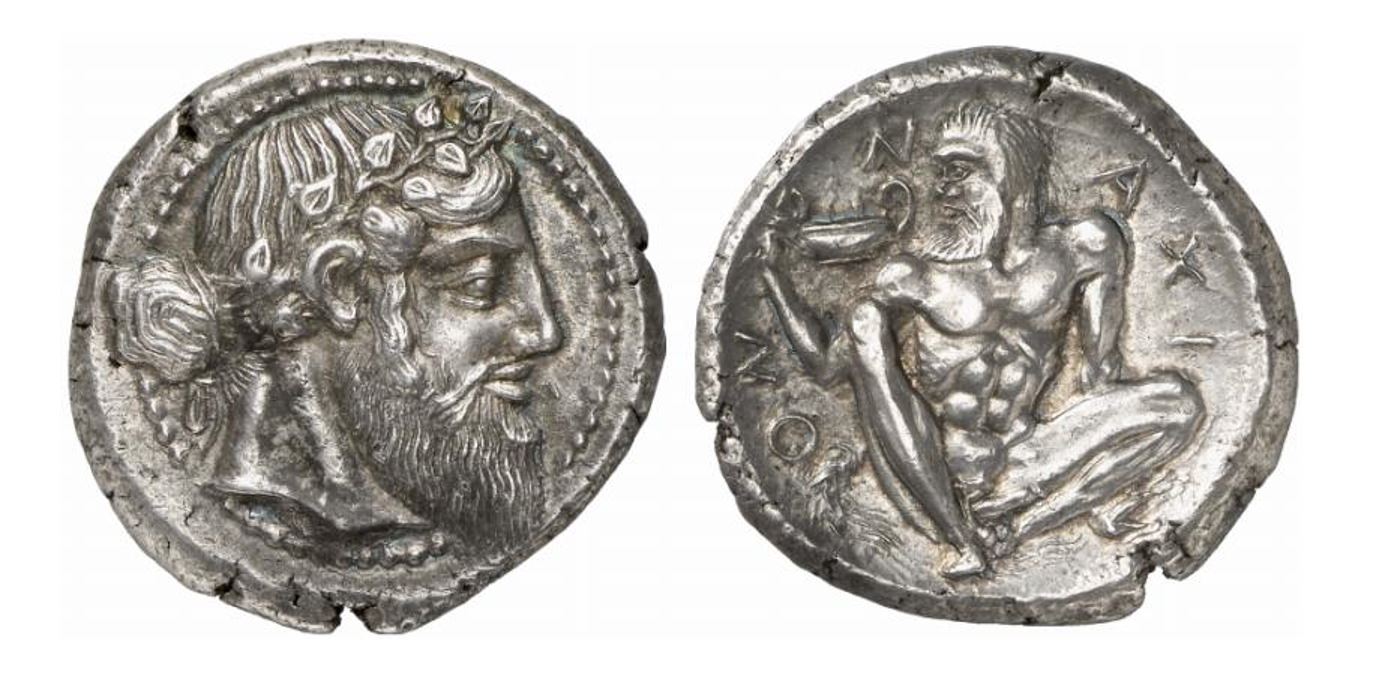
Nomos 1, 2009, 25. Naxos, Sicily, from the Randazzo Hoard of 1980. Est. 400,000 / Hammer 775,000
Yes, large amounts of surface metal detector finds do enter the world market, and the scientific loss can be serious, but the real problem is that so much of this material is what commerce terms 'junk'. If all this material could be identified and have its find spot recorded we would learn an immense amount. But, of course, except in England, where finders who declare their finds are rewarded by the PAS when what they find is deemed of national or local importance, or have their finds returned to them if no national or local museum wants them, confiscatory laws and derisory rewards mean the finders almost invariably seek to sell their finds on the black market (and, alas, thanks to insufficient penalties illegal finders flout the law in England too). In my personal experience, before Switzerland enacted very serious import regulations, all sorts of people used to arrive with sacks of surface finds that they were convinced were worth a fortune. It was then my duty, since Silvia Hurter and Leo Mildenberg did not want to be bothered, to tell the people that their treasures were basically worthless, and we certainly had no interest in buying them. They would invariably get furious, especially when I would tell them that it would have been better and more profitable to have kept the coins in their own country rather than smuggling them out and, then, smuggling them in to Switzerland. The legal sanctions were far and away more drastic than that of the coins' value. They would look at me like I was crazy. Even worse, most of the time these people cleaned the coins themselves, effectively completely destroying what little value they originally had: they would dump piles of bronze coins into petrol/gasoline and they'd come out looking like shiny pennies!! Fair laws, with decent rewards for material of real interest and with everything else returned to the finder and/or land owner, would have kept all this material in the home country, with records of where it was found, rather than ultimately being tossed into boxes of "junk" in Munich or London!
Another point is that once those coins are dug up unrecorded from sites all over the greater Mediterranean world, their contexts and archaeological importances are irretrievably lost (remember, many, many coins have an archaeological value far, far above their commercial worth).
But hoards, from which the vast majority of truly collectible coins come, are often of far less archaeological value. Not always. Emergency hoards from urban sites really do help to date the site's destruction, but so many hoards are actually primarily of numismatic rather than archaeological importance. The great Meydancikkale Hoard from near modern Gulnar in Cilicia was found in three large pottery vessels buried under the floors of an ancient building - there seem to have been no signs of destruction so this was apparently a form of savings hoard.
Archaeologically it tells us little, but numismatically it was of real importance for refining the chronology of the issues of Pergamum, the Ptolemies and of the Posthumous Lysimachii. Many other hoards have been found outside of archaeological zones, often far from habitations: once again, their contents were, unlike all those single finds, or emergency hoards found in destruction levels, primarily of importance for numismatic questions, not archaeological ones. The great Dekadrachm/Elmal#305; Hoard seems not to have had any serious archaeological context, and numerous major Ancient British and Roman hoards from England are often from areas of no apparent archaeological interest.
To end, and to show quite how wacky the present situation is becoming, here is a quote from the latest US MOU with Libya, listing a type of thing classed as an archaeological object that needs to be restricted from entering the USA:
3. Rope--Rope and string were used for a great variety of purposes,
including binding lifting water for irrigation, fishing nets,
measuring, and stringing beads for jewelry and garments.
Isn't this wonderful? Soon containers of rope and string will start being sent back to Libya, saving them from the hands of all those avid collectors of Libyan rope and string, dating from the Neolithic Period through 1750!
I am not making this up.
********************************************************************************
This is enough for today!
Nomos AG
Dr. Alan S. Walker Dimitrios G. Gerothanasis










 Posted 01/04/2018 7:41 pm


