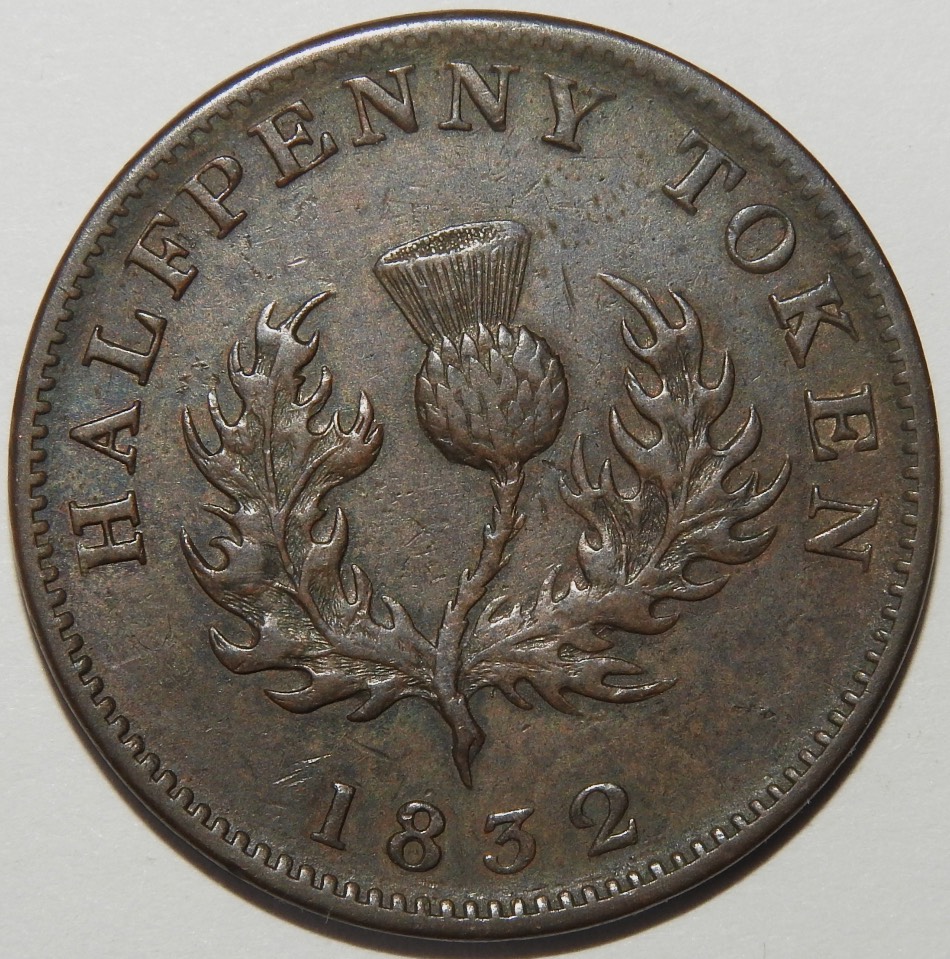
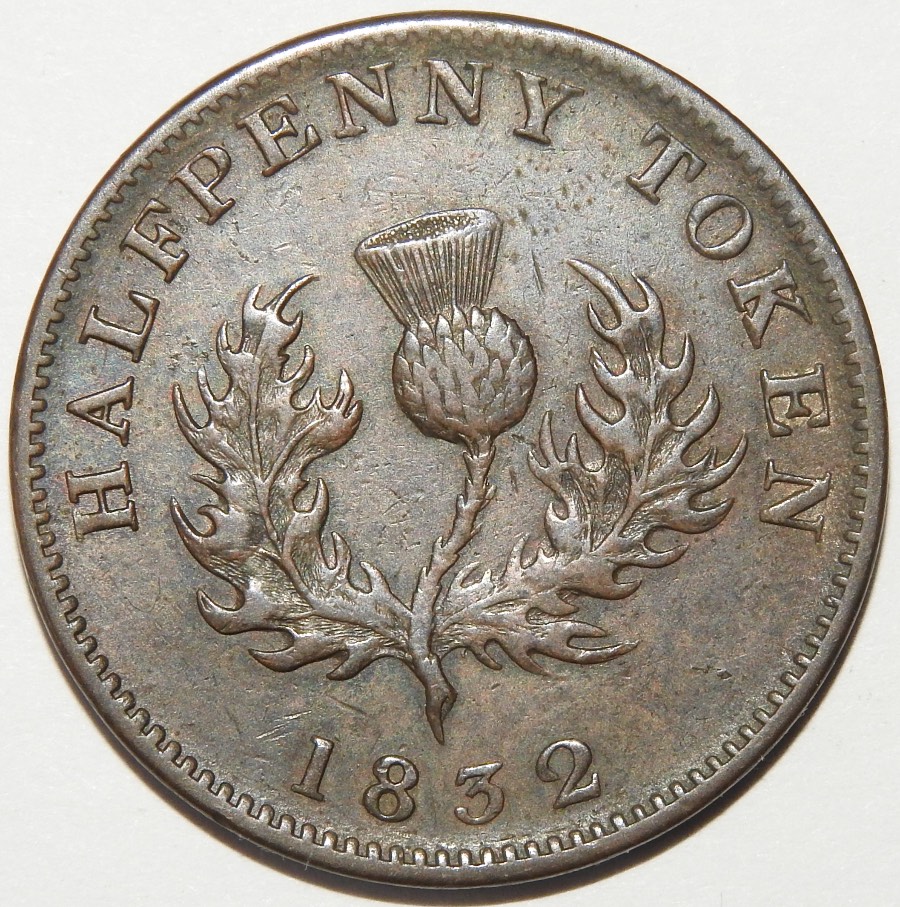
Concerning your 1832 halfpenny Nova Scotia token:
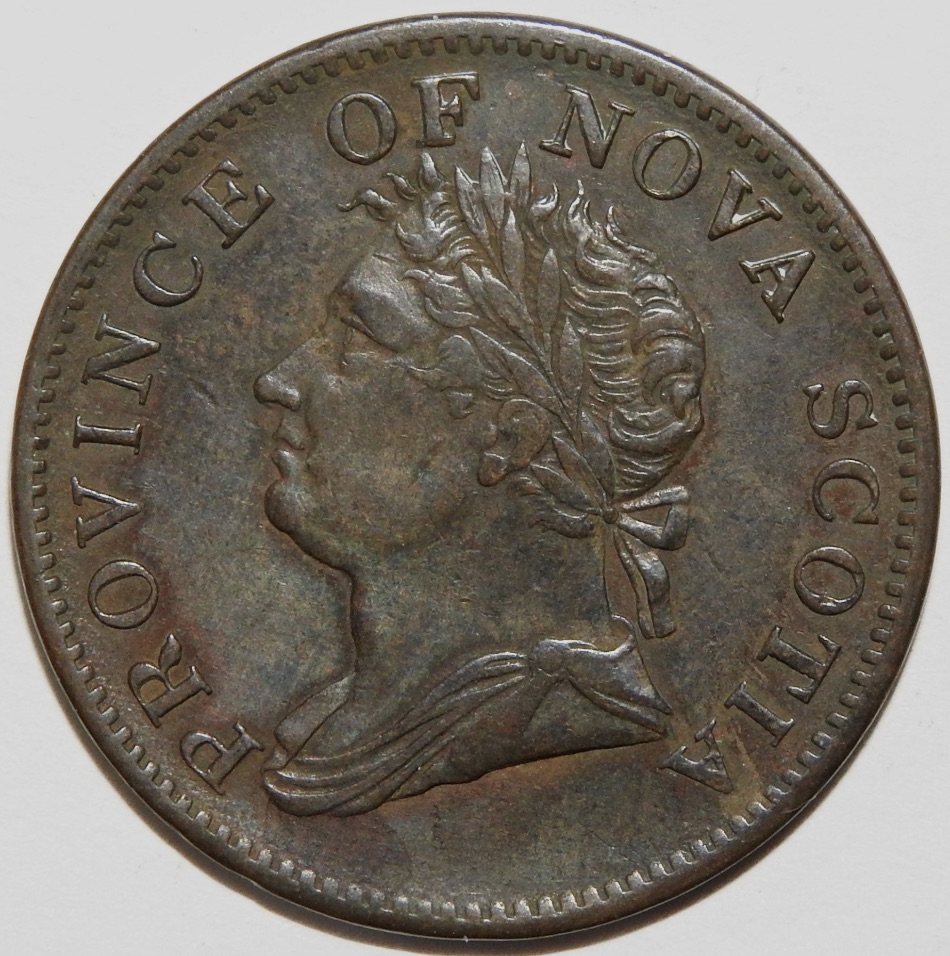
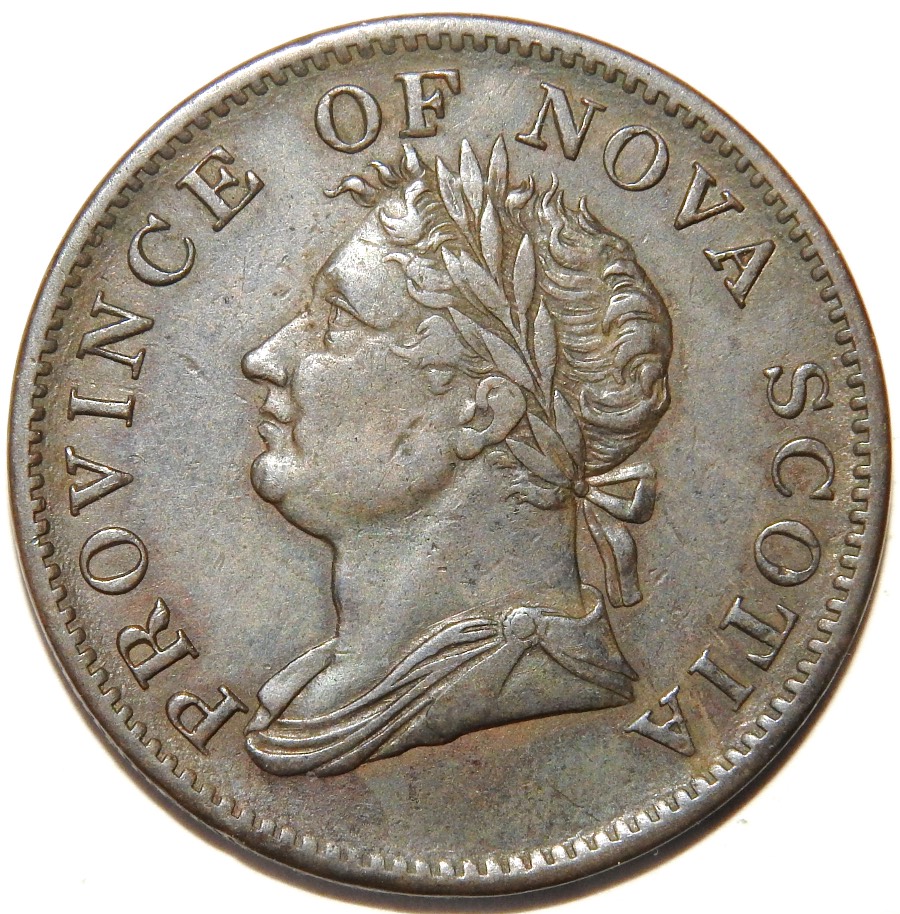
I concur with the grade of XF-40. I believe this token to have been properly cleaned years ago and has since re-toned. On such tokens of this era one would expect to see 'crud' within the devices. Absolutely no curd is detectible on your token. This proper cleaning should not affect or detract from they value of the token.
This series, along with the Habitants, New Brunswick's, and St. Georges were expertly manufactured and exhibit an abundance of detail.
Of this series, Dr. Courteau identified some thirteen different sub-varieties. Charlton separates this series into four primary groupings dependent upon the configuration of the 'ribbons' on the obverse. Charlton's NS-1D1 is described as engraile, and having the left ribbon longer of which Courteau identifies as Co. 265 (sole ensample). Charlton's NS-1D2 is also engrailed and is described as having the right ribbon longer. This grouping encompasses Courteau varieties 266. 267, 268, 269, 270, and 271. Charlton identifies NS-1D2a as the same as Charlton's NS-1D2, but having a plain edge. This is a pricy variety and is identified by Courteau as variety 272a. Charlton's NS-1D3 is identified as engrailed and having the ribbons of equal length. This grouping encompasses Courteau varieties 272, 273, 274, 275, and 176.
The ribbons of your token are of equal length, thus of the NS-1D3 grouping.
Courteau 272 is identified as 'the two upper locks are thin, disconnected and almost straight, the middle is closer to the lower one, the leaves near bow show all, but the upper one is disconnected from knot.' On your token, the upper leaf is joined to the knot.
Courteau 272a is identified as 'The two lower locks are long, the middle is longer on this than on any other of the series, and comes very close to the letter o. This is not your variety either.
Courteau 273 is identified as 'The two upper locks are short and thick, and distant from lower one; the central leaf near bow is partially hidden by adjacent ones' This is a possible contender.
Courteau 274 is identified as 'The two upper locks are plain, the middle is the smallest, almost straight, and closer to lower one; the leaves near bow are all visible and well connected to the knot; narrow ribbons of equal length. A single hair forming an upward curve under the lower lock is peculiar to this variety.
Thus far variety 274 appears as the strongest contender.
Courteau 275 is identified as 'The locks on forehead are equally distant and the middle one forked; central leaf partially overlaps others, the ribbons are the same length, but the deft is detached and terminates in an outward curve.'
Finally, Courteau 276 is identified as 'The two lowest locks are large, the upper one is mall and weakly struck, almost inperceptible; the three locks near bow entirely show, and are well connected to know; the ribbons are of equal length and narrower than on any other of the series.
Weighing all the evidence, you token appears to be Courteau variety 274, having a rarity factor of 1 (common).
doug









 Posted 01/12/2018 8:39 pm





