| Author |
 Replies: 32 / Views: 5,832 Replies: 32 / Views: 5,832 |
|
|
|
New Member
 United States
12 Posts |
|
|
New Member
United States
12 Posts |
one more 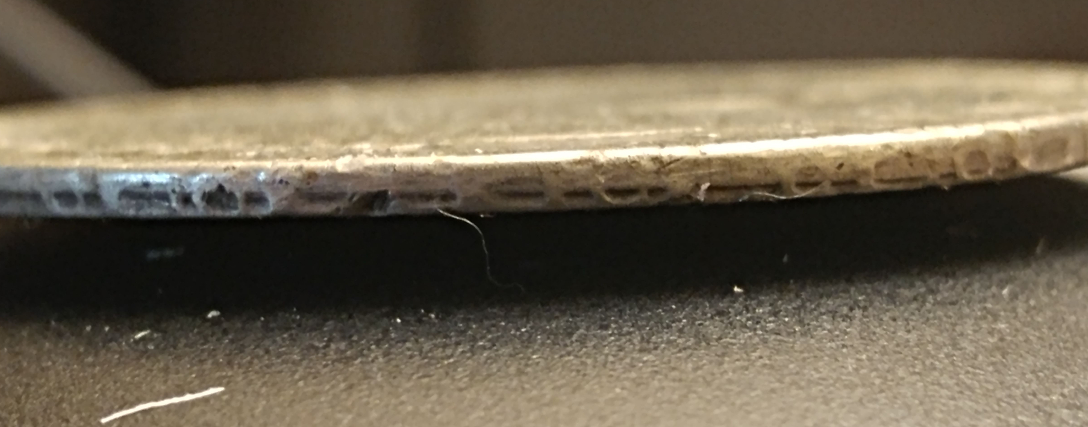 |
|
Pillar of the Community
United States
1761 Posts |
The middle photo (brassy piece) is obviously the piece from Spain by the noted Spanish dealer. Its K.71D-M34. There are two known (R8). The discovery piece which is in my "Forgotten Book" in Chapter 2 as a new variety obviously as my PART III treatise and the discovery piece was the Marc Mayhugh example which I never got a picture from this C4 member but its known as the 1771(1) variety for obvious reasons. The second example is this ebay piece from Spain very recently (last week actually) which went into a bidding war with Richard August and Chris Stevens after I dropped out at $227.77. Chris Stevens is the new and upcoming numismatist of Spanish/American contemporary counterfeits and will be taking over the Kleebergs after I am dead. He has at least 50+ different varieties. I never asked. The others pictured will wait for another time. Chris won the piece at an astonishing $400 price or so ... hey ... August always loved the Kleeberg 1771's ... he told me at a C4 show 20 years ago. He made Chris pay dearly for it but its a classic in the series. Interestingly not sure that top photo may be the M. Mayhugh example or we have a third known piece? In terms of the 4 Reales size that indicates 8R I can't recall its edge of this Paty99 inquiry. The Christensen piece when his long lost extra CCCs were finally found by a family member and auctioned in the Philadelphia Sale by Stacks was new to our world of CCC collectors and it was noteworthy and in some ways this denomination error CCC is still in that class of desirability. It seems that second column bottom piece may be the one I sold to Kraljevich - you sure keep a well groomed photo file realeswatcher! JPL Edited by colonialjohn
01/18/2018 9:46 pm
|
|
Pillar of the Community
United States
5362 Posts |
Most but not all buttons have plain edges. A colonial edge would point in the direction of a CCC.
John - remember one fact. Proof that an alloy contains over 0.2% gold in relation to silver content only proves that it MIGHT be a Contemporary Circulating Counterfeit. The XRF tests is successful to prove that a coin could NOT HAVE been made before 1850-1870 but not necessarily that it was.
In combination with the edge it may be a CCC but since it was undersized for an 8R, it would never have been given a GNL number and included in the book.
|
|
Pillar of the Community
United States
1761 Posts |
Stacks thought it contemporary Bob and so did I - yes its a 4R sized planchet with 8R. Its a die engraving blunder or oddity. Who can say ... its not and I agree a GNL Type 1 due to its size being a 4R planchet. When I said like a GNL Type 1 I meant its contemporary circulating status being "probably" of the period due to its fabric. Its crude with a legend blunder. Great piece!
Edited by colonialjohn
01/19/2018 09:25 am
|
|
New Member
United States
12 Posts |
I know I am no expert on this topic but I do have the item in my hand and in my opinion it was made to be a coin. Whether it is a CCC or made as a token to be used in the lunch room at the Mexico City mint, that I don't know. However like I said earlier I believe it contains silver which makes me think it may be a CCC......
Then again, I could be wrong. :-)
Pat
|
|
Pillar of the Community
United States
1962 Posts |
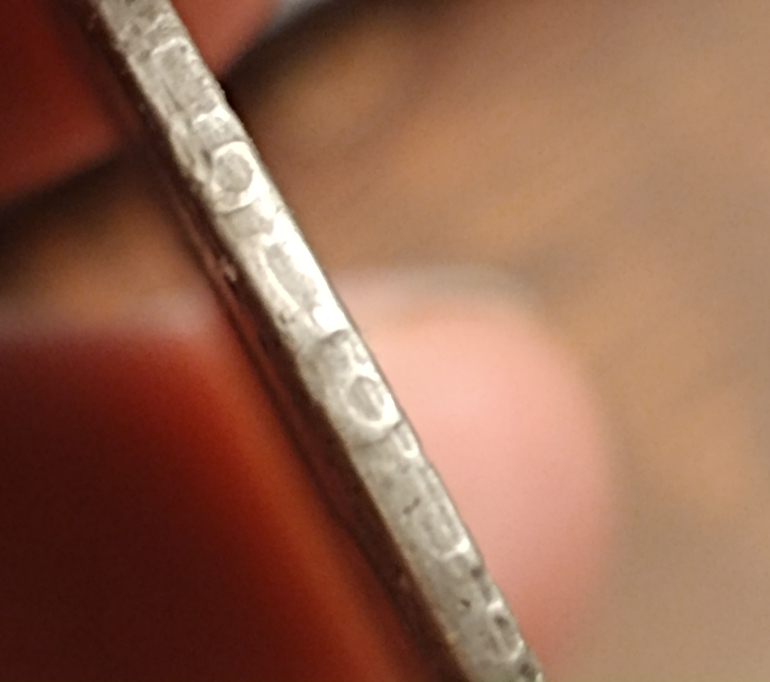
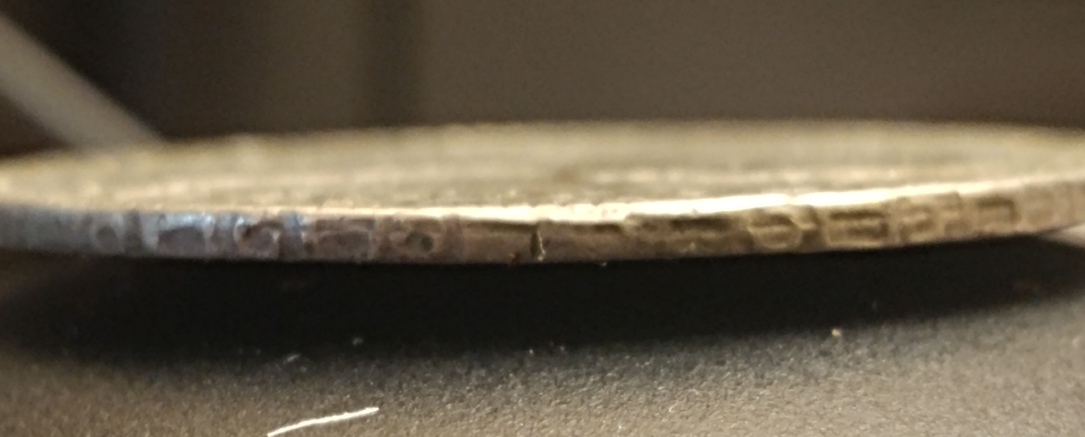
What are we seeing that edge seam as... a cast seam or some kind of guiding line? Quote:
made as a token to be used in the lunch room at the Mexico City mint Just to be clear, this piece had absolutely nothing to do with any official Mint practice, whatever the alloy. Pat, the alloy on your piece has much more of that dull grey tone associated with "German silver" or copper-nickel based alloys that maybe sometimes have ~10%-ish silver added in. If you're familiar at all with some of the really common 1830s-dates contemp ctfeit bust halves... same look. Clearly the other pieces we see were all of dubious alloy. Edited by realeswatcher
01/19/2018 4:35 pm
|
|
Pillar of the Community
United States
1962 Posts |
John, when I see something interesting, unless I get sidetracked, I try to save it for posterity. I do get a little sloppy sometimes in recording pedigree, though... so not exactly sure where I saw that first 1771 example. Sort of looks like the way the Spaniards tend to do their photos, so I would guess a Spain seller.
But, boy, ~$400 for a piece where (2) out (2) that I've seen have removed shanks... That might be ~$400 to buy a button.
I do wonder, sometimes... even though most of the button types were later creations, did people sometimes attempt to remove the shanks in an effort to pass them as money? I would bet that late 1800s, you still had colonial silver floating around some as money in Argentina, Uruguay... I know some more remote/underserved parts of Central America did.
|
|
Pillar of the Community
United States
1761 Posts |
Occasionally I have seen both regal and CCCs with shanks. It does not automatically mean they were like buttons we see in GNL and make them later or 1850-ish like those 8's we see in GNL. There was an old time dealer the late Lou Hudson that LOVED buttons. I bought a few and they were common in Portraits of 1R size and not so common in 2R size. He also carried the 8's we see in GNL. Some regal, some CCCs and a few later concoctions from who knows when. Sometimes money was used for other purposes. Again it does not make them mid-19thC - automatically.
|
|
New Member
United States
12 Posts |
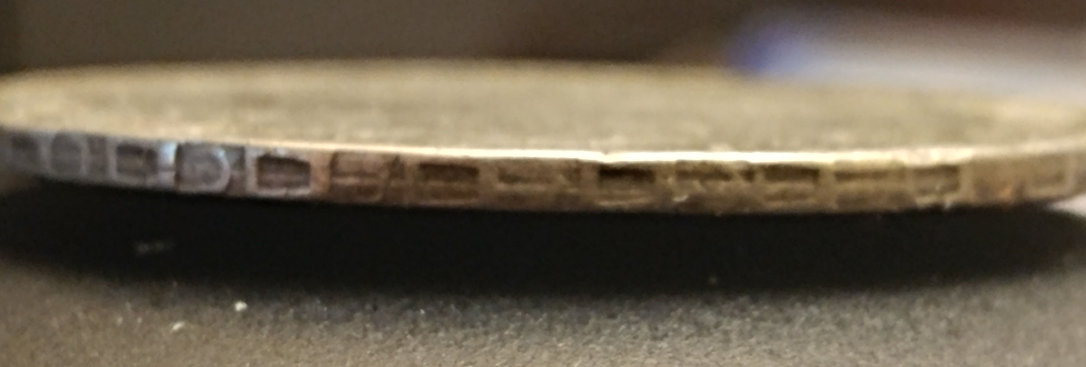
Realeswatcher. I can't be sure what that seam is but it might just be a well placed scratch as well. I don't know. After the education I have acquired over the last 2 weeks since pulling this coin out of hiding, I realize it has nothing to do with the Mexico city mint. I was just making a joke. :-) ...
But I am going to start calling it my Mexico City mint lunch token....
Eh maybe not
I'll see if I can get a better shot of that seam.
Paty99
Just to be clear, you are talking about the seam in the third edge picture?
Edited by paty99
01/19/2018 10:55 pm
|
|
New Member
United States
12 Posts |
Actually now I see there is a seam that runs along the edge of the coin also, that definitely looks more like a seam than a scratch. Is that what you were talking about?
|
|
Pillar of the Community
United States
5362 Posts |
The line running through the edge details is a trait I have seen on counterfeits of all ages. I have seen it on coins that are definitely CCC but also on very recent Chinese fabrications. I think it is most common in the last half of the 19th century. That unfortunately would put it in the button era.
Personally I don't like it being there for a claim that the coin was made ca 1800. I have yet to understand why anyone would add a line near the center of the edge die. In some semi-modern cases (post 1850) it seems to be a trace of a seam made when a transfer die pair was created by electro-typing. The seam occurs when the join between the two halves is widened to add almost a 1/2 mm in thickness to the coin being copied. The added thickness was to add weight.
Regarding the ability of many auction companies to address the age of a forgery, I always find descriptions to be somewhat self serving. I have seen too many counterfeits labelled original and too many counterfeits called off metal patterns or die trials to automatically accept that even Stacks, Bowers and Ponterio is correct in every case.
I am not saying it has to be a button. Perhaps some of these uniform buttons are really valuable. I am just unsure of the age of this one.
|
|
Pillar of the Community
United States
1761 Posts |
Its not any form of an electrotype or lead-filled scenario as I would have remembered that much - I wish I kept records of its XRF assay and SEM/EDS microstructure. I will check the bank vault again - perhaps I have another of this type? Its odd and extremely crude edge - I remember. JPL
|
|
Pillar of the Community
United States
1962 Posts |
I can hear Bob grumbling under his breath about that 1840 "pattern" Cap & Ray 8R...
My mind is starting to wander to those 1808 4 Reales "Santiago" pieces. They also generally present more like a CC coin than a button... but I've seen a few references out of South Americans that they seem to have those dated to ca. 1870 (which is right in that button period). I'm not sure if that's just lazily assuming them to be tied in to the button types... or they have on-the-ground historical recollection.
|
|
Pillar of the Community
United States
5362 Posts |
realeswatcher Personally I classify the 1808 Santiago 2R as far more modern than a CCC. It was likely used for money but dates to a very late date. Artificially worn etc.
Also yes, I am absolutely grumbling because I am positive that the $3,000 1840 pattern is a simple CCC, an example from the period of John Riddell. I have been searching down leads for the location of his written documentation on volume 2 of his book. I have actually located a significant number of notebooks belonging to him that have never been fully catalogued. He was apparently addicted to making notes about everything he did. They are located in several collections in University Libraries. I have couple leads I hope to live long enough to research. It would be a great coupe to locate that coin in Riddell's notes.
|
| |
Replies: 32 / Views: 5,832 |





 First Page



 Posted 01/18/2018 2:57 pm





