| Author |
 Replies: 16 / Views: 3,659 Replies: 16 / Views: 3,659 |
|
Pillar of the Community
United States
4883 Posts |
This is the ".W.W" variety. I'd like to hear your opinions on what grade it might receive if submitted for certification. 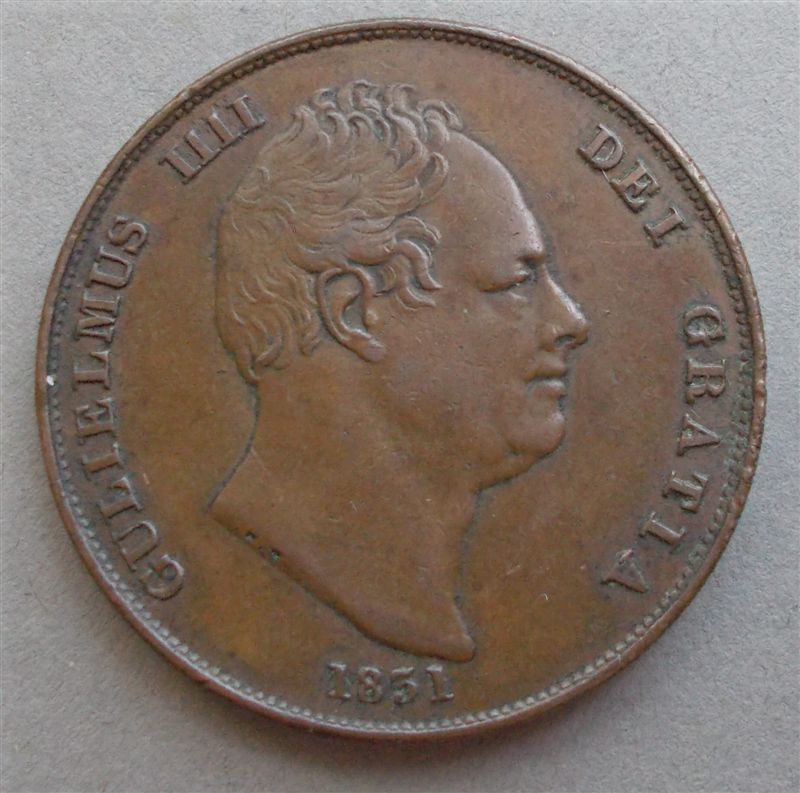 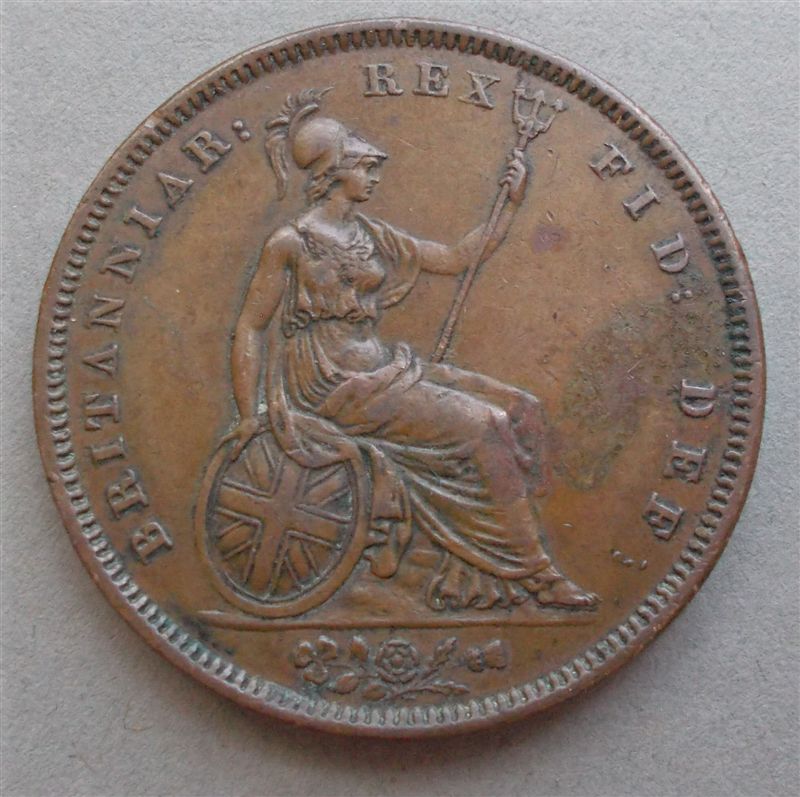 Colligo ergo sum
|
|
|
|
Valued Member
United Kingdom
190 Posts |
GVF ( UK grade) but the reverse looks cleaned on the picture
|
|
Bedrock of the Community
Australia
21792 Posts |
In theory, it could be graded with a Sheldon number, but I only grade U.S. coins 0 - 70.
I have never seen a British coin slabbed; I stand to be educated.
|
|
Valued Member
United Kingdom
190 Posts |
On the Sheldon scale AU53 but IMO been messed about with which is a pity as a scarce date
|
|
Bedrock of the Community
United States
94367 Posts |
Agree low to mid AU with, apparently, some sort of environmental damage.
|
|
Pillar of the Community
 United States
4883 Posts |
Quote:
I have never seen a British coin slabbed; I stand to be educated. I don't believe Stack's Bowers, Heritage, Goldberg, et cetera would handle any such unless it was. In any case, see: https://www.PCGS.com/pop/default.aspx?t=6The population report shows that PCGS has only ever certified three examples of this variety - grading them AU 50, 55, & 58. Colligo ergo sum
Edited by Lucky Cuss
01/23/2018 09:58 am
|
|
Pillar of the Community
United Kingdom
1351 Posts |
Probably not valuable enough to slab (but that is up to you).
It could probably benefit from verdicare.
|
|
Bedrock of the Community
Australia
21792 Posts |
|
|
Pillar of the Community
United States
3402 Posts |
Using American grading, there is too much wear to be an AU, therefore...EF.
KK
|
|
Valued Member
United Kingdom
190 Posts |
Do the American grading companies just grade the currency coin as one type rather than the three that are recognised ?
|
|
Pillar of the Community
United States
4883 Posts |
Quote:
Do the American grading companies just grade the currency coin as one type rather than the three that are recognised ? I haven't looked up what NGC does, but the PCGS population report at least distinguishes between the ".W.W" marked variety and what would seem to be the more common unmarked type. Incidentally, the highest grade PCGS has ever given a William IV penny is a 64 - and none of those was an 1831 of any sort. Colligo ergo sum
|
|
Valued Member
United Kingdom
190 Posts |
64 would be a really good grade for a currency one as a sought after date 31,34& 37
The Standard one is the most common in currency then the .W.W the w.w may well just be a blocked die as I have only seen them in low grade.
The 1831,34 & 37 currency are all sought after in Top grade.
|
|
Bedrock of the Community
United Kingdom
18946 Posts |
I'd agree with pwa1967 - Good VF (British grade).
Not sure what the stain on the reverse is - environmental damage perhaps?
This is one of the better William IV pennies I've seen - pure copper coins are soft and wear down quickly, and these heavy coins used to get dented and battered in circulation.
|
|
Pillar of the Community
United States
4883 Posts |
Quote:
Probably not valuable enough to slab Consulting my most recent price guide (2018 edition), in EF this "books" at £300. Something would almost certainly have to be shaved off that figure if it were to get a "details" annotation for that disturbed area on the reverse. In any case, I'm not inclined to have it certified. I hadn't mentioned it, but this came (along with quite a few other pieces) out of a tray containing what the seller considered "junk" world coinage. On that basis, its flaws were tolerable. Colligo ergo sum
|
|
Pillar of the Community
United States
4883 Posts |
One last detail to address regarding this coin - on the reverse between "DEF" and Britannia's extended foot there're three irregular raised dots. I take these to be indicative of chips/gouges in the die. Is anybody familiar with this particular die state? 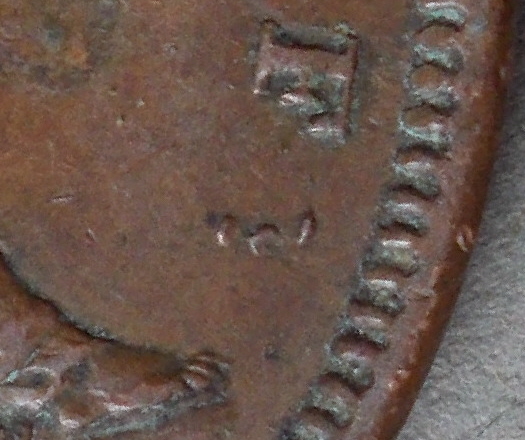 Colligo ergo sum
|
|
Valued Member
United Kingdom
190 Posts |
A lot of the copper pennies have re entered colon dots in different places.There is a 1855 with three colons after FID and also a 1859 three colon after DEF also 1854 with none to the reverse.
Looking at yours its like others I have seen on the same penny in the same place.
The DOT / Flaw nearest the teeth appears to be grit that has damaged the die leaving a mark that is not uniform or circular and the other two are in the correct position.
Maybe it is a restruck colon ....thats for you to decide.
Edited by pwa 1967
02/16/2018 3:45 pm
|
| |
Replies: 16 / Views: 3,659 |








 Posted 01/22/2018 07:17 am


