Stonebone, I used to be the first to recommend acetone use as having or leaving no side effects after a simple soak.
I still recommend it, but only if certain guidelines are followed. On bright red copper some adverse effects or toning can occur if some precautions or proper steps are not followed.
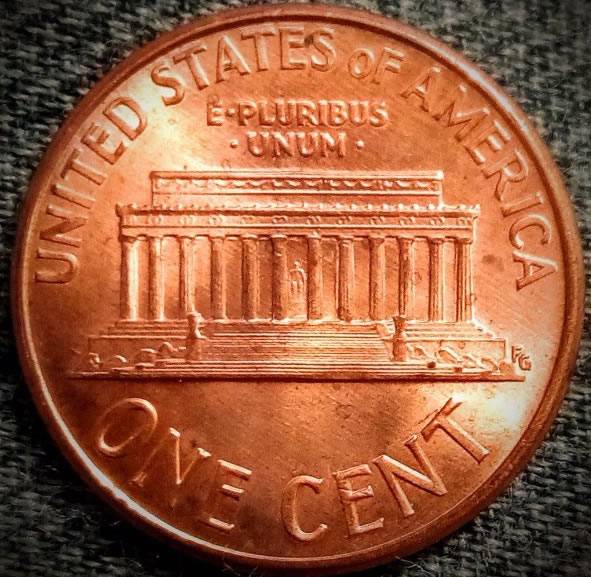
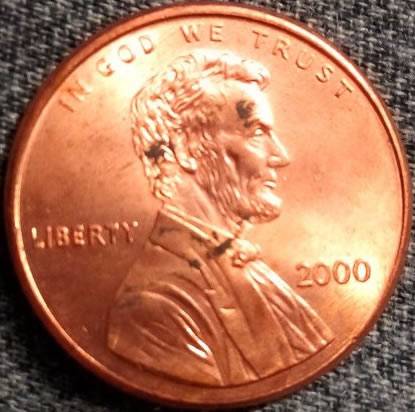
This coin is not showing a bright red, but close. Can't tell whats on the obverse from current image. On the reverse the spots look like stains that probably will not come off.
Have company so will try and follow up later. Thanks, Doug.
Follow up: From BadThad Posted 12/20/2009
http://goccf.com/t/57008#447106Quote:
Whenever you have residue and want to try to conserve a coin, you should follow the solvent polarity ladder. Randomly trying different solvents is not systematic, it is problematic. You'll never figure out exactly what kind of residue you have and whether or not you'll be able to remove it by darting around. The goal is conservation and if you're not careful you'll cross-over into the evil world of cleaning.
Here's an except from my upcoming book on verdigris....but it applies here too. I also have an in-depth look at olive oil that should make for interesting reading.
Quote:
THE FIRST STEPS OF CONSERVATION
ALWAYS be aware that sometimes organic residues can be green and mistaken for verdigris. Just because a coin surface contaminate is green doesn't necessarily mean it is verdigris. Coins can be exposed to anything and everything during their existence. That green spot could be a very old piece of gum. For this reason it is recommended to first try what I call the solvent POLARITY LADDER shown below:
Wannabe Geek Note: Polar means a chemical has a negative charge on one end and a positive charge on the other end.
Very Important Note: Only use glass containers with a tight fitting lid for soaking coins.
TABLE 3: The coin solvent Polarity Ladder.
SOLVENT POLARITY
Deionized or Distilled Water Polar
Acetone Less polar than water
Xylene or Hexane Non-polar
STEP 1: WATER
Water will remove many polar surface contaminants. On the Polarity Ladder we start with the absolutely safest coin solvent in the world. As long as soak times are kept reasonable, probably less than 7 days, distilled water will not damage a copper coin. When water soaking, be sure to change out the water at frequent intervals. The more frequent the water changes, the better. Remember, the water is dissolving unwanted contaminants so it becomes contaminated. Each time you change it you're throwing away the bad stuff. Always use distilled or deionized water for soaking. Unpurified water or tap water contains contaminants that may deposit on the coin defeating the conservation attempt.
STEP 2: ACETONE
Acetone chemically, OC(CH3)2 , is a very polar, organic, volatile solvent. High grade acetone can be purchased at most hardware stores. It can also be ordered over the internet in a higher grade like ACS (American Chemical Society) but at a much higher cost. It will remove many organic materials from the coin surface.
Warnings: Do not soak in directly sunlight and store your acetone away from sun. UV light can degrade acetone and produce some chemicals that might be hazardous to your coin. Never allow the acetone to evaporate while the coin is soaking or everything that was dissolved will simply be redeposited on the surface. Use high quality acetone only! DO NOT USE NAIL POLISH REMOVER! Acetone will dissolve plastics and styrofoam so only use a glass container with a tight sealing lid when soaking in acetone. Acetone is flammable; keep open flames away from it. Be sure to read the label and MSDS so you understand the hazards of working with this organic solvent.
A good test to perform before using acetone on a coin is to place some in a glass dish and allow it to evaporate. Inspect the bottom of the dish once it's gone and make sure there's no residue, haziness or sticky film. Any acetone that fails this test is impure and should not be used on a coin.
STEP 3: XYLENE
Xylene is what we call a non-polar solvent and it's completely safe on copper. It's important to use a non-polar solvent because it's the only thing that will dissolve some organic residue. If the surface debris is non-polar, chances are that xylene will be able to dissolve it. Remember "like dissolves like"! Do not over-soak in xylene or you may affect the patina, it can lighten a brown patina with enough time.
That is the process of stepping through various coin safe solvents before attempting conservation. If the green is removed, then it was most likely organic (carbon containing) in nature.
I'm adding if its a coin with potential high dollar value, think twice, then stop and think twice again. Might be best to let a professional do it. That said if one decides to go ahead.
Start with a clean vessel. Some soaps can leave residue in or on the container surface. If doing multiple soaks, recommend a cleaned vessel for each attempt.
Rinse coin with fresh distilled water after each attempt before drying. Try not to let the solvents evaporate dry on their own.
Use a clean soft, microfiber cloth and lightly pat or dab dry.
Never rub!
This is how I would approach a coin that had potential value. Cruddy or most circulated coins is another story. They generally require less fuss.
Forgot to mention gloves or no gloves try and handle the coin by the edge. Thanks, Doug.









 Posted 02/24/2018 09:40 am





