| Author |
 Replies: 9 / Views: 2,254 Replies: 9 / Views: 2,254 |
|
|
Valued Member
United States
393 Posts |
Hi, everyone. thanks for the opportunity to learn from the experts. Kindly see if the MM has doubled die & a repunched. Is the innet rim with doubled die, too? Is the MM filled? Thanks. 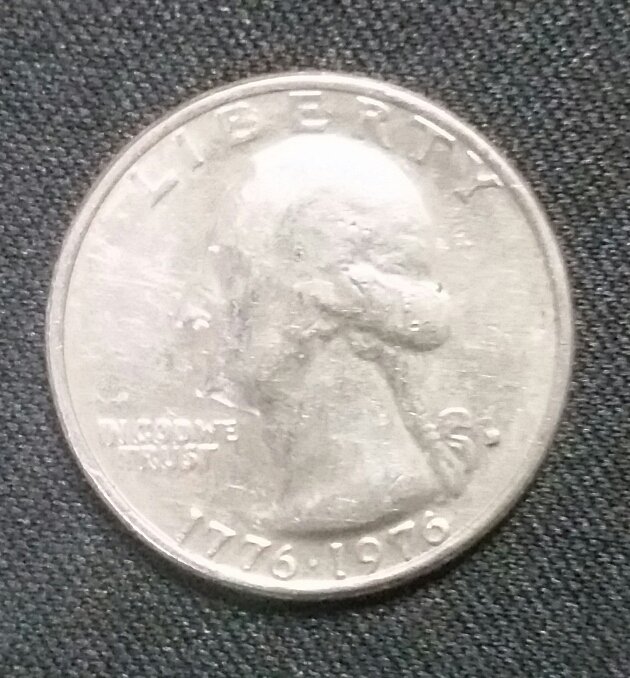 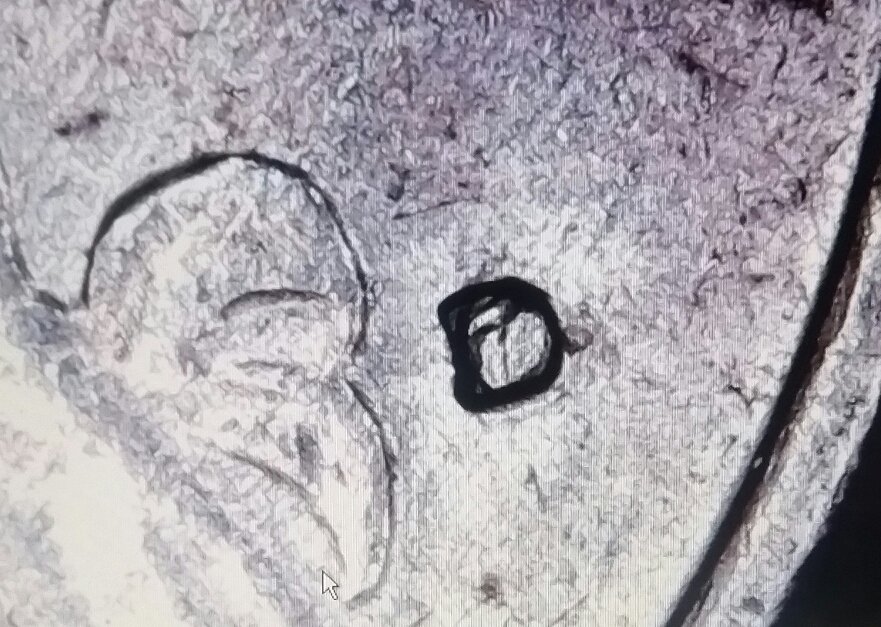 |
|
|
|
Pillar of the Community
United States
4409 Posts |
Not an RPM, no split serifs or separation. It is a filled mintmark, they are common, not worth anything.
Where do you think there is a doubled die?
|
|
Bedrock of the Community
United States
62064 Posts |
The mint mark post that would have formed the center of the mint mark, has broken off the die. It even broke below the base of the post. How can I tell? It is above the mint mark. That is what you are seeing. The void that broke off the die below the base.
|
|
Valued Member
 United States
393 Posts |
Thanks for the responses. Coop, you have an understanding of my neophyte visual imagination. How many times are MM being punched? Is the coinage process somewhat similar to the baking/icing of cake? The masters have complete design of the coin & the working hubs/dies have the partial designs being punched to the planchet? In my limited knowledge, if all the working hubs/dies have the same design as the masters, the finish coin will have flat appearance like a water paint? 'Coz that dark, chocolate matter occurs at certain parts of the devices, it outlined the MM. What is the name of that dark chocolate colored liner? Is that dark chocolate liner a die? Thanks, again.
|
|
Bedrock of the Community
United States
62064 Posts |
How many times are MM being punched?Depends. They are hammer into the die. If the location/depth/angle struck isn't correct, they will be hit over and over until it looks correct to the worker. 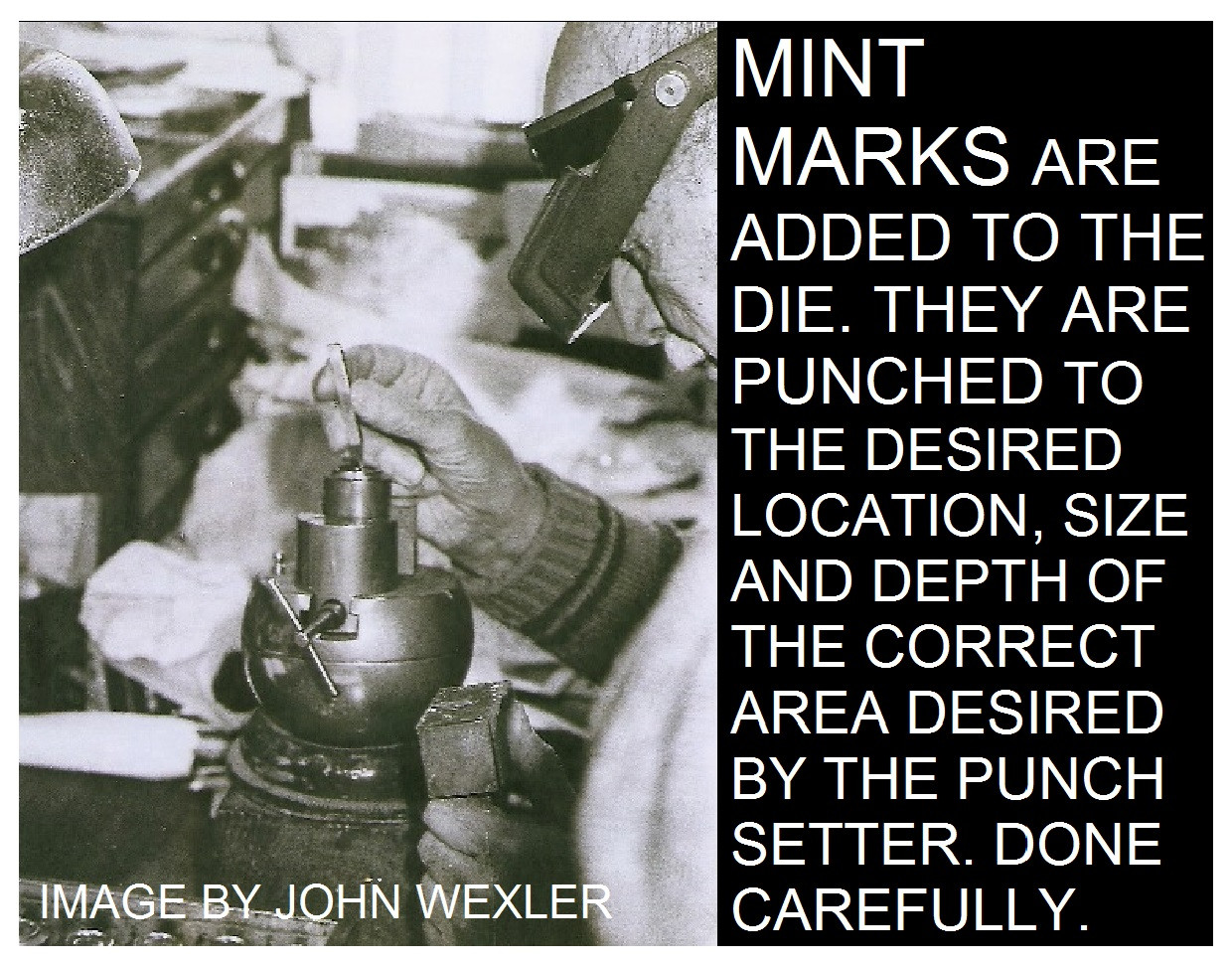 Since 1990, the coins have the mint marks already on the dies as they are part of the design since then. So no more RPMs after 1989. (last year for this to happen)
|
|
Valued Member
424 Posts |
I think finding a clear "D" mint mark would be harder then finding a smashed one.
My collection of 1976 quarters has filled mint messed up marks or none at all.
What do you all think?
|
|
Bedrock of the Community
United States
62064 Posts |
The broken post on the devices are usually an indicator of die wear. As the die gets older, things start to happen. Cracks/chips/breaks/cuds/clashes/polishing and other things. So depending on the die state, the dies may/may not have an issue. On a filled device that from a post, the only way this would look like that is that the die post has broken off the die. All other coins struck with that die will show the exact same issue (plus others events that happen later) until the die is finally retired. So a filled device (broken post issue) is terminal for the die. It will have to deal with it until its life is done.
|
|
Valued Member
United States
393 Posts |
Thanks, all your educational input is helping me. Just for my learning process, I saw this as I was browsing, there's a 1942-D CONECA: RPM-002/FS-01-1942D-502 (018.91) 'The secondary D is evident to the north of the primary D.' It's just my way to learn. Please bear with me, this bicentennial MM, can it be the opposite? 'The secondary D is evident to the SOUTH of the primary D.' Just a wishful thinking. Lol. Thanks again.
|
|
Pillar of the Community
United States
4409 Posts |
Mintmarks can be repunched in any direction, but yours is not a RPM.
|
|
Bedrock of the Community
United States
62064 Posts |
But to answer the question: In orer to be a certain die number, it much match exactly the same. Each coin will have the same location of the mint mark. Same spread if they are the same variety. If one part is missing or different, then it is not that variety. (the only exception is on the class 2 doubled dies. On them the doubling is on the outside edge of the devices. Die wear and remove the doubled die in this area. But internal hub doubling can still be seen. Just the outside devices that have the hub doubling of the area closest to the rim will be affected by being removed)
|
| |
Replies: 9 / Views: 2,254 |
|










 Posted 03/05/2018 10:34 pm


