| Author |
 Replies: 14 / Views: 5,012 Replies: 14 / Views: 5,012 |
|
|
New Member
Australia
4 Posts |
Can anyone identify this Chinese coin found at an 1866 site in Australia please? 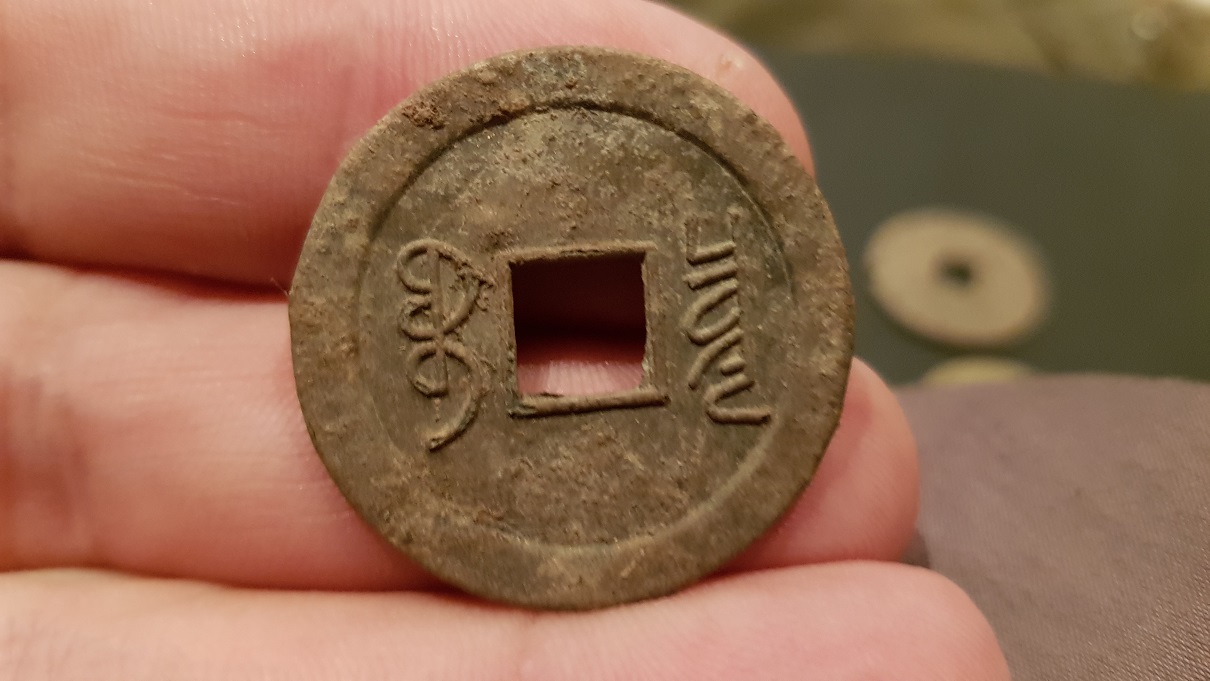 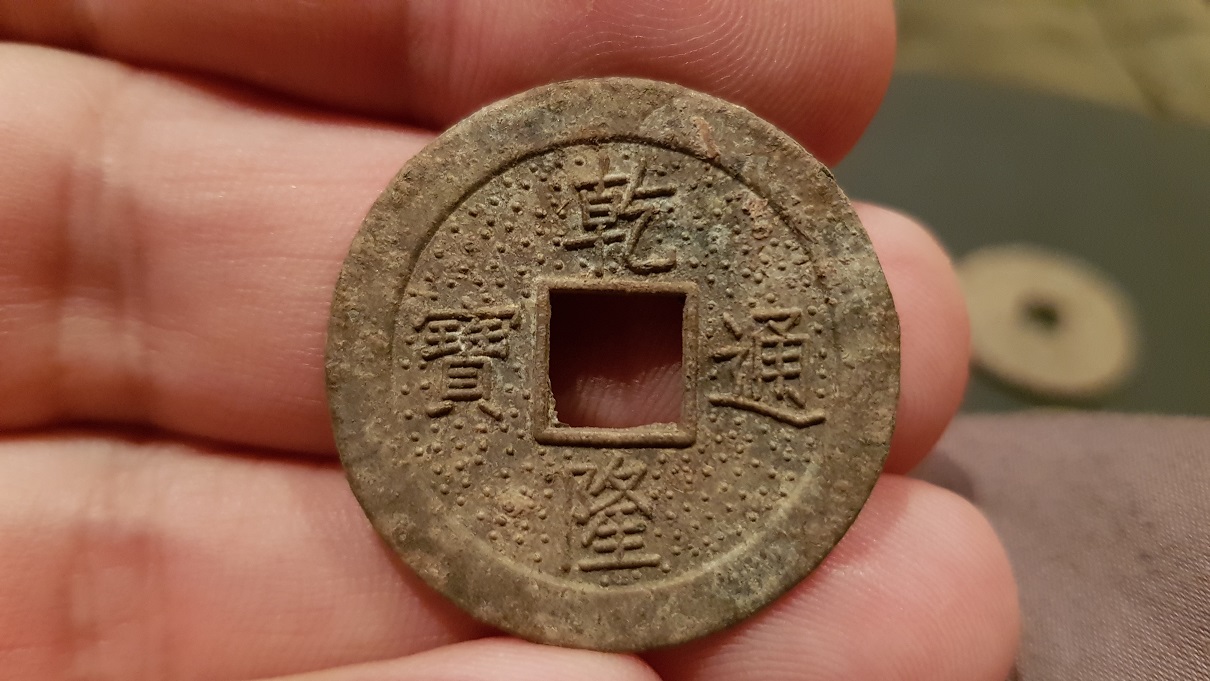 Edited by hazz
03/16/2018 05:40 am
|
|
|
|
Pillar of the Community
Russian Federation
5186 Posts |
Imitation of Qing cash. The dimples give it away.
|
|
Bedrock of the Community
Australia
21792 Posts |
Not a Chinese cash,
but a Chinese charm.
The pimples on the reverse are the diagnostic feature.
I will take it as said, that it was found in 1866, although there lots of modern Chinese cash coin / like charms.
Lots of Chinese came to Australian during the Gold Rush days, and the finding of these items in the old abandoned mining camps is not an extremely rare occurrence,
although the finding of cash coins would be less rare these days.
They are most often found by hobby metal detectorists, and mine site archeologists / historians.
|
|
New Member
 Australia
4 Posts |
Thanks that's great to know, and learn how to identify a Chinese Qing charm. Is there any way to date it please?
|
|
Moderator
 United States
196424 Posts |
 to the Community! Your post was moved to the appropriate forum for the proper attention.  |
|
Pillar of the Community
United States
6130 Posts |
It must have gotten mixed up if your notes say this was found in 1866... this is a modern, machine-struck copy, not cast. The characters are far too clean and clear, even compared to very lightly circulated official Qing coins. China did not machine-strike coins until about the 1880s, and this coin should be from the late 1700s.
If the *site* dates to 1866 but the coin was recently found, it was lost or planted by a tourist as a prank.
|
|
Bedrock of the Community
Australia
21792 Posts |
|
|
New Member
Australia
4 Posts |
Thanks all for your help. Yes it was found recently on the old site, and so clearly not as old as the site, although early 20th century as you indicate. Thanks again.
|
|
New Member
Australia
4 Posts |
The consensus appears to be that the initial two items that I found are not coins but rather Qing dynasty charms, based on the dimples on one side. Yesterday I found a spill of six more nearby to the original two, however the latest six are of two smaller sizes 20mm and 25mm diameter. The first two that I found are 30mm diameter. Can you tell me are they different "denominations", how old are they, and why would they be in the grounds of an 1866 Methodist church in Australia please? 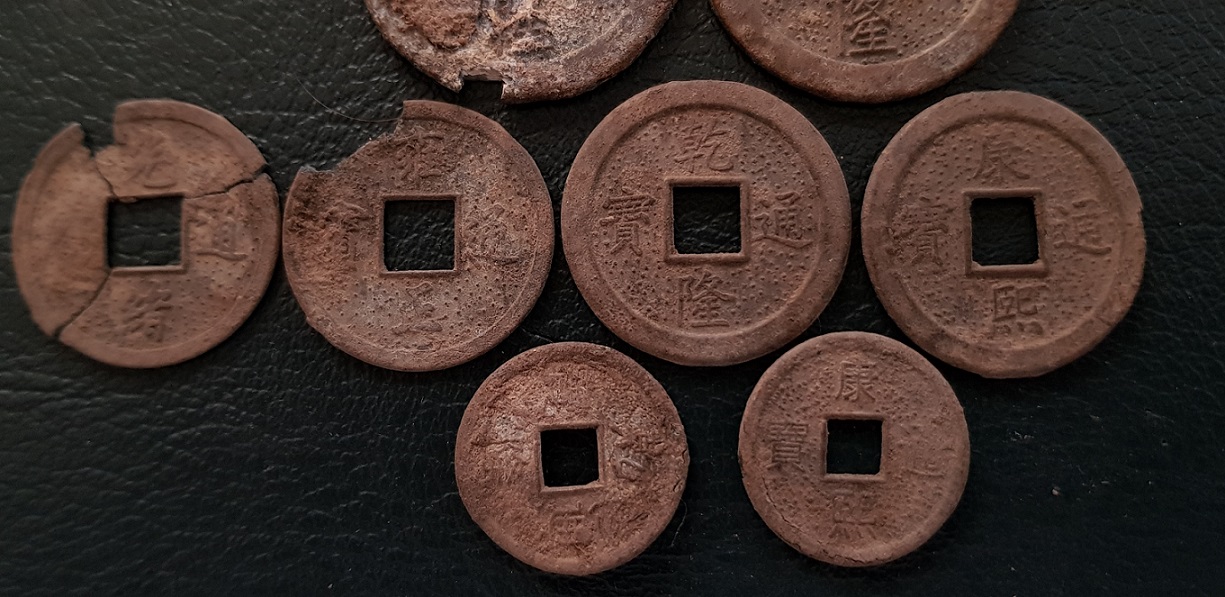 |
|
Pillar of the Community
 United States
6514 Posts |
What a cool spill find in such a neat place. Nice.
|
|
Pillar of the Community
United States
4883 Posts |
This has all the earmarks of a site being "seeded" for some reason, akin to the nefarious practice of placing some decent precious metal bearing ore to be found in or around what is in fact a totally played out mine. The coins are absolutely very modern reproductions, possibly artificially aged (from the looks of them, maybe by being run through a fire) before being put there. Here's what authentic 19th century and earlier buried cash coins ought to look more like: 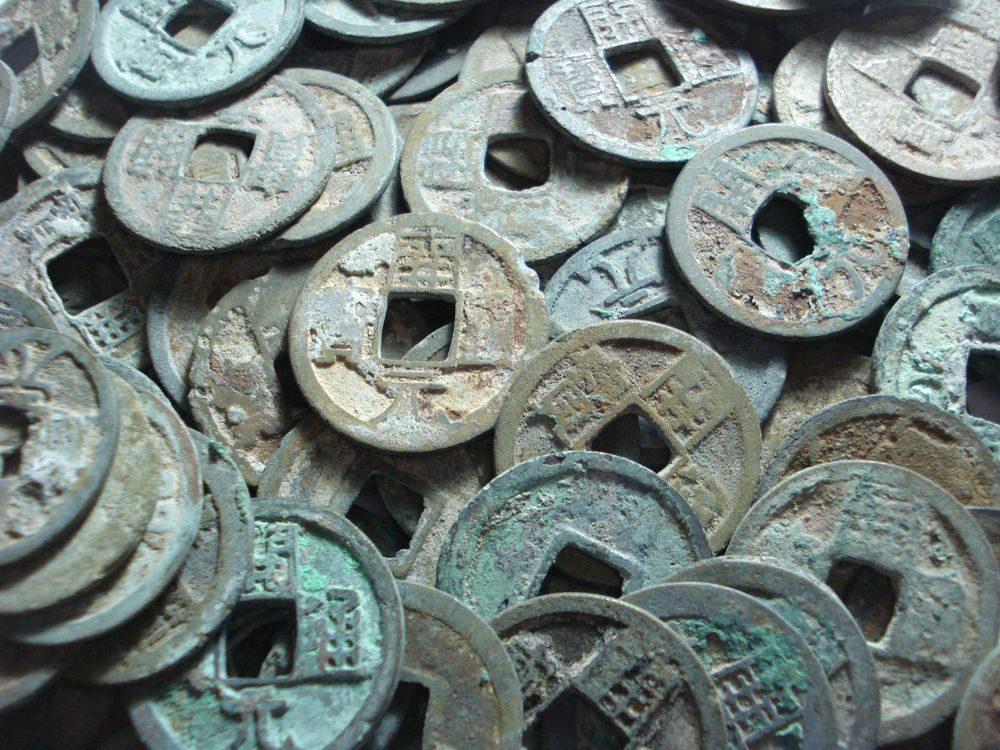 Colligo ergo sum
Edited by Lucky Cuss
04/24/2018 08:37 am
|
|
Pillar of the Community
United States
6514 Posts |
I'll ask the question I guess. Why would someone seed like that? To what benefit? I don't doubt the theory. I just can't imagine why I suppose.
|
|
Pillar of the Community
United States
6130 Posts |
Same reason I bought some Viking coins on ebay, then buried them in a beach in Maine...  |
|
Pillar of the Community
United States
6514 Posts |
Quote:Same reason I bought some Viking coins on ebay, then buried them in a beach in Maine...  Ok. I understand now. |
|
Moderator
Australia
17006 Posts |
Don't assume that someone buried these pieces purely as a practical joke on future metal detectorists. People sometimes do strange, seemingly-irrational things, particularly in the name of "ritual" or "custom". In this case, this is another possible reason "why".
Replica money, including coins such as these, is often burned in traditional Chinese funeral and ancestor-memorial practices, a custom that the Communist government in mainland China is trying to repress but which is still widely practiced in Chinese communities elsewhere in the world.
These old mining settlements typically have very few Chinese-descent people living nearby today, but perhaps someone of Chinese descent visited the area (in relatively recent times, as the replicas are indeed modern - no earlier than the 1970s) and held a ceremony there.
Don't say "infinitely" when you mean "very"; otherwise, you'll have no word left when you want to talk about something really infinite. - C. S. Lewis
|
| |
Replies: 14 / Views: 5,012 |
|










 Posted 03/16/2018 07:23 am


