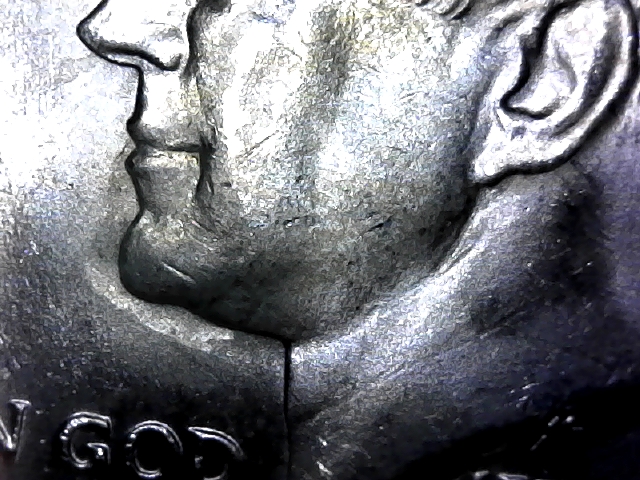
Tooling on the coin itself is often like this, to sharpen the outline of facial features on Roman coins, but I don't that this is the case here. In this case, the outline of the chin appears to be too exact to be post mint tooling or other tampering with the coin.
My first suspicion is that is the product of a die variety.
my opinion is Struck Through Grease. the area is incused/lowered into the field? right? if it was raised that would probably be from a worn/abraided die
Quote: my opinion is Struck Through Grease. the area is incused/lowered into the field? right? if it was raised that would probably be from a worn/abraided die
Disclaimer: While a tremendous amount of effort goes into ensuring the accuracy of the information contained in this site, Coin Community assumes no liability for errors. Copyright 2005 - 2026 Coin Community Family- all rights reserved worldwide. Use of any images or content on this website without prior written permission of Coin Community or the original lender is strictly prohibited. Contact Us | Advertise Here | Privacy Policy / Terms of Use











 Posted 03/20/2018 6:58 pm


