



Coin Community Family of Web Sites Join Thousands of Coin, Bullion, & Money Collectors
Coin, Banknote and Medal Collectors's Online Mall Royal Canadian Mint products, Canadian, Polish, American, and world coins and banknotes. Vancouvers #1 Coin and Paper Money Dealer Specializing in Modern Numismatics Join Thousands of Coin, Bullion, & Money Collectors 300,000 items to help build your collection! Shop for APMEX Bullion on eBay!


Username:
Password:
Save Password
Forgot your Password?


This page may contain links that result in small commissions to keep this free site up and running.

Welcome Guest! Registering and/or logging in will remove the anchor (bottom) ads. It's Free!

1851 Large Cent Attribution Help.

To participate in the forum you must log in or register.
Author Previous TopicReplies: 3 / Views: 2,467Next Topic  
Valued Member

United States
190 Posts
 Posted 03/29/2018  02:03 am Show Profile   Bookmark this topic Add pasasap to your friends list Get a Link to this Message Number of Subscribers
1851-Large-Cent-Attribution-Help.

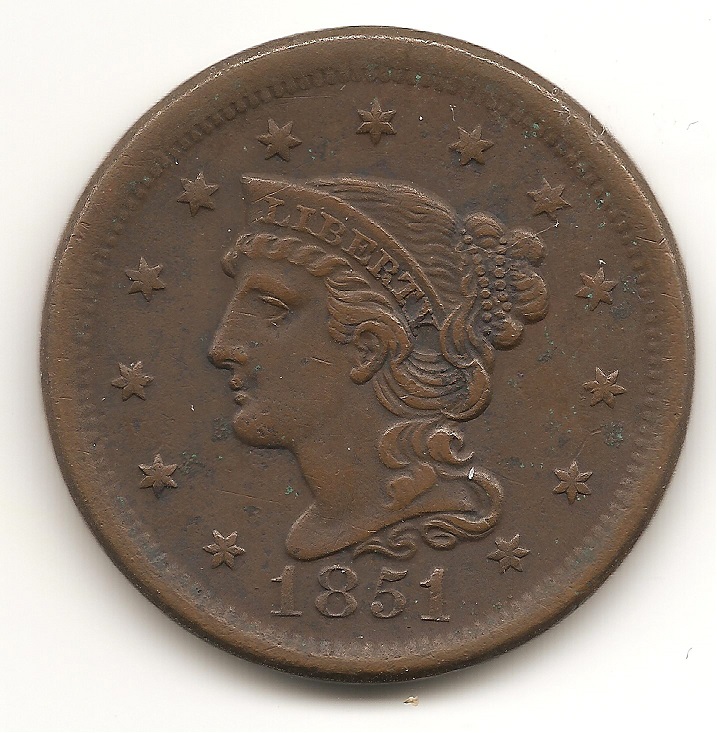
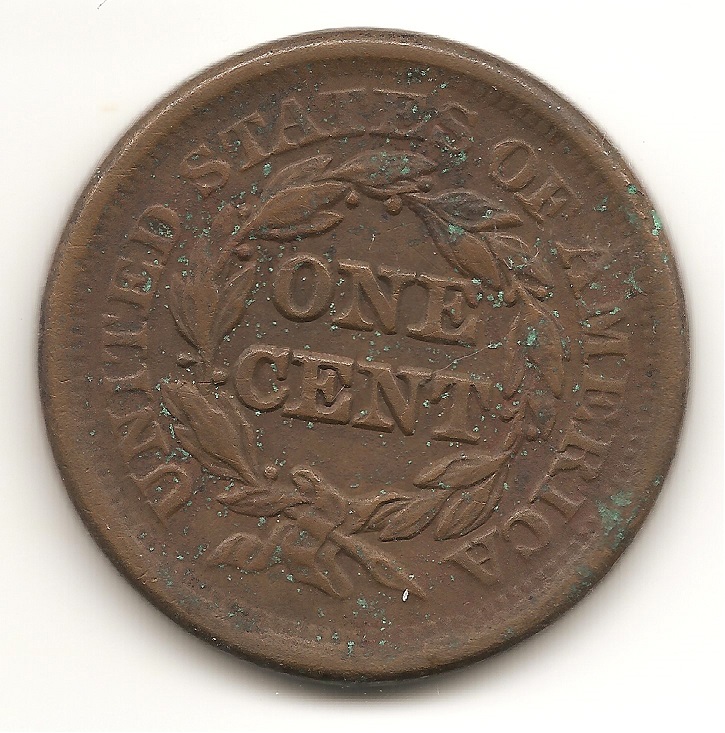
The top two photos are of an 1851 Large Cent that I found at a coin show. It is the error variety 51 over upside down 18 or 51 over 81.

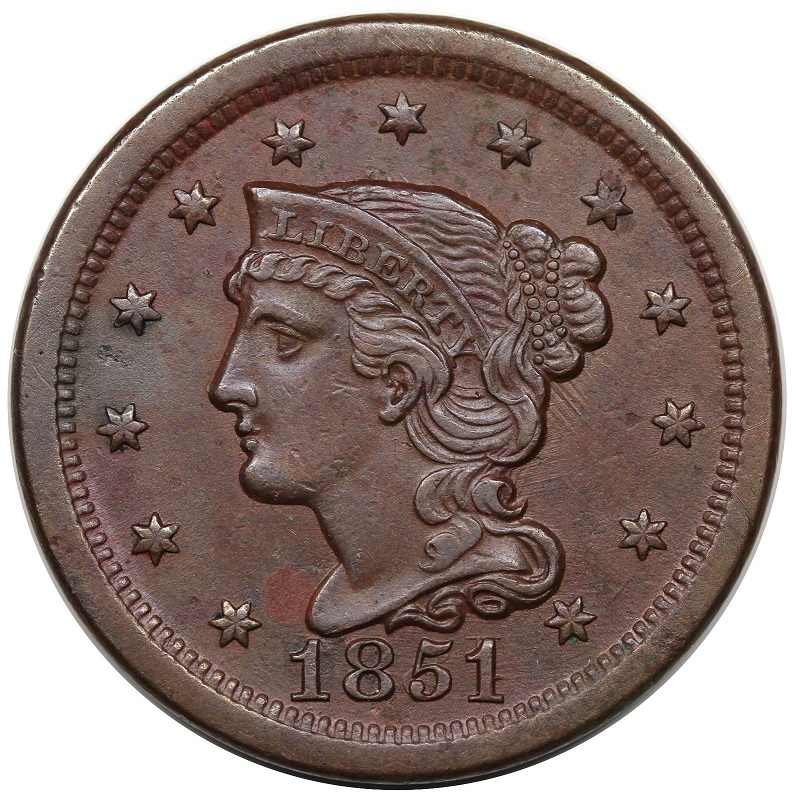
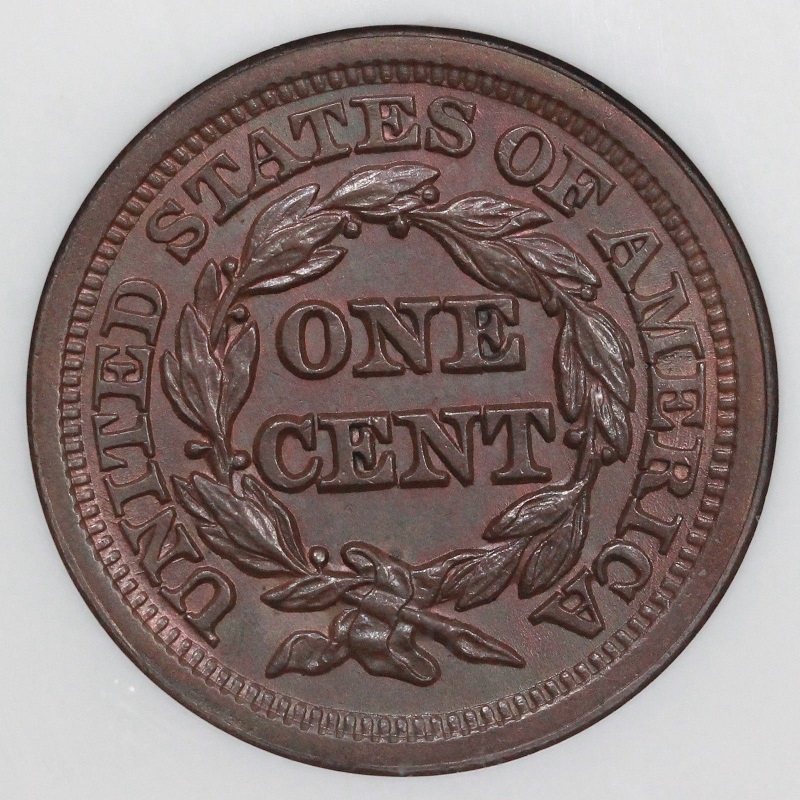
The next two photos are of an 1851 Large Cent being sold on ebay. It too is the 51 over upside down 18 error. This 1851 Large Cent is attributed as N-3, which is the 51 over 81 error.

Now, I use ebay photos and the online Dan Holmes collection photos to help be attribute my Large Cents. I find the attribution guides to be difficult to understand until I get a good photo to go along with the book to use for diagnostics. This method has worked until now.

The coin I purchased should be N-3, because it is the 51 over upside down error, but there is a problem. It does not match the other examples of N-3. Let me explain...

The stars and date on my coin are further away from the denticles than the other examples of N-3, which is already odd, but the date is also farther away from the bust too. There is no possible explanation to explain how this happened if the dies used to make all other N-3's was also used to make this one. For all the other examples of 1851 N-3 that I could find this never happened. The date is exactly the same distance from the denticles and bust with one exception. The exception was a very heavily worn coin. On this 1851 N-3 Large Cent the date was flattened out from being worn and was closer to the Denticles and the bust, not further away. This situation is easy to explain. The coin was worn down to the point the date flattened and widened out. This caused the date to appear closer to the denticles and bust, but what could possiblely cause it to appear further away from both the denticles and the bust?

So, let me add a little more information before I make my final points. A local coin dealer that deals with Large Cents said it was N-3 because of the 51 over 81 error. The error is very faint, but the complete upside down 1 is clear and part of the 8 can be seen at the back of the 5. He said because the error was so weak that I probably had a LDS coin. I had not noticed the error, but had dismissed N-3 because the date was too far from the denticles and too far from the bust. I did see the point of the upside down 1, but did not connect it as being the error variety. After he concluded it was N-3, I used my computers scanner to magnify the 51, so I could see the error more clearly. I was shocked to see the error because the date and stars are clearly farther away from the denticles when compared with other examples of N-3 that I could find online. I thought maybe because it was a late die strike it was just an illusion caused by the denticles breaking down on the die, but then I noticed that the date was also further away from the bust too, which I thought was not possible. All the stars point to the correct spots and are not further away from the bust, but only the deticles. In the date this is what I have observed. The 1 is further away from the bust and does not cause the cup like indentation found on other N-3 examples. The curl pointing down towards the 8 points to the correct spot, but is higher than normal. The 5 is further away from the curl above it than normal. The entire date is simply not in the right place to be an N-3.

So, this leads me to three possibly conclusions...

(1) This is not N-3, and I have discovered a new Newcomb Variety. That would be cool, but highly unlikely.

(2) This is a very high end counterfeit made by a master counterfeiter. The Chinese have advanced tools and still cannot get the dates right on Large Cents. The date on this coin looks authentic as does everything else.

(3) This is N-3 LDS, but I do not have access to a photo of one in this state, so what I observed was EDS and MDS, but not LDS, and on the LDS version the date is further away on both sides. However, this does not seem logical to me. I have been depended on the dates always being in the correct spot for each die type. So, far that fact has never failed me until possibly now.

So, here are my three questions...

(1) How do I verify the 1851 Large Cent as being a new variety, if it is a new variety?

(2) What gave it away as being a counterfeit if that is what it is?

(3) If this is N-3, then why is the date further away from the denticles and bust? Why are the stars further away from the denticles? What caused this difference in this coin during the minting process?
Bedrock of the Community
Conder101's Avatar
United States
17884 Posts
 Posted 03/29/2018  1:02 pm  Show Profile   Bookmark this reply Add Conder101 to your friends list Get a Link to this Reply
I'd say it is an N-3. It does appear to be a late die state, and I'd say there's been some die polishing done. That die polishes what increases the distance between the date and the bust or the denticles. The fact that the stars are furthest from the denticles also indicates this. After around 1836 the dies were all made from hubs so the relative positioning of the features and the denticles do not change from one die to another. This is this is definitely true after 1840. The only feature that changes is the position of the date. That's why die variety identification has to be done through die lines, points, or cracks. Polishing the dies reduces the field depth and makes features slightly further apart than they were originally.
Valued Member
United States
190 Posts
 Posted 03/31/2018  10:55 am  Show Profile   Bookmark this reply Add pasasap to your friends list Get a Link to this Reply
Condr101, thank you very much for your help. That was the missing information that I was lacking. The dies being polished explains the distance issue. Everything lines up correctly for N-3, and the error is faint, but present, so this is N-3 LDS, which is rare. What did not make sense to me was the distance of the date and stars. I thought they minted the Large Cents until the die was unusable. It never occurred to me that they might polish it from time to time.

What I have been doing is looking mostly at the date when attributing. I have found that the position of the date can help determine the Newcomb number most of the time for most dates even in lower grades. Most of my coins are in the grade similar to the one I posted in the photo above. I also use die breaks, lines, cracks, and Cuds when I can see them. I think it is still possible to collect by Newcomb number using mid-grade coins, and in some cases low grade coins. It is just harder, and the chances of making a mistake is greater. Also, I am pretty much done with me date set. I am only missing the high priced key dates that are out of my price range. So, this is still a fun way for me to collect and not spend more than $30 on a coin. I do not make enough money to be the next Dan Holmes, but I do not care. I like collecting Large Cents, they are a lot of fun to collect. And they are actually a lot rarer than most people realize especially the different Sheldon and Newcomb varieties. And it is possible to put a strong set together within a budget. For instance, I am nearly done with the Classic Heads. I am only missing three Sheldon Numbers. It also makes sense to me from the standpoint of how I have been collecting. My date set includes all varieties listed in Coins Magazine and the Red Book, plus any transitional over date errors meaning error such as 1811 (11 over 10). A lot of people do not realize there are other errors that connect dates in this way until you start looking into the Sheldon and Newcomb numbers. 1829 (9 over 8) comes to mind. I would have never known that one existed without reading the Large Cent Attribution guides, because it is not listed in the Red Book.

Thanks again! :)
Bedrock of the Community
Conder101's Avatar
United States
17884 Posts
 Posted 04/02/2018  08:27 am  Show Profile   Bookmark this reply Add Conder101 to your friends list Get a Link to this Reply
There is no 1829/8 that I know of. I know of nine varieties for 1829 (I have all of them) none of them are in overdate. Do you mean 1819/8?
  Previous TopicReplies: 3 / Views: 2,467Next Topic  

To participate in the forum you must log in or register.


Disclaimer: While a tremendous amount of effort goes into ensuring the accuracy of the information contained in this site, Coin Community assumes no liability for errors. Copyright 2005 - 2026 Coin Community Family- all rights reserved worldwide. Use of any images or content on this website without prior written permission of Coin Community or the original lender is strictly prohibited.
Contact Us  |  Advertise Here  |  Privacy Policy / Terms of Use

Coin Community Forum © 2005 - 2026 Coin Community Forums
It took 0.3 seconds to rattle this change. Forums