| Author |
 Replies: 13 / Views: 1,540 Replies: 13 / Views: 1,540 |
|
|
Pillar of the Community
586 Posts |
*** Edited by Staff to Add Year / Mintmark / Denomination to Title. Titles are Important! ***This is just a general question about the probability/liklyhood of strike throughs, specifically grease strike throughs,happening on the same coin in the same place. A couple months ago I found a pretty cool 2017 ATB Ellis Island quarter with what the consensus on here said was more than likely a grease strike through. Since then I have found two more with the same area affected, with 2 of them being almost identical and the other to a lesser degree. My question is when this generally occurs does it usually affect the same areas on certain issues, is it usually random, could it possibly be that I happened to get multiple quarters that we're struck in sequence on the same die, or possibly all of the above. I know it might be hard to give a difinitive answer so please understand I'm just asking for opinions on the matter. I have a few different strike throughs but besides quarters pre 1999 I haven't really come across a lot of coins with the same issues on the same exact area. Granted the state and ATB Quarters are a lot more detailed in their designs than some of the older coins. Any info or directions to where I could learn more about this is much appreciated. I forgot to mention the quarters are also all Philly mints. Here's some pics too just for some additional info. Thanks in advance for what I'm sure will be great info. 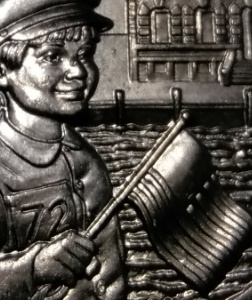   
|
|
|
|
Pillar of the Community
 586 Posts |
In case I didn't put enough info in the original post, the first pic is of the same area of a Ellis Island ATB that is normal and the next three are three different examples. I didn't post full pics of both sides of the coin because I'm not asking for help with a specific identification. If you would like full pics just ask and I'll be happy to oblige. Thanks again. |
|
Rest in Peace
10197 Posts |
A strike through grease is caused by the diamond paste, and greases involved in polishing the dies to prolong their life. This material along with the metal removed from polishing sometimes gets stuck in the incused die devices. Upon repeated pressure from striking, this hard material is packed even harder, clogging the openings. And yes it stays there, until it may fall out as a "grease plug" and be stamped into a coin or just changed out with a replacement die.
Remember, the devices on the die are reversed image. the "waves" missing there are very shallow, more so than the people who are larger, deeper and more noticeable if something gets pushed in there when wiping the die face.
Edited by Crazyb0
04/14/2018 01:17 am
|
|
Pillar of the Community
586 Posts |
I'm pretty familiar with the process that happens when a die gets filled with grease or some other material and causes the issue. Like I said, I was told back when I first picked up the hobby and did my research and have since seen a lot of diff examples of all diff kinds. I especially like the strike through involving a piece of thread somehow. I appreciate the info nonetheless. I guess I'm mainly just wondering is it more likely that this is just an area prone to grease or whatever build up or is it more plausible that I have somehow miraculously managed to find a few coins struck on the same die. I get the fact that they could have all been rolled and sent out together and being that they were maybe sent to the same bank they would be in the same area. It's just that I got one in a bank roll, one in change and the other from my works cash drawer. Obviously they are all in the same area so I guess its possible. Like I said, just wondering if it has more to do with the coin being more susceptible in that area, if that's even something that is knowable.
|
|
Pillar of the Community
586 Posts |
Sorry, I am always very long winded.
|
|
Bedrock of the Community
United States
12477 Posts |
I don't know how it happens, but a series of grease strike-throughs can be had. I had one ( inherited) and ended up selling them as a set for more than four cents (semi-regret). The evidence is here: http://goccf.com/t/275494In Memory of Crazyb0 12-26-1951 to 7-27-2020
In Memory of Tootallious 3-31-1964 to 4-15-2020
In Memory of T-BOP 10-12-1949 to 1-19-2024
Edited by spru
04/14/2018 03:33 am
|
|
Moderator
 United States
56855 Posts |
Waynoah83, You have great photos,what are you using? What is your exact set up,make model of camera,lighting,etc? John1  |
|
Rest in Peace
United States
17900 Posts |
 Fantastic photos. Not much more I can add. |
|
Pillar of the Community
United States
2775 Posts |
Waynoah83, if your inquiring if other causes are plausible, I'll try and explain my approach. The area in question obviously shows some weakness or wear. Seems to extend into the dock. The images to me suggests it might be raised. If so it could suggest a die polishing issue. The area in question is at or close to field level. Also the 1st large image on the tip of the mans cap bill may show remnants from a die clash. See overlay. If not raised then grease is probable. Grease Fill will tend to displace material away not allowing a proper fill in. Lastly I take into consideration what is behind or opposite an affected area. In this case one of the deepest part of the bust is opposite. Not seen as many issues with quarters as they use a few more tons of pressure to strike coins. Commonly found on early 1970 cents using planchets in spec, they often show weakness opposite the bust due to the bust taking up the resources. When filled or nearly filled the devices opposite the bust have the ability to finish needed backfill. I only mention it because the weakness opposite the bust is often referred to a Struck Through Grease when in fact most cases the needed length of strike or required tonnage pressure was not present to complete the backfill process. Thanks, Doug. Images from the US Mint.  Edited by Halo1st
04/14/2018 12:53 pm
|
|
Bedrock of the Community
United States
62064 Posts |
I think I now see what you are looking at. There maybe an issue with Feeder Finger Damage on that area. I would like to see the full coin to see if the outside ring area is also affected? It so it maybe that it is this, or it was this if there is nothing visible on this area of the ring. It might be like the Shield cent recently that the sub/shallow devices were affected with this damage? (deeper devices would not be affected) Also the area in which this happened, is also a target area for doubled dies. (these would be raised) Here is an image from the Mint what a normal one should look like: 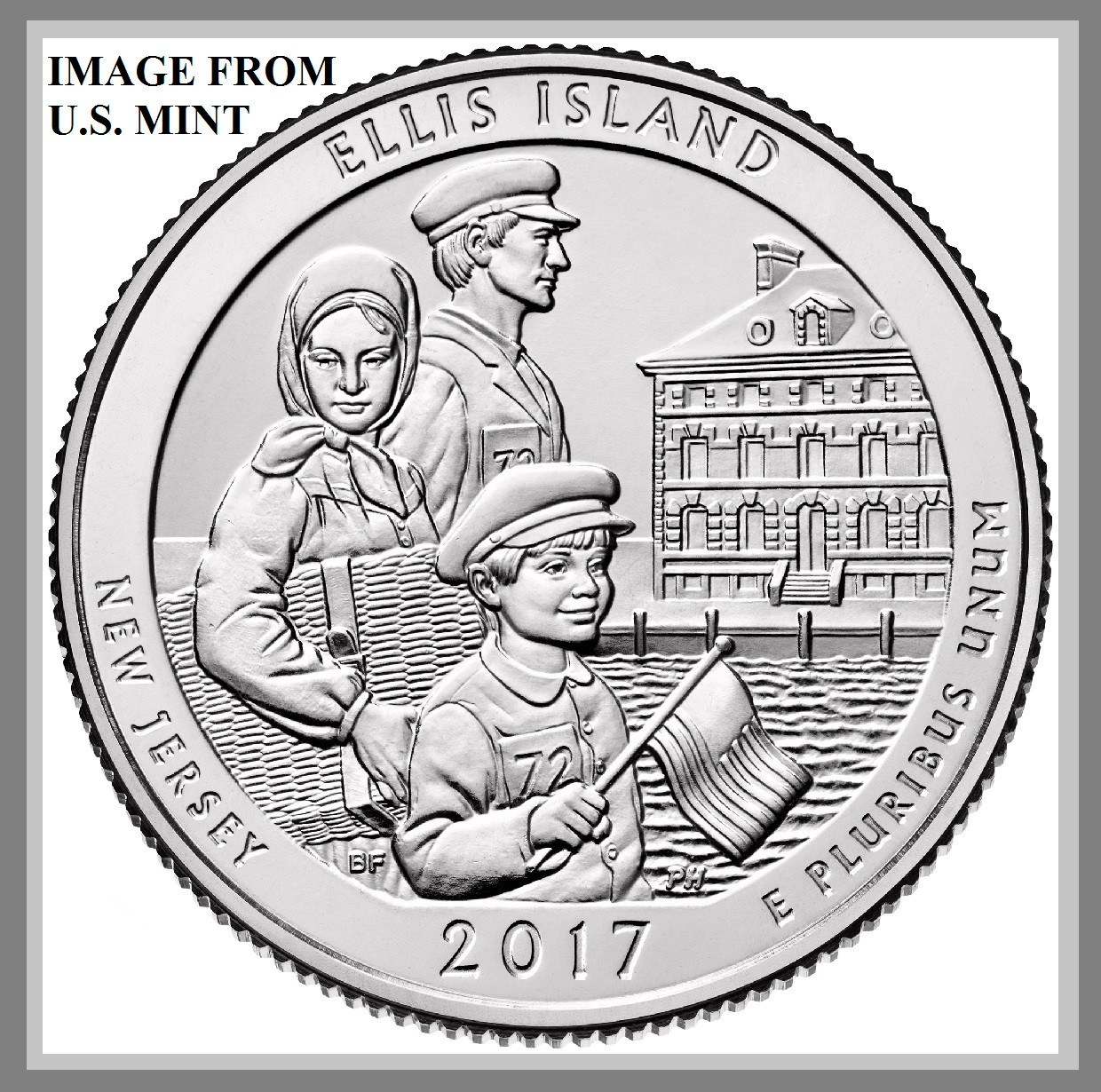 Looks like some polishing did take place weakening some devices. The face of the Boy would probably where I would for doubled devices on a DDR. (nothing listed yet though) Edited by coop
04/14/2018 2:11 pm
|
|
Pillar of the Community
United States
4424 Posts |
|
|
Pillar of the Community
United States
2775 Posts |
Also noticed in the 1st large image the gap between the man right arm and ladies left arm. May also suggest die polishing or did not strike up. Thanks, Doug.
|
|
Pillar of the Community
586 Posts |
Thanks for all the info guys. As to what setup I use you might be surprised but its just my cell phone. I set it to macro and take the pic under really bright light and adjust my shutter setting to around -.4. then I zoom in a little using my stock image editor and crop until I get below the 300kb limit. I have my settings turned up to the highest resolution so that's why when I crop the image there's not much left of the coin because of how big the original file is. It took a little tweaking but that works the best for me. Btw it's a ZTE pro max phone. I got it for free from metro for signing up with them. It has a 16mp cam with an HD screen and 32 mb of RAM and a 16 gb hard drive. Beat phone I ever bought especially for the price. I've had it a year and have Zero complaints about it other than it has a very large wcreen, but know I'm used to it and couldn't imagine goin back to something smaller.
|
|
Bedrock of the Community
United States
62064 Posts |
Lighting is fine. Not much glare and the light and shadows work good for you.
|
| |
Replies: 13 / Views: 1,540 |
|









 Posted 04/14/2018 01:13 am


