| Author |
 Replies: 14 / Views: 1,692 Replies: 14 / Views: 1,692 |
|
|
Valued Member
United States
274 Posts |
Gotta fill those 20 spaces in that title. I enjoy the hunt, it quells my OCD. I certainly don't do it for profit, although I'm not apposed to finding and selling a two headed 1955 doubled die LC stamped on a gold nickel planchet... *BUT* some of these DDO's and DDR's, and others, are so miniscule and common that it almost seems, I don't know, not pointless but not worthwhile? I think it's kind of a double edged sword.. if all varieties were so uncommon it would take the fun out of it, like my cat when he gets frustrated because he's never able to actually get his paws on that little red dot from my laser pointer. Finding a listed coin from time to time keeps hopes high.. I don't know, just a thought. 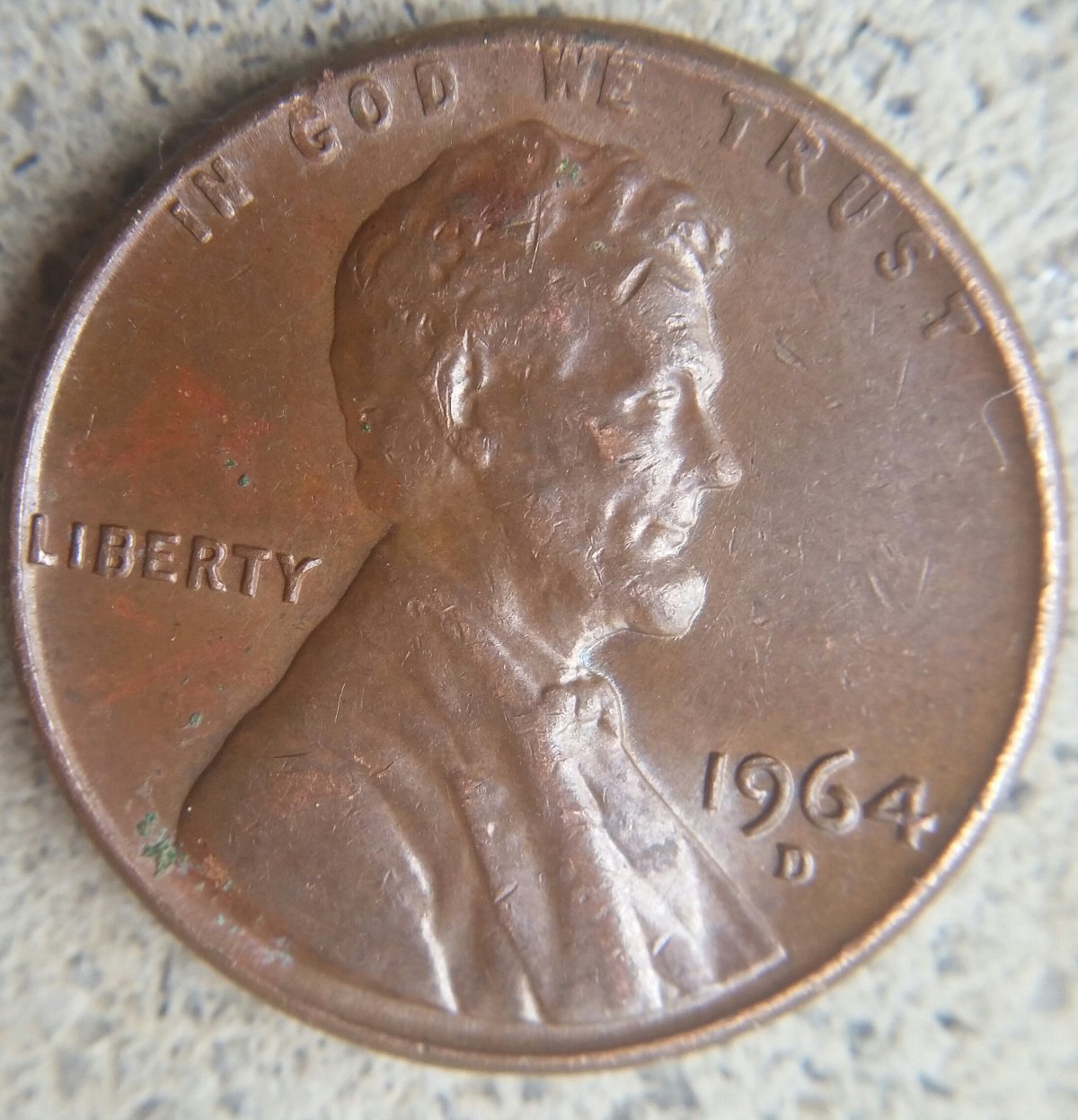 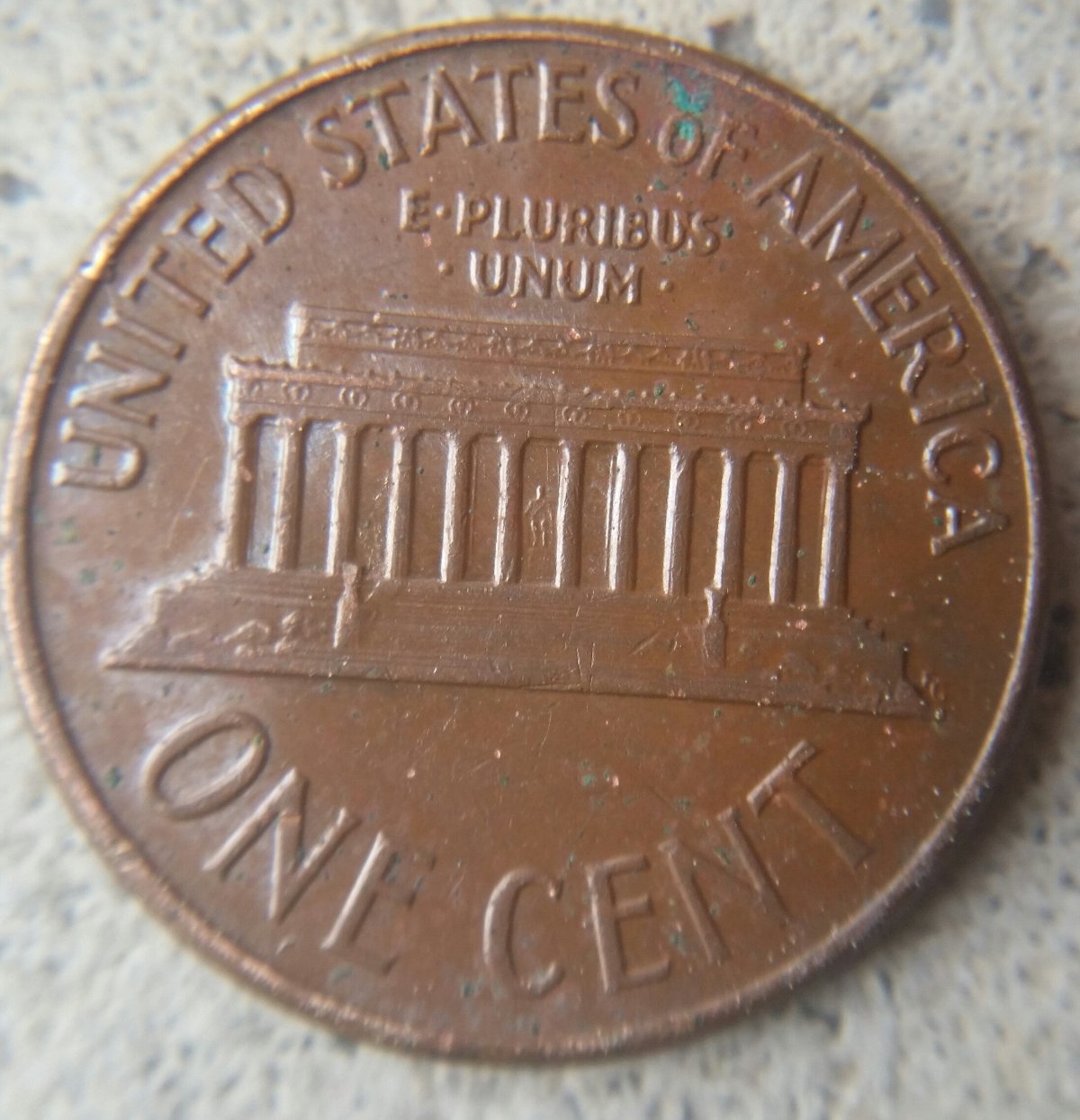 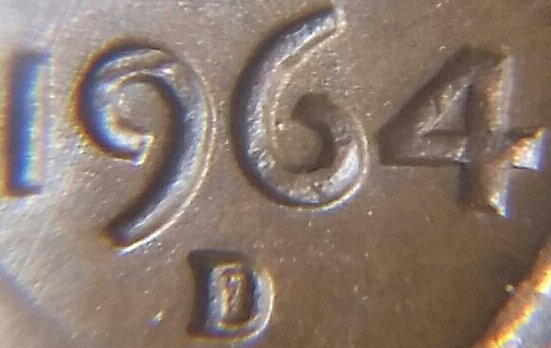 |
|
|
|
Moderator
 United States
56855 Posts |
Not seeing a DDO or any doubling for that matter. John1  |
|
Pillar of the Community
United States
7573 Posts |
Me neither  |
|
Pillar of the Community
United States
4417 Posts |
 not seeing anything. |
|
Bedrock of the Community
United States
78224 Posts |
|
|
Valued Member
 United States
274 Posts |
I did. 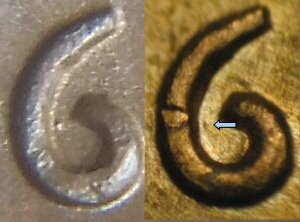 |
|
Rest in Peace
United States
17900 Posts |
A tiny hit at the arrow I think. Good photos though.
|
|
Bedrock of the Community
United States
62064 Posts |
The arrow is pointing to a die dot. A small dot area fell off the die. When more than one die has this then it maybe a working hub issue. If half of all dies have it, then it might be master hub issue. But because more than one die may have it, it is not a doubled die. Why? Because there is no design doubling from the hub. In order for this die to be a doubled die, we would need to see spread between the hubs during the die creation process. The variety comes first, then markers are secondary, just to match a die stage. So matching die dots is going the wrong way. This die dot issue could be on just on die or a thousand hubbed dies from that year. Hope this helps Finding the fingerprints of a variety coin, then matching markers is the correct way. Can you imagine checking for a single area of a fingerprint trying to convict with just a 1% match? Needs to be an exact match first, then look for markers. Spread is still an issue that is considered when someone thinks they have found a doubled die. If there in no spread, then there's no variety. MD is not a spread, it is the reduction on a normal dies devices on a coin. A quick way to study my threads? CoopHome is the key. Click on that and find the subject you want. Check page two for an updated page.Edited by coop
04/26/2018 8:43 pm
|
|
Valued Member
United States
420 Posts |
I understand your thinking.. However, having what appears to be a match in the date region (or anywhere else on the obverse from that year for that matter) has no bearing on whether the mint mark will be a double..
Besides, where the doubling would be is in shadow.. We can't see if it's there or not regardless..
Swamp
|
|
Bedrock of the Community
United States
62064 Posts |
But the thread is about a DDO. But if a DDO coin has this dot, and a second die has a dot, but not the DDO, then they are not from the same die. In order to be a match, then the DDO and mint mark location would have to match. |
|
Valued Member
United States
274 Posts |
That's all kinda my point. I see so many posts on here that you couldn't tell if it was or wasn't a doubled die unless you took a close up with the hubble telescope. I'm not sure I've found the point to it yet but I'm still looking, learning. I took the liberty of grabbing a few pics from doubleddie because they seem to aid me in whatever point it is I think I'm trying to make... DD-doubled 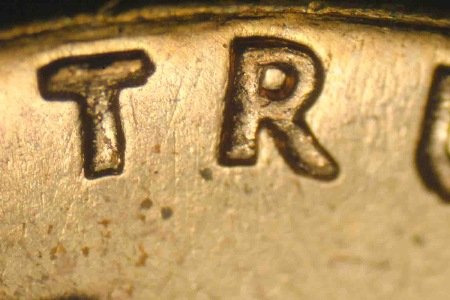 Mine-not 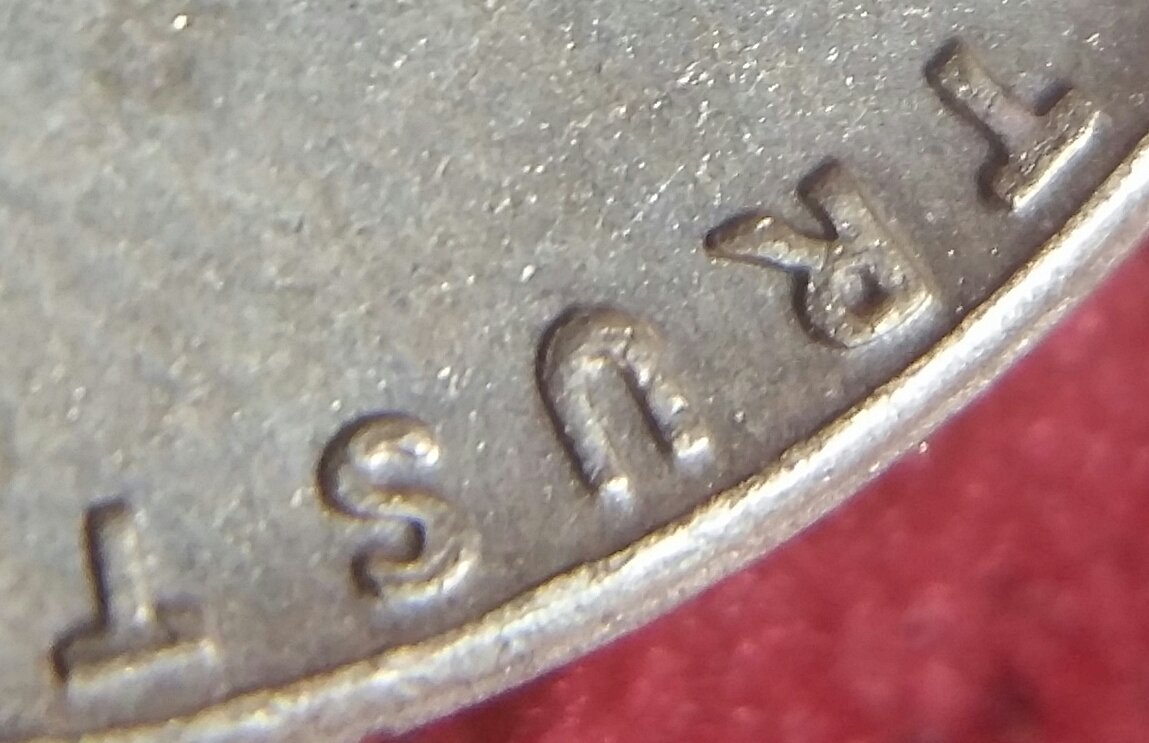 DD-doubled 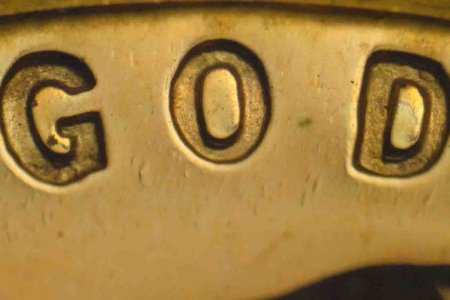 Mine-not 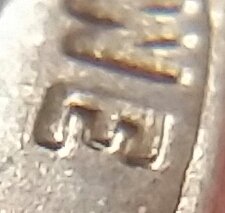 DD-doubled 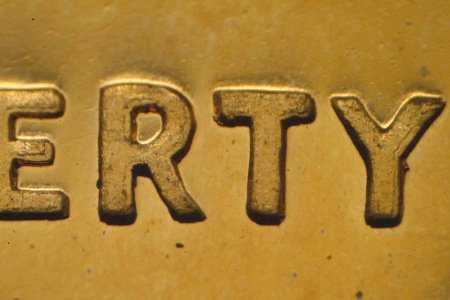 Mine-not 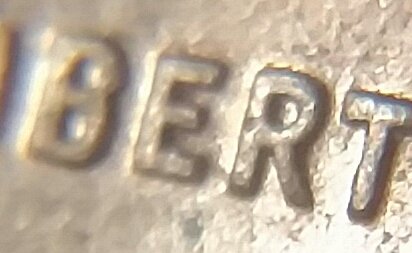 I'll stop there. Some of these are so subtle most aren't noticeable not to mention all but disappeared with a little circulation. With notes like "slight doubling under the L" or "doubling on the G and the last T in trust" or "doubling noted here as extra thickness on the BERT" but around here it seems like there absolutely has to be notches in the upper left and obvious on all devices. I'm not knocking it and most of you guys are pretty helpful, you know who you are. If any of you half way understand what I thought I wanted to say to begin with, give me a thumbs up, hit the Like button below and remember to subscribe to my channel for more updates! |
|
Valued Member
United States
274 Posts |
Here's a 77P, looks doubled to me... 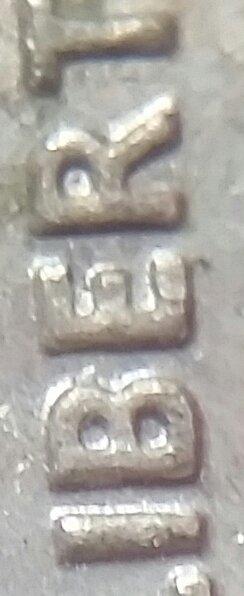 |
|
Moderator
United States
56855 Posts |
|
|
Valued Member
United States
420 Posts |
Oh geez..! How did I end up at RPM..?
So much for multi-tasking.. My bad & apologies..
Swamp
|
|
Bedrock of the Community
United States
62064 Posts |
On the doubled die with the ERTY, do you see the spread on the right side of those devices? That is how much wider the hub doubling created on the die. Many are looking in the wrong places for the spread. Most look at the outside edges of devices, that usually always shows MD there. The MD is lower on that area. Machine Doubling is created on the coin after the strike. 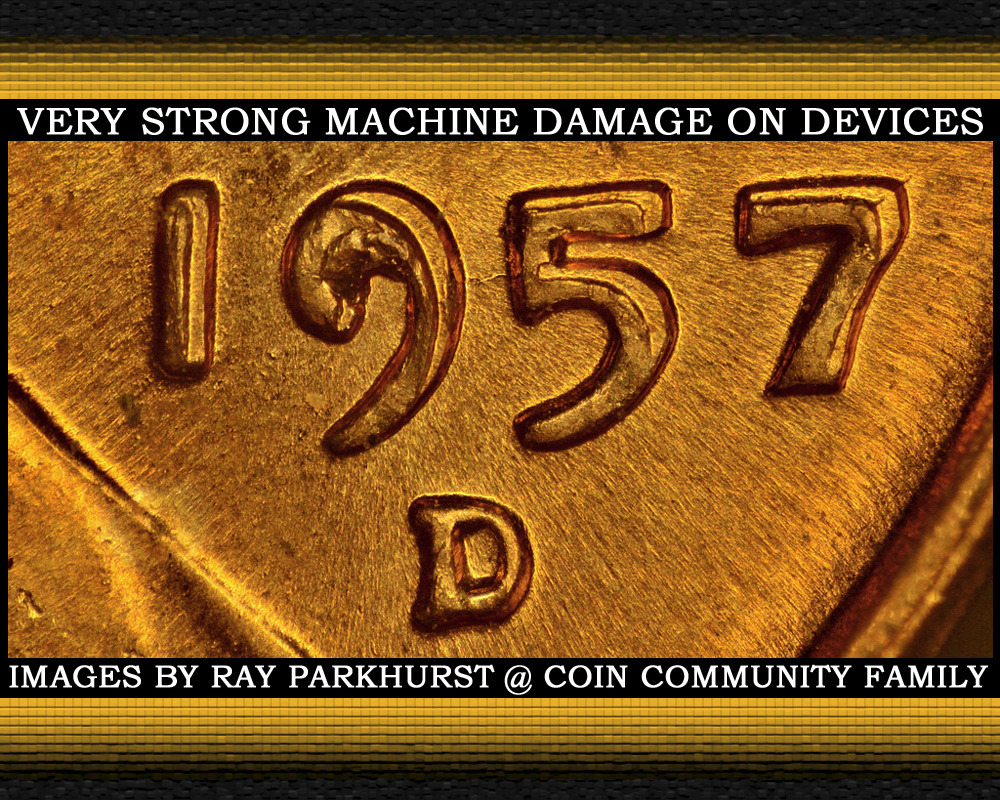 Note on this machine doubled area of the date. We see the normal size of the device, then note, the reduced area that happened after the strike, it is lower than the normal device. 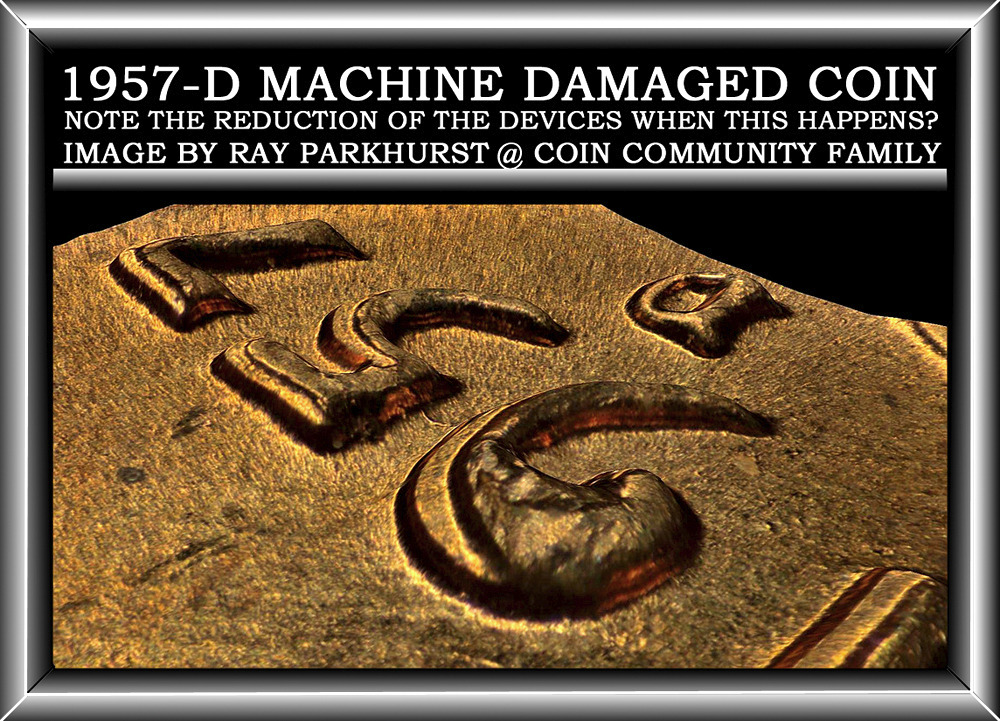 That is what I'm talking about on MD. Note how it reduces the normal size of the devices? Then look at the image above on the ERTY area on the doubled die. Do you see the spread? On this on you can see an actual line on the top of the device. On one hubbing of the die, that was the normal size. With a second hub, it created a new edge to those devices. That is the area to look for a doubled die. Not the outside edges on the devices. |
| |
Replies: 14 / Views: 1,692 |
|







 Posted 04/26/2018 6:33 pm





