As for Australian mintmarks generally, the systems used here were as a rule more complicated than the simple "D for Denver" alphabetic mintmarks used in the US.
On gold coins, it is a simple alphabetic system: P for Perth, S for Sydney, M for Melbourne. This was part of the world-wide network of branches of
The Royal Mint striking British gold coinage, which also included C for Canada, I for India, SA for South Africa and "no mintmark" for London.
For other series, the system is more complicated. On some early silver coins, you can find M for Melbourne, and on some early coppers, I for India (during WWI; that war hoarding issue again). There were also a couple of years where the Heaton Mint, a private mint in Birminham, England, struck some copper coins with a "H" mintmark.
The Sydney mint did not strike non-gold coins for very long before it shut down, leaving Melbourne the "Senior mint" in Australia. "no mintmark" after the 1920's means Melbourne Mint.
Perth did not begin making non-gold coins until WWII, either, and only a small series of silver - mainly bronzes. The Perth "mintmark" was a strategically placed "dot" somewhere on the reverse; you need a good catalogue to tell you where to look for the dot for each year and denomination. I for India also reappeared on bronze coins during WWII.
The American S and D mintmarked coins from WWII have already been discussed.
The only other mintmark in the predecimal series is the "PL for London" mintmark on silver coins of 1951, mentioned by Nancy. Your 1951 threepence is actually the PL mintmark type; the "P" is in the bottom left corner of the ribbon above the first E in THREE, and the "L" is in the bottom right corner, opposite it, above the first E in PENCE.
I think I remembered them all. A predec specialist will no doubt correct me if I forgot any!

Don't say "infinitely" when you mean "very"; otherwise, you'll have no word left when you want to talk about something really infinite. - C. S. Lewis







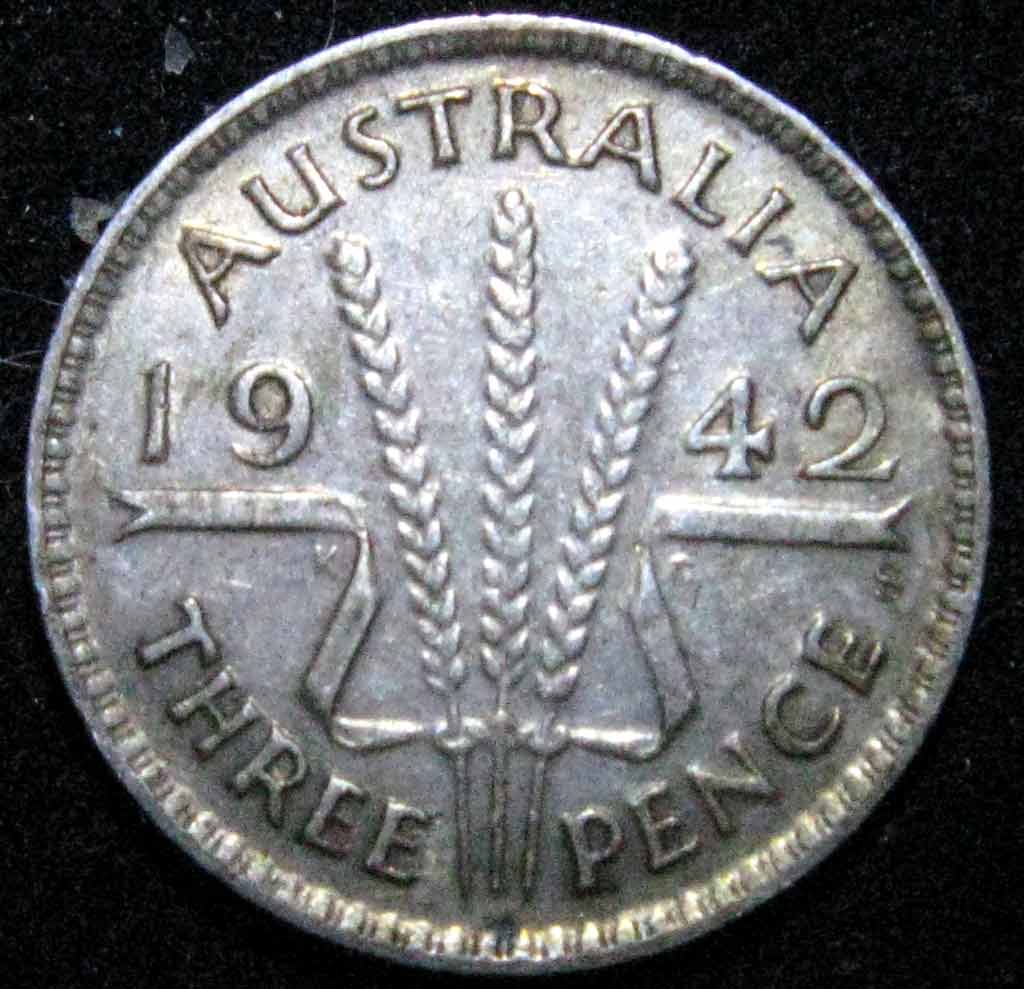 19423PenceS.jpg
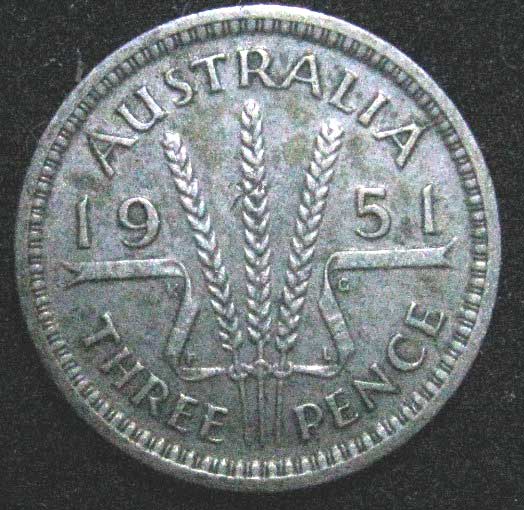 19513Pence.jpg


 Posted 06/17/2008 8:11 pm





