| Author |
 Replies: 5,294 / Views: 290,998 Replies: 5,294 / Views: 290,998 |
|
|
|
Pillar of the Community
United States
9395 Posts |
1602 -- Countship of Schaumburg-Pinneberg, 1/24 thaler:   |
|
Valued Member
Norway
375 Posts |
Solidus, Riga, Livonia, 1601 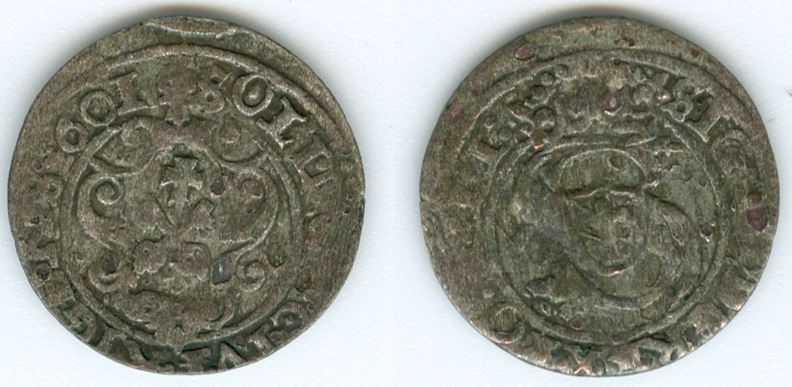 Edited by giljan
08/15/2019 01:02 am
|
|
Pillar of the Community
Belgium
1185 Posts |
1601 Jeton from Dordrecht, Holland, Dugn.3518: two examples 'inauguration of prins Maurits of Nassau as count of Meurs' Obv. MAVR PR AVR CO NASS CATZ MOERS MAR VER ET VLISS Rev. IE MAINTIENDRAI 12 AVGVSTI 1601 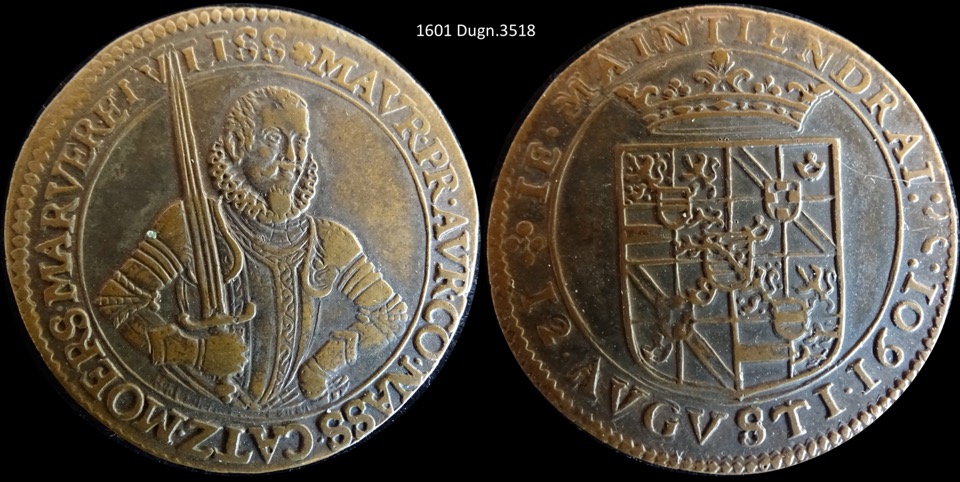 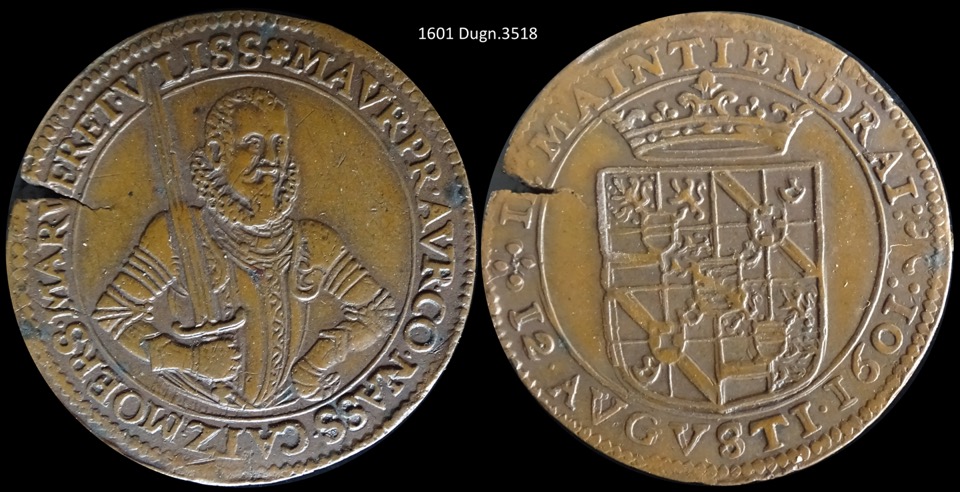 there are not many types of coins/medals/tokens with a portrait of Maurice of Orange (1567-1625), Stadhouder of the United Provinces, who was the son of William of Orange (William the silent - "father of the Netherlands" - the leader during the first decades of the Dutch revolt). Maurice is remembered as an excellent military leader who reconquered a large part of the territory that was taken between 1579 and 1589 by the Spanish Netherlands during the "ten years of Alexander Farnese". Grave (see previous page) was one of the latest examples. During the truce of 12 years internal conflicts in the United Provinces especially a battle for power with Johan van Oldenbarnevelt (who was beheaded) the leadership of Maurice became less clear. After his death in 1625 he was succeeded by his younger brother Frederik Hendrik. https://en.wikipedia.org/wiki/Mauri...ce_of_Orangebelow a painting from the prince made 6 years later than the jetons by Michiel Janszoon van Mierevelt; on that moment, Maurice of Nassau, became prince of Orange as his older half brother died in 1607. 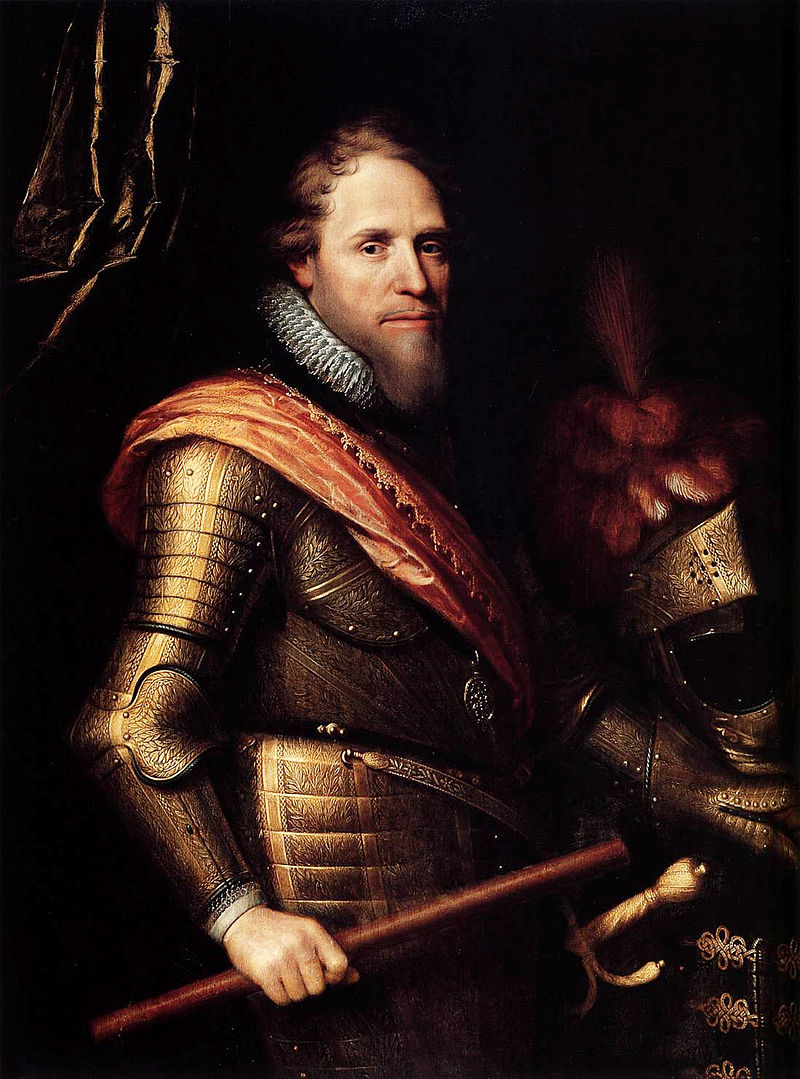 Edited by 1c5d7n5m
08/15/2019 05:05 am
|
|
Pillar of the Community
Belgium
2895 Posts |
Oops I forgot the submit the draft I prepared Soryy Duchy of Brabant Real no date Heersers: Albert & Isabella (1598-1621) Mint: Antwerp (between 1603-1607) ALBERTUS.ET.ELISABET.D.G. ALBERTUS ET ELISABETH DEI GRATIA Albert and Isabelle, by the grace of God PHS.D.G.HISP.Z.REX.DUX.BR. PHILIPPUS DEI GRATIA HISPANIARUM Z REX DUX BARBANTIÆ ARCHIDUCES.AUST.DUCES.BURG.ET.BRAB ARCHIDUCES AUSTRIÆ DUCES BURGUNDIA ET BRABANTIÆ Archdukes of Austria and Dukes of Burgundy and Brabant Literature: Van Gelder / Hoc 293-1 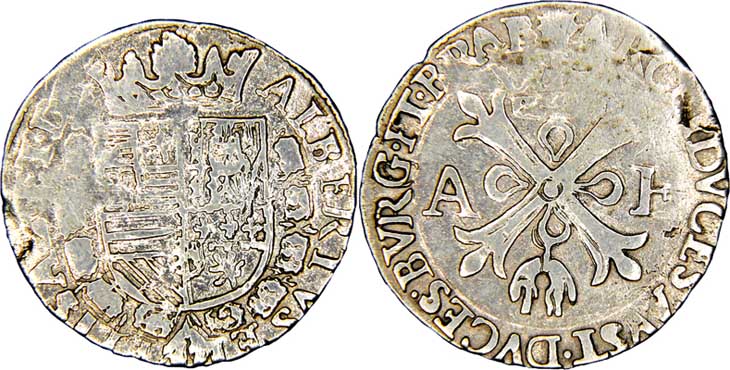 |
|
Pillar of the Community
Belgium
2895 Posts |
Sigismund Wasa (1587-1632) King of Poland, Lithuania and Sweden SOLIDUS.CIVI.RIGE.601 (sheaf of grain) SOLIDUS CIVITATIS RIGENSIS Crowned S monogram SIG.III.D.G.REX.P.M.D.L SIGISMUND TERTIUS DEI GRATIA REX POLONIAE MAGNUS DUX LITHUANIÆ Riga mint KM# 5 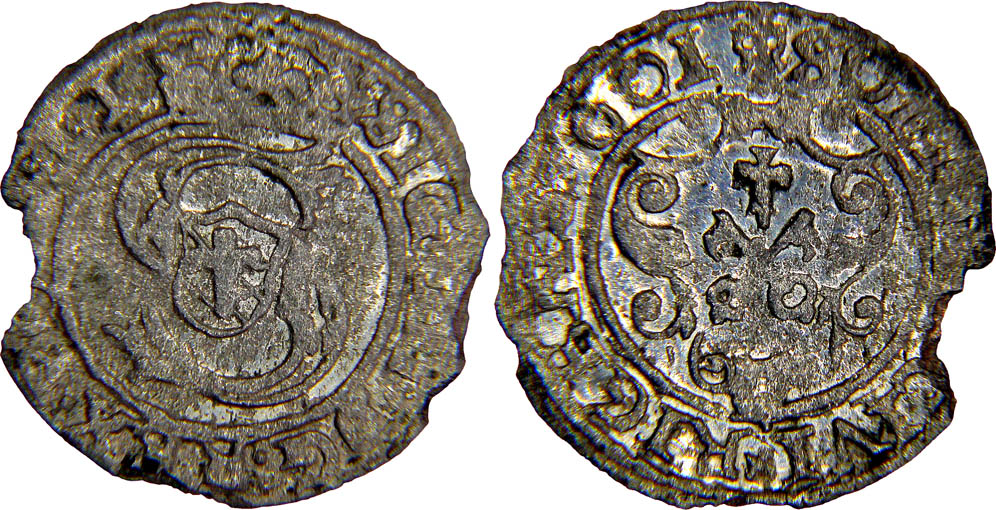 |
|
Pillar of the Community
Belgium
2895 Posts |
Jeton 1601 Low Countries Siege of Rheinberg HOSTIS  DIRA MINITANS BERCA PELLITVR 1601 IRATO NVMINE NIL IVVANT VNDIQ COLLECTAE VIRES Count of Berg (top in the middle) with his army. Army trumpeter on the left and drummer on the right. Collected troops to redeem the besieged Spanish troops. In a cloud at the top of the word "Jehovah" in Hebrew Struck in Dordrecht (rose) literature: Dugniolle III-IV, p. 167, no. 3517 Van Loon I, p. 558 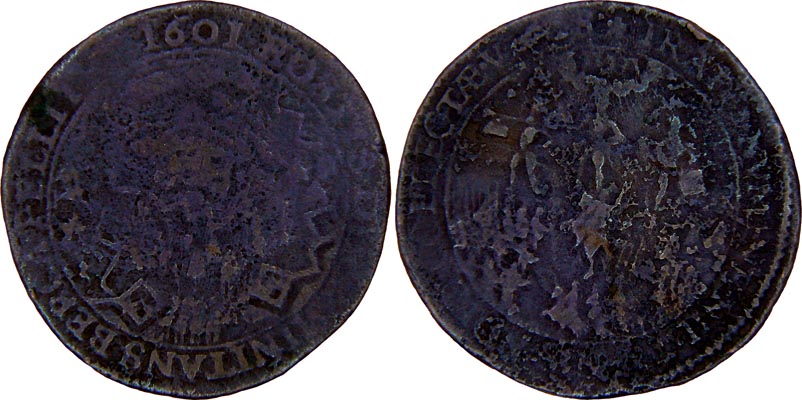 |
|
Moderator
 United States
34563 Posts |
Here is a Schilling of Polish occupied Livonia dated AD 1601. So excited to be on the cusp of entering the 16th Century! 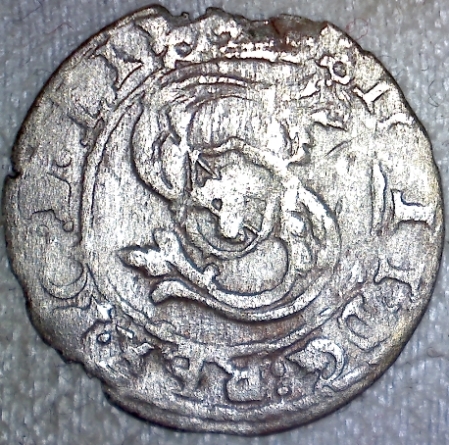 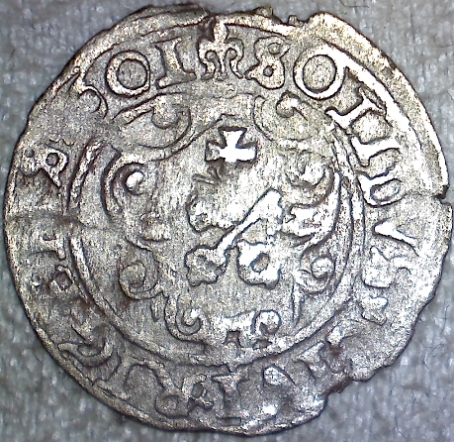 "If you climb a good tree, you get a push."
-----Ghanaian proverb
"The danger we all now face is distinguishing between what is authentic and what is performed."
-----King Adz
|
|
Pillar of the Community
Belgium
1185 Posts |
Quote:
So excited to be on the cusp of entering the 16th Century!  1601 Dugn.3521 Dordrecht, United Provinces: 'sieges of Rheinbergh and Oostende' tetragrammata on both sides being part of the images, spreading the message: "God is on our side" 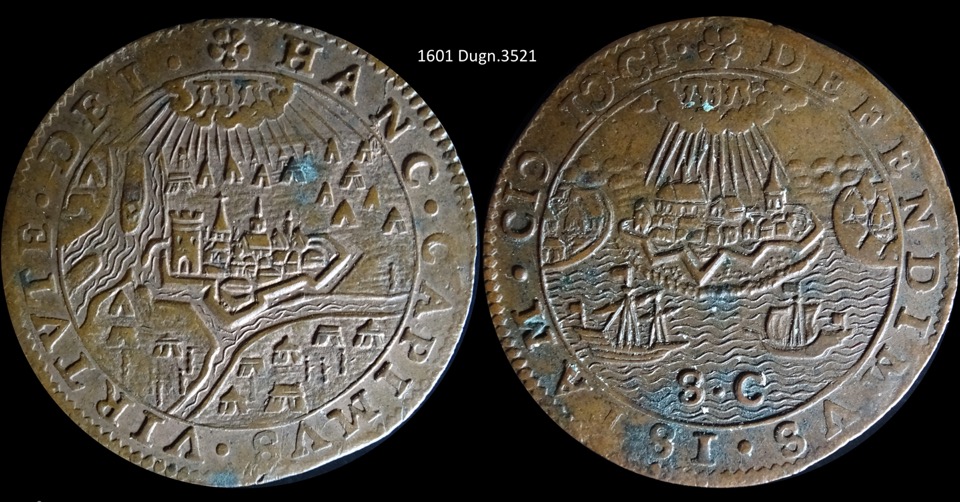 Obverse: Rheinberg surrounded by the troops of Maurice of Naussau. Rays from the heavens shine on the tents of Maurice & co. HANC CAPIMVS VIRTVTE DEI ("this place was taken with the help of God") Reverse: Oostende (with Dutch/English ships on the forefront) under attack, but protected by the heavens. DEFENDIMVS ISTAM ("let us defend this place") CIC ICCI / SC Prince Maurice of Naussau left with a 10,000 strong army the sieged city of Oostende in 1601 and moved 200 miles to the North-East to lay siege to the small town of Rheinbergh (today in the state of North Rhine-Westphalia, Germany - then on the East borders of the Dutch Republic). The idea was to draw Spanish military focus away from Oostende, as said before, a very important stronghold for the Dutch and English. After a siege of a few months Rheinbergh indeed surrendered. The siege of Oostende, however, defended at that moment by Francis Veere and the English forces, would last for another three years causing an enormous amount of bloodshed. Rheinbergh (Rijnberk) would become an important point of defense of the Dutch Republic on the East borders after 1601. The structure of a 17th century defense line cannot be better illustrated than by this painting (from 1672 - Rijksmuseum Amsterdam) when king Louis XIV made is big military move to conquer the Netherlands. Here his army is near the fortifications of Rheinbergh.  |
|
Pillar of the Community
 United States
8056 Posts |
More incredible jetons and history! To the three Livonian schillings, I'll add a Sigismund trojak (3 groschen) Krakow mint (letter K separates the date reverse) As we enter the next century, I expect we'll see more trojaks (also more schillings, which we haven't seen much the last week). 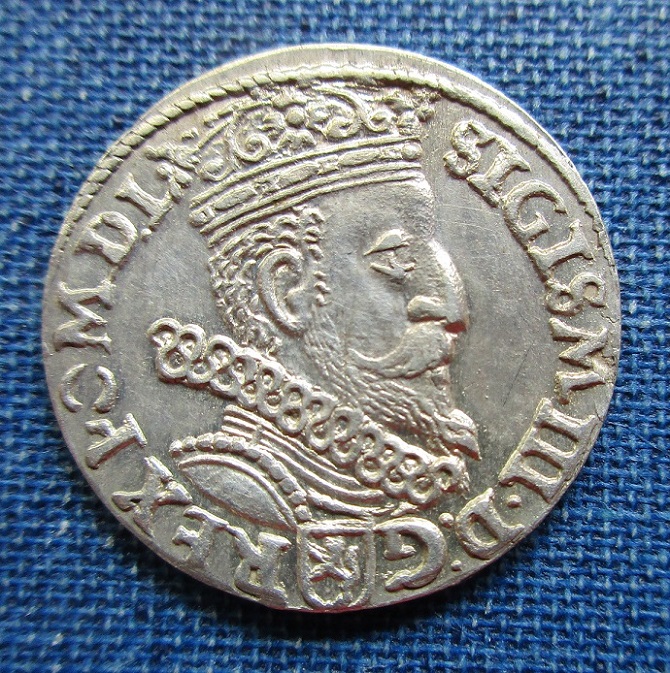 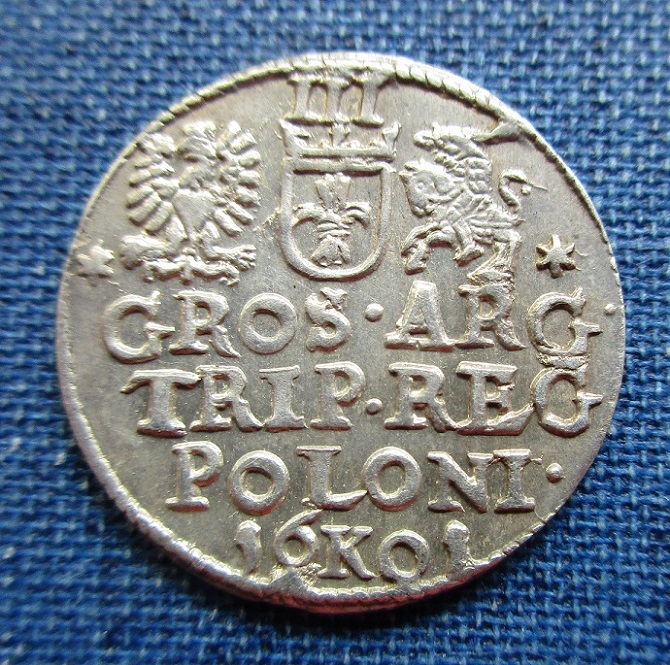 Edited by tdziemia
08/15/2019 06:23 am
|
|
Pillar of the Community
Belgium
1185 Posts |
Quote:
Sigismund trojak (3 groschen) Krakow mint splendid coin  |
|
Moderator
 United States
196278 Posts |
Quote:
Oops I forgot the submit the draft I prepared You are forgiven.  |
|
Pillar of the Community
United States
8056 Posts |
As we enter the 16th century and the first 13 years of Sigismund's reign, we will see some trojaks (3 groschen) with lots of variety. While my comments will not be as interesting as the political history we have been learning, they will give some numismatic context for the Siggy coins of the next two weeks. When minting of silver coins under Sigismund III began in 1588, production began at the same 5 mints that were in operation under his predecessor, King Stefan Batory. These were: the "crown mints" of Olkusz and Poznan in historical Poland, the Gdansk city mint in former West Prussia, the Lithuanian mint in Vilnius, and the Livonian mint in Riga. The trojak, or 3 groschen, was the largest circulating silver denomination for the first 8 years (1588-95); minting of trojaks began in Olkusz, Poznan and Riga in 1588, and Vilnius in 1589. Four more crown mints produced trojaks in the 1590s: Malbork (1592-94), Bydgoszcz and Wschowa (Bromberg and Fraustadt in German, 1594-1601), and Lublin (1595-1601). Krakow, which had not minted coins since 1549 began in 1600. Each of the 9 mints that produced trojaks between 1588 and 1601 designed its own bust of Sigismund, sometimes even changing the bust within a date/year, and varied the reverse to include the emblem of local mint officials. In 1598, some of the crown mints adopted the use of a letter as mint mark. So we see B for Bydgoszcz/Bromberg, P for Poznan, L for Lublin and F for Fraustadt/Wschowa (which had previously used a mint mark in medieval times). I guess this innovation was copied from the French, as there were strong links between Poland and France at this time (the Polish-Lithuanian parliament had elected the future Henry III of France as their own king in 1574). So the trojaks produced between 1588 and 1601 present an enormous amount of variation for collectors, and were produced in significant enough quantity to make many varieties fairly accessible. For anyone who needs to catalog a trojak, you can use the detailed Iger system through the WCN website http://iger.wcn.pl/If you are curious about what's on the market, this September auction has over 200 trojaks in higher grades starting at lot 1204. https://onebid.pl/en/aukcje/879948/749/7/0/0 . Early trojaks can be found elsewhere (WCN, most German auction houses, even ebay) at more modest prices in lower grades, and as lots. |
|
Pillar of the Community
United States
9395 Posts |
1601 -- Countship of Schaumburg-Pinneberg, 1/24 thaler:   |
|
Pillar of the Community
United States
8056 Posts |
@pepactonius, nice date series from Spain and now this German city-state. I have one more for 1601, this 1 lira of Tuscany, Ferdinando I de Medici, picturing the beheading of John the Baptist: 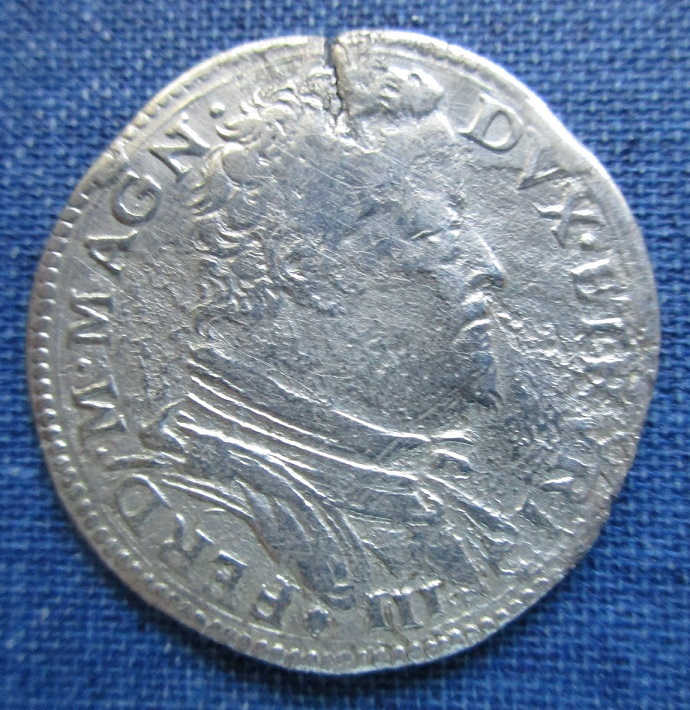 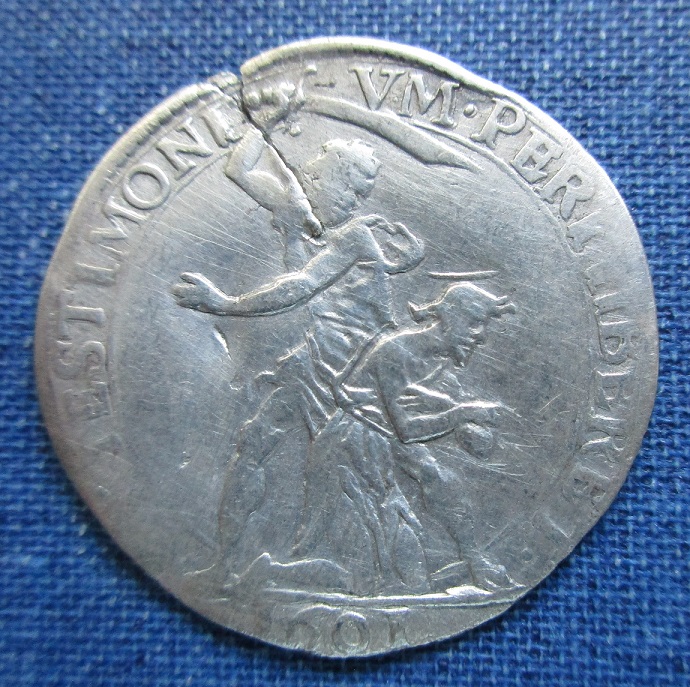 Cracked planchet, maybe some delamination obv, and harshly cleaned. Edited by tdziemia
08/15/2019 10:07 pm
|
|
Pillar of the Community
United States
2703 Posts |
Quote:
1 lira of Tuscany, Ferdinando I de Medici, picturing the beheading of John the Baptist Dramatic piece, very cool |
| |
Replies: 5,294 / Views: 290,998 |







 First Page
 Previous Page


 Posted 08/15/2019 01:01 am





