








 Posted 08/03/2018 04:26 am


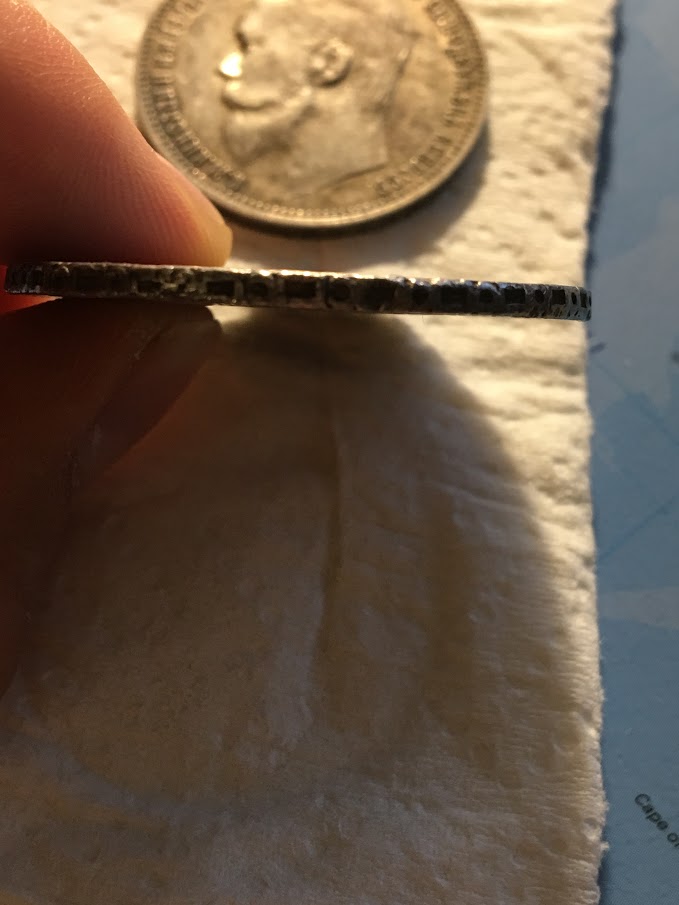
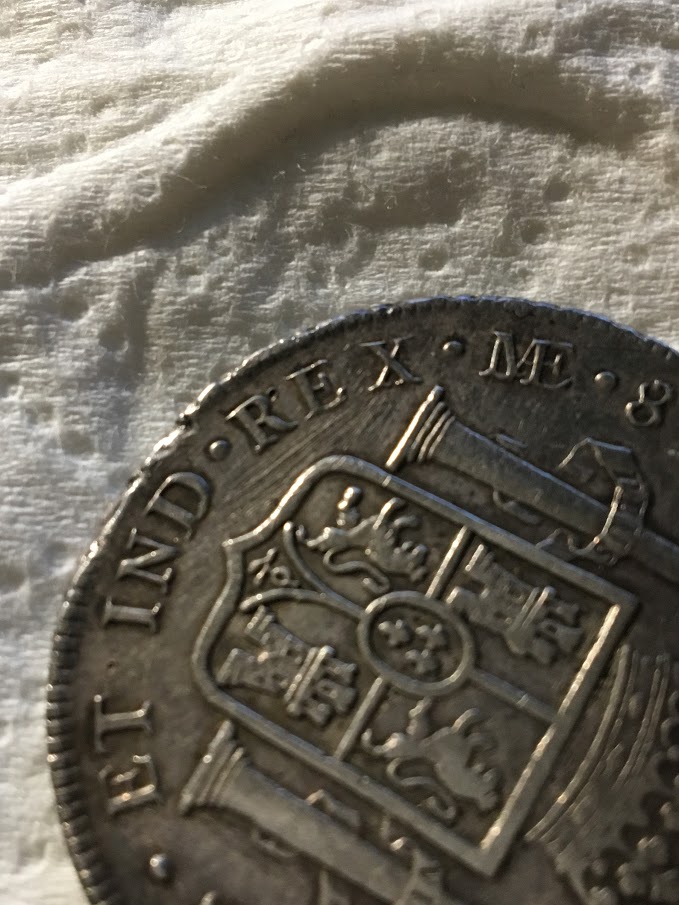
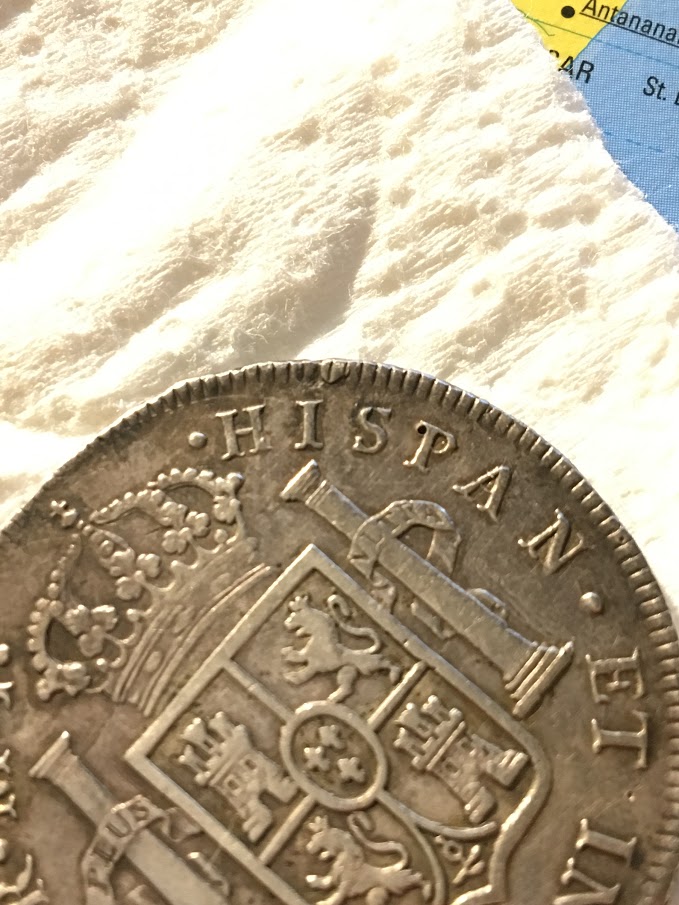
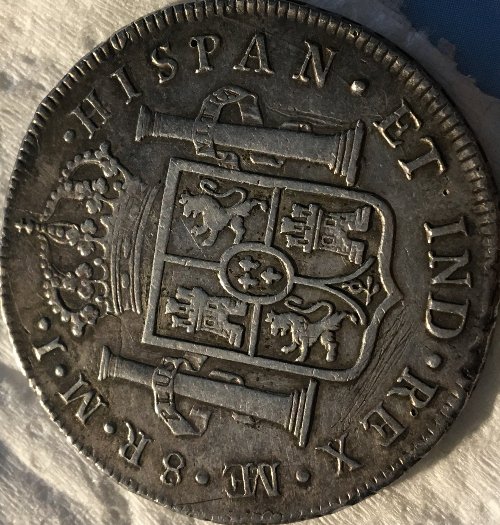
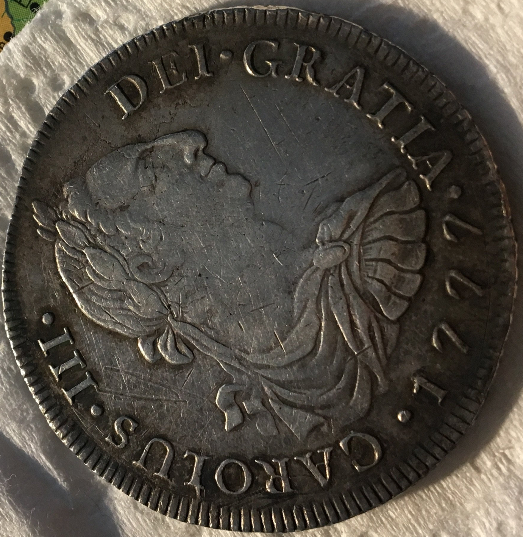
Based only on appearance, I tend to believe the coin is likely genuine. From pictures alone, it can be very difficult to authenticate these pieces. I would need two clear edge photos that show the overlaps in the design detail along with enough of one face of the coin (same face in both pictures) so that I can located the laps on the face. These photos need to be in focus at the point or the overlap.
The overlaps must be exactly opposite one another and they must be the same length.
Next the weight of the coin and the density should determine if it is silver. Since the coins of Lima carried no premium value in China, there is little likelihood that silver counterfeits were ever made to circulate. So if the coin is 900 fine silver SG = 10.31 there is a good chance it is genuine.
Based on the design used - in my opinion there is a matrix match.
I looked at the edge picture by inverting the colors. While not clear you did capture one overlap in the photo at the left side near your fingers. The design rectangle and circle is correct and the large size of the elements is a standard at LIMA. There may be a couple anomalous circles - impossible to tell without clearer pictures.
The Lima mint is noted for two trace contaminants - silver and arsenic. In raw silver they occur at about the same level. If the silver was purified by multiple cuppelations much of the arsenic could have been removed - however, the gold trace being soluble in silver must remain close to intact. Because of the density of gold even an inexpensive handheld XRF should return a signature for gold. Lacking gold would be a good indication of a more modern fabrication (after the 1880s).
Good fortune with the coin.
The overlaps must be exactly opposite one another and they must be the same length.
Next the weight of the coin and the density should determine if it is silver. Since the coins of Lima carried no premium value in China, there is little likelihood that silver counterfeits were ever made to circulate. So if the coin is 900 fine silver SG = 10.31 there is a good chance it is genuine.
Based on the design used - in my opinion there is a matrix match.
I looked at the edge picture by inverting the colors. While not clear you did capture one overlap in the photo at the left side near your fingers. The design rectangle and circle is correct and the large size of the elements is a standard at LIMA. There may be a couple anomalous circles - impossible to tell without clearer pictures.
The Lima mint is noted for two trace contaminants - silver and arsenic. In raw silver they occur at about the same level. If the silver was purified by multiple cuppelations much of the arsenic could have been removed - however, the gold trace being soluble in silver must remain close to intact. Because of the density of gold even an inexpensive handheld XRF should return a signature for gold. Lacking gold would be a good indication of a more modern fabrication (after the 1880s).
Good fortune with the coin.

 To CCF!


