



Coin Community Family of Web Sites Join Thousands of Coin, Bullion, & Money Collectors
Royal Estate Auctions - $1 Coin Auctions300,000 items to help build your collection! Royal Canadian Mint products, Canadian, Polish, American, and world coins and banknotes. Coin, Banknote and Medal Collectors's Online Mall Vancouvers #1 Coin and Paper Money Dealer Join Thousands of Coin, Bullion, & Money Collectors Specializing in Modern Numismatics


Username:
Password:
Save Password
Forgot your Password?


This page may contain links that result in small commissions to keep this free site up and running.

Welcome Guest! Registering and/or logging in will remove the anchor (bottom) ads. It's Free!

Spanish 1825 2 Real Coin In The China Trade?

To participate in the forum you must log in or register.
Author Previous TopicReplies: 4 / Views: 1,308Next Topic  
Pillar of the Community
Squire Wilson's Avatar
Australia
653 Posts
 Posted 07/24/2018  05:02 am Show Profile   Bookmark this topic Add Squire Wilson to your friends list Get a Link to this Message Number of Subscribers
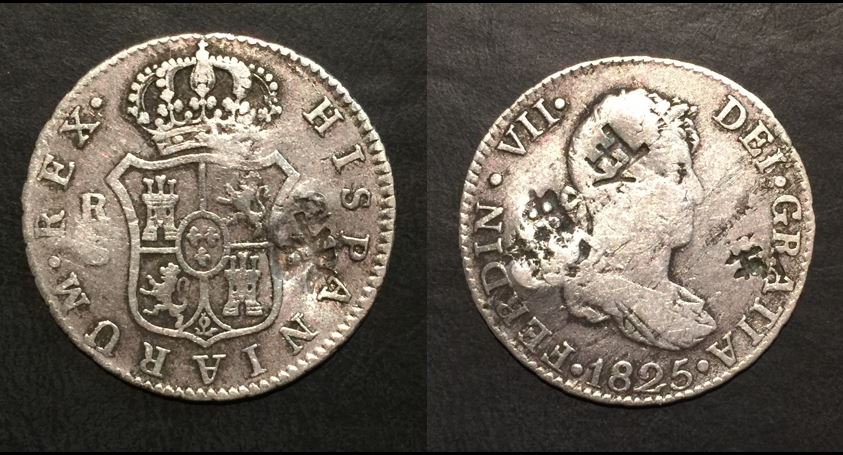
Recently I added the below Spanish 1825 2 Real coin to my collection. This coin is of interest for a few reasons and I would value the feedback from Coin Community Family members.

Firstly the coin appears to me to be a Spanish 2 Real coin. Note the absence of the two "Pillars of Hercules" from the reverse of the design. The RS mintmark indicates Seville as the origin of the coin.
Finally you can see the Chinese chop marks on the coin.
How could a Spanish coin like this end up in the Far East?
I thought that this principally occurred with "colonial" Spanish silver coins sporting the "Pillars of Hercules" on the reverse.

Squire

Spanish-1825-2-Real-Coin-In-The-China-Trade?
Edited by Squire Wilson
07/24/2018 05:05 am
Pillar of the Community
Australia
3831 Posts
 Posted 07/24/2018  08:03 am  Show Profile   Bookmark this reply Add gxseries to your friends list Get a Link to this Reply
Why not? Chopmark practices continued well until early 1900s. Regardless of Japanese, English or Spanish origin, silver is silver.
My partial coin collection http://www.omnicoin.com/collection/gxseries
My numismatics articles and collection: http://www.gxseries.com/numis/numis_index.htm
Regularly updated at least once a month.
Pillar of the Community
Squire Wilson's Avatar
Australia
653 Posts
 Posted 07/24/2018  10:00 pm  Show Profile   Bookmark this reply Add Squire Wilson to your friends list Get a Link to this Reply
Thanks gxseries

It would appear that the Chinese were not very fussy about the coins that would make up their Sycee Ingots, provided they contained the required grade of silver .

Squire
Valued Member
CanadianNumismatist's Avatar
Canada
115 Posts
 Posted 07/27/2018  01:13 am  Show Profile   Bookmark this reply Add CanadianNumismatist to your friends list Get a Link to this Reply
In my opinion the coin is most likely genuine, for it to have been chopmarked, as chop marks were made by well known assayers of silver coinage in China, certifying the coin is up to standard for use in trade. And also as you were wondering how Spanish silver got to the Far East, well, before the USD became the global currency, the Spanish Peso de a ocho was the global currency used in worldwide trade. These, and other Spanish coins, were prized for their high silver content, and so many countries based off their own national currencies on the Spanish currencies.
Pillar of the Community
jgenn's Avatar
United States
1156 Posts
 Posted 07/27/2018  2:38 pm  Show Profile   Bookmark this reply Add jgenn to your friends list Get a Link to this Reply
The presence of an Asian chop should not be used to authenticate the host coin. Unless you are an expert in this area you have no idea when the marks were made. You can bet that there are plenty of modern counterfeits that have been given chops to make them attractive to collectors.

The mintmark is S for Seville, the R is for reales and goes with the number 2 on the right side of the shield to show the denomination.

Lots of countries traded silver for Chinese goods. It's one of the main reasons that the US and European nations created silver Trade dollars. Some collectors of US Trade dollars prefer those with chops to those without.

A Spanish coin could have passed through the Philippines since if was a Spanish colony until 1898.
Edited by jgenn
07/27/2018 2:47 pm
  Previous TopicReplies: 4 / Views: 1,308Next Topic  

To participate in the forum you must log in or register.


Disclaimer: While a tremendous amount of effort goes into ensuring the accuracy of the information contained in this site, Coin Community assumes no liability for errors. Copyright 2005 - 2026 Coin Community Family- all rights reserved worldwide. Use of any images or content on this website without prior written permission of Coin Community or the original lender is strictly prohibited.
Contact Us  |  Advertise Here  |  Privacy Policy / Terms of Use

Coin Community Forum © 2005 - 2026 Coin Community Forums
It took 0.26 seconds to rattle this change. Forums