







 First Page


 Posted 08/08/2018 4:21 pm


[quote]
tdziemia asked:
Can anyone explain why this happens during a coin strike? And why Jeffersons seem especially prone to it? To me, this means the metal is not "flowing" (technically, I suppose the better term is deforming) as it should in order to give a smooth surface. More friction at die surface? Inadequate stamping force? [quote]
During the strike the metal is being moved around. Making some parts higher and reducing others to make them lower. After several hundreds of strikes, the lower field areas on the coin, start showing die flow lines. Keep in mind they usually do not use lubrication on the dies. This leaves a residue on the coins. It also gets into the devices and prevent the full strike of them. So this metal to planchet wear will make lines form where the metal is moved over and over into the new location. That is what you are seeing on the fields. Note on your coin, they make the fields to look white in color. This is totally normal. The more coins struck with a die, the more the devices breakdown. This affects all the entire die. Then figure in die clashes that transfer the outlines of deeper devices onto the opposite dies. So to remove these, the polish down the fields of the die. (the fields are the outside part of the die) The devices are deeper into the die and are not usually affected during a clash. Usually the bust outlines and the buildings are transferred on cents.
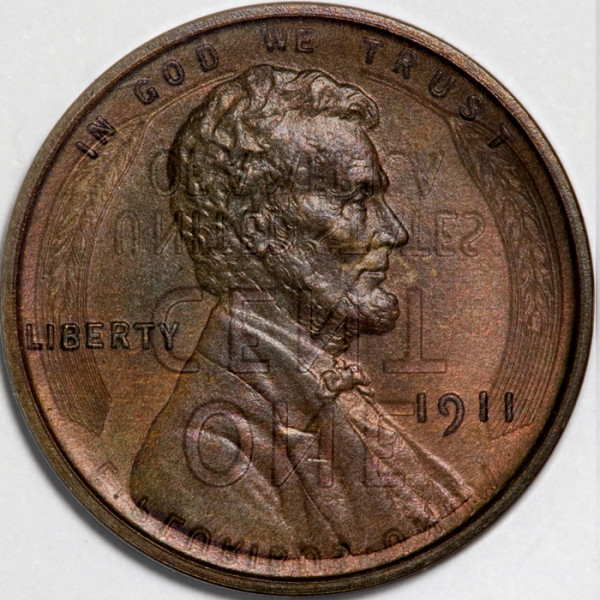

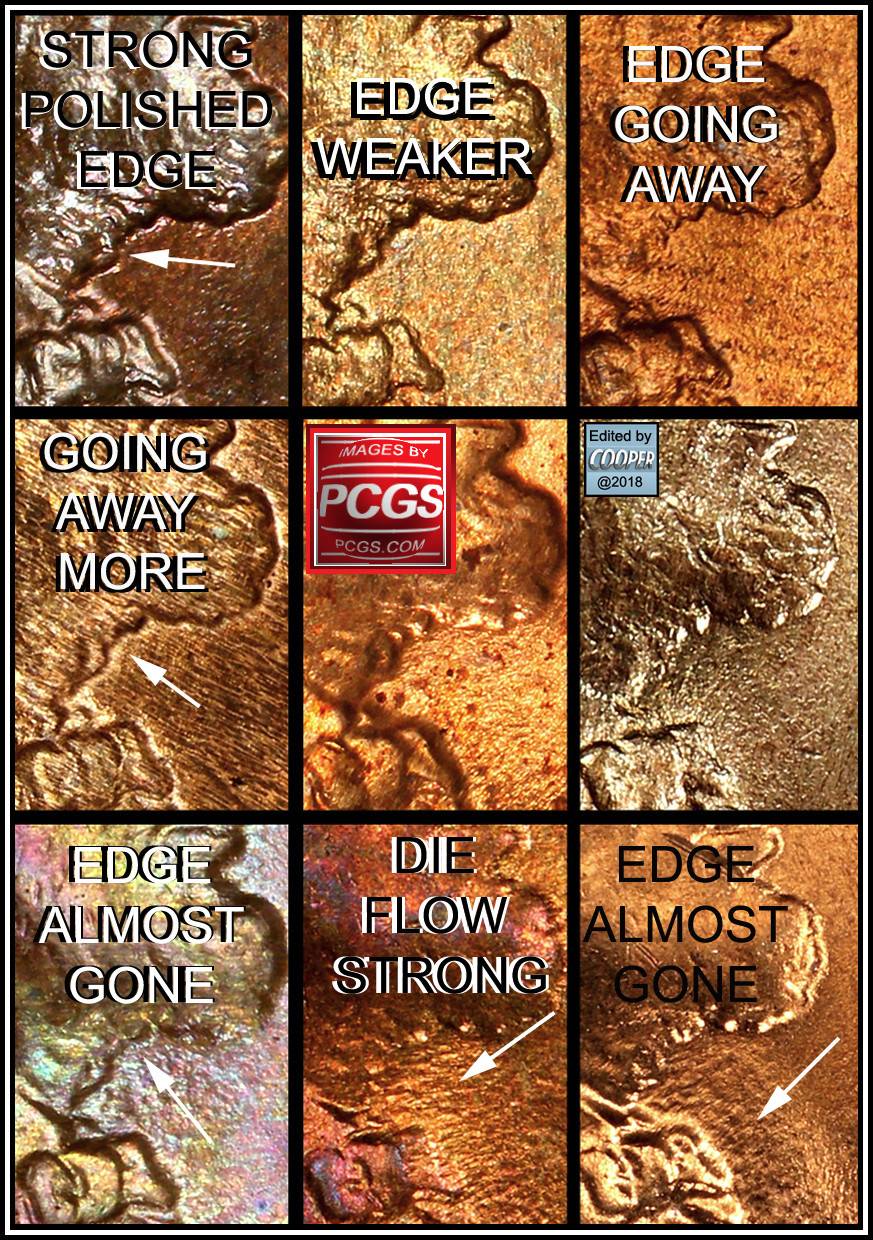
As the die ages and polishing take place, then the die is altered from the fresh die that started out to an aged, altered die that is continued to be used. Die wear is just part of the lifes process for a die. Die events happen and clashes, cracks, chips, breaks and sometimes a Cud can happen before the die is retired. It is doing the job it was made for.
tdziemia asked:
Can anyone explain why this happens during a coin strike? And why Jeffersons seem especially prone to it? To me, this means the metal is not "flowing" (technically, I suppose the better term is deforming) as it should in order to give a smooth surface. More friction at die surface? Inadequate stamping force? [quote]
During the strike the metal is being moved around. Making some parts higher and reducing others to make them lower. After several hundreds of strikes, the lower field areas on the coin, start showing die flow lines. Keep in mind they usually do not use lubrication on the dies. This leaves a residue on the coins. It also gets into the devices and prevent the full strike of them. So this metal to planchet wear will make lines form where the metal is moved over and over into the new location. That is what you are seeing on the fields. Note on your coin, they make the fields to look white in color. This is totally normal. The more coins struck with a die, the more the devices breakdown. This affects all the entire die. Then figure in die clashes that transfer the outlines of deeper devices onto the opposite dies. So to remove these, the polish down the fields of the die. (the fields are the outside part of the die) The devices are deeper into the die and are not usually affected during a clash. Usually the bust outlines and the buildings are transferred on cents.
As the die ages and polishing take place, then the die is altered from the fresh die that started out to an aged, altered die that is continued to be used. Die wear is just part of the lifes process for a die. Die events happen and clashes, cracks, chips, breaks and sometimes a Cud can happen before the die is retired. It is doing the job it was made for.


