not sure if it is ok to post a link to this site so I just pasted in what it said:
For years, a coin with a hole was looked upon with disfavor by U.S. collectors. As recently as 10 years ago, dealers sometimes had difficulty selling them for 10 per cent of their catalog value.
No one knows for certain why many of the earlier coins of the United States were holed. They couldn't all be worn as charms on a necklace or bracelet. Some may have been used as makeshift teething rings; a holed dollar of the 1790s was found with what appear to be nicks such as might have been left as a result of use by many teething babies.
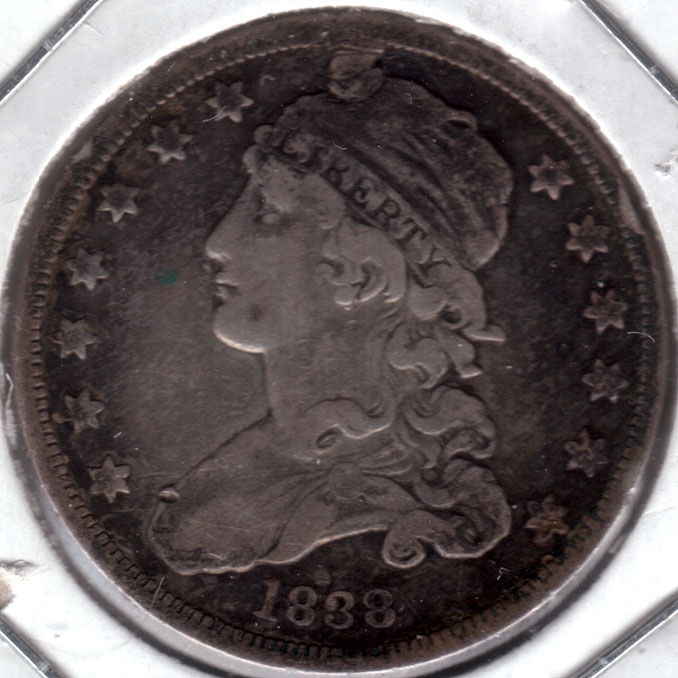
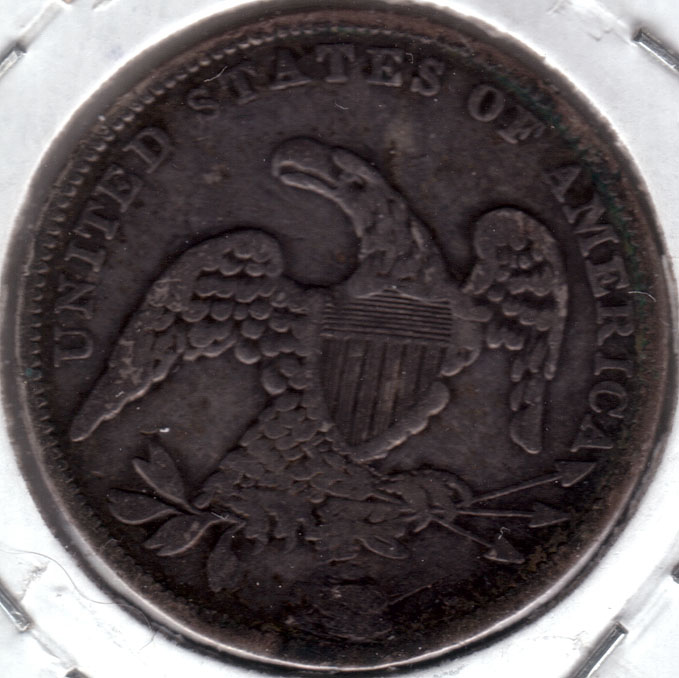
Holing of dollars and quarters and halves and large cents appears to have been fairly widespread as late as 1876. One collector has found a quarter, a half dollar and a
Trade dollar of that year, 1876, each with a neat hole at the top of the obverse. And all were in nearly Extremely Fine condition. Could these holes have been drilled recently? It hardly appears likely, since the catalog value of the three is close to $50, and not many persons tamper with that much value, even for the girl friend's bangle bracelet.
This is not to say that drilling holes in coins stopped abruptly in 1876; late-date
Indian cents, a
Buffalo nickel and a
Walking Liberty half dollar have been encountered so holed.
Do holed coins have a future? It would appear that the early United States specimens have a very bright future. Whereas the io per cent of catalog was the old rule of thumb, many dealers today are asking-and getting-as much as 10 per cent of catalog value.
In Europe today, an ancient Roman or Greek coin with a hole is often displayed alongside those which are completely sound. And the price asked is exactly the same with hole or without.
Early American coins with holes have had a steady increase in value because there simply aren't enough fine, sound coins to go around. When collectors of
United States coins could be counted in the hundreds or low thousands, there were enough coins for all. Today, although the exact figure is anybody's guess, the number of serious coin collectors in this country is estimated to be well into the hundreds of thousands.
While it might be a wonderful state of affairs if every collector who wanted a prime specimen of, say, a 1795 half dollar could get it, it just can't be done today. So the early half with a hole is being looked upon with more and more favor.
In 1800, the United States Mint reported that it turned out 11,622 Half Eagles-$5 gold pieces. How many have survived is not known. Its catalog value today ranges from $175 in Fine condition to $375 in Uncirculated.
How much would such a coin, in Extremely Fine condition but with a small neat hole in it, be worth? Under the old schedule, it would be valued at about $25- But don't be surprised that that early gold piece, even with a hole, is valued by its present owner at more than $150. And he doesn't want to sell it.
The moral of all this is:
1. Don't carry a potentially valuable coin as a pocket piece.
2. Avoid dropping that 1797 silver dollar on the tile floor.
3. Holes in classic American coins aren't as damaging as they used to be.










 Posted 07/09/2008 04:55 am


 ) that seems to support your idea about placement of the hole having some effect on the desirability. Unfortunately it also says that when the coins are plugged (the new term I just learned for coins that have filled holes), they may be less desirable than a holed version.


