| Author |
 Replies: 8 / Views: 3,991 Replies: 8 / Views: 3,991 |
|
|
Pillar of the Community
Belgium
1194 Posts |
Nero : 54 - 68 . AE 24 , 24 mm , 16.47 gr ,12 h . obv : laureate head right rev : large S C in laurel wreath mint : Seleucis ad Piera , Antioch AD 65/66. 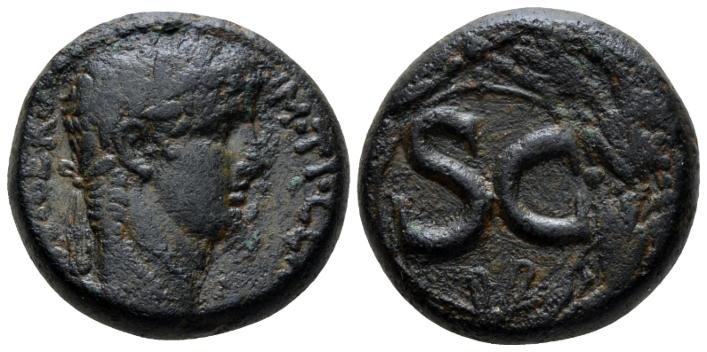 The main mint of Syria was Antioch and produced vast numbers of bronze coins with the letters S C in a wreath on the reverse .These issues begin with Augustus and continue down to Philip I (244-249).It is unclear what the abbreviation S C means . Normally it would signify that the Roman Senate has given his approval (senatus consulto) but the senate had no authority in the province of Syria,which was under the direct control of the emperor.One possible explanation is that the Senate had issued a senatus consultum approving a decision of Augustus to begin the issue of this type of bronze coinage. Another possibility is that S C on this Syrian coins is an abbreviation for something other than senatus consulto . albert |
|
|
|
Pillar of the Community
United States
1122 Posts |
Albert, I have one of these and always wondered that. I would guess that it meant Syria Coele - the name of the province. 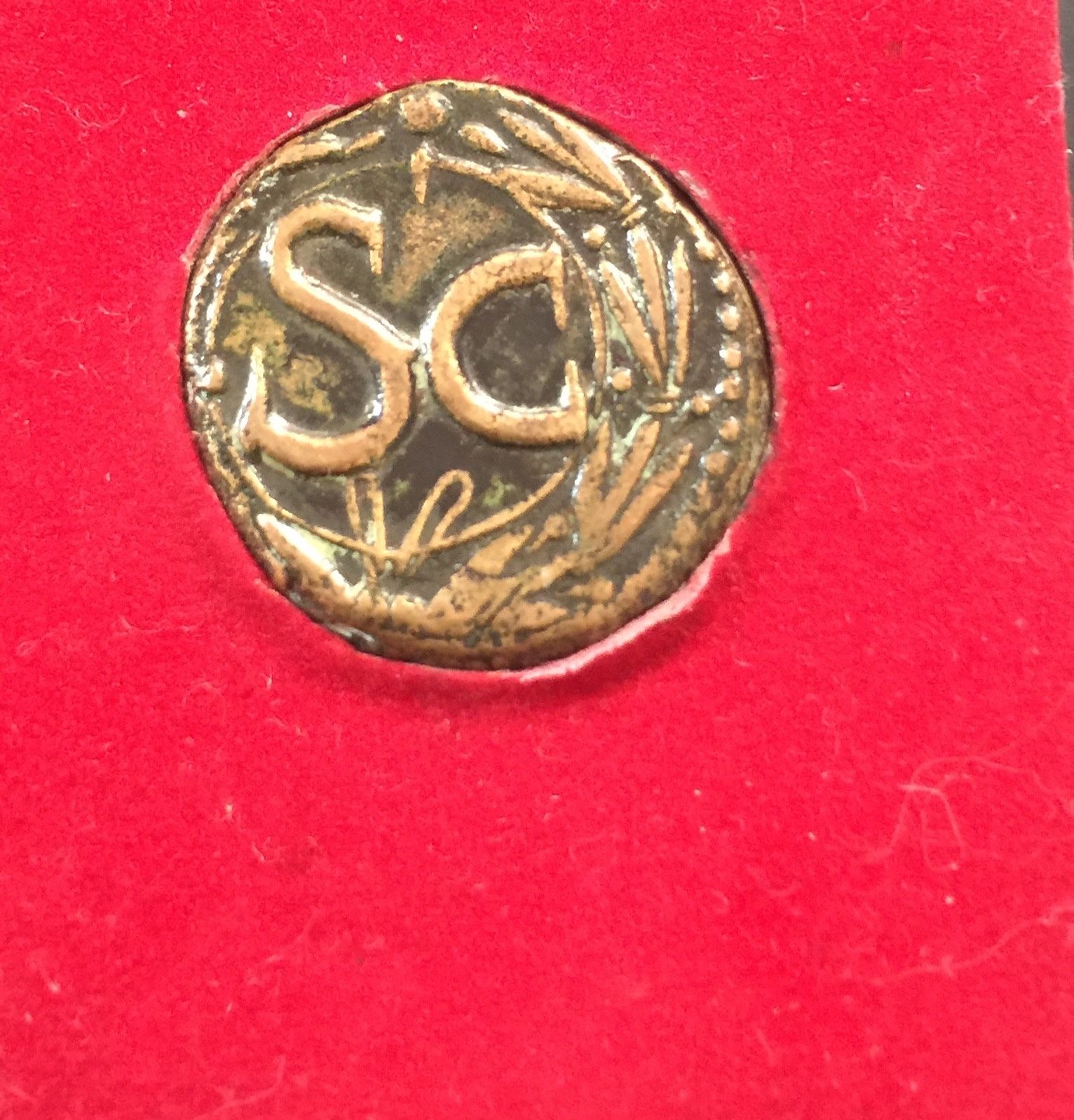 Edited by travelcoin
09/27/2018 12:09 pm
|
|
Bedrock of the Community
Australia
21792 Posts |
Could be right, - but I don't think so. Although it is a Roman Colonial coin, I still think it refers to what is indicated on Roman Imperial coins. "Senatus Consulto" roughly translated means "by the authority of the Senate of Rome" - - (not by the Authority of the Emperor). Applies to bronze and orichalcum (brass) coins. ______________________________________________________________________________________________________________________________ Actually, I happen to be making this post , when I an currently in Italy. A few days ago, I was in Rome. I found cast iron sewer manhole covers, proudly displaying "SPQR", Senatus Populi Que Romani, Which, although quite factual, I felt was rather funny, when displayed on a sewer manhole cover.  |
|
Pillar of the Community
 Belgium
1194 Posts |
Travelcoin : very good idea , but Syria coele is situated next to the Syria province : https://en.wikipedia.org/wiki/Coele...23_Syria.jpg .Seleucis ad Piera was the harbour of Antiochia ad Orontes . Sel 691 : the problem is that Syria an imperial province was , the senate had no authority in the imperial provinces and the senators had even to ask permission to go to an imperial province .Syria was under direct control of the emperor; One possible explanation is that the senate had issued a senatus consultum approving an initial decision by Augustus to begin this type of bronze coinage . The letters are also employed on different sorts of coinage and even silver tetradrachms.albert |
|
Pillar of the Community
Belgium
1194 Posts |
Sel , did you visit the coin collection in the Palazzo Massimo alle terme in the basement ? albert
|
|
Moderator
 Australia
16991 Posts |
It's my understanding that these provincial bronze coins were issued under the authority of the local city council. I am uncertain, perhaps the local council in Antioch called itself a "senate" (in Latin; the Greek equivalent being "Boule"), and thus justified its use of "SC", meaning "by order of the Senate (of Antioch)"?
Don't say "infinitely" when you mean "very"; otherwise, you'll have no word left when you want to talk about something really infinite. - C. S. Lewis
|
|
Bedrock of the Community
Australia
21792 Posts |
Antwerpen 2306:
Unfortunately, I never got the chance to visit the Museum.
I am a member of a touring group, that had other interests.
Nevertheless, many years ago I spent a whole day in the Coins and Medals Department of the British Museum, looking specifically at ancient coins, and in particular, Roman aureii.
That is a day that I will never forget!
|
|
Pillar of the Community
United States
1122 Posts |
Albert, thanks for the insight. According to Britannica, "Syria itself was later divided by Septimius Severus into two provinces—Syria Coele in the north with two legions and Syria Phoenice with one. By the beginning of the 5th century it was subdivided into at least five provinces."
Therefore, I'm going with Sap's suggestion it's from a Senate - just not the Roman Senate
|
|
Pillar of the Community
Belgium
1194 Posts |
I agree it can be a Senate , but if so ,it has to be the Roman senate as said in the beginning . The SC coins begin with Augustus and continue down to Philip I (244-249) .The Romans conquerring Syria in the first century BC keep the existing monetary system but took it under control and introduce some new coins , as the SC coins and later the denarius andthe aureus .In this beginning period , the name for this province was Syria , there was a Συρια ΚΟιλη ,but it indicated a region in today Lebanon and Syria .
For the administration of the imperatorial provinces : the imperator was the big boss and he named the local administrator of the province : legatus Augusti pro praetore . In the senatorial provinces , the name didn't change ( propraetor ) .
The Roman Senate had not any decision power in this imperial provinces .
The coinage in Roman Syria seems to divide between silver and bronze coins that for the most part lack any indication of their city of origin and coins with an ethnic ( most in the genitive plural) as if they were considered to be the communal property of the citizen body of a particular city .
Coins lacking an ethnic circulated widely whereas coins without were more restricted ,perhaps no more than the territory of the issuing city.
The inscription SC figures also on some silver coins till the time of Gordianus III .
This type of SC coin is struck by different emperors,from Augustus till to the third century.The coin has been created by Augustus ,so SC can not indicate the local administration , eventually the Roman Senate , as the coin has been created early and the Roman Senate issued maybe a senatus consultum approving an initial decision by Augustus. albert
PS: most of the elements I use come from the book : Coinage in Roman Syria: Northers Syria ,64 BC-AD 355 , by K.Butcher .
|
| |
Replies: 8 / Views: 3,991 |
|










 Posted 09/27/2018 12:50 pm


