

 Posted 10/16/2018 07:11 am


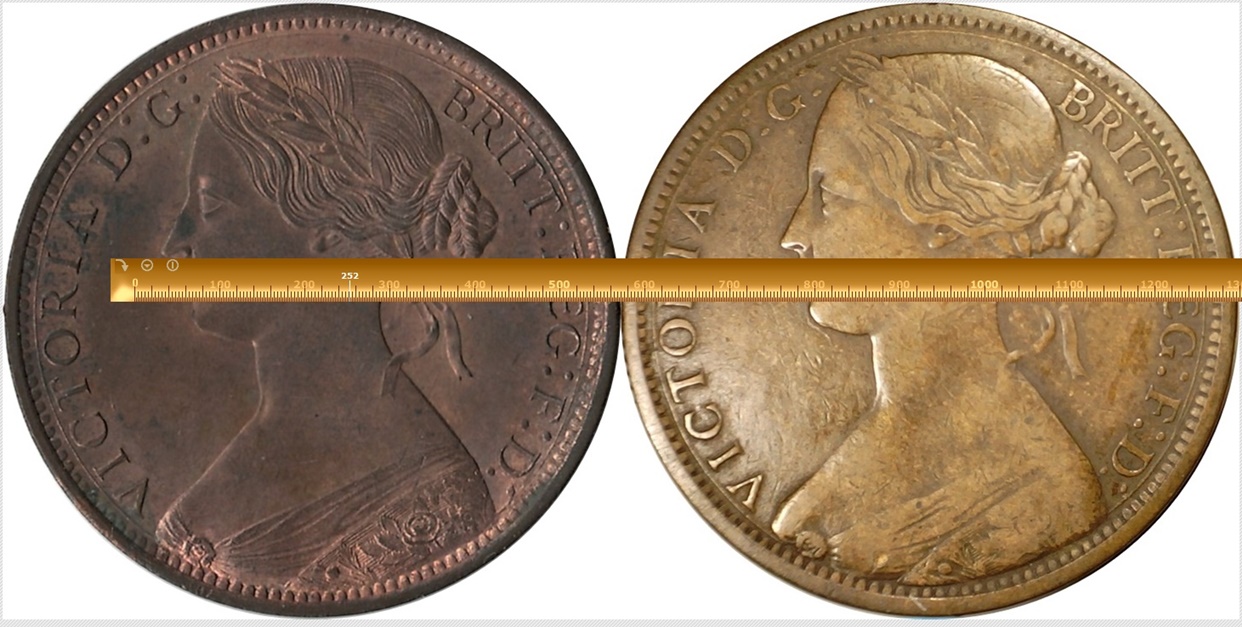
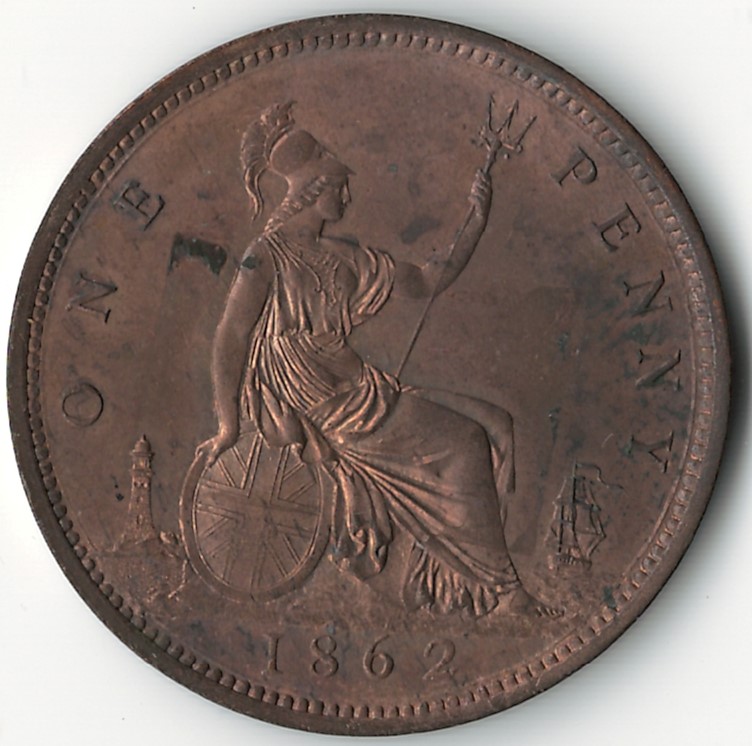
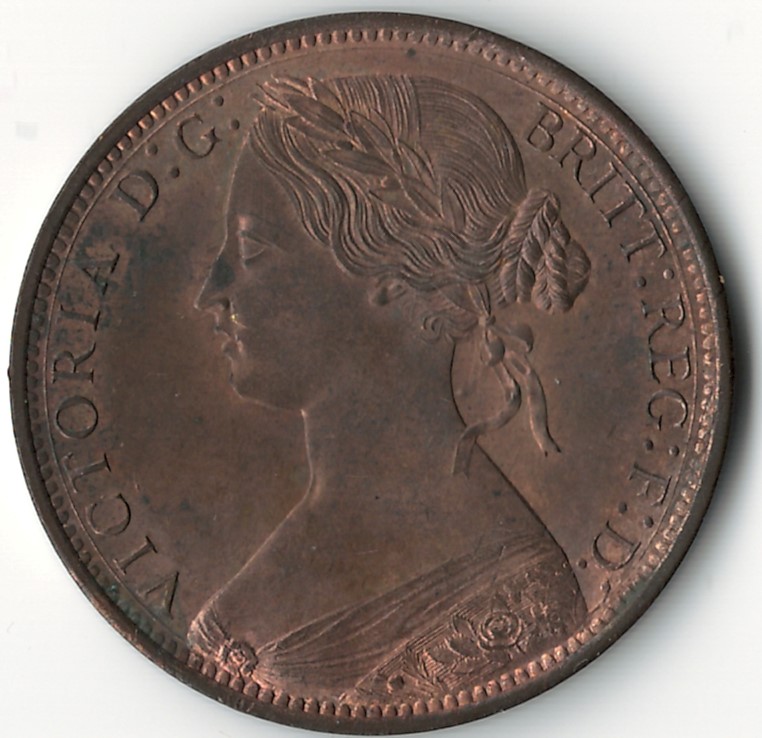
That is the Standard Obverse 6 reverse G 1862 penny but Here's the thing. I am questioning the obverse 6 on some coins as possible transitional dies akin to the canadian cents struck by the heaton mint where one bust type was struck over another. We are supposed to take on face value that all obverse 6 has a die flaw on the top colon after D: of F:D:.The flaw on your coin is a break in the linear line which is completely different to the flawed colon. Also obverse 6 the colons point to the far right edge of the 3rd tooth from the shoulder. Your coin points directly at it which I have also seen on an example before. Also Obverse 6 has the B of BRITT almost touching the hairline at the back of Victoria's head . Notice on your coin it is quite a distance away more resembling obverse 5. It cannot be obverse 2 as the signature would be prominent half on half off the bottom of the mantle and obverse 2 sits much higher on the planchet and doesn't have a recessed area on the mantle. There could be many reasons or theory as to why your coin exhibits features of 2 obverses 1 could be it's simply struck on a slightly smaller planchet which would affect where the normal markers are for this obverse.
I have seen hundreds of obverse 6 1862 pennies and there are many that have these strange traits some look very low relief others high relief normally a distinctive gap between the teeth and the mantle or like yours well below the linear circle line and almost touching the border teeth. Just my opinion but I am not convinced there are just the documented obverse dies for this particular year
I have seen hundreds of obverse 6 1862 pennies and there are many that have these strange traits some look very low relief others high relief normally a distinctive gap between the teeth and the mantle or like yours well below the linear circle line and almost touching the border teeth. Just my opinion but I am not convinced there are just the documented obverse dies for this particular year