| Author |
 Replies: 9 / Views: 1,355 Replies: 9 / Views: 1,355 |
|
|
New Member
United States
1 Posts |
It's on the back of an 1858 Flying Eagle penny. 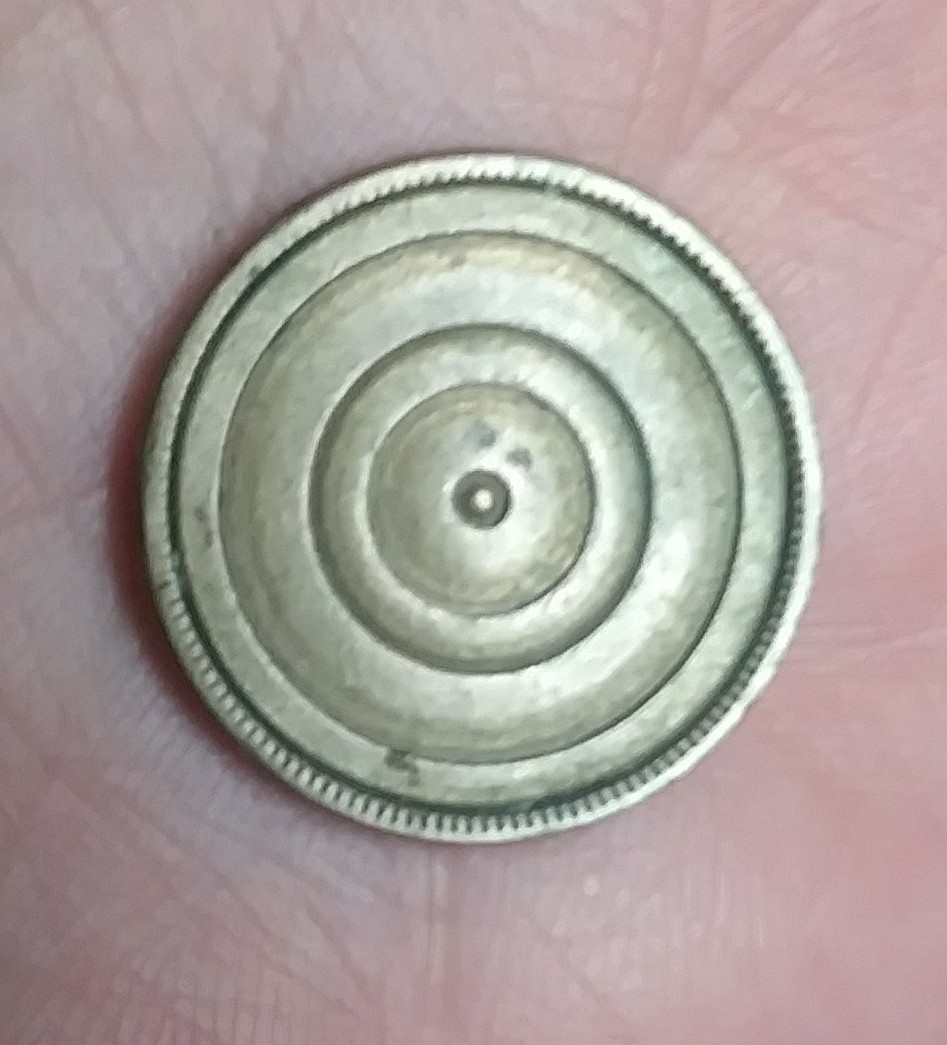 *** Moved by Staff moved to a more appropriate forum. *** *** Moved by Staff moved to a more appropriate forum. *** |
|
|
|
Moderator
 United States
34552 Posts |
@Bvozar1, first welcome to CCF. Second, if this back side of the coin is dished, then perhaps you have one side of an old Magician's coin. As it is hard to tell depth from your photo, can you please confirm that the coin gets thinner in the center compared with the rims? Then again, maybe this is wrong--normally the denticles wouldn't be there just a vertical edge so that the other half could be slid into place. Maybe add a pic of the edge and other side of this coin? Thx. "If you climb a good tree, you get a push."
-----Ghanaian proverb
"The danger we all now face is distinguishing between what is authentic and what is performed."
-----King Adz
|
|
Bedrock of the Community
Canada
21892 Posts |
 to the CCF It looks like it has been milled out for some reason. In any case, it wan't done during the minting of the coin so it PMD. |
|
Pillar of the Community
7234 Posts |
Agree, look like somebody got a precision jewelers lathe and was practicing.
|
|
Moderator
United States
195559 Posts |
to the Community! |
|
Bedrock of the Community
United States
94367 Posts |
to the CCF! |
|
Pillar of the Community
United States
3402 Posts |
Yeah, definitely lathe work.
KK
|
|
Pillar of the Community
United States
4432 Posts |
This post reminded me of a counterstamp in my collection. Note the similar lathing effect; this, done prior to the application of the merchant's logo stamp. I'm not suggesting that this was the intent of the machinist who operated on the OP's cent. Having studied many counterstamped coins over the years, those that evidently passed through the hands of metal workers, I've simply noted that many an early machinist would use a coin to test his work skills.   |
|
Bedrock of the Community
United States
94367 Posts |
Interesting theory. The confined work area of a ground cent would be a challenge, I think you're saying.
|
|
Pillar of the Community
United States
4432 Posts |
Quote:
Interesting theory. The confined work area of a ground cent would be a challenge, I think you're saying. Yes. This was precision work on both pieces. The OP's coin was perhaps a test or practice exercise. The copper-nickel cents were, at their time of issue, one of, if not THE hardest metal products used for standard coinage. What better piece then to serve as a guinea pig? |
| |
Replies: 9 / Views: 1,355 |
|





 Posted 11/20/2018 9:46 pm





