| Author |
 Replies: 13 / Views: 2,015 Replies: 13 / Views: 2,015 |
|
|
Pillar of the Community
United States
751 Posts |
If a double Die striking, is showing exactly what you would see if you could look at the die. HOW is it possible that the Die ended up being made in the first place, all the quality controls, and mysteriously the die slipped through.
Has anyone ever seen a photo of the die that produced the coins ? Yet when you really think about it, If by some chance the blank had actually been struck twice, the second strike, would have destroyed the first strike, yet both images are very crisp. Has anyone ever written an explanation of how it happened ?
Google says that when it got to the final stage of stamping out a final die for production, the die became slightly rotated in it's holder, and when the final stamping occurred it presented a ghosting second image of the date and Obverse lettering.
My main question that I just can't work past, IS WHY didn't the final die stamping in the process, damage the previous image already present on the die itself. Just can't get past that.
Dan
|
|
|
|
Rest in Peace
United States
18456 Posts |
Excellent question , lets see what Coop has to say .  |
|
Pillar of the Community
United States
2189 Posts |
When a modern coin die is created, it is struck from a working hub, which places the incuse image onto the die that will subsequently be used to strike coins. Normally, this requires multiple blows. In 1955, one of the working obverse dies at the Philadelphia Mint was misaligned on the second blow from the working hub, thus resulting in a doubled image. Due to the manner in which this hubbing was carried out, it most noticeably affected the date and inscriptions, with very little doubling (albeit noticeable loss of detail) visible on the bust of Lincoln. These doubled features were visible on all of the coins struck from this die. It is estimated that 40,000 of these coins were minted, all during one night shift at the Philadelphia Mint.[2] Roughly 20,000-24,000  of the pennies were introduced into circulation after the minting error. |
|
Bedrock of the Community
United States
94367 Posts |
I believe that explains it very well, thanks!
|
|
Pillar of the Community
United States
2775 Posts |
Food for thought. See link. http://doubleddie.com/58222.htmlI never thought of the master dies down as being struck together, but rather squeeze together in a more controlled manner. In the multiple-squeeze hubbing press, the master dies, working hubs and working dies needed to be annealed multiple times in the process until an acceptable imprint was obtained. From coop's image library. 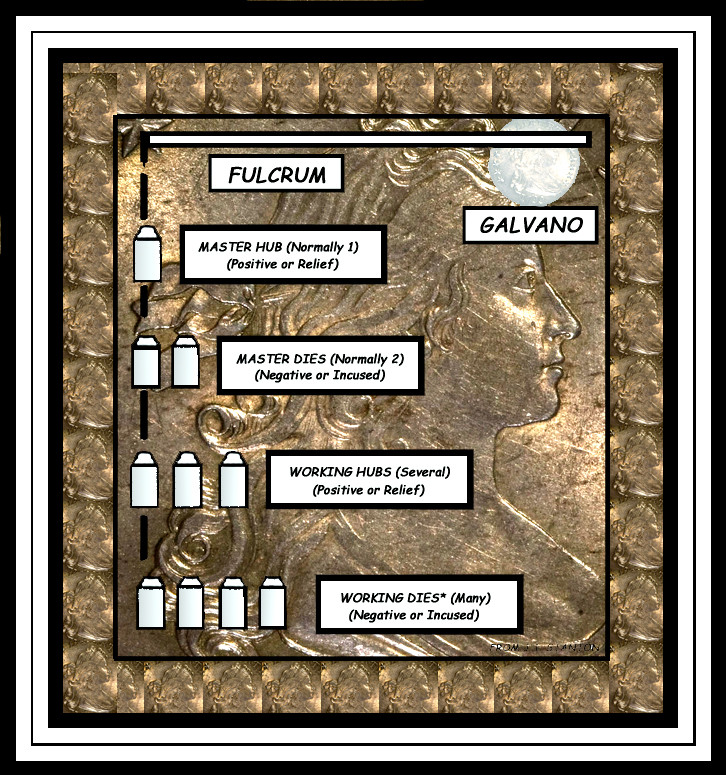 Thanks, Doug. |
|
Pillar of the Community
 United States
751 Posts |
Jasper;
Thanks for the explanation.
"one of the working obverse dies at the Philadelphia Mint was misaligned on the second blow from the working hub, thus resulting in a doubled image."
However it still doesn't answer my inquiry as to why that final strike to fix the die to be used, Did not in any manner distort the previous strike.
Correct me if I'm wrong but, when you press a die into a blank , the die does not add metal in the form of an image to the blank, it simply pushes the metal of the blank further into the blank leaving the raised image. The spots between the letters is flat metal of the die, When making the final stamp into the die being made for the 55 one cent coin rotated, why didn't the flat spots of the master die, flatten out the previous image on the die being made ? Keep in mind the master did not have a double image, it only had one image, the double came when the die being made rotated slightly and then the master came down onto it and made the second image. How was the first image not damaged ?
Dan
|
|
Pillar of the Community
United States
571 Posts |
You have to remember that the Working Hub, which the working dies are made from, is a positive image of the coin. It looks just like the actual coin. Therefore the flat fields are the lowest part of the working hub. Everything else is pressed into the die, leaving a reversed image. If the hub is rotated slightly, and presses into the die again at the same strength and distance, the flat fields cannot damage anything, as they are the last thing that comes into contact with the die. You can kind of replicate this by pressing a coin into a piece of clay, removing it, rotating it, and pressing again.
|
|
Pillar of the Community
United States
751 Posts |
I see what you are saying. Now it makes sense. I needed to take the reversing of the image one more step.
Dan
|
|
Pillar of the Community
United States
2775 Posts |
 with Dave42. Seems to have a good grasp on it. More food for thought, direct link to Class I doubled dies found in link above along with the other classes. Class I doubled die. http://doubleddie.com/203843.htmlThanks, Doug. Edited by Halo1st
12/16/2018 10:11 pm
|
|
Bedrock of the Community
United States
12477 Posts |
Quote:
I needed to take the reversing of the image one more step. I'm glad that final step presented itself. It gets confusing sometimes thinking about how all the incuse and relief pieces interact, but I agree with what was said.  In Memory of Crazyb0 12-26-1951 to 7-27-2020
In Memory of Tootallious 3-31-1964 to 4-15-2020
In Memory of T-BOP 10-12-1949 to 1-19-2024
|
|
Bedrock of the Community
United States
62064 Posts |
Each business strike coin is only struck once (normally). A doubled die had the doubling on the die. Each strike will create a coin with the same doubling. If a business strike coin is struck twice, (Proof coins are struck 2-3 times per strike) and the coin rotated or flipped over, that is called a double strike. What do they look like? Rotated in collar: 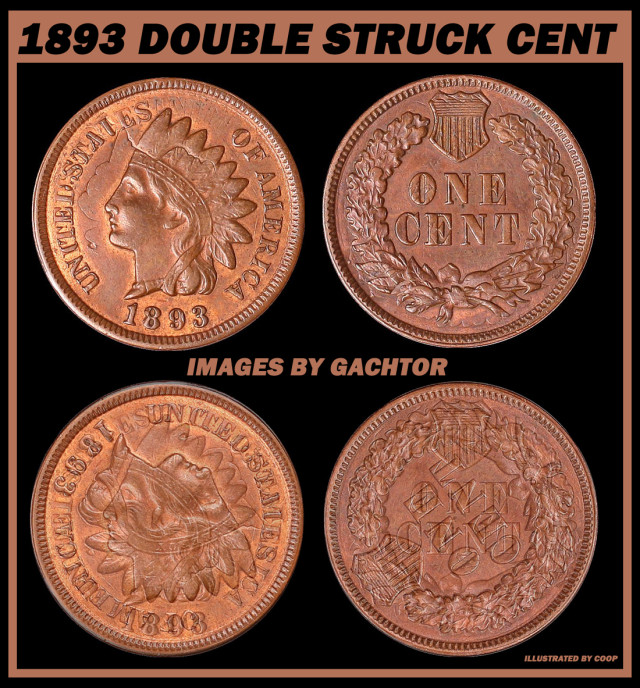 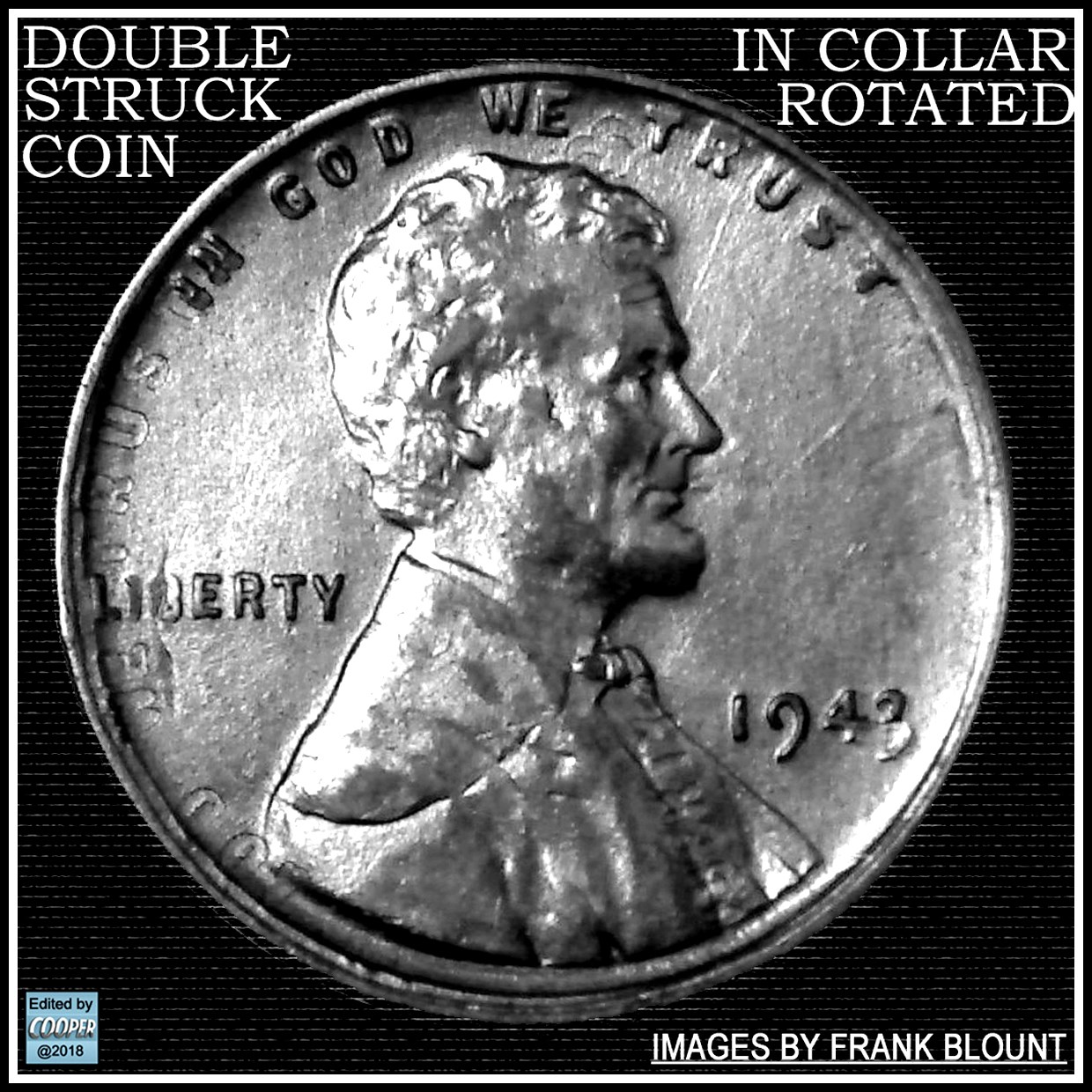 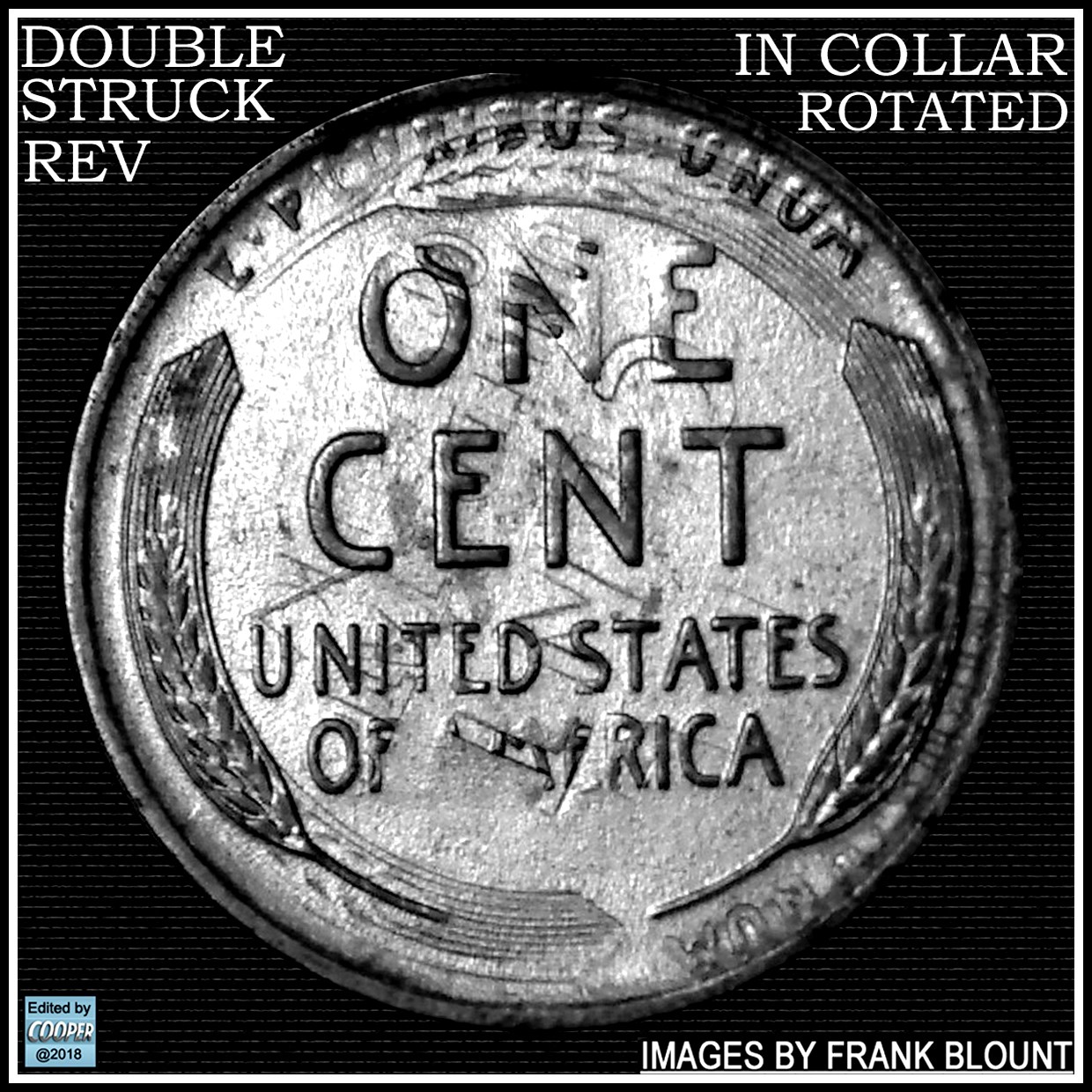 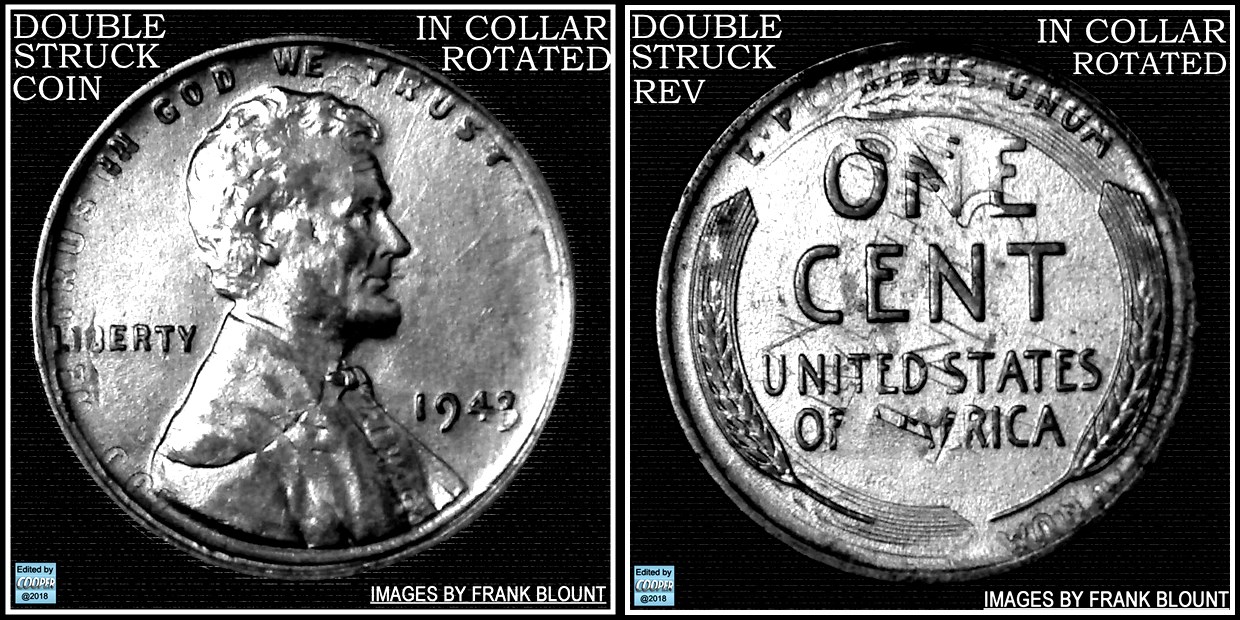 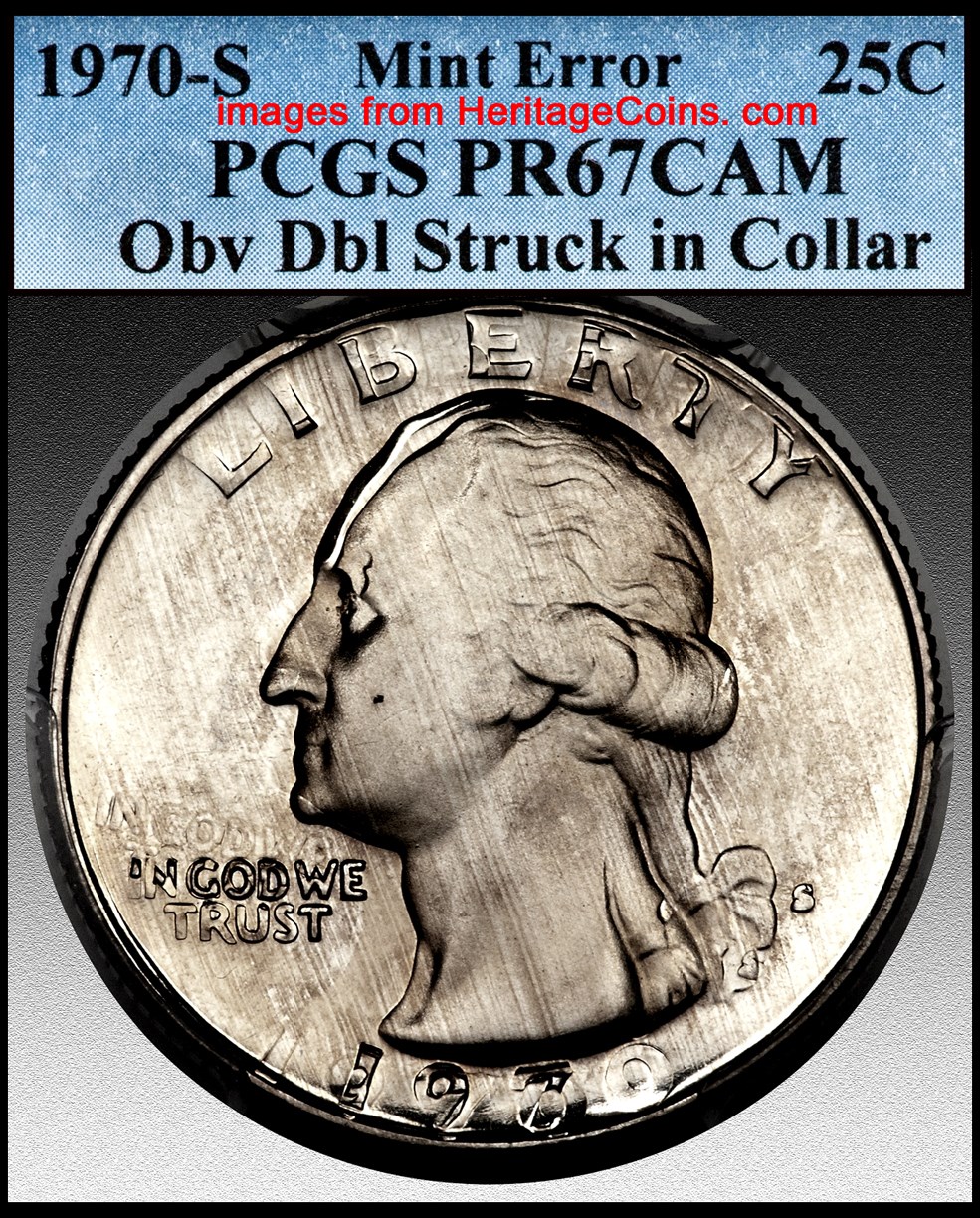 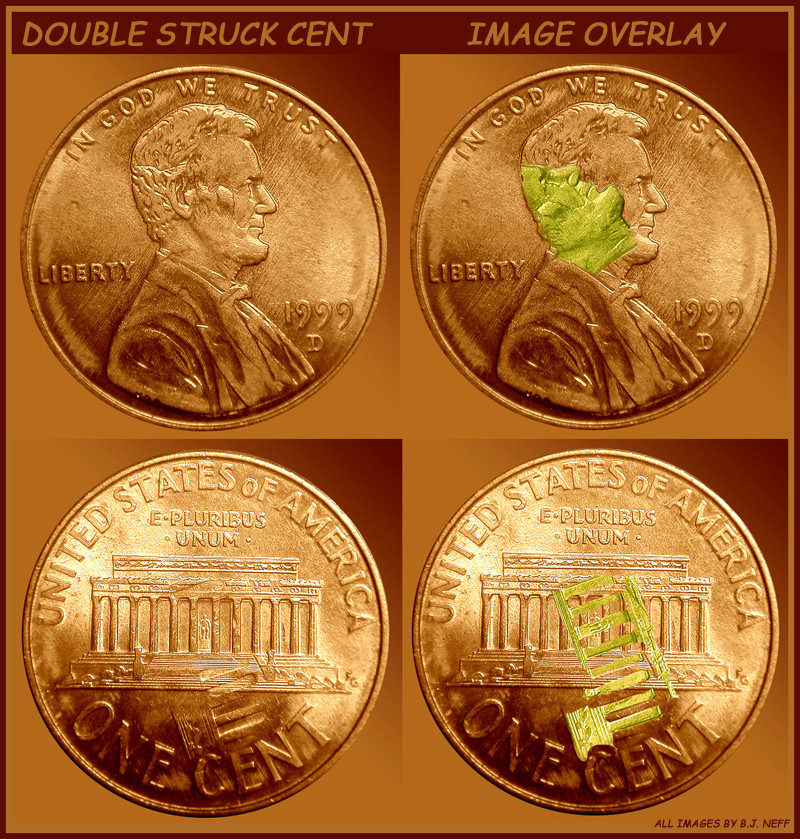 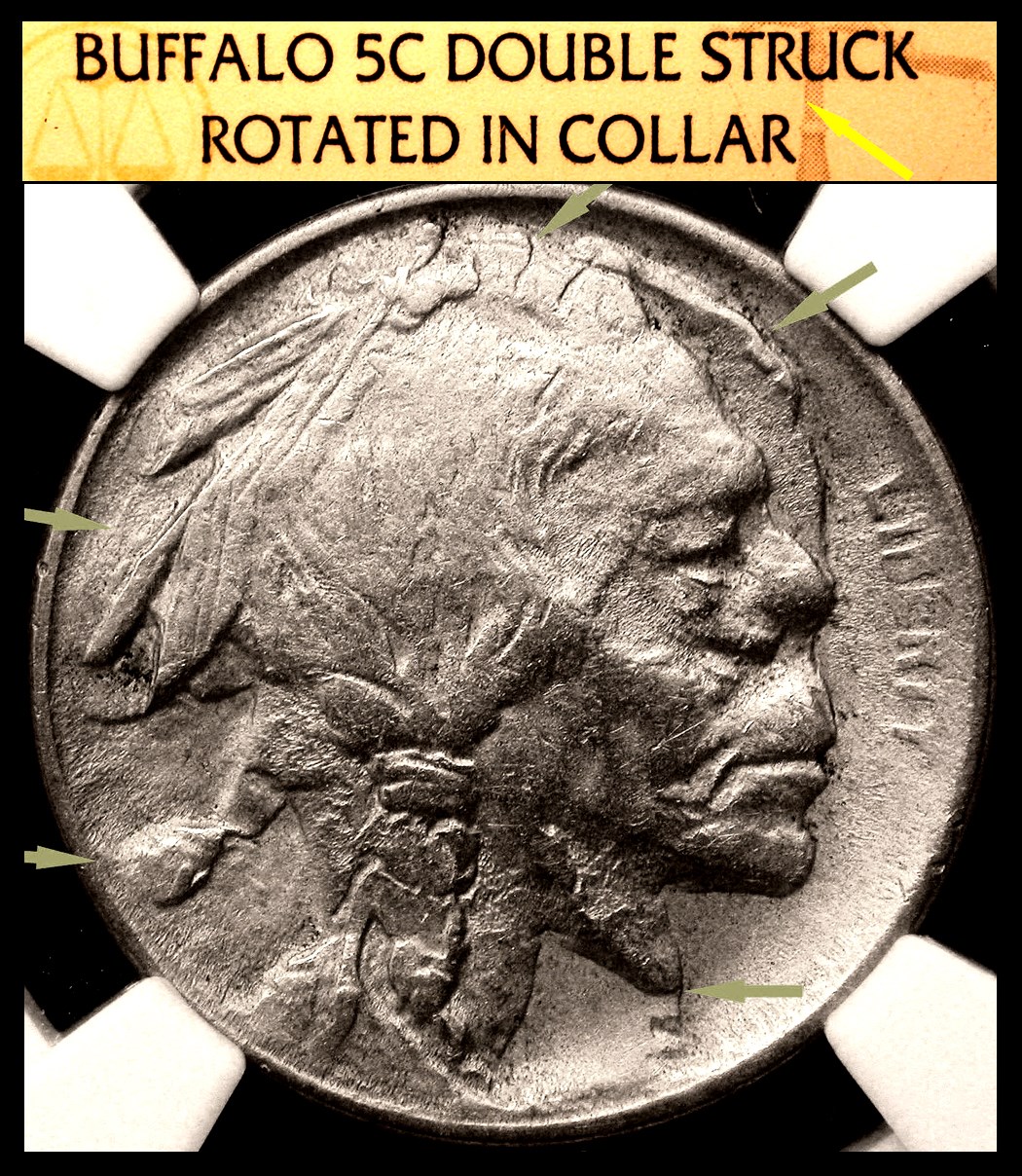 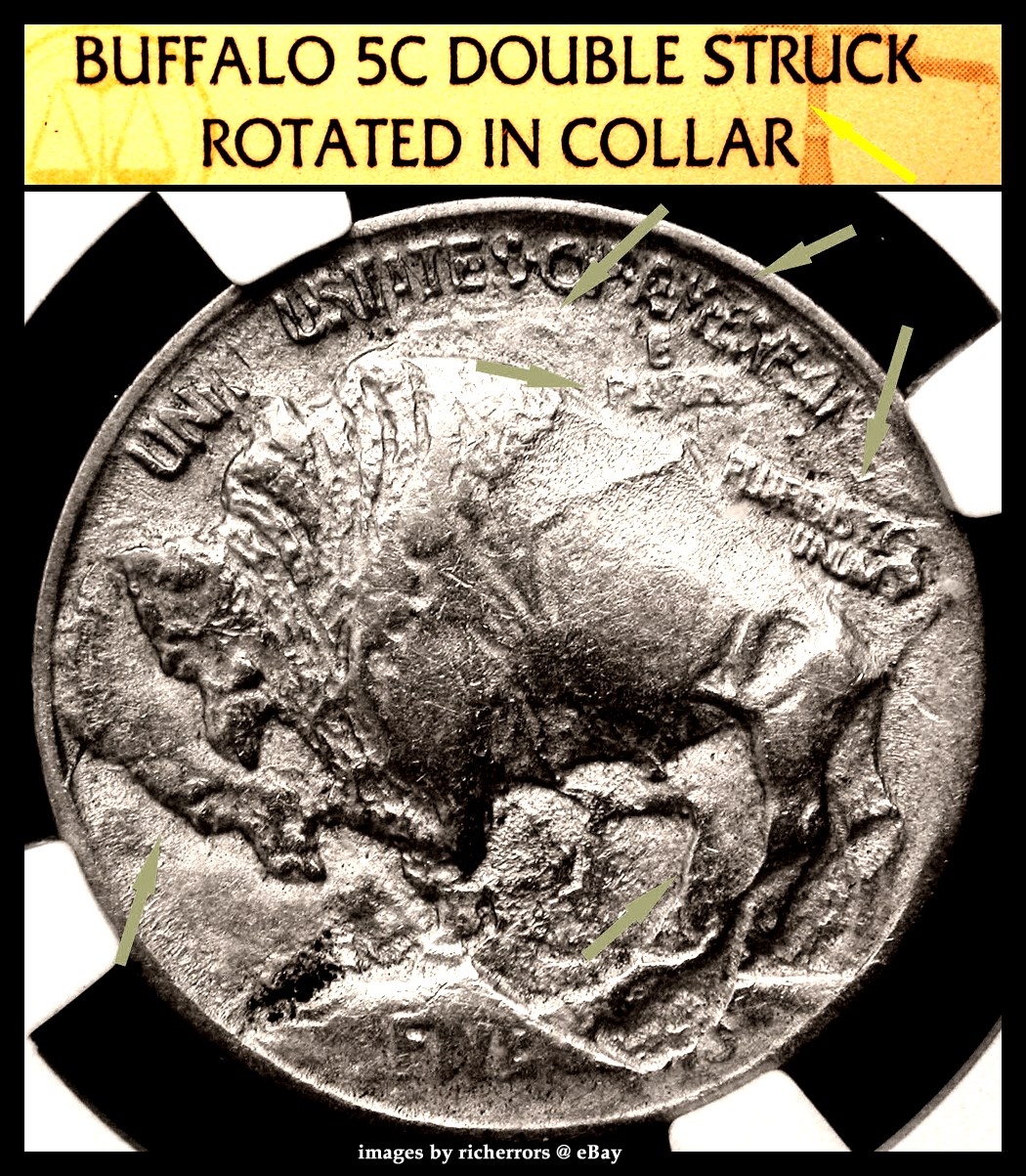 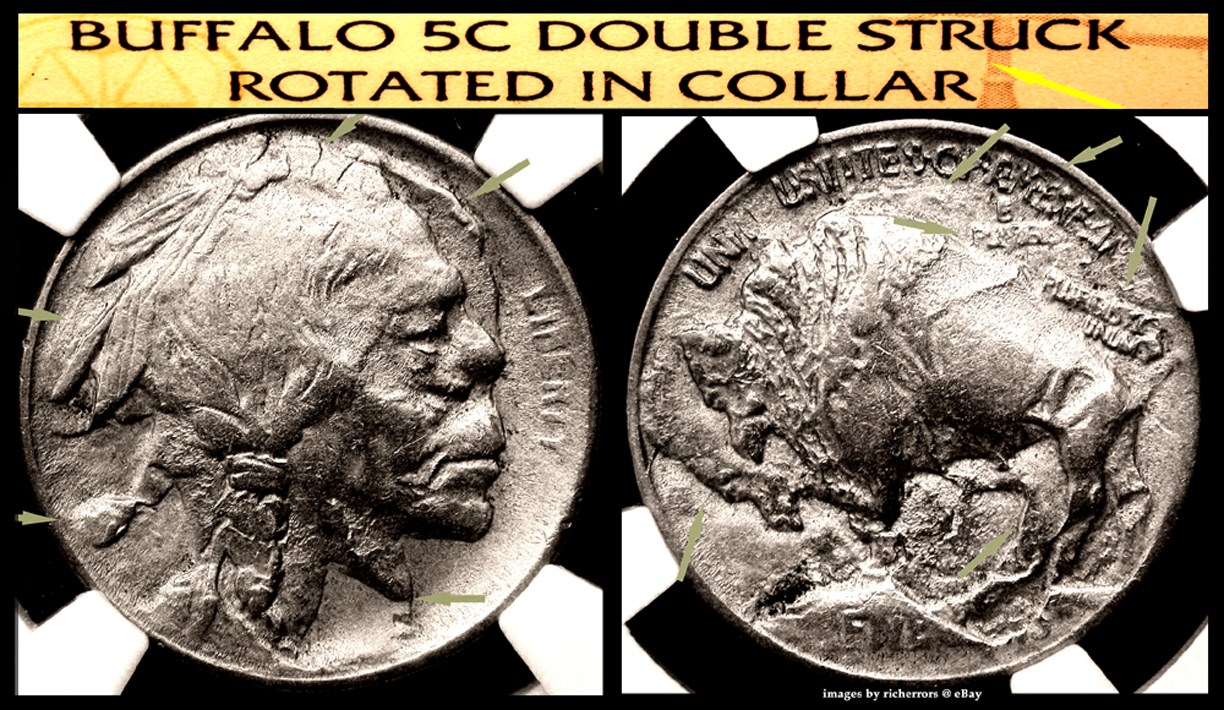 Flip over strike: 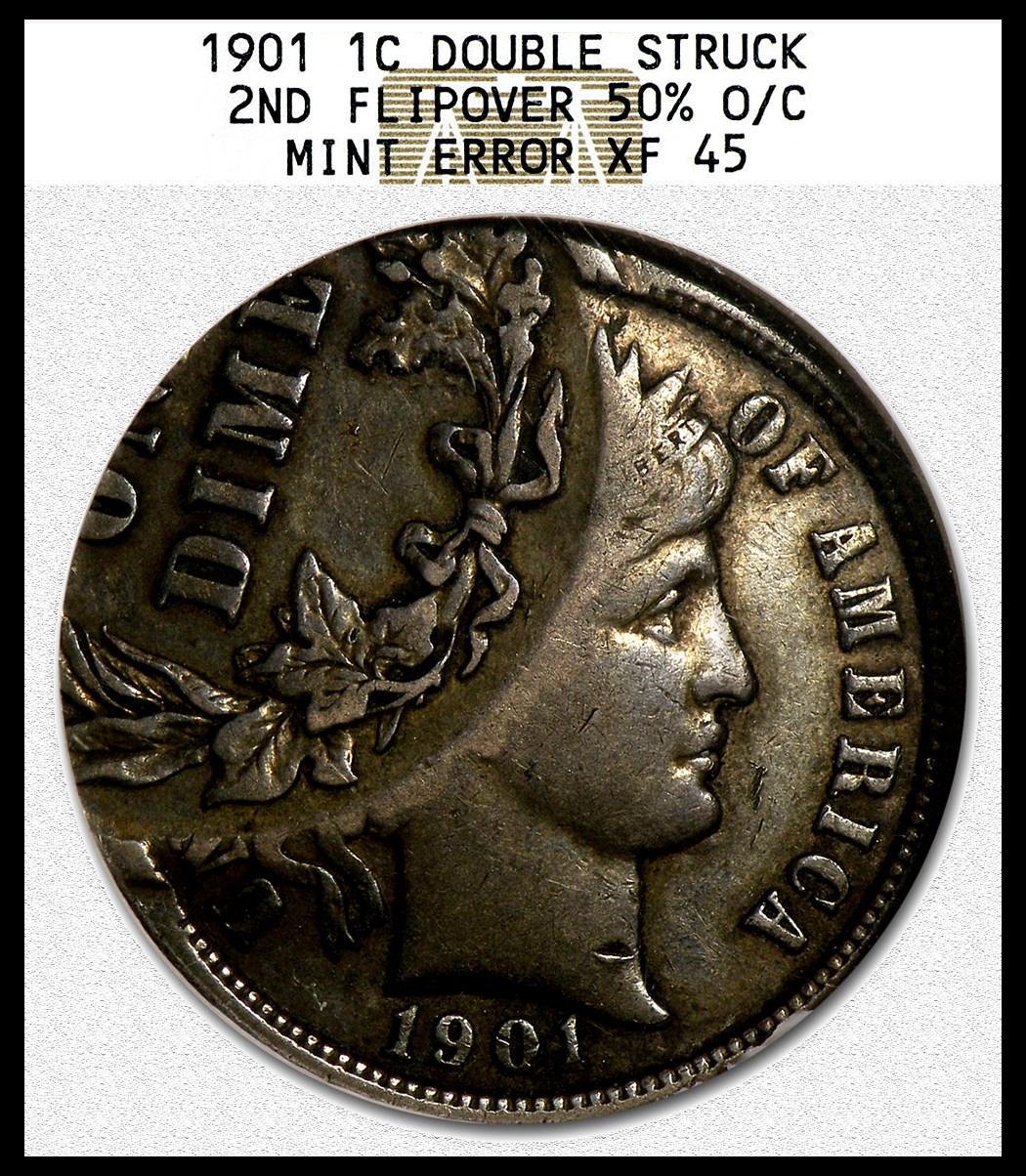 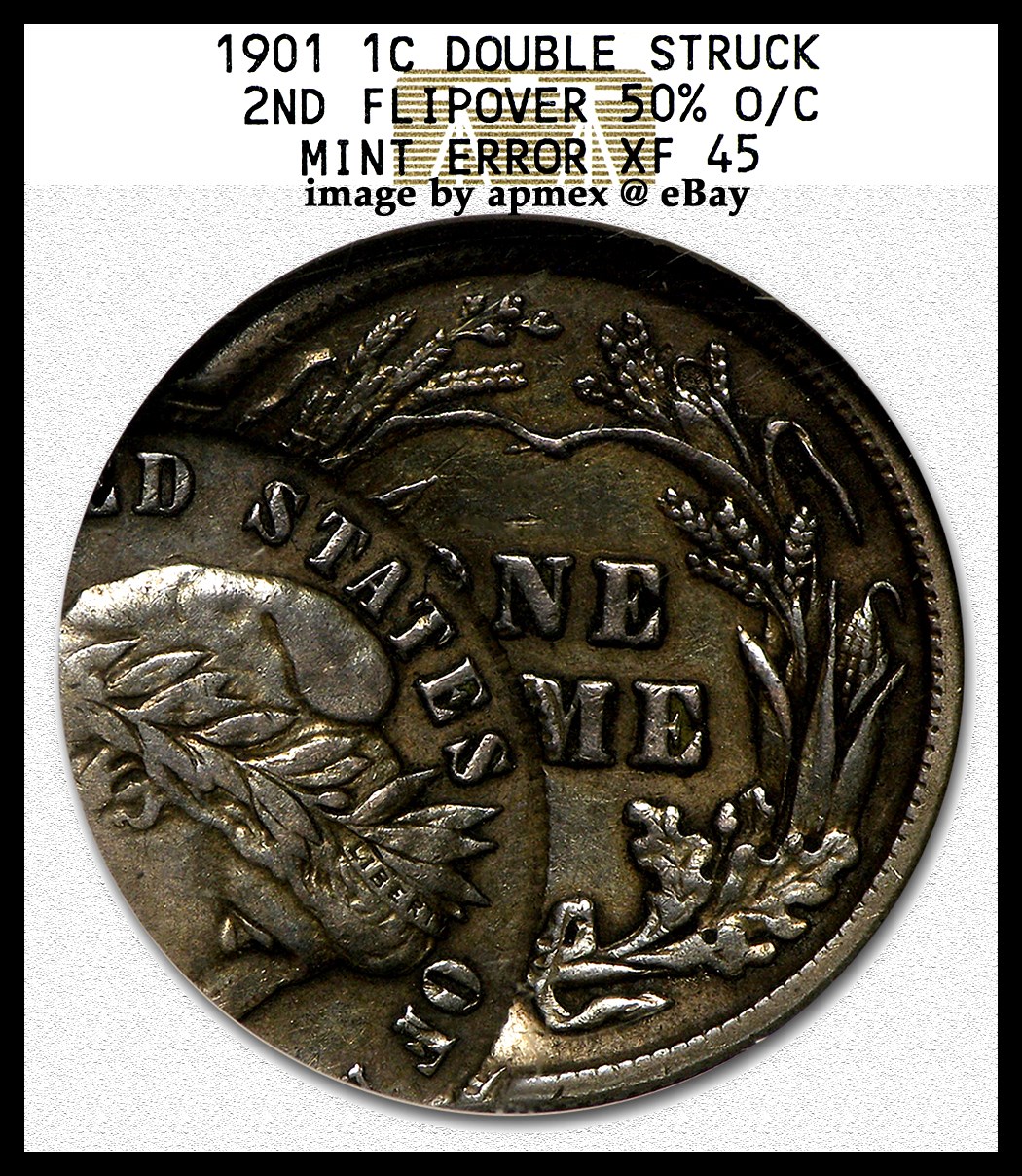 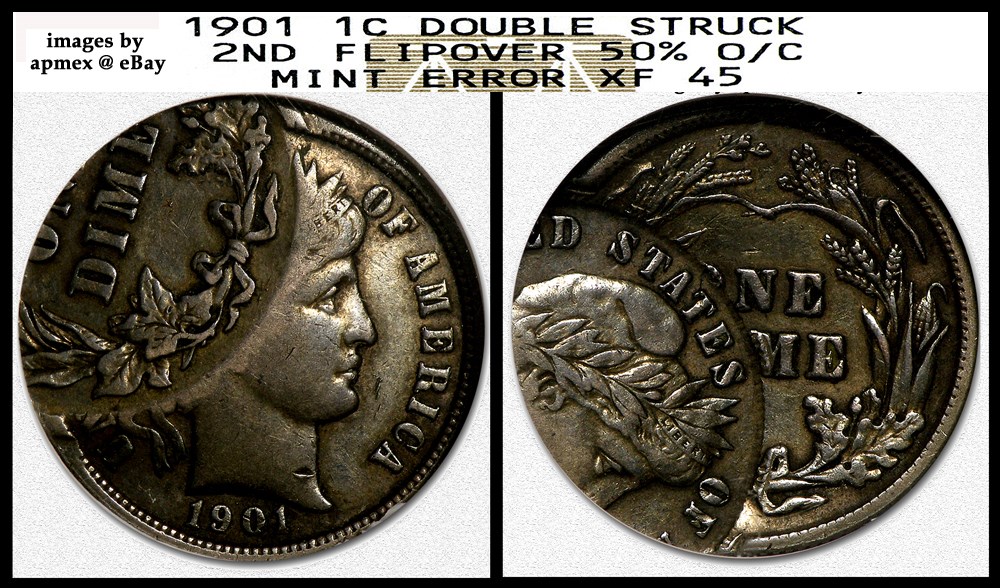 Double struck out of collar: 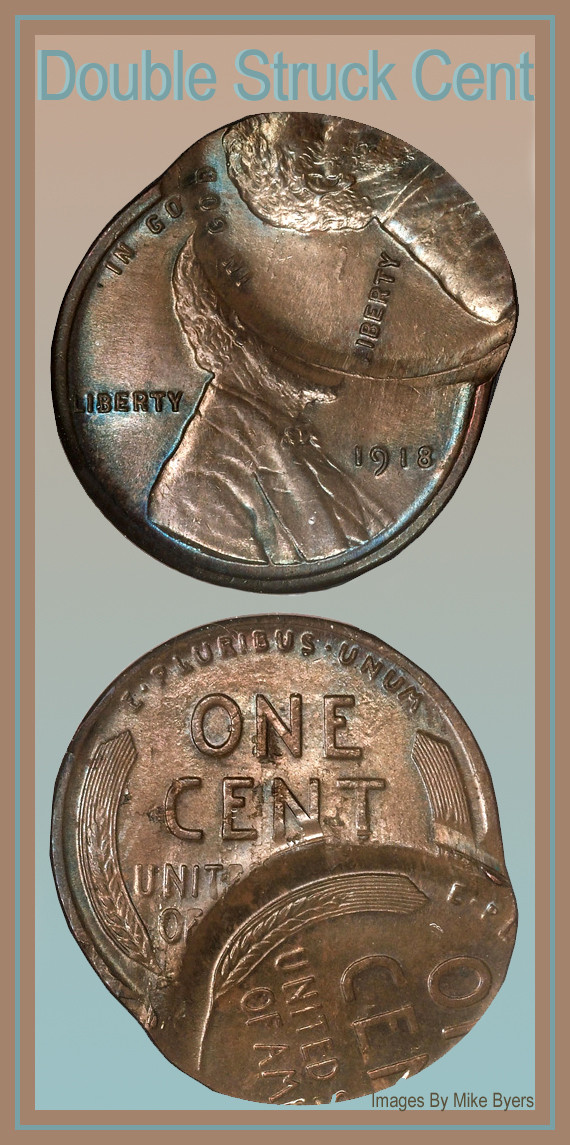 Struck once in collar, one outside of collar: 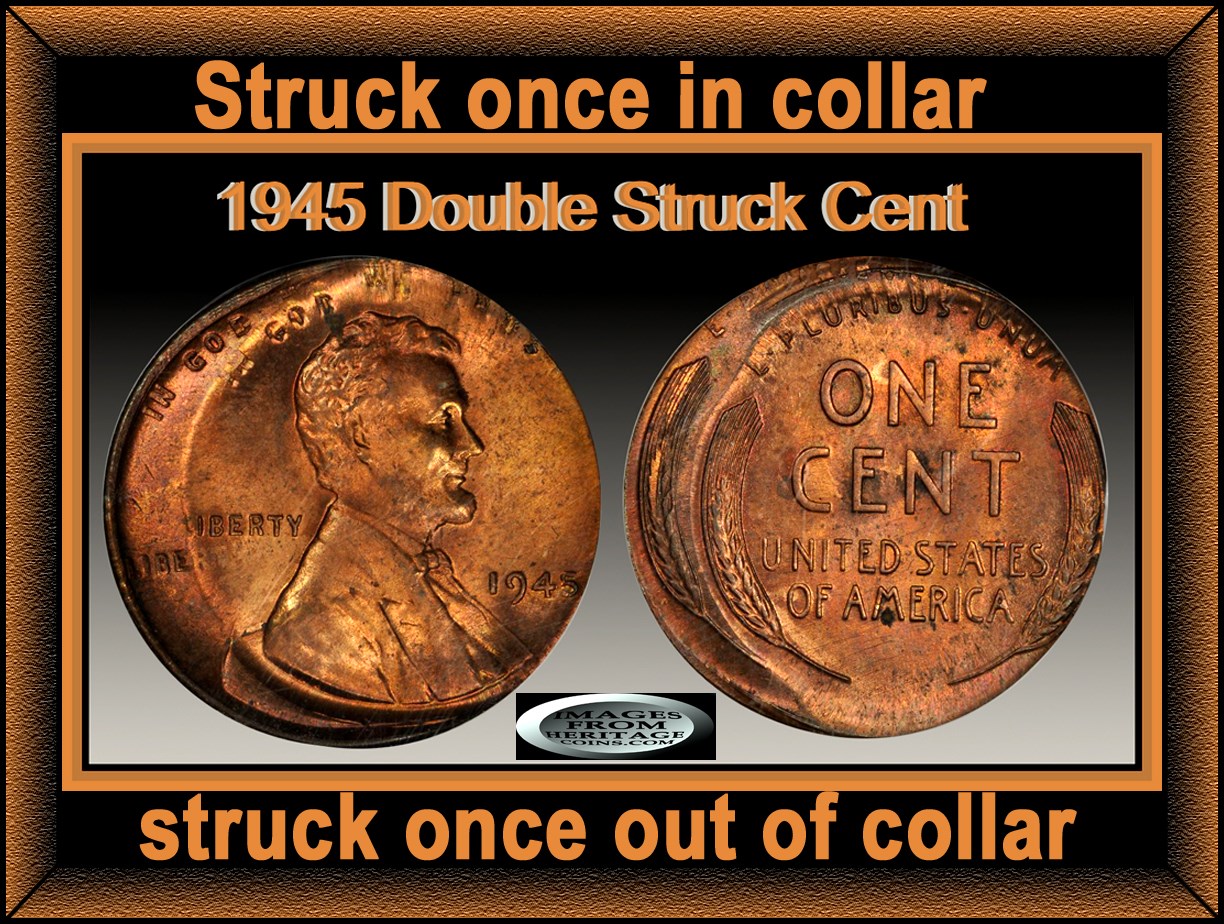 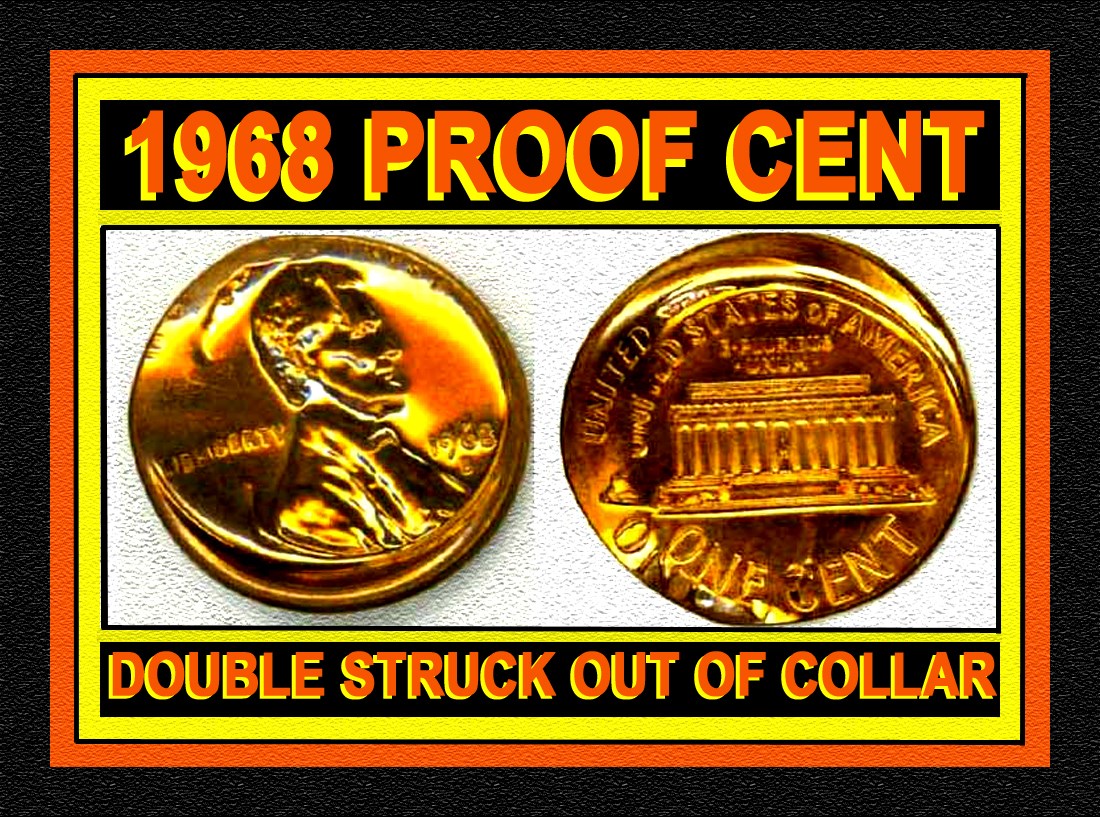 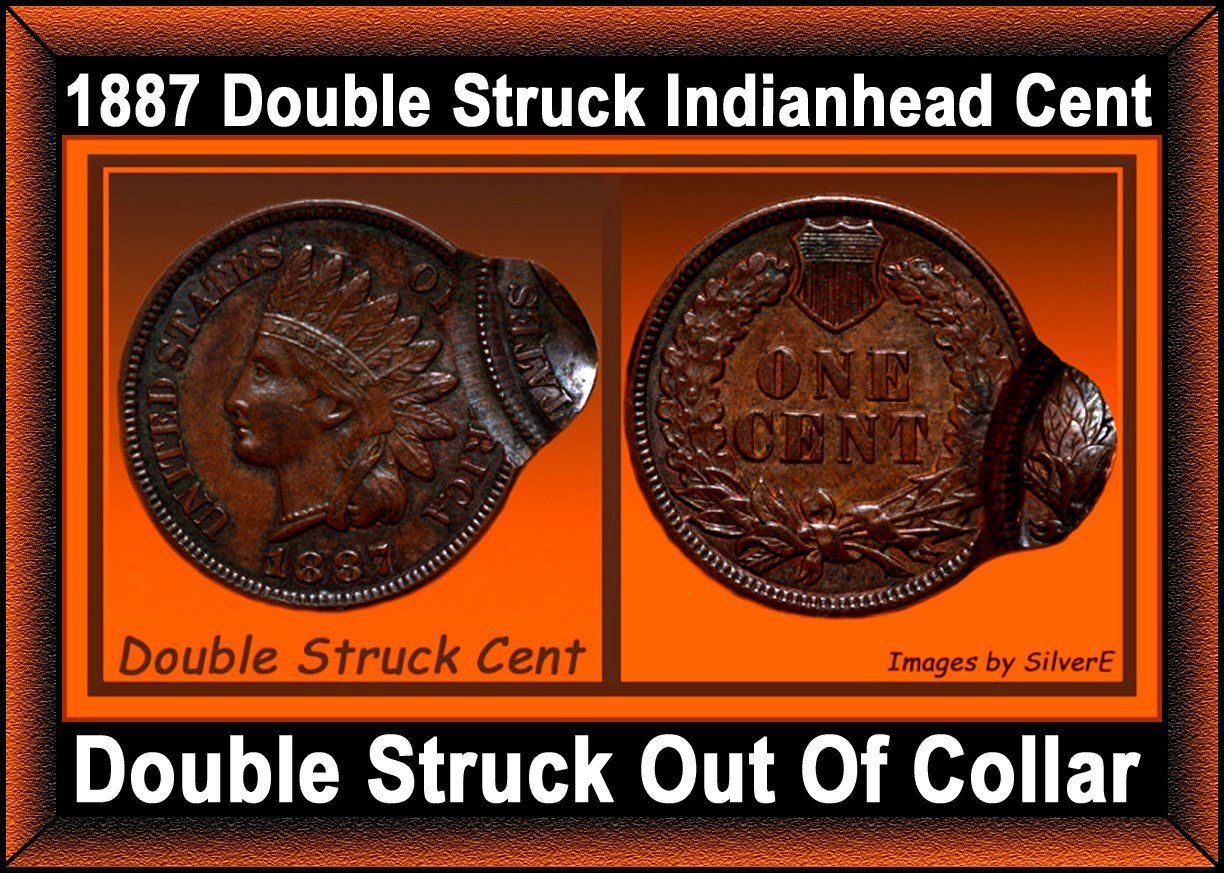 So A doubled die is not from being struck twice. If that were the case, on all the examples above, the same thing would happen to both sides of the coin. But a doubled die is caused by the die being doubled. Not a machine issue like Machine Doubling created. MD happens after the strike damaging the devices. You asked what a die look like? 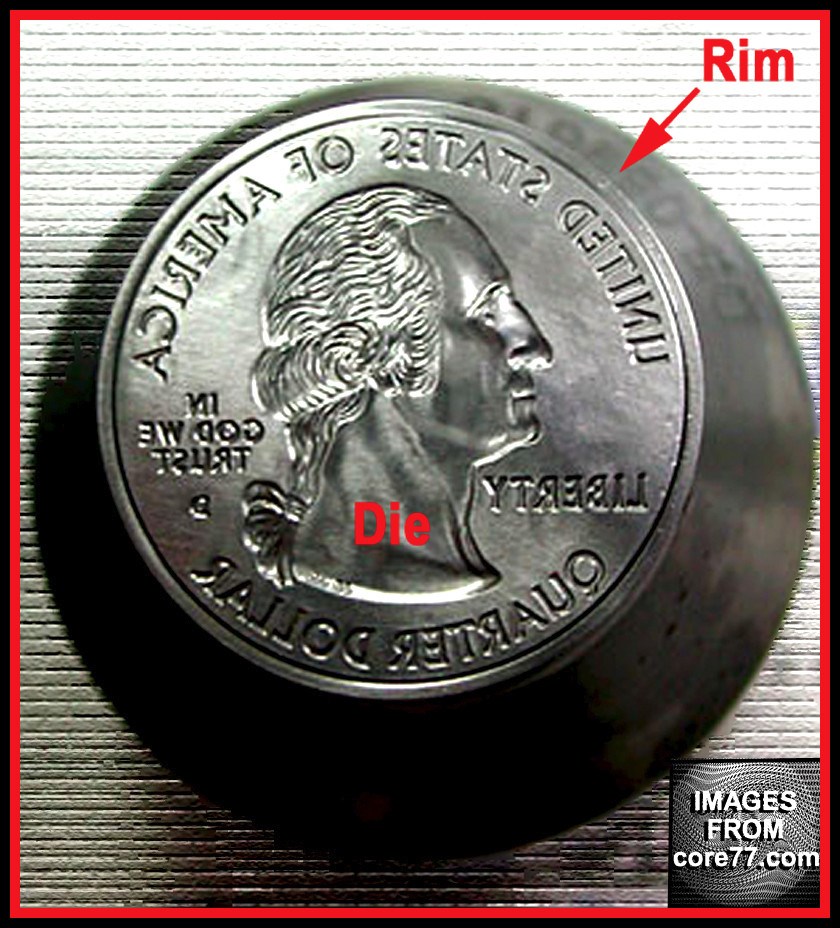 Note a die is a negative of a coin. (everything is mirrored) What is hight on a coin, is deeper into the die. The fields of the die is the outside of the die. Any contact with the die alters the fields not the devices. We often hear the term hub and hub doubling what does that mean: 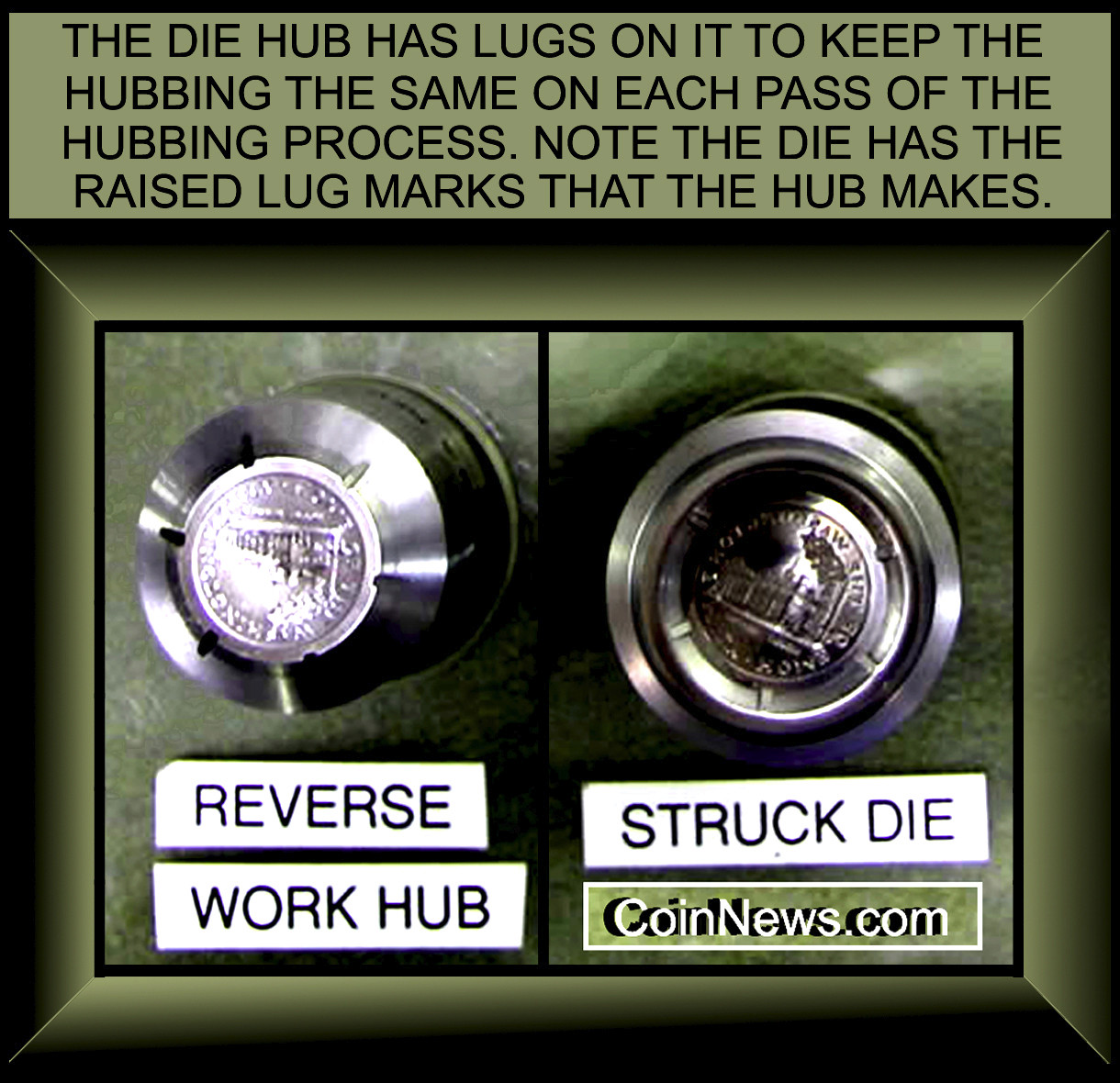 The hub is a positive, just like the coins are positive. Pressing the hub into the bar stock creates the die. But is there is the slightest rotation of the hub onto the, it created a doubled die. All coins struck with that die will have the same doubling. So how is Machine Doubling and using a doubled die different. A doubled die enlarges the devices. The Machine Doubling caused by movement of the die alters the normal side of the devices even smaller. This removes the contour of the devices, leaving them flat What do they look like side by side? 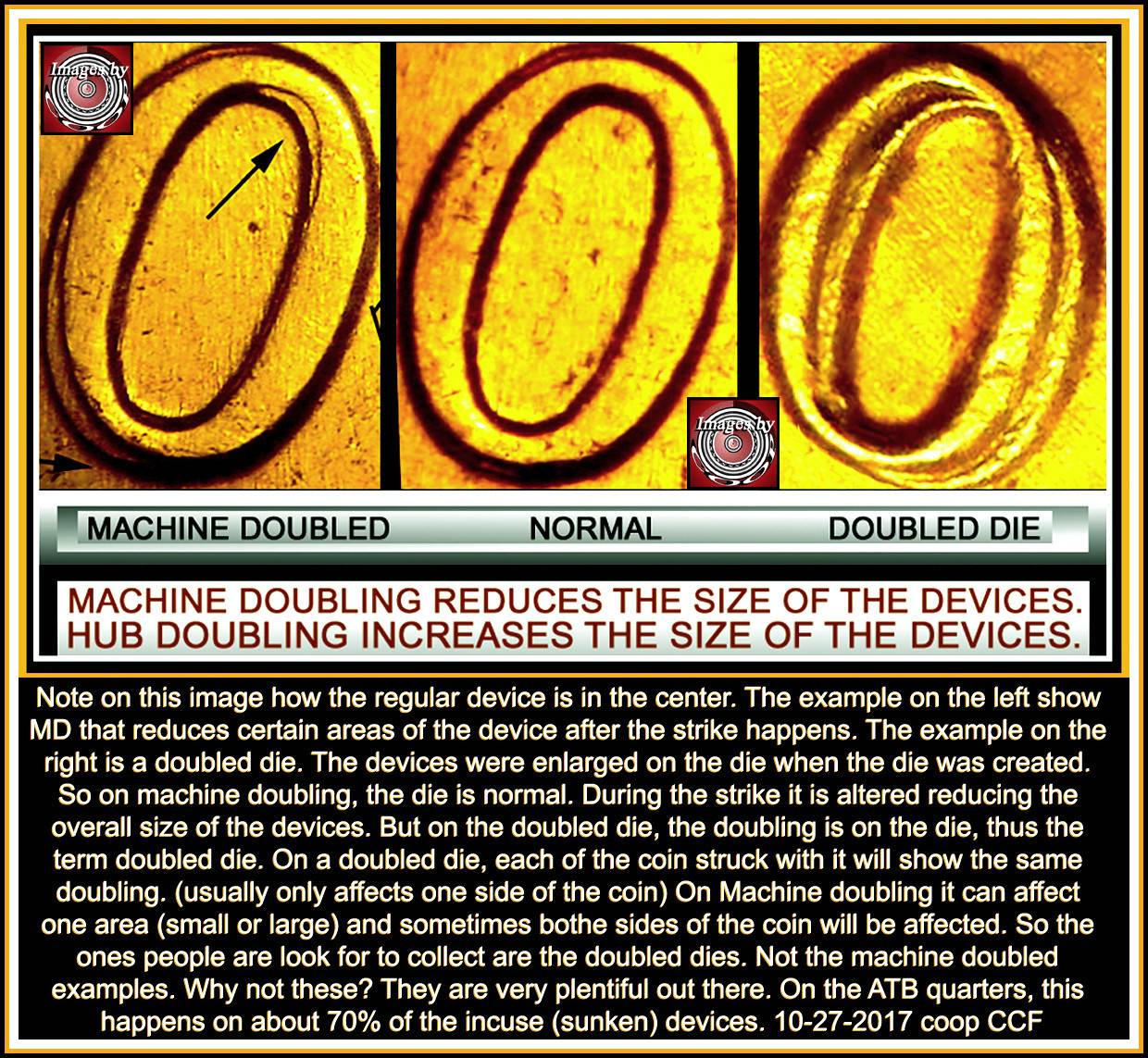 Note the differences. The center is a coin from a normal die, left altered MD and the one on the right is the coin from a doubled die. Machine Doubling is very common. New ones think they are special. But they are not from a doubled die. Hopefully this helps your coin knowledge, but a more blanks, please ask rather than assume. Edited by coop
12/18/2018 8:08 pm
|
|
Pillar of the Community
United States
2775 Posts |
Quote:
The die hub has lugs on it to keep the hubbing the same on each pass of the hubbing process. More food for thought. The way I read it is the alignment lugs were added after the 1955P major (Class 1) Doubled Die. The lugs were discontinued in 1969, prior to the 1969S that exhibited a strong rotated (Class 1) Doubled Die. Then the lugs were reintroduced in 1973, after the 1972P exhibiting another very strong rotated (Class 1) Doubled Die. Thanks, Doug. |
|
Bedrock of the Community
United States
62064 Posts |
The lugs are added to the die during the hub process. Then they are removed in the next step: 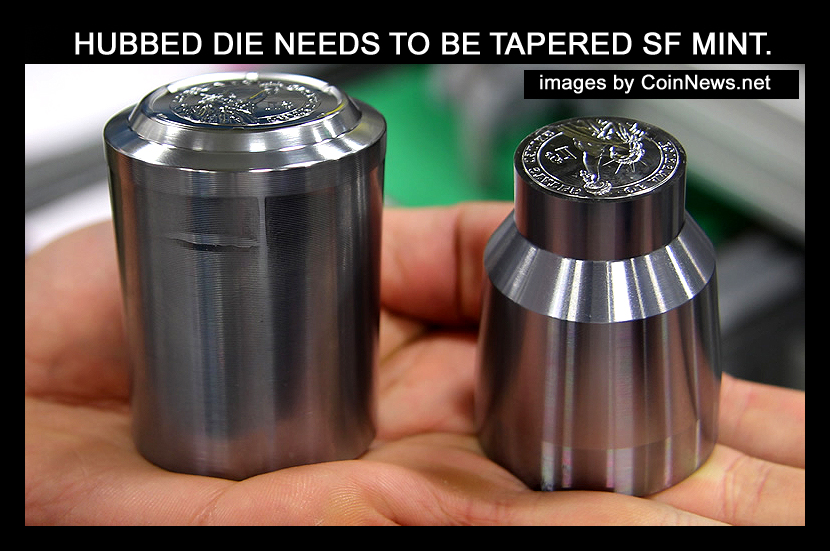 When the die is set to specs. 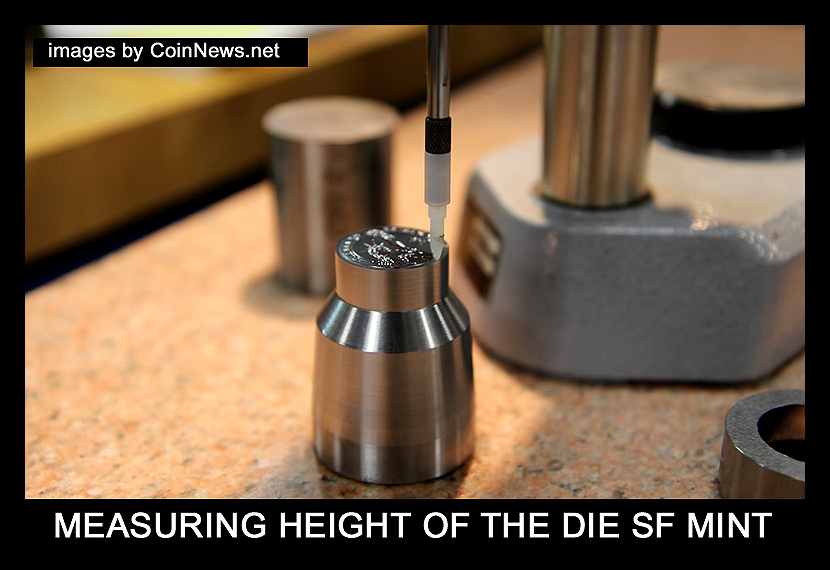 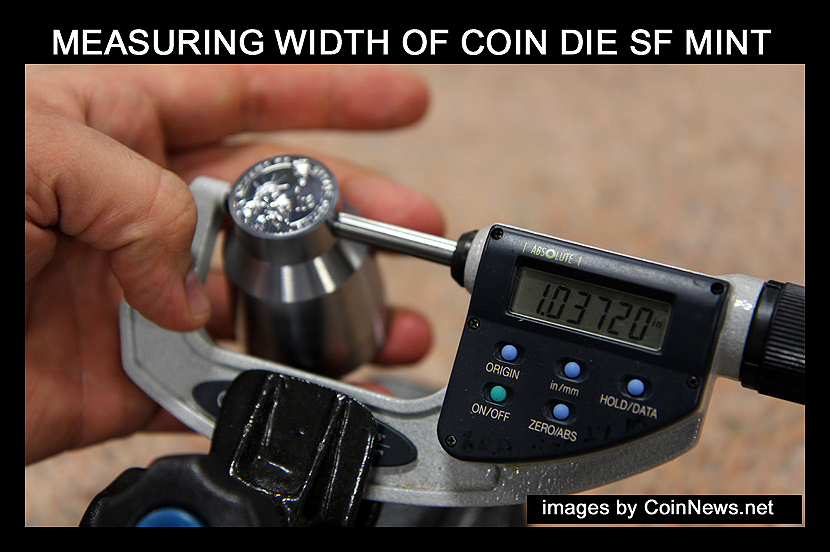 |
|
Pillar of the Community
United States
2775 Posts |
Wexler's Coins and Die Varieties http://doubleddie.com/58222.htmlAfter the production of the famous 1955 Lincoln Cent Die #1 doubled die variety with an extremely strong spread to the doubling, the Mint took measures to prevent such widespread doubled dies from ever happening again. They placed lugs around the rim of the dies and hubs so that the images on the hub and partially completed working die would align properly when they were placed in the hubbing chamber. These lugs were raised on the working die and they were depressed indentations on the working hub. 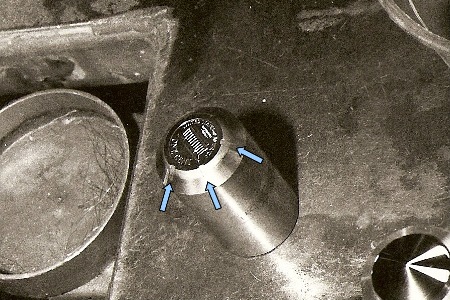 This photo illustrates a working hub that was created for the Lincoln Cent reverse. If you look carefully, you can see that the images on the face of the working hub are raised and look just like they will appear on the struck coins. The arrows point to grooves along the edge of the hub. The lugs on the working die will fit into these grooves to allow proper alignment of the working hub and the working die when more than one hubbing is needed to complete a satisfactory image on the hub or die being made. This photo illustrates a working hub that was created for the Lincoln Cent reverse. If you look carefully, you can see that the images on the face of the working hub are raised and look just like they will appear on the struck coins. The arrows point to grooves along the edge of the hub. The lugs on the working die will fit into these grooves to allow proper alignment of the working hub and the working die when more than one hubbing is needed to complete a satisfactory image on the hub or die being made.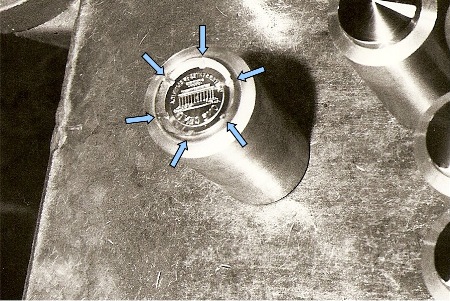 This is a working die (left) for the reverse of the Lincoln Cent as it appears after being hubbed. Notice that the design is reversed from what you will see on the struck coins. Though difficult to see in the photo, the design is depressed (incuse) in the working die. Arrows point to the raised areas (lugs) around the rim that align to the grooves of the working hub. To the right of the working die we can see some more blank steel rods that can be used to make master dies, working hubs, or working dies. This is a working die (left) for the reverse of the Lincoln Cent as it appears after being hubbed. Notice that the design is reversed from what you will see on the struck coins. Though difficult to see in the photo, the design is depressed (incuse) in the working die. Arrows point to the raised areas (lugs) around the rim that align to the grooves of the working hub. To the right of the working die we can see some more blank steel rods that can be used to make master dies, working hubs, or working dies.In 1969 the Mint modified the obverse design for the Lincoln Cent. As a result of those changes, they experienced difficulty in getting satisfactory impressions in the working dies. To remedy the problem they removed the lugs from the hubs and dies to allow for deeper penetration of the hub into the die. This did fix the problem and allowed the deeper penetration of the hub into the die, but it opened up the possibility of doubled dies again being created with strong spreads. It didn't take long for the consequences of this decision to be felt. In 1969 a major doubled die was produced for the 1969-S Lincoln cents. Another major doubled die was produced for the 1970-S Lincoln cents. Several doubled dies found their way into production for the 1971 Lincoln cents with two major varieties known for the 1971-S proof cents. The dam broke in 1972 and several doubled die varieties were produced for the Lincoln cents from all three Mints including a major doubled die for the obverse of the P-Mint cents. During this period of time significant doubled dies were being produced for other denominations as well. After the flood of doubled die varieties in 1972 and all of the publicity that they generated, the Mint returned to the practice of placing the lugs around the hubs and dies. Thanks, Doug. |
| |
Replies: 13 / Views: 2,015 |
|










 Posted 12/16/2018 6:15 pm


