| Author |
 Replies: 10 / Views: 2,147 Replies: 10 / Views: 2,147 |
|
|
Pillar of the Community
2087 Posts |
the last few months I have been filling holes in my collection. I have managed to get a few lower priority coins. I have wanted an Ashrafi or Sultani for some time as these are European influenced denominations. Back in the 12th century Sicily and Spain used coins that were denominated in terms of the Gold Dinar( Approximately 4 -4.5 grams) the Genovino ( one is in the post on its way to me)followed by the Florin and later the Venetian Gold Ducat( Zecchino/Sequin) introduced a new standard gold coin of 3.5 grams. The Venetian ducat influenced Levantine trade considerably and the Ashrafi and the Sultani were Arabic imitations of that coin. They show how much the economic centre had shifted from the east back to the west. This example is Burji Mamluk dating to 1468 -1496. It weighs 3.4 grams. Ruler: Qa'itbay. Album 1027 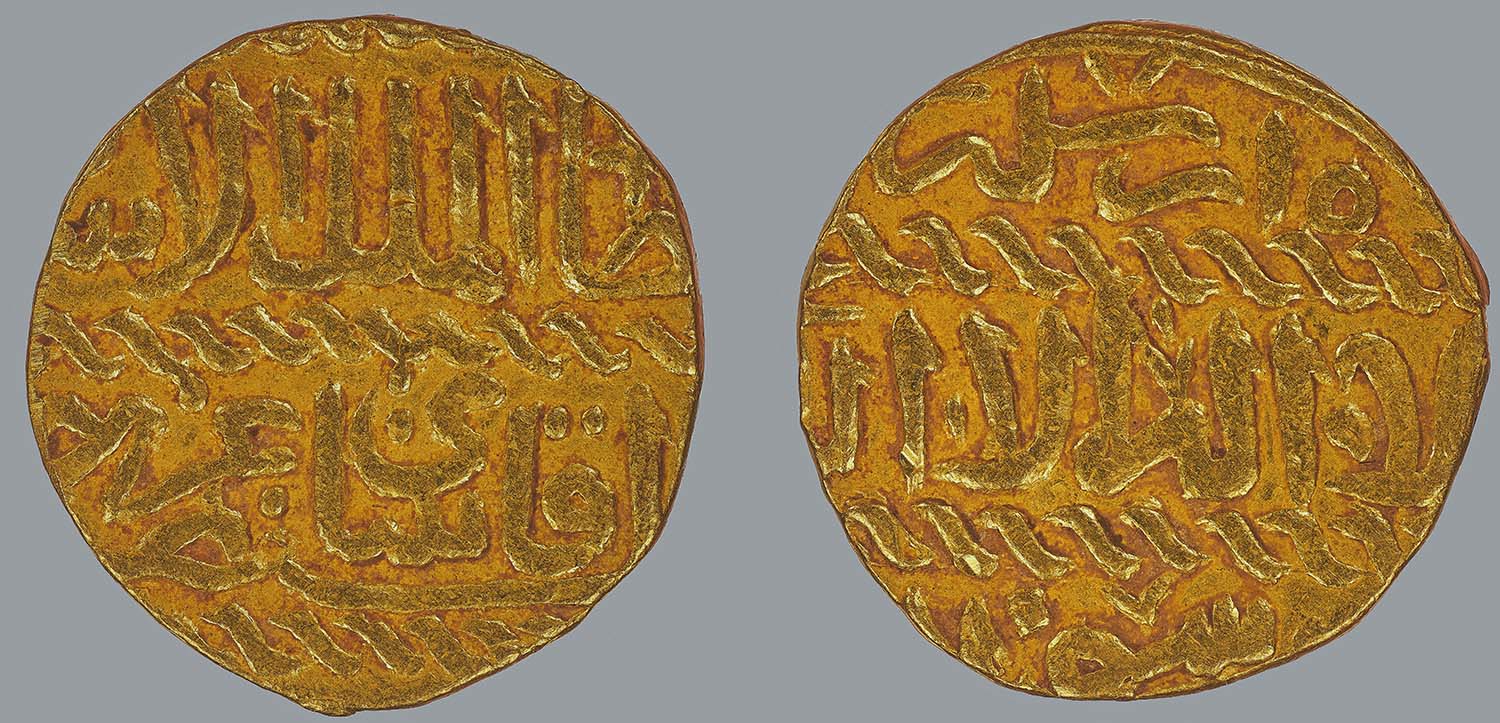 Edited by austrokiwi
02/04/2019 12:08 pm
|
|
|
|
Pillar of the Community
United States
2643 Posts |
Very informative. I appreciate how much you have taught me about the evolution of European and levantine medieval coinage.
|
|
Pillar of the Community
 2087 Posts |
Quote:
I appreciate how much you have taught me about the evolution of European and Levantine medieval coinage. Thank you. I am, if there are enough registrations, conducting the ducats to Dollars seminar in the second week of the summer seminar. I should note its not just the Evolution of European coinage I am following but the evolution of USA coinage. The Venetian ducat( as well as the Genovino and Florin) is the direct ancestor of the Dollar. |
|
Moderator
 United States
23731 Posts |
|
|
Moderator
United States
34549 Posts |
Quote:
summer seminar. @AK, I'm expecting that this is open only to university students, but would you mind either posting or PMing me details? I'm not currently planning to be in Austria this summer, but I'm also not not planning... Thx! "If you climb a good tree, you get a push."
-----Ghanaian proverb
"The danger we all now face is distinguishing between what is authentic and what is performed."
-----King Adz
|
|
Pillar of the Community
2087 Posts |
Not in Austria ANA summer seminar in Colorado Springs |
|
Moderator
United States
34549 Posts |
Ah ok thx!
"If you climb a good tree, you get a push."
-----Ghanaian proverb
"The danger we all now face is distinguishing between what is authentic and what is performed."
-----King Adz
|
|
Bedrock of the Community
Australia
21792 Posts |
austrokiwi :- Thanks for the information.
I would like to find out a lot more about the numismatic background about this series. What was the source of information for your post here?
|
|
Pillar of the Community
2087 Posts |
The info comes from a variety of references and on occasion inferences from my own research( often stepping away from Numismatics and into Economic history references.
For the Ashrafi, I have a number of references all say the same thing( Which in itself is a worry as it suggests not much is known). the at hand reference is Album's Checklist of Islamic coins.
top of page 115 3rd edition
Av Ashrafi introduced 829(AH)/AD 1422-1438
The ashrafi was a new reform coinage to the weight and fineness of the Venetian Ducat named after Barsbays(the first ruler issuing the coin)laqab( my translation: title or nickname). "al-malik al ashraf"
ON the European gold. I used a variety of references and some supporting inferences from economic history. Worthwhile references are: "One money for Europe" 1991. It has a number of authors it was produced to support a museum exhibition of the same name in Belgium. More specific and detailed and the following: Zecca, by Alan M Stahl 2000 ANS. Stahl's work has one of the best descriptions( if not the best)of how a medieval mint operated( its better than coopers book. If you want more references PM me.
In recent tradition, the Golf Florin( of Florence) was the first circulating gold coin of western Europe( since the 7th century). however, very recently it has been acknowledged that Genoa produced the first example of a 3.5g gold coin. Both the Genovino and Florin are currently accepted as being first produced in 1252. It is likely the Genovino was produced for a few years before 1252. To explain. the main maritime powers in the Mediterranian were Genoa and Venice( followed in third place by Pisa). Gold in the 10-13th centuries was imported from North Africa having been transported from the upper( Northern), and neighbouring, regions of what is now northern Nigeria. That gold was used to produce the gold coins of Southern Italy, Spain and Byzantium. That gold was mostly carried by Genoan traders on their ships. Genoa dominated western Mediterranean trade( Venice dominated eastern Mediterranian trade( where the two nations crossed they often went to war). Arabic gold coins were produced from that same North African gold.
Florence was a landlocked city-state that had less access to the sea than Genoa or Pisa. The strength of Florence was in banking not maritime trading. The first gold florins were produced using North African Gold transported by Genoa. Genoa would have produced the gold Genovino for trade with the Levant. Florence more than likely copied the Genoan coin( very quickly after they became aware of the Genoan issue. Due to Florentine banking activities ( initially related to the Champagne fairs) the Gold florin became the predominant gold coin of Western Europe while the Genovino was mostly forgotten. Venice had its highly successful silver ducat, the Grosso ( introduced 1194 approximately) for gold they used Byzantine coins. It was not until 1284 that Venice copied the florin and produced the gold ducat.
As a passing note, Genoa later found it harder and harder to dominate North African trade.... it was they who "opened" the sea routes to the west coast of Africa ( soon to be dominated by Portugal) for the purpose of getting better more reliable access to African gold. That set the scene for Columbus (who was Genoan)
Edited by austrokiwi
02/05/2019 04:37 am
|
|
Pillar of the Community
United States
1554 Posts |
I found this thread interesting, so I thought I would see what Balog ("The Coinage of the Mamluk Sultans of Egypt and Syria, 1964) has to say about the ashrafi. If I read Balog correctly, the Egyptian economy was in a shambles by the beginning of the Burji period. The gold coins were essentially ingots struck to random weights. Silver was scarce and most day to day transactions were carried out with fiduciary coppers, prices reckoned in dirhams of account rather than actual silver dirhams. About the year 800h (AD 1398), al-Nasir Faraj made a return to the traditional Islamic gold standard by issuing a canonical gold dinar of 1 mithqal weight. This reform failed within a short period due to the sultan's limited finances. Faraj's second reform, about the year 810 (AD 1407), introduced a new gold coin based on the Venetian zeccino/ sequin/ ducat known as the "Nasiri Dinar". There seems to have been some tinkering with the standard, usually slightly below that of the sequin. I assume there are a number of for-profit games that can be played in this manner. Under al-Ashraf Barsbay, Faraj's sequin standard became definitively adopted as the "Ashrafi Dinar" with it's characteristic cable design, named "Ashrafi" after Basbay's laqab, al-Ashraf, meaning "nobility" or "honor". The op coin of al-Ashraf Qa'itbay is a variant of Balog 808, no mint or date (al-Qahira/ Cairo?). O: [al-sul]tan al-malik al-Ashraf / [Abu']l-Nasr Qa'itbay 'azza nas[rahu] "the sultan the king al-Ashraf Abu'l-Nasr Qa'itbay may his victories be glorified". R: arsalahu / la ilah illa All[ah] / [Muhammad] rassul [Allah] / ... "There is no god but Allah, Muhammad is the apostle of Allah, He sent him..." Edited by Kushanshah
02/05/2019 05:03 am
|
|
Bedrock of the Community
Australia
21792 Posts |
austrokiwi and Kushanshar: This is the sort of numismatic history of the period that interests me, and for which I have only very scant book references. Thankyou both for posting.  |
| |
Replies: 10 / Views: 2,147 |
|










 Posted 02/04/2019 12:36 pm


