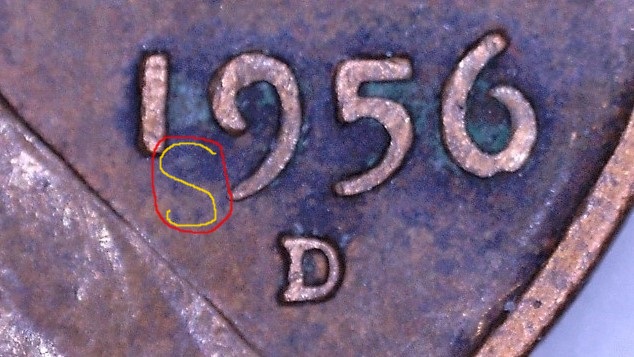
I have strong feelings about this variety, but I'll hold off until after the coin details.
This coin has all of the Stage A markers, plus the Stage B and Stage C markers. Some of the Stage A markers are weak, matching Wexler's description of Stage B. The presence of both the weak Stage A markers and the Stage C marker suggests that this may be a very early Stage C.
First, the obligatory mug shots:


Here is John Wexler's description of the coin:
1956-D 1¢ WDMM-001
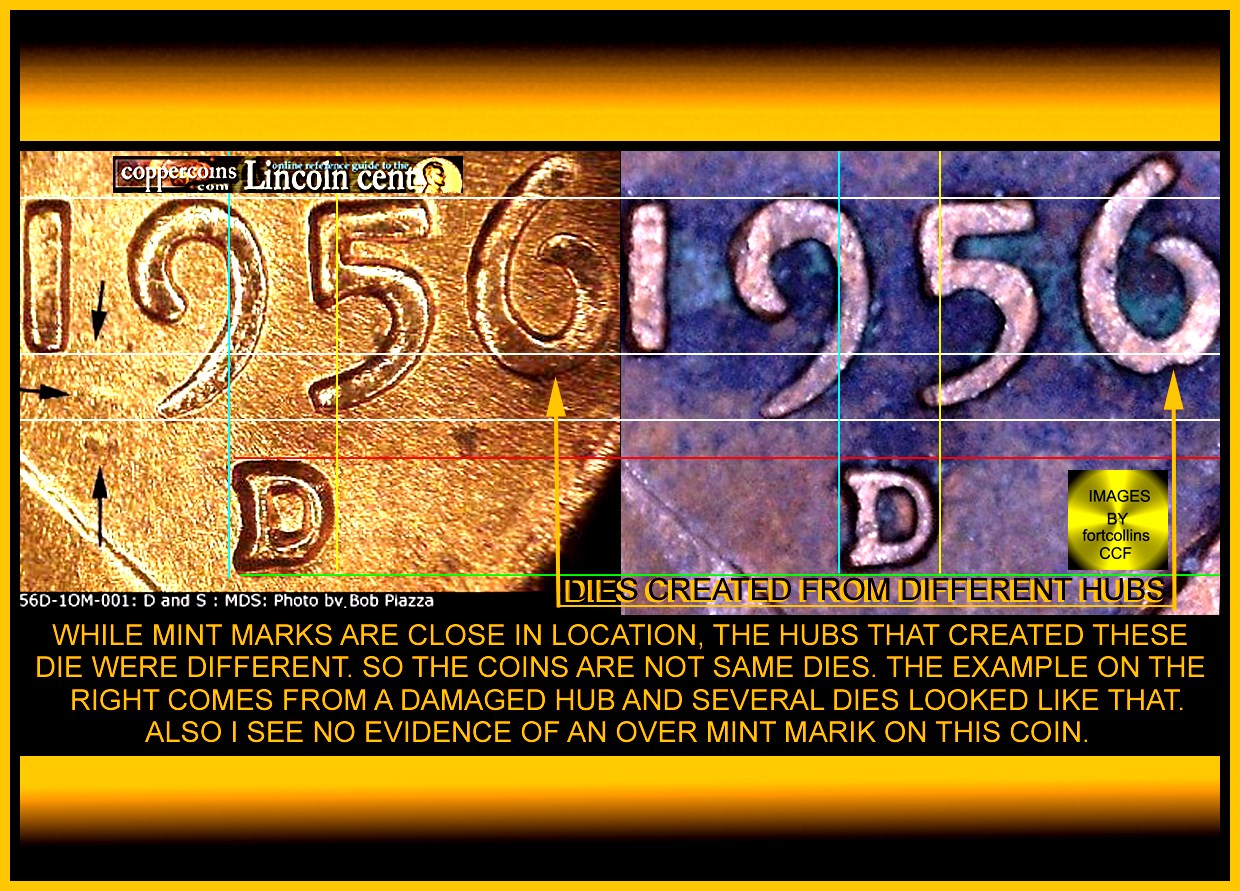
Description: An S punch can be found between the lower 1 and 9 of the date.
Here are three images of the mint mark(s):


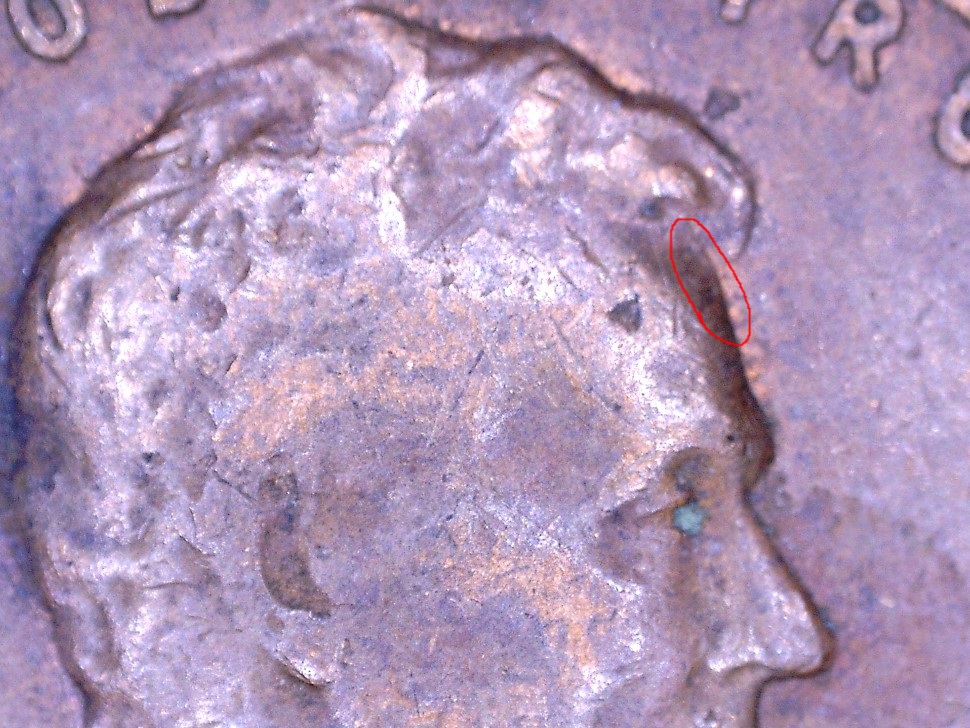
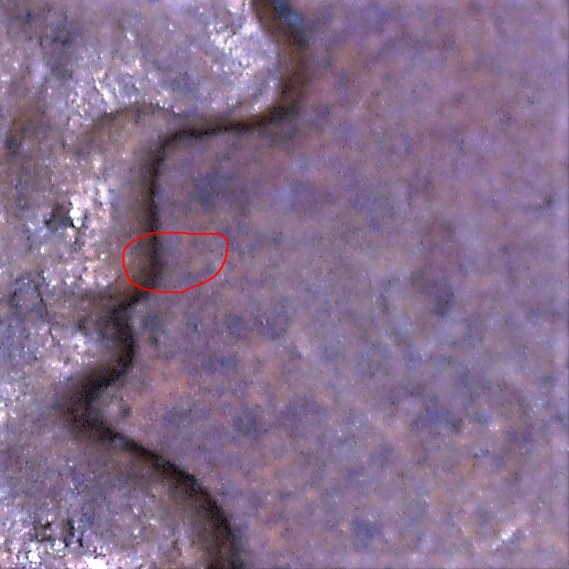
John Wexler lists four key obverse markers. Here are his descriptions and the photographs of this coin:
Obverse Stage A: Light die scratch from midpoint of forehead NNW to front of hair.


Obverse Stage A: . . . Short east to west die scratch above upper lip and nose extending into field.

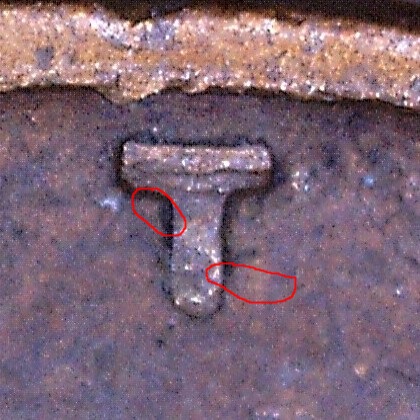
Obverse Stage A: . . . Die scratch connecting left side horizontal bar of last T in TRUST to lower vertical bar on left side and a short die scratch ESE from right center of vertical bar.

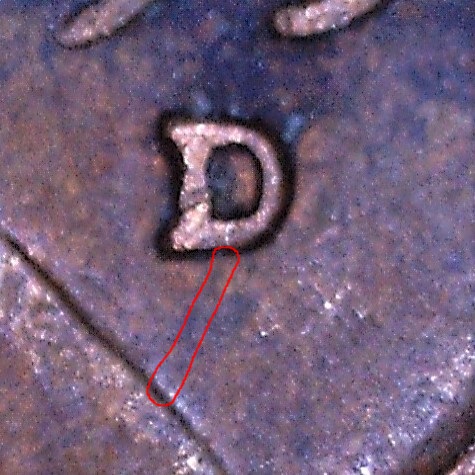
Obverse Stage B: Die scratch from bottom center of mint mark south to tip of bust.Obverse Stage C: Stage A markers weaker. Scratch from mint mark is gone.
While weak, the scratch from the mm to the bust is still visible.

John Wexler lists three reverse markers, two for Stage A and one for Stage C. All three are present on this coin, though the Stage C marker is in its infancy.
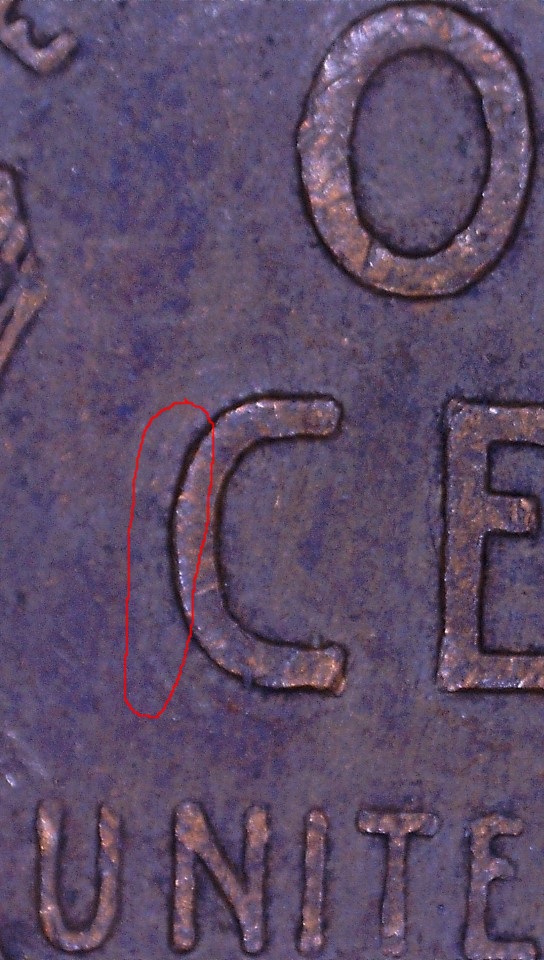
Reverse Stage A: NNE to SSW die scratches strongest along O of ONE, C of CENT and U of UNITED.

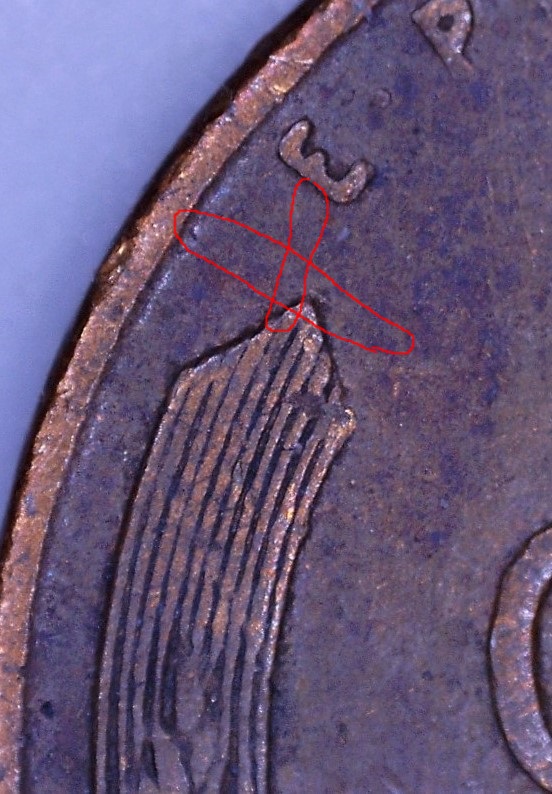
Reverse Stage A: . . . Two long die scratches forming an X between left wheat tip, the rim, and E of EPU.

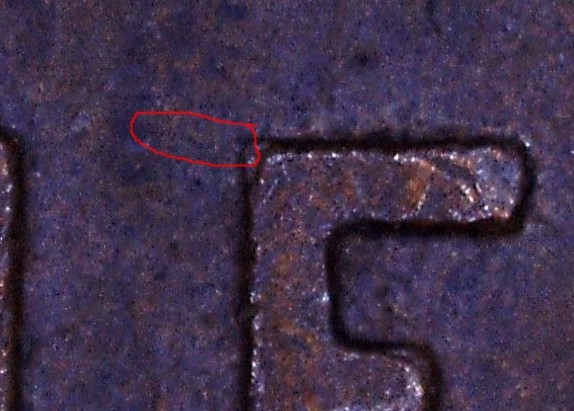
Reverse Stage C: Light, short, east to west die crack at upper left corner of E in ONE. Stage A & B markers weak.

With all of that said, I do not believe this is a legitimate variety. Here are my reasons:

Closure of the San Francisco mint was announced in mid-1954, well over a year before it closed. Nobody would have thought San Francisco would be in operation in 1956. There would not have been any reason for an "S" mint mark punch to be in use in 1956.
The location of the supposed "S" mint mark is absurd. Even in a year with crazy mint mark placement, nobody would have whacked a mint mark between the "1" and "9" of the date.
The supposed mint mark would have to have been polished to weaken its appearance to what is now visible. How? How could the mint mark be obscured in that location without damaging the "1" or "9"?
As many dies as were produced and used in 1956, why would a defective double mm die be used at all? Why wouldn't the die simply be scrapped?
Look closely at my thee photographs of the purported "S" mint mark. The most distant photograph is the clearest, and the purported mint mark becomes much less distinct the closer the image. Is there
any other actual mint mark in the Lincoln series with that attribute?
Dr. Wiles rejects this as a dual mint mark coin. He sees it as a damaged die, though John Wexler quotes CONECA as saying "at best this variety was the upper loop of an inverted S punch."
What say all of you? D and S? Or a 1956-D with a damaged die?







 Posted 02/12/2019 04:45 am