Very interesting lot and consistent with ancient Afghan coinage, but a major caveat - fakes of these coins have been in production for a long time!
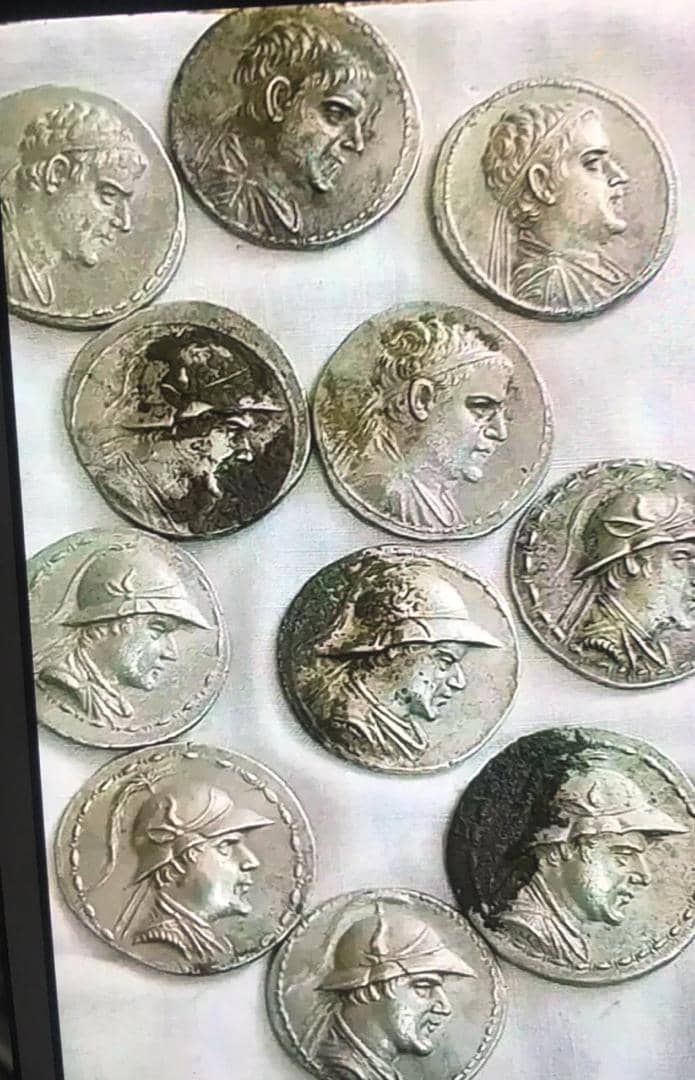
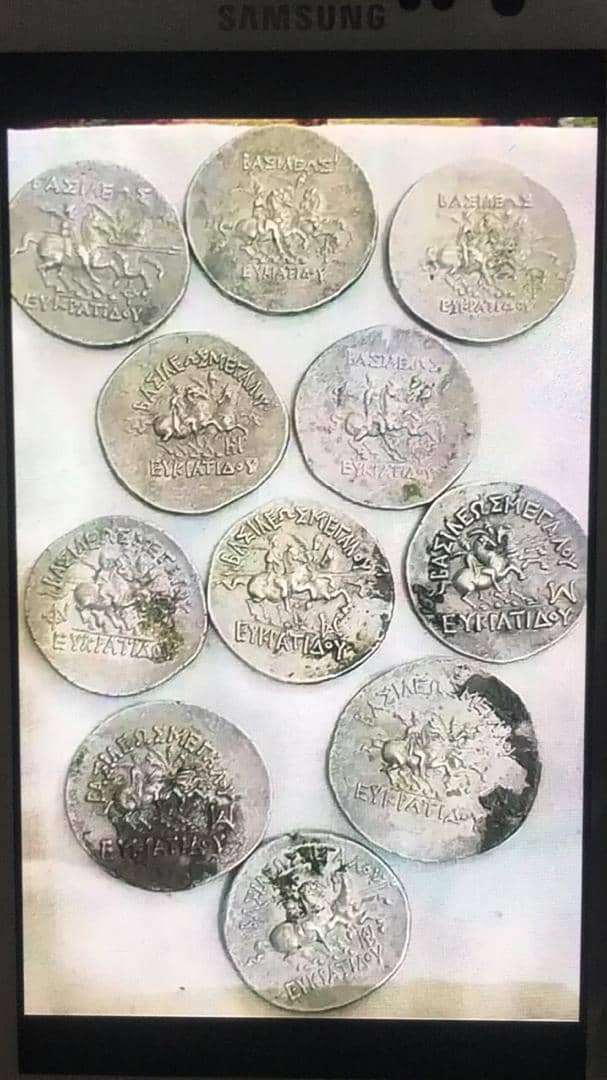
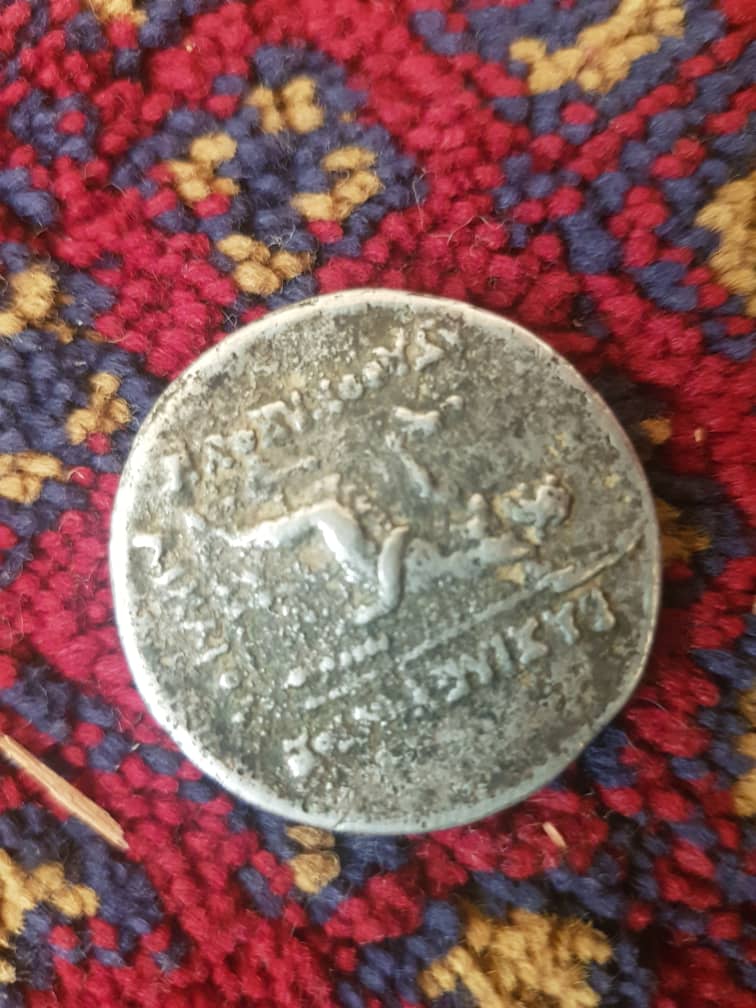
In the first picture all the coins read 'ΒΑΣΙΛΕΟΣ ΜΕΓΛΟΥ ΕΥΚΡΑΤΙΔΟΥ' (of the Great King Eucratides) or 'ΒΑΣΙΛΕΟΣ ΕΥΚΡΑΤΙΔΟΥ' (of the King Eucratides). Eucratides was a powerful ruler of the Greco-Bactrian Kingdom which formed from a splinter of Alexander's empire and was the furthest east of the major Greek kingdoms. By the time of Eucratides (171BC - 145BC), contact with other hellenistic kingdoms had been reduced by the rise of the Parthians, but they had contact in the east with China and India and continued to trade with Ptolemaic (i.e. Greek) Egypt via the sea.
His power and prestige is clear from the large number of coins he issued with high artistic qualities; his coinage is amongst the finest examples of hellenistic art and good examples command a high price. If you take a look at some Afghan banknotes from the 80s or 90s, you will find the reverse of these coins depicted. Eucratides was murdered by his son, who would oversee the demise of the empire; a splinter of the kingdom in India would survive until 10AD.
As a side note, here is what the coinage looked like immediately before the Indo-greek kingdom fell in 10AD, to give an idea of the quality of Eucratides coins:
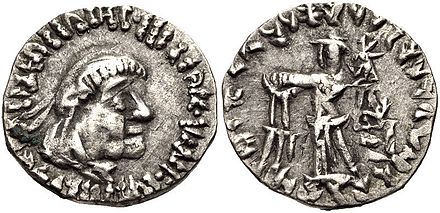
Are yours real? The likelihood is always quite low, but there isn't much to say these are fake. From the pictures, I see no evidence of casting and all of them come from different dies, which is an excellent sign. There is encrustation on some, which could indicate antiquity (and likely could be removed by professional conservators). If you can get us pictures of the edge (where casting is most easily noted) and find the weight, it could help. Otherwise, you should take these to a numismatics auction house for professional in-hand examination. If authentic, they are worth a lot of money.
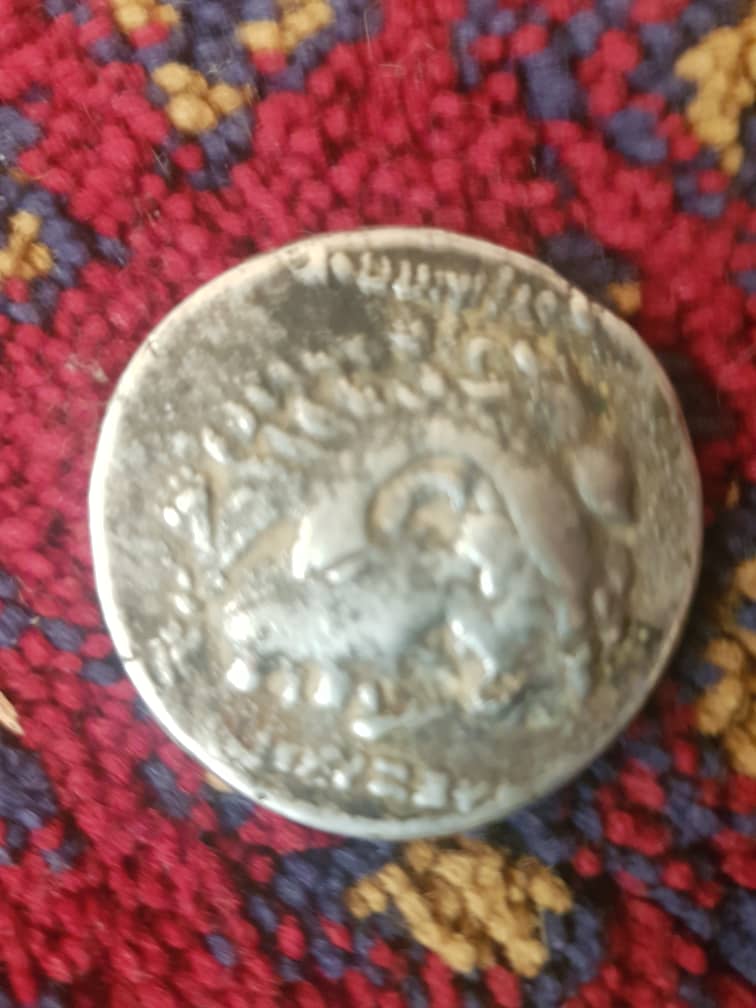
The second set of pictures is more easy to weigh in on - unfortunately, it looks like a cast fake. The type is Herakles / Zeus seated, popularised by Alexander, but the name on it isn't Alexander. Due to the casting artifacts, I can't read the name, but I'm sure someone will recognise the type because having an inscription on the Herakles side is very unusual.
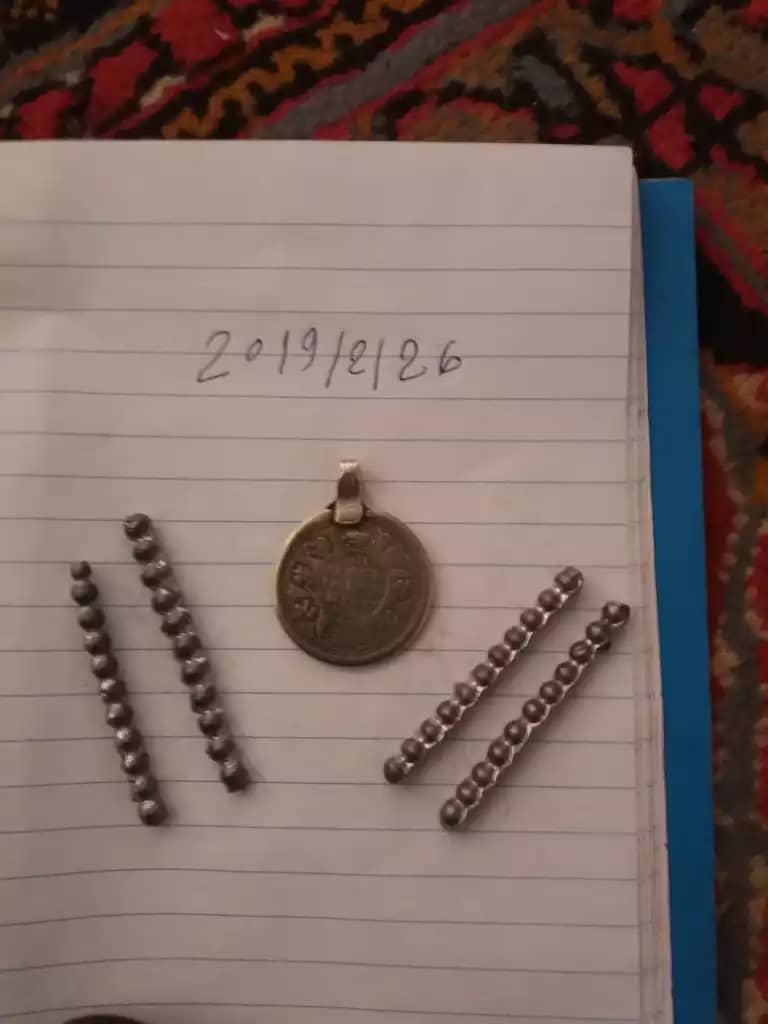
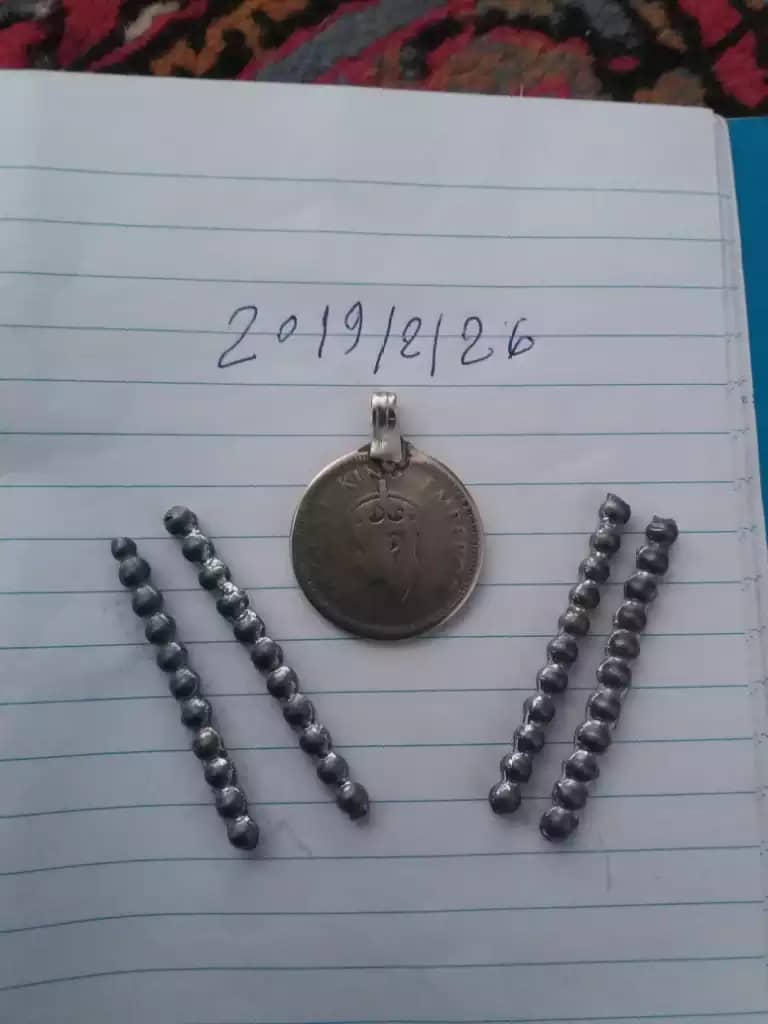
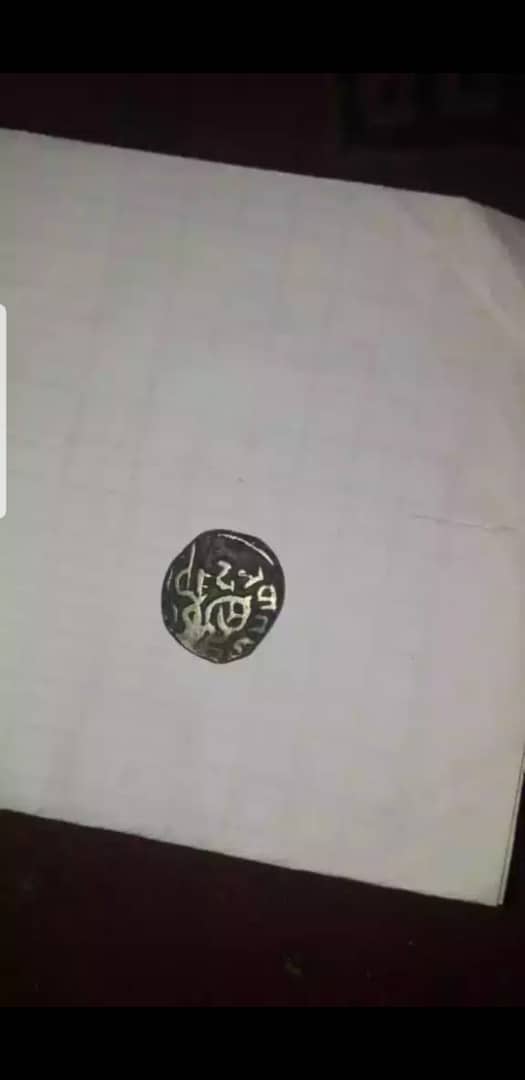
The next coin is an Indian issue from a slightly later time which I also don't recognise but there are some very knowledgeable people here who will be able to help on that.
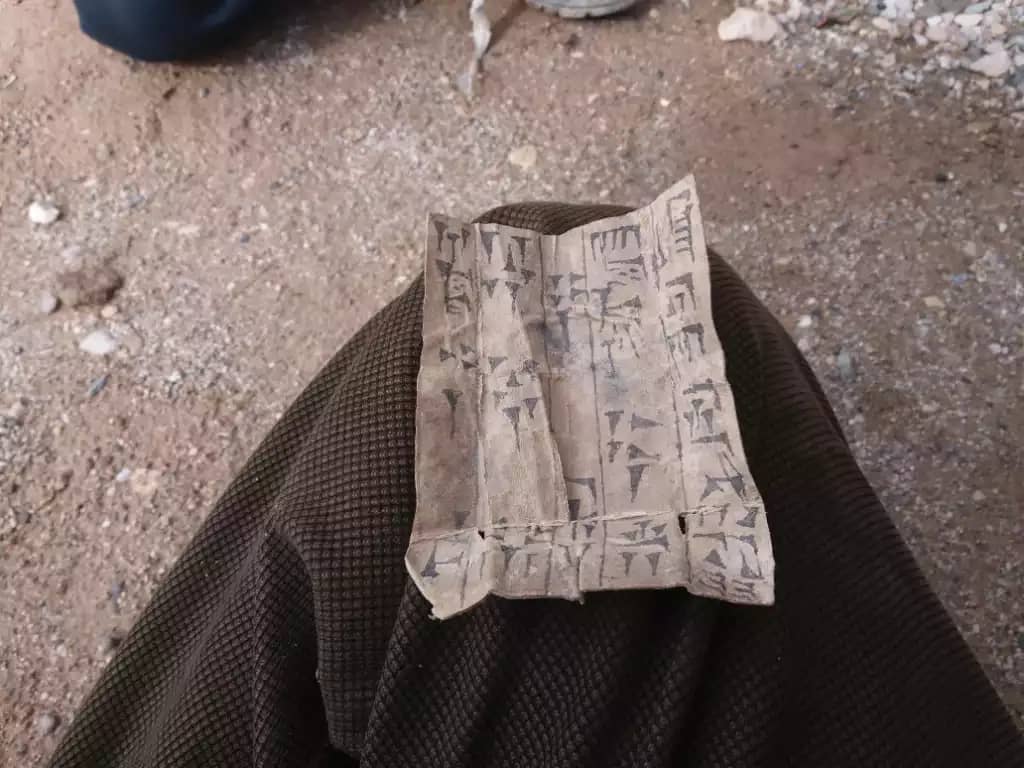
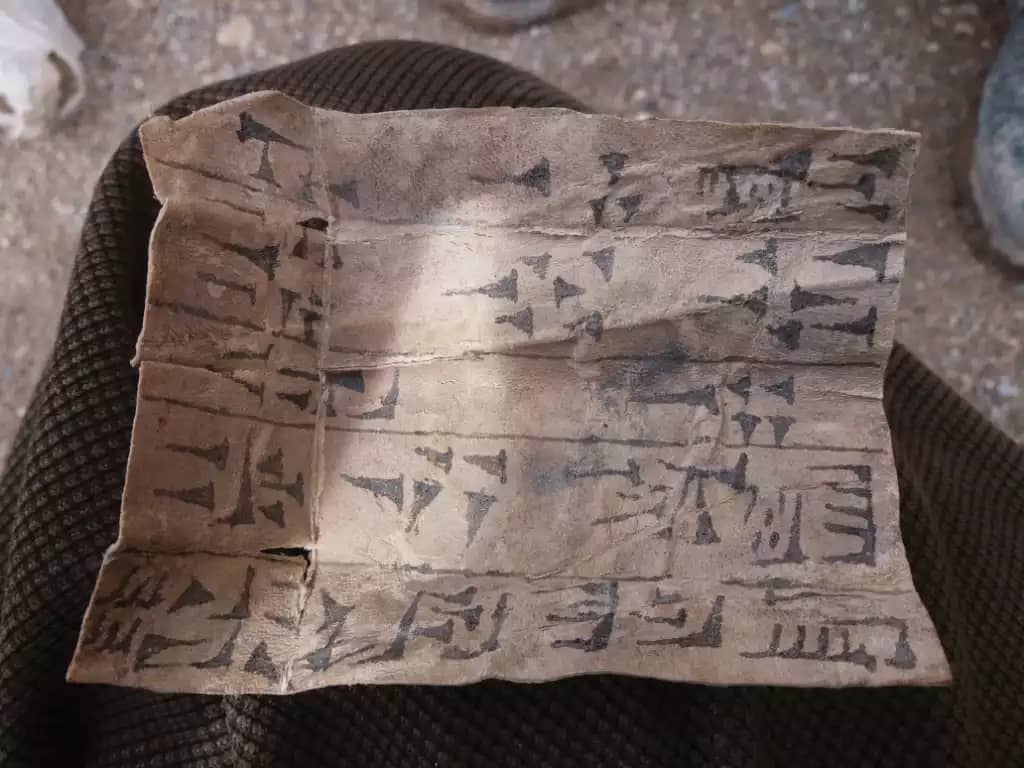
The leather object at the end looks like it's supposed to be cuneiform, but to my knowledge, cuneiform wasn't written like that. You should try emailing a museum to ask about it - the British Museum has a large cuneiform collection, if you bug them they can probably help. Heres an example of cuneiform:













 Posted 02/24/2019 09:34 am