| Author |
 Replies: 14 / Views: 2,084 Replies: 14 / Views: 2,084 |
|
|
New Member
United States
12 Posts |
|
|
|
|
Moderator
 United States
34561 Posts |
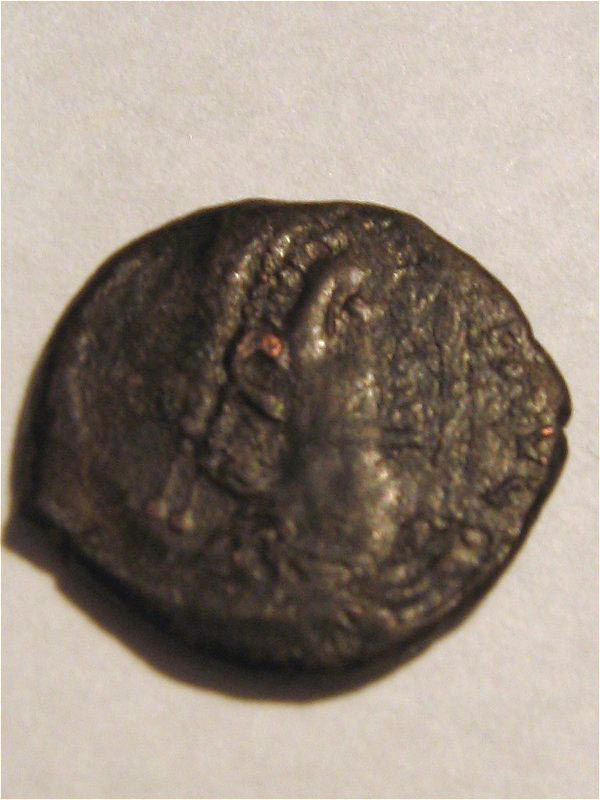
@dlpmarius, can you please also post a pic of the obv of this coin? Thx.
"If you climb a good tree, you get a push."
-----Ghanaian proverb
"The danger we all now face is distinguishing between what is authentic and what is performed."
-----King Adz
|
|
Pillar of the Community
United Kingdom
4208 Posts |
|
|
Moderator
United States
23731 Posts |
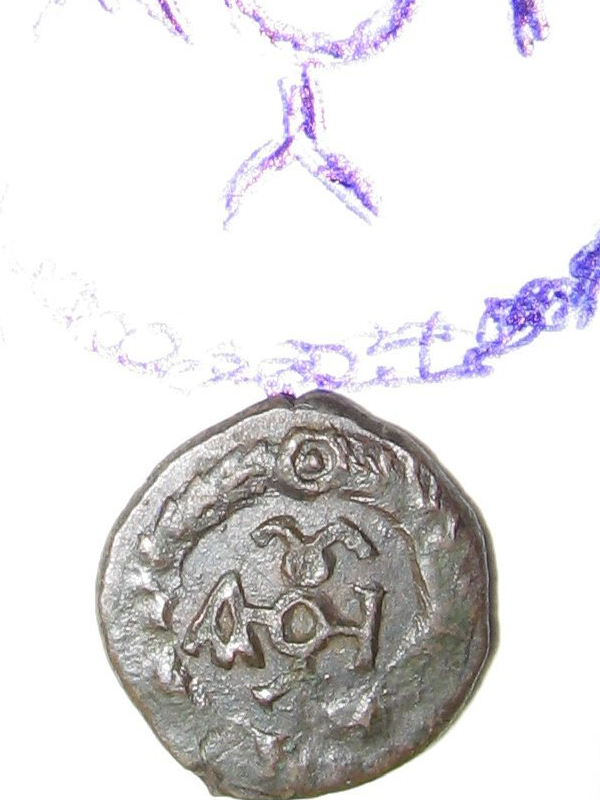
Interesting monogram one that I have seen before. I agree with the others a picture of the obverse is needed.
|
|
Moderator
United States
23731 Posts |
I tried to enhance your image a bit, but there really is much to got by. These late Roman bronze bust tend to all look a like.
|
|
Valued Member
United States
66 Posts |
The bust (Augustus pearl diadem) looks typical of the 4th and very early 5th century Roman coins.
|
|
Pillar of the Community
United States
6130 Posts |
Something smells off here.
We have a Greek cross-shaped monogram typical of the 6th-7th century Byzantine coins, coupled with a late 4th-early 5th century portrait. Monogram coins weren't a thing before Theodosius II, and the portraits were much more degenerate than this before Byzantine kings started using Greek monograms, especially in this format. I'd want to see some more examples vetted as being genuine, or else I'd suspect a numismatic forgery with extra examples seeded out to give credence to the original "find".
Can you give any details about this coin's provenance? What else was it found or sold with?
|
|
Moderator
United States
196100 Posts |
 to the Community, pilegicvs! |
|
Valued Member
United States
66 Posts |
The reverse reminds me of the "cross in wreath" types of the late 4th and early 5th centuries. The monogram, which I've only see on Helvetica's ID Chart, always reminded me of a court jester...with a Greek/Byzantine style "A" as the right hand and "I" as the left hand.
|
|
New Member
 United States
12 Posts |
PILEGICVS...would you happen to be a member of the Shrine (masonic)-I see the words court jester :) I bought this coin on ebay...I look for ancient imitative-barbaric-vandals etc...that's what I thought this coin would be...95% of the multitude of coins I buy from 2 very reputable dealers who ARE here on coin community... |
|
Valued Member
United States
66 Posts |
Sorry, not a Mason - though my Dad actually worked as a Mason before he was drafted... While a few of the other Monograms on Helvetica's Chart look like stick figures, this one is the "best" representation of a figure - and the 'court jester' makes it easy for me to remember. Helvetica's Monogram spreadsheet lists this monogram once - on a 24mm. lead seal. The reference is CNG auction 195, Sept. 2008, lot 303. Found item on their website - https://www.cNGCoins.com/Coin.aspx?CoinID=129227 |
|
New Member
United States
12 Posts |
thank you for the lead seal info...I'm gonna contact victor at CNG I've known him for over 30 years...i respect their knowledge also David Sear is a friend of mine after I here from CNG going to send to him...I've been collecting ancients since 1959...i used to advertise my "buy list" in the Celator magazine...in the late 1990's sold of my collection which I was only missing a few emperors, wives, children, etc from the Roman AND byzantine era.one of my prize coins was a mint Constantine III gold...Respectfully Dan
|
|
Valued Member
United States
66 Posts |
I'm thrilled CNG has a photo of a "coin" they sold 10 years ago on their website. Started collecting 'stuff' in 1969, added coins/medals in the early 70's. Back then, most purchases were at shows... Sold off bulk of it in the mid-80's via classified ads in newspapers, magazines and newsletters. (I wish digital cameras were available then!) Have "only" been collecting ancients for 5 years but have background in Archeology, History, Languages (though Greek is still driving me to distraction...).
We tend to emphasize "emperors", but could the monogram be from a provincial governor, military leader or other notable (or even a moneyer)?
|
|
Pillar of the Community
United Kingdom
4208 Posts |
What is left of the obverse legend clearly reads AVG - so whoever was issuing it was giving their respect to the emperor. But I just cannot see how it came to be - a fourth century obverse on a 6th/7th century reverse? Quite the little mystery. I hope Victor can shed some light on it. I don't really know how to read these monograms, but it seems to me to have the letters L/A/MO/I/O, which doesn't sound like any emperor I know of. I too have trawled ebay looking for coinage from the fall of the empire, but I have only come across western 'box' monograms. |
|
Valued Member
United States
66 Posts |
Is it possible the answer is as simple as this - a coin from Constantine's time (or one of his sons?) was available around Constantinople (?) 150-200 (?) years later. The reverse was filed flush. The coin was heated, placed obverse down on a hard piece of wood and the reverse was re-struck with our mystery monogram? Either as test pieces or as 'tokens'? I'd suggest the engraver was fairly competent as the wreath and monogram (if they were done together) look pretty good. We don't know the "who", but this is a possible "how". This could have been done more "recently", too, as also suggested...
|
| |
Replies: 14 / Views: 2,084 |
|









 Posted 02/25/2019 4:59 pm





