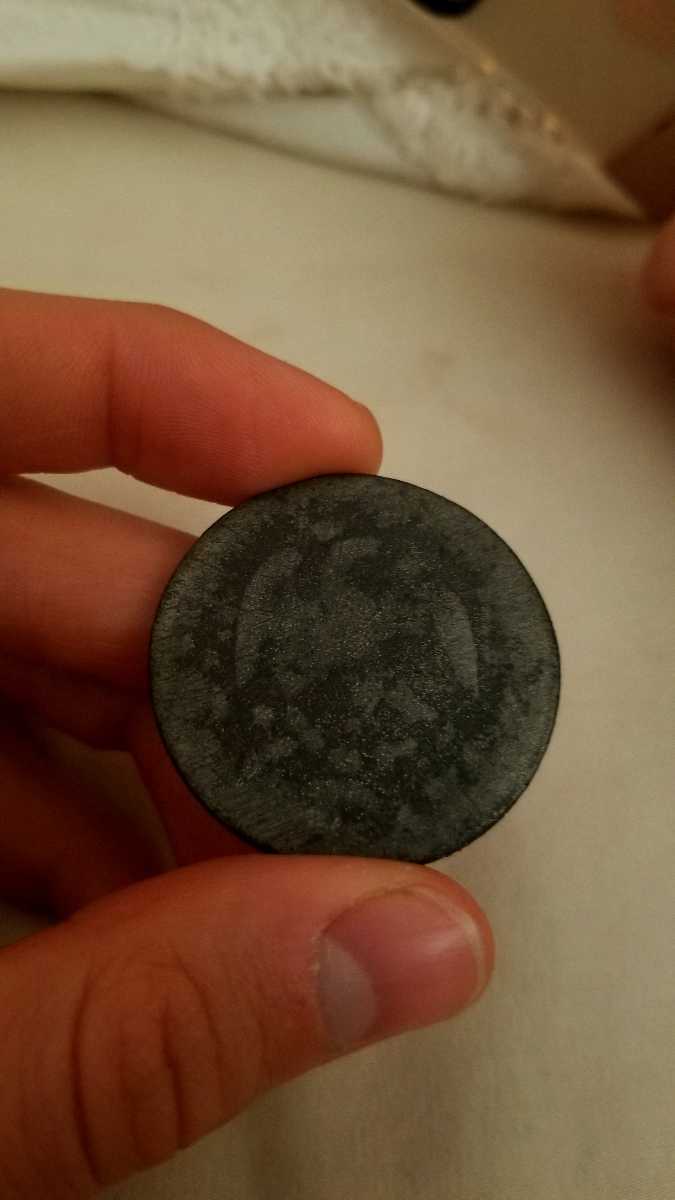
coins92 The design of the eagle looks like the standard second Republic 8 Reales issued until 1897.
I do have a question or two. First you say:
Quote:
Edges are reeded.
The edges of genuine 8Rs are engrailed NOT reeded.
A reeded edge is a series of ridges and valleys that are square to the die faces. They are applied using a third die (a closed collar) that contains the strike. The third die has the reeds cut into the interior surface of the ring. They fill with metal forced into the die by the pressure applied to the face dies. The third die rises and falls with each strike so the design must consist of straight line segments (more or less). Reeding look like |||||||||||| - the edge on a modern US quarter doillar.
An engrailed edge is a shape that resembles a series of brackets - {{{{{{{{{{{{. The engrailed edge was applied by a machine called a Castang machine (in the US) or simply an edge mill in Spain and her colonies. The blank coin was edged BEFORE the strike of the coin faces. The edging process upset the edge of the blank turning it into a true planchet. The reason the edge was added first was that Mexico used an OPEN sided screw press - there was no enclosing collar.
That said are you positive that your coin's surface appearance is due to corrosion? I am asking because to me your coin looks like a sand casting. This could possible be a Sinaloa cast peso. These are found in Krause under the Revolutionary section. They were an emergency issue There are two types sand casts of 8 reales attributed to General Bulena which are KM-768.1. This comes with and without a counterstamp that reads (G.C.) normally seen on the cap side. The counterstamp was a verification of sorts. There is also a pair of types that used a Peso coin as the pattern.
The final possibility is of course a period circulating counterfeit coin but without a date and mint visible it would be of minimal interest.
If you can post a picture of the edge it might clear things up a bit.








 Posted 03/16/2019 2:31 pm





