| Author |
 Replies: 11 / Views: 1,255 Replies: 11 / Views: 1,255 |
|
|
Pillar of the Community
United States
5240 Posts |
|
|
|
|
Pillar of the Community
 United States
8946 Posts |
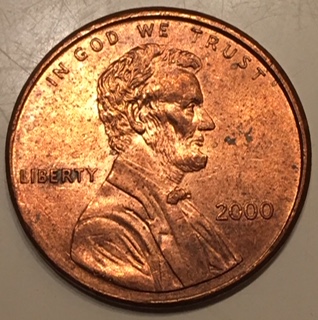
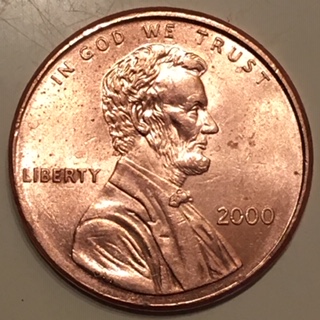
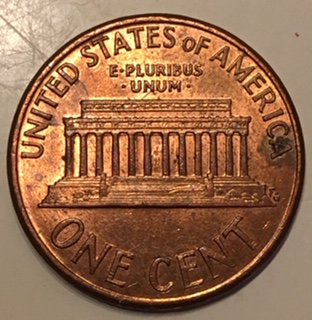
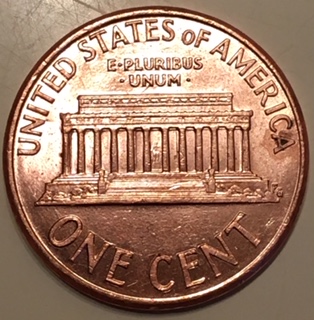
Holy cow! That's one heck of a improvement. What and how did you do it? Any hairlines? Does it look cleaned in hand? Do tell!
|
|
Rest in Peace
United States
18456 Posts |
The truth is it looks like a cleaned Zincoln .  |
|
Bedrock of the Community
United States
79414 Posts |
T-BOP, remember that this is the Wide AM cent variety. Some of them were accidentally struck with the Type 2 proof reverse. Jim, that's a very nice improvement! Errers and Varietys.
|
|
Pillar of the Community
United States
1391 Posts |
If this was a silver coin I would assume it was cleaned because of the changes in the fields outlined in red below. How ever, it is not a silver coin and I don't really collect zincolns so take what I say with a healthy dash from the salt pig. 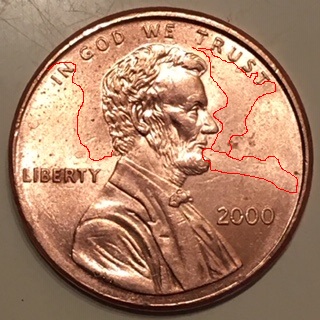 I can't tell if it is the harsh lighting in the new pictures, but for the reverse it seems like there are some differences in the cartwheel/luster. Or maybe it is just the environmental damage removed. On the reverse the last "A" in America has what would be possible signs to me of a cleaning. An other thing is that acetone is an organic solvent. So that tells you the surface material was not organic in nature. These zinc washed coins are so easily damaged I don't know what the correct answer is going forward if they are to be preserved. I can tell you that a lot of my zinc coins for just a few decades ago have not held up very well. Edited by allranger
04/01/2019 3:00 pm
|
|
Pillar of the Community
United States
6514 Posts |
What an amazing improvement. It might look kind of cleaned but considering what you started with, Wow. Are you going to share your concoction or are you calling the patent office?  |
|
Bedrock of the Community
United States
17884 Posts |
Looks like a cleaned cent. Does not have a natural appearance, at least in the images.
|
|
Pillar of the Community
United States
1944 Posts |
wow...
i would have probably done the experimenting on a random - face value coin, and not a substanital premium value coin...
i think your coin looks "cleaned" also...
i am not an expert...
Edited by dbrablec
04/02/2019 2:04 pm
|
|
Pillar of the Community
United States
2775 Posts |
I'll admit if I had not seen before and after, I'd probably not thought twice one way or the other. Being a fan of natural toning, I think it appears cleaned in this state. What boggles my mind thus far, is no mention of conservation. Thanks, Doug. http://goccf.com/t/57008#447106BadThad 12/20/2009 Quote:
THE FIRST STEPS OF CONSERVATION
ALWAYS be aware that sometimes organic residues can be green and mistaken for verdigris. Just because a coin surface contaminate is green doesn't necessarily mean it is verdigris. Coins can be exposed to anything and everything during their existence. That green spot could be a very old piece of gum. For this reason it is recommended to first try what I call the solvent POLARITY LADDER shown below:
Wannabe Geek Note: Polar means a chemical has a negative charge on one end and a positive charge on the other end.
Very Important Note: Only use glass containers with a tight fitting lid for soaking coins.
TABLE 3: The coin solvent Polarity Ladder.
SOLVENT POLARITY
Deionized or Distilled Water Polar
Acetone Less polar than water
Xylene or Hexane Non-polar
STEP 1: WATER
Water will remove many polar surface contaminants. On the Polarity Ladder we start with the absolutely safest coin solvent in the world. As long as soak times are kept reasonable, probably less than 7 days, distilled water will not damage a copper coin. When water soaking, be sure to change out the water at frequent intervals. The more frequent the water changes, the better. Remember, the water is dissolving unwanted contaminants so it becomes contaminated. Each time you change it you're throwing away the bad stuff. Always use distilled or deionized water for soaking. Unpurified water or tap water contains contaminants that may deposit on the coin defeating the conservation attempt.
STEP 2: ACETONE
Acetone chemically, OC(CH3)2 , is a very polar, organic, volatile solvent. High grade acetone can be purchased at most hardware stores. It can also be ordered over the internet in a higher grade like ACS (American Chemical Society) but at a much higher cost. It will remove many organic materials from the coin surface.
Warnings: Do not soak in directly sunlight and store your acetone away from sun. UV light can degrade acetone and produce some chemicals that might be hazardous to your coin. Never allow the acetone to evaporate while the coin is soaking or everything that was dissolved will simply be redeposited on the surface. Use high quality acetone only! DO NOT USE NAIL POLISH REMOVER! Acetone will dissolve plastics and styrofoam so only use a glass container with a tight sealing lid when soaking in acetone. Acetone is flammable; keep open flames away from it. Be sure to read the label and MSDS so you understand the hazards of working with this organic solvent.
A good test to perform before using acetone on a coin is to place some in a glass dish and allow it to evaporate. Inspect the bottom of the dish once it's gone and make sure there's no residue, haziness or sticky film. Any acetone that fails this test is impure and should not be used on a coin.
STEP 3: XYLENE
Xylene is what we call a non-polar solvent and it's completely safe on copper. It's important to use a non-polar solvent because it's the only thing that will dissolve some organic residue. If the surface debris is non-polar, chances are that xylene will be able to dissolve it. Remember "like dissolves like"! Do not over-soak in xylene or you may affect the patina, it can lighten a brown patina with enough time.
That is the process of stepping through various coin safe solvents before attempting conservation. If the green is removed, then it was most likely organic (carbon containing) in nature. |
|
Pillar of the Community
 United States
5240 Posts |
Everything used is all natural and it's only two ingredients. With one exception, an extremely mild non-abrasive soap. It only takes ten seconds on both sides, a lukewarm rinse and it's done. Again, I've only done this with three plated cents. And thus far no I'll effects.
Edited by Jim0815
04/02/2019 4:59 pm
|
|
Pillar of the Community
United States
3003 Posts |
Hello Jim0815,
I don't even drink the water out of tap where I live.
Instead of tap water distilled water for the final rinse might be better.
For a total of 20 second soak, that is amazing.
|
|
Bedrock of the Community
United States
62064 Posts |
Here is the information in image form. 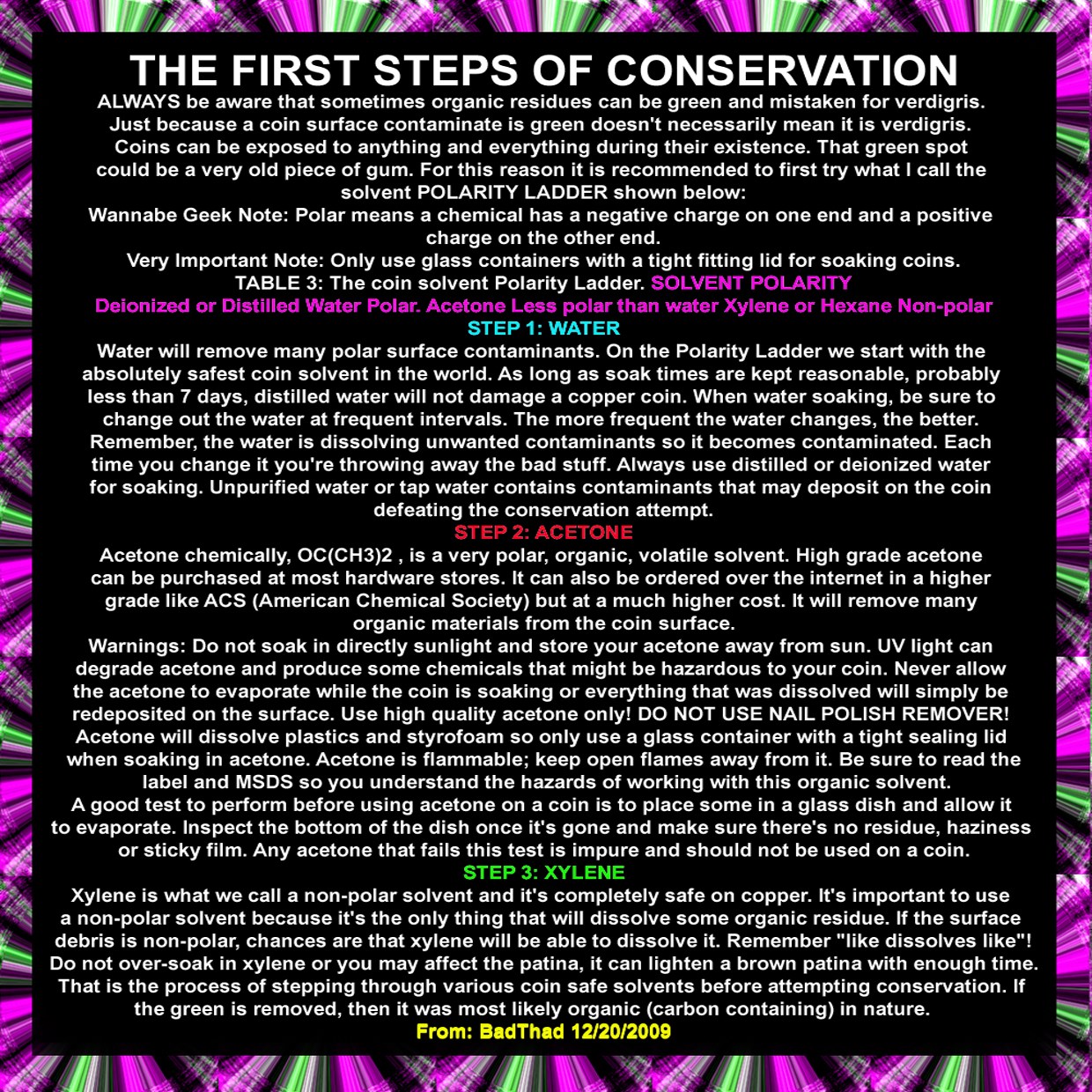 |
| |
Replies: 11 / Views: 1,255 |
|









 Posted 04/01/2019 2:30 pm





