Both are genuine indeed. I must add that I am not extremely well-versed in what I call 'later' cash (Anything after 221 BC), so I wouldn't really call myself an expert or anything. But you pick up a fair few things now and again ;).
Patina is just part of the authentication process. The style and calligraphy are equally difficult to fake convincingly, just as in 'western' ancients. The statement I have heard that 'they would be easier to fake than other ancients' is utter nonsense. Agreed, detecting these fakes can be slightly more difficult due to the lack of die-matches, since they were cast, but if one studies the issue or type in detail, a lot fakes will not show the correct style!
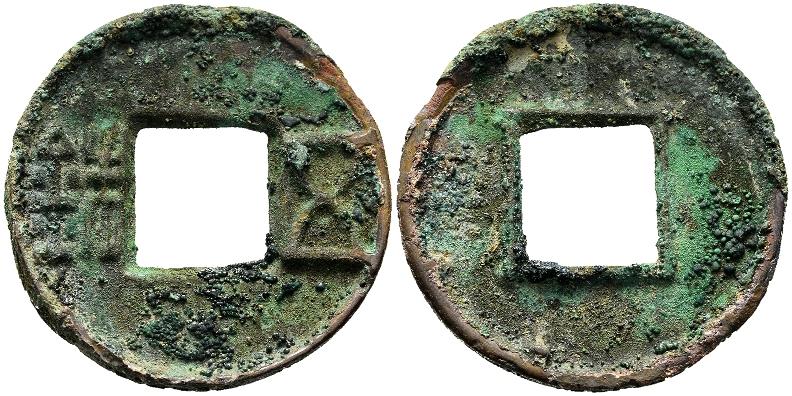
The Wuzhu indeed shows a multi-layered patina, a good sign for authenticity. Patina formation is not a linear process. Instead, what you will see is that a primary corrosion product will form first, virtually always cuprite (though not necessarily), on the original surface of the coin. Over time, this will continue deeper into the coin, while secondary corrosion products form on top of the original surface. What happened here is that a part of the crust somehow got chipped and exposed the deep cuprite penetration. Nice and genuine.
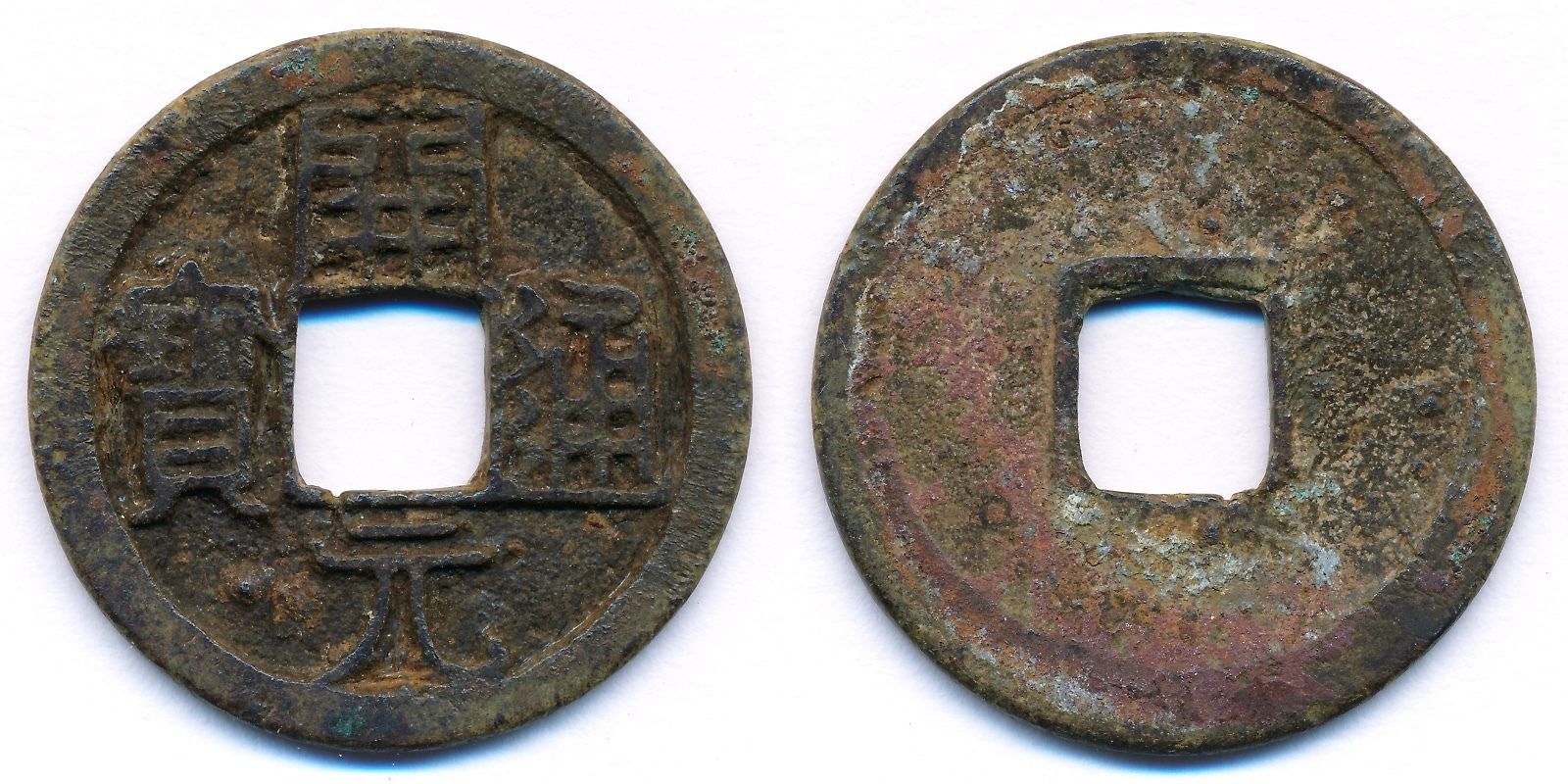
As said, the Kai-yuan is also genuine, but I would personally not pursue this coin. While it is a decent example, there are much better ones with far more pleasing patinas. One of the upsides to some of these types being so common is that you have plenty of choice and can be rather selective in the type & crustiness of the patina that you prefer. The few examples of Kai-yuans I have for example mostly come from a single hoard of them. Beautiful deep blue patina with orange highlights, what's not to love?
Edited by AnYangMan
04/28/2019 5:33 pm












 Posted 04/27/2019 10:00 pm


