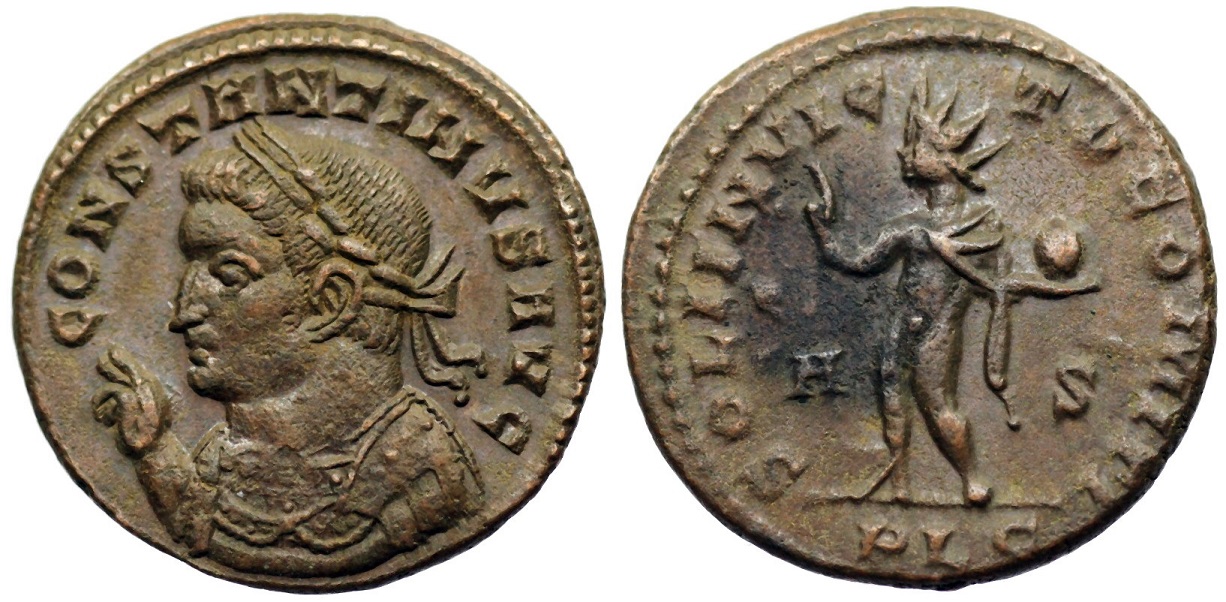
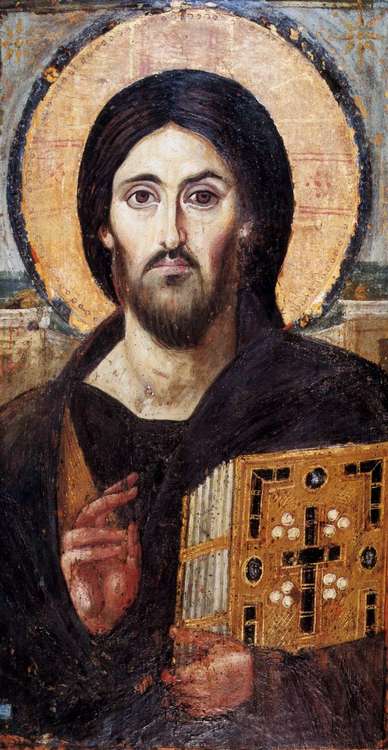
Waving wouldn't have been a "friendly greeting" in ancient times, due to the similarity with another universally understood hand gesture with a much deeper meaning.
And no, not the "Roman salute", as promulgated by the Italian fascists - which appears to be a fanciful modern invention as there is no literary or pictorial evidence that Romans saluted each other in the fascist fashion, with rigid-arm and palm-down.
Raising the right hand, with palm up or half-up, was commonly used in antiquity as a symbol of pledging trust, friendship or loyalty. It's a "you can trust me" gesture. In Greek-style Rhetoric and Oratory which the Romans adopted, the tradition evolved of a speaker holding his hand out in this manner for most of his speech - again, the message is "you should listen to me because you can trust what I'm saying". Because you had to hold your hand out there for quite a long time, if you were in the habit of giving long speeches, the held hand was in a relaxed, half-open position (rather than a flat palm or clenched fist). The Emperor Augustus is doing this in the famous statue of him known as the
Augustus of Prima Porta.
Don't say "infinitely" when you mean "very"; otherwise, you'll have no word left when you want to talk about something really infinite. - C. S. Lewis












 Posted 05/19/2019 01:59 am


 sounds good. P.S. always enjoy your post of ancient coins..