| Author |
 Replies: 12 / Views: 1,660 Replies: 12 / Views: 1,660 |
|
|
Valued Member
Brazil
146 Posts |
Dear friends, A great friend bought this aureus, but we are unsure of its authenticity. For this reason, I ask for your opinion. Thank you! Domitian, as Caesar (Vespasian, 69-79), Aureus, Rome, AD 73, AV (6,95gr, 18,7mm), CAES AVG F - DOMIT COS II, laureate head r., Rv. Domitian galloping l., holding sceptre and raising hand. RIC I 232 = II 540 C 663 Calicò 812. 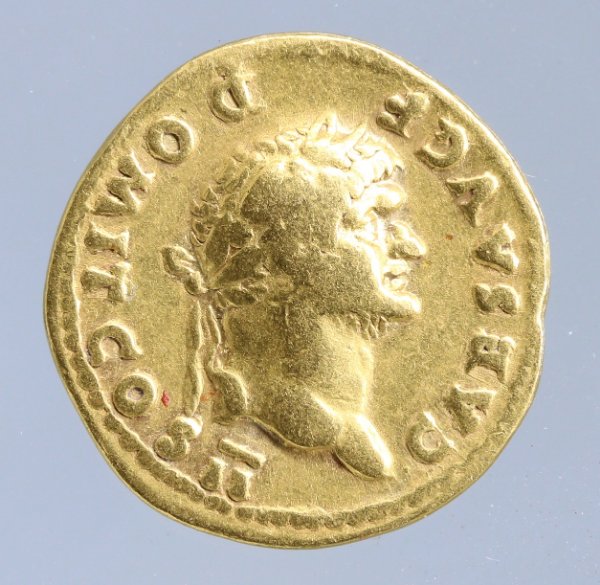 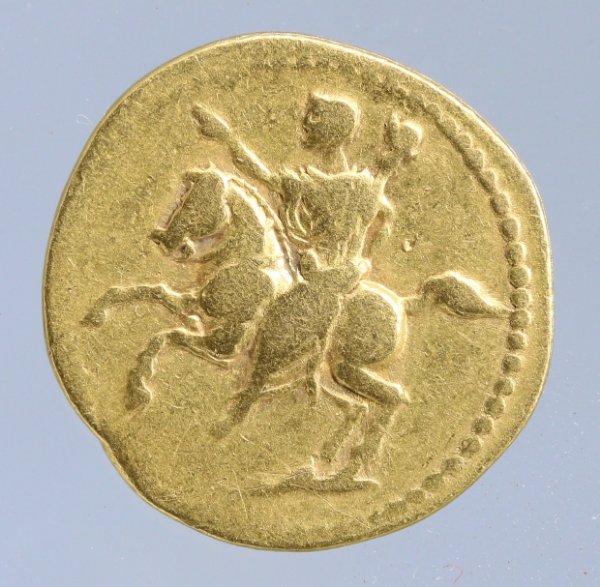 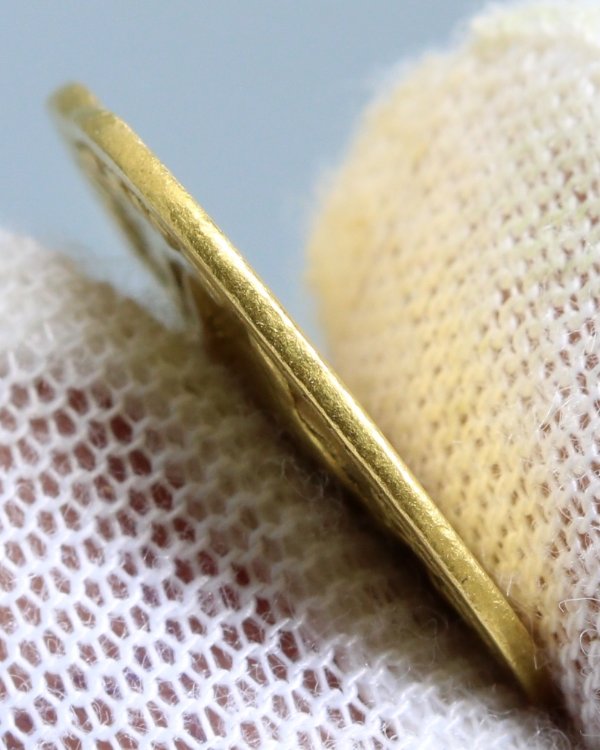 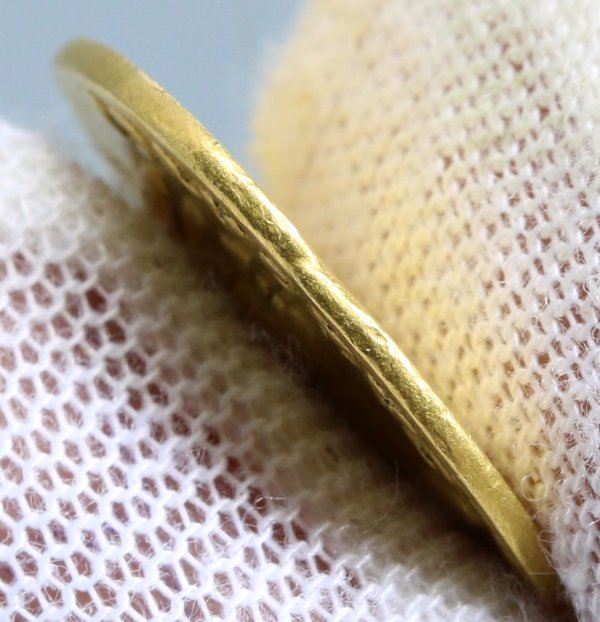 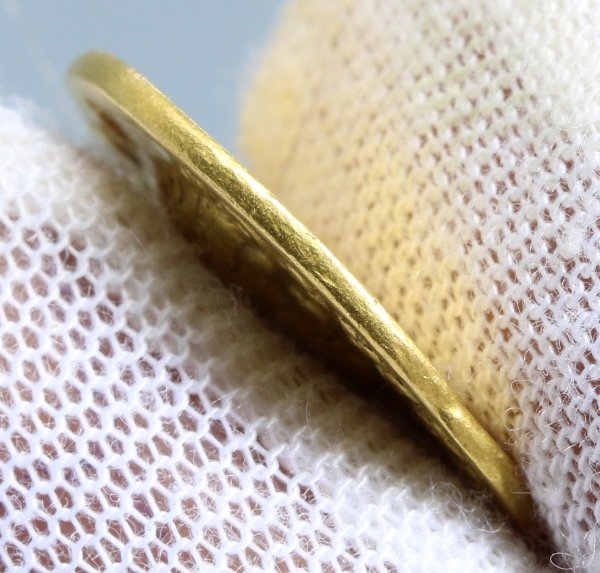 |
|
|
|
New Member
United States
6 Posts |
Oh wow! how much did he buy it for? It looks to me like its made out of gold which is quite an amazing thing!
10/10 for me
|
|
Moderator
 United States
23731 Posts |
It doesn't look right to me, soft detail and there appears to be a rim line which would suggest a cast copy.
|
|
Pillar of the Community
United States
1046 Posts |
I agree with Ron.
In addition, the legends look a bit "blockish" to me.
Maybe it's my bad eyes but it almost looks as if this coin was tooled as well.
Edited by Biancasdad
05/31/2019 2:49 pm
|
|
CCF Advertiser
United States
1318 Posts |
As I always ask when these come in, would the poster like to give us the pedigree of the coin? There are not that many out there and a coin like this usually has a verified pedigree a person can search. Sadly no one has ever done this after I ask, but for such an important coin, if a pedigree can't be produced to show chain of custody at the lowest level just needed to see a history you can't imagine the coin is real. I have not found a match yet but the surface looks very nondescript like this fake from the British museum. https://www.britishmuseum.org/resea...593&partId=1 |
|
Moderator
United States
34542 Posts |
Ron, which of the OP's images shows the casting seam? Right now I'm not seeing it, but am way out of my league on real vs. fake. Just trying to learn something this afternoon...
"If you climb a good tree, you get a push."
-----Ghanaian proverb
"The danger we all now face is distinguishing between what is authentic and what is performed."
-----King Adz
|
|
Moderator
United States
23731 Posts |
Dave, all the edge images show it IMO.
|
|
Valued Member
 Brazil
146 Posts |
Dear friends. Thanks for the review. I agree with you. The following image with the casting line. Right? 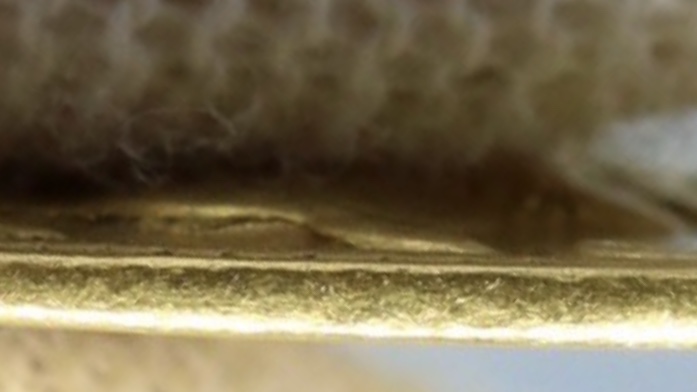 |
|
Bedrock of the Community
Australia
21789 Posts |
I agree: it looks like a cast copy, probably made from modern .900 fine gold.
This is a case where XRF testing would be very helpful.
The ancients were unable to refine above about 950 fine, with all of the trace metals remaining in the gold coins that they made. Modern modern refining has been able to refine to 1000 fine, then add a precisely controlled alloying metal such as copper only, to harden the gold for coining purposes.
What you need to look for in the XRF analysis is the presence of trace metals such as silver and platinum and a wide variety of other trace metals.
A bullion dealer or a scrap gold jewelry buyer should have a hand held XRF instrument. A fee may be charged for their service.
------------------------------------------------------------------------------------------------------------------------------------------------------
The main methods for establishing authenticity of an ancient coin are:-
1. pedigree, which needs to be independently verifiable.
2. checking on data bases against already documented fakes
3. metal analysis
4. fabric
5. weight
6. style
7. general appearance, looking for evidence of copying
Edited by sel_69l
05/31/2019 7:28 pm
|
|
Moderator
United States
34542 Posts |
Ok thanks for the clarification on the casting seam guys!
Added: very nice summary list @sel.
"If you climb a good tree, you get a push."
-----Ghanaian proverb
"The danger we all now face is distinguishing between what is authentic and what is performed."
-----King Adz
Edited by Spence
06/01/2019 06:57 am
|
|
Pillar of the Community
United States
616 Posts |
Were gold coins circulated enough to show such wear?
A silver coin with that kind of wear is common, but just as I expect $100 bills to look crisper than $1 bills, I would think a gold aureus wouldn't look that worn.
|
|
Pillar of the Community
Canada
5290 Posts |
Roman gold circulated very little. I think that it was used more to hoard by the wealthy.
|
|
Bedrock of the Community
Australia
21789 Posts |
A casting seam on a .900 fine gold cast copy can be hidden reasonably easily. Gold is highly malleable.
The edge is filed to remove the casting seam, then gently beaten to remove the file marks, until there is little or no evidence of the casting seam or file marks to be seen.
This process is much harder with alloys other than gold.
Edited by sel_69l
06/02/2019 05:49 am
|
| |
Replies: 12 / Views: 1,660 |
|







 Posted 05/31/2019 2:42 pm





