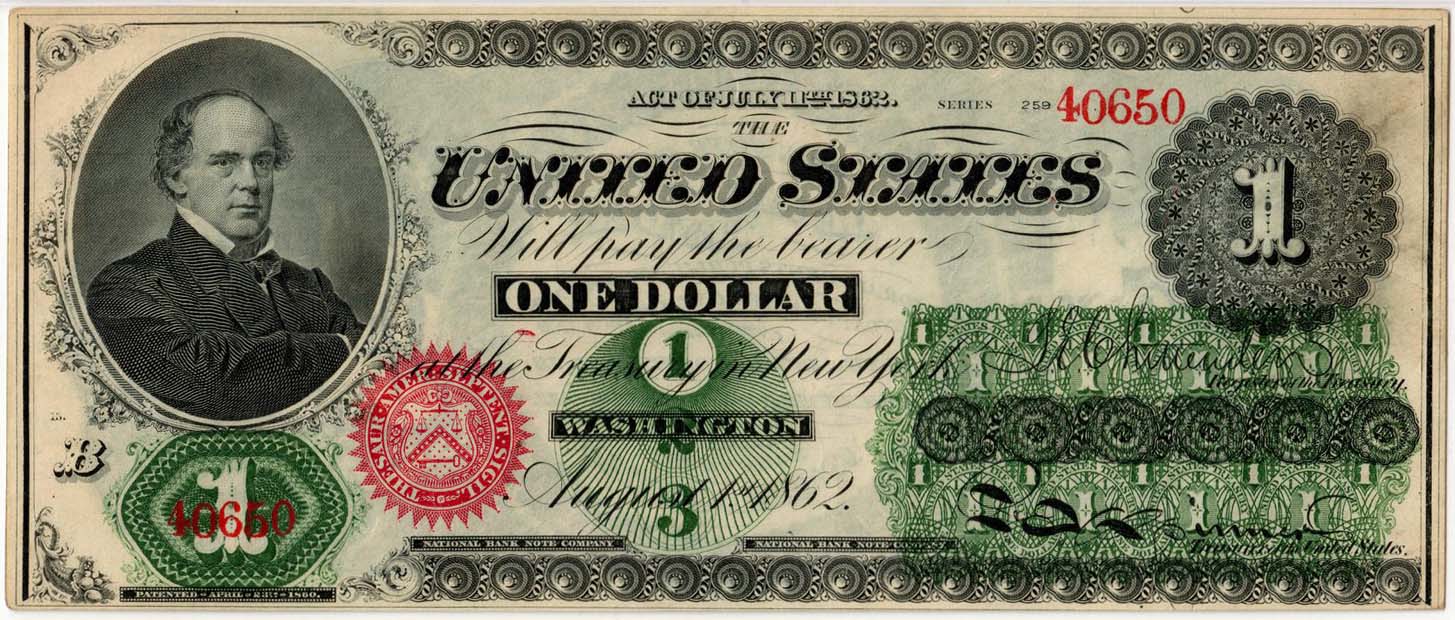
This caught my attention.
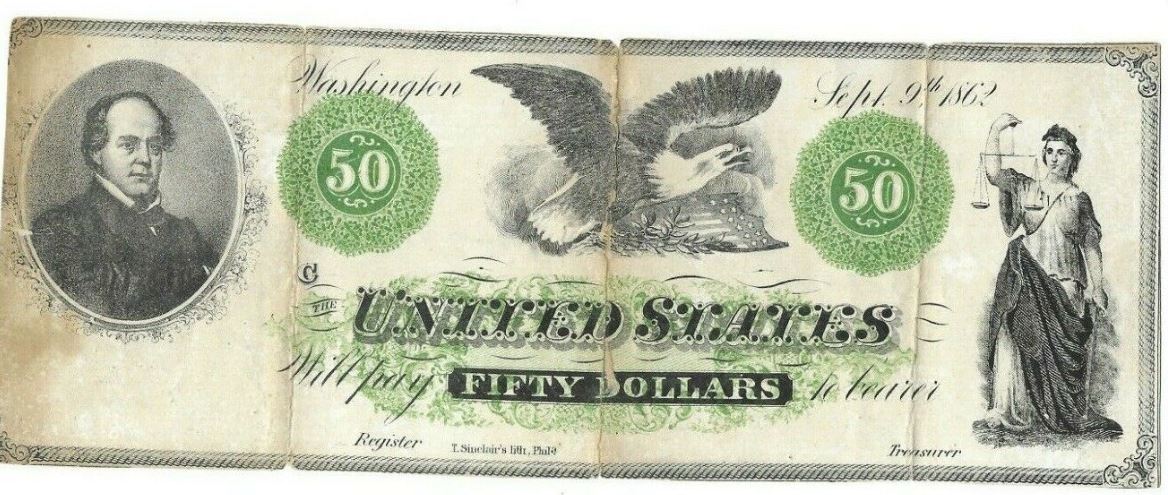
It's signed at the bottom by T(homas) Sinclair.
That would be the rather famous T. Sinclair & Son of New York and Philadelphia (latterly of San Francisco), a stationery firm which produced lots of advertising and promotional work in the 1880s and 1890s as well as high quality artistic lithos for newspapers and books.
They specialized in lithography, particularly chromolithography, which dominated mass market advertising and printing from the 1830s through the early 20th c.
Prints made using the chromolithography process were called "chromos" and "chromo-cards" were smaller-size prints on thicker cardstock.
This is how playing cards and early ad cards were made in color, and also provided the first viable cheap source of reproductions (what we now call prints) of paintings.
Engravings and lithos from Sinclair's earlier works (1850s) are very high quality, but the process to produce them was extremely labor intensive and not cheap, and today they are very, very collectible works of art -- the early frames tended to ruin the prints by acid leaching.
By the 1880s the process was affordable and much quicker, especially with an offset press, but the quality was deteriorating from "photo-realistic" to "meh, it kind of sort of looks vaguely like the original."
Unfortunately this leads to more questions...
So we know Sinclair was the lithographer for this "note" -- who engraved it, then? Could Ourdan have done this one too? It's not far removed from his designs for United States Notes, but only in style.
Justice is to the right, an eagle centered at the top, ... and who is depicted in the leftmost portrait? It's not Hamilton!
September 9, 1862, is an auspicious date -- this is the day Robert E. Lee ordered Stonewall Jackson to mobilize and capture Harper's Ferry. Strange date for a "United States" $50... but wait, is it?
McClellan's "gift" (the intercept of Lee's order quite by accident by Union soldiers) allowed him to win the subsequent engagements. The resulting "cautious but optimistic" tone helped persuade a certain Mr. Lincoln to move ahead with his mildly famous proclamation of the freedom of slaves....
The first US $50 was issued in 1862. It looks nothing like this. However...presumably, there would have been a competition or contest to design $50 bills for the 1863 issues.
Might this have been a proof or specimen engraved and printed for the consideration of the Treasury as a design for future $50 bills? Perhaps even done under an arrangement with ABNC/NBNC? I don't think so (explanation below.)
I don't know -- old currency is a subject with which I have little experience!!
Putting Sept 9 as the date is certainly a jab at Confederate sympathizers, intentional or otherwise.
I can't venture a guess as to originality; however, if I had to, I'd think this might be a specimen not of currency but of an "ad-back" advertising note. The obverse would feature designs that were not actually in use, or not legal tender, to avoid issues; the backs were customizable with advertisements for your business of choice. I would also suspect it is more likely to date from the 1880s or 1890s than from 1862.
(edit: by the time I posted this long-winded response, westernsky had already came to that conclusion!)
Perhaps the people who live and breathe paper currency can shed some light here, or offer corrections, or further wisdom as to whether this is an advertising note specimen or something else.


Member
ANA - EAC - TNA - SSDC - CCT #890
"Most of the things worth doing in the world had been declared impossible before they were done." -- Louis D. Brandeis









 Posted 06/08/2019 10:31 pm