Coin Community Family of Web Sites Join Thousands of Coin, Bullion, & Money Collectors
Join Thousands of Coin, Bullion, & Money Collectors Royal Estate Auctions - $1 Coin AuctionsRoyal Canadian Mint products, Canadian, Polish, American, and world coins and banknotes. 300,000 items to help build your collection! Specializing in Modern Numismatics Coin, Banknote and Medal Collectors's Online Mall Vancouvers #1 Coin and Paper Money Dealer


Username:
Password:
Save Password
Forgot your Password?


This page may contain links that result in small commissions to keep this free site up and running.

Welcome Guest! Registering and/or logging in will remove the anchor (bottom) ads. It's Free!

Dai Nippon - Finn's Japanese Type Set, 1636 To Date

To participate in the forum you must log in or register.
Author Previous TopicReplies: 20 / Views: 8,515Next Topic
Page: of 2
Pillar of the Community
Finn235's Avatar
United States
6130 Posts
 Posted 07/19/2020  11:48 pm  Show Profile   Bookmark this reply Add Finn235 to your friends list Get a Link to this Reply
Tokugawa Coinage
1626-1867


Background

At the conclusion of the Japanese civil wars at the end of the 16th century, the Tokugawa shogunate came to absolute power over Japan under Tokugawa Ieyasu in 1600. Initially enjoying a booming economy and flourishing international trade, the Shogun gave the order of Sakoku, or the closing of the country to foreigners. This was ostensibly because of a growing number of Catholic converts in Japan, and the Shogun feared the European missionaries sought to overthrow the Japanese government and colonize the islands. In 1633 all ports except Nagasaki were closed, and trade was forbidden with all nations except China, Vietnam, Korea, and the Netherlands. The Ryukyu Islands--which were officially a separate and independent kingdom--were exempt from Sakoku, despite being directly controlled by the Japanese Satsuma clan. Unless accompanied by an official guardian, no foreigners could enter Japan from the trading post at Dejima in Nagasaki bay on pain of death. The native Japanese could only enter Dejima by special permit.

The Tokugawa era saw unprecedented success. Japan was free from internal or external warfare for 250 years, and good fiscal management meant the general populace was kept in comfortable institutionalized poverty while the arts and culture flourished as the wealthy patronized the skilled. To facilitate this booming economy, the Tokugawa shogun commissioned the development of a new currency for Japan.


Overview:

There were three facets to the Tokugawa currency system; Gold, Silver, and Bronze.

The base unit of gold was the Ryo, which was issued in the form of a large, thin ovoid coin, known as a "Koban." One Koban was worth enough for one Koku--about 150kg / 330 pounds of rice; enough to feed one adult for a full year.

Silver initially occupied a very confusing position, having no denominated coins, but rather being legal tender at the intersection of weight and fineness, both of which were in near-constant flux. Until the very early 1800s, Japanese silver "coins" were cho-gin and mameita-gin, both coarse rounded bars or pellets of silver which were stamped with a seal to indicate purity, and had to be individually certified in order to circulate. At the turn of the 19th century, the Chogin and Mameita-gin were phased out of circulation and clearly denominated silver bars were introduced. Denominated in Bu (1/4 Ryo, 1,000 mon) and Shu (1/16 Ryo, 250 mon) these had serious purchasing power, although they did circulate some.

The workhorse of the Japanese economy was the Mon, or cash coin. Like in China, these coins had little individual purchasing power (probably as much as a US quarter or dime today) and would be tied up in "strings" of 1,000 coins for safekeeping or large transactions. Due to copper shortages, a 4 mon coin was introduced in 1768, and eventually phased out the 1 mon coin. These were joined by a huge ovoid 100 mon coin in 1835.


Bronze coinage

Kanei Tsuho - 1 Mon
1626 - 1867


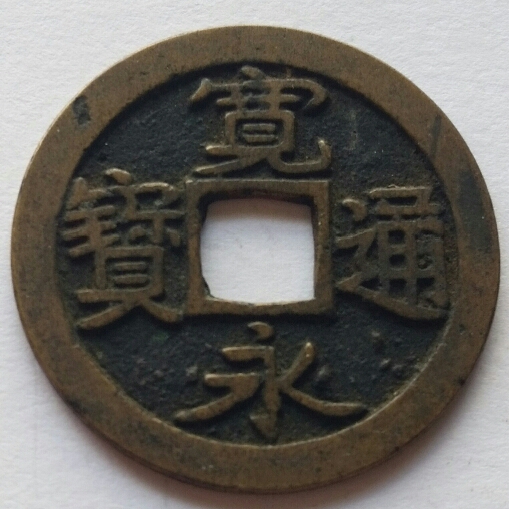
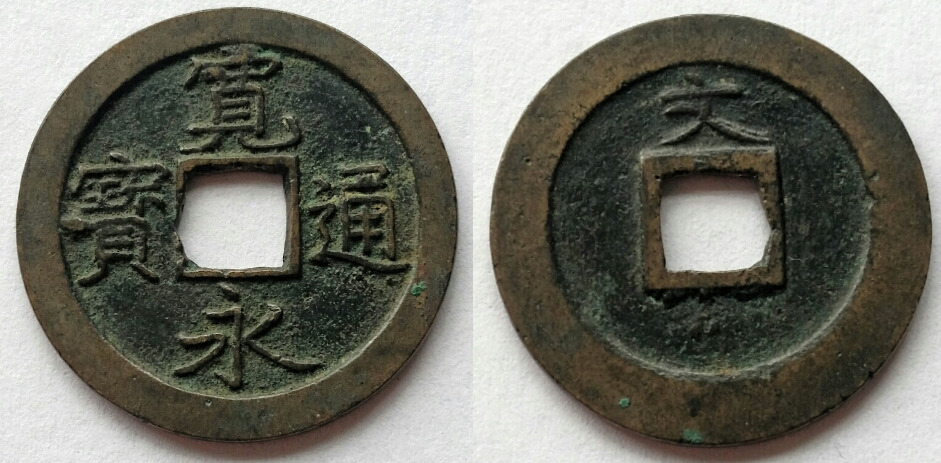
In the rocky first years of the Tokugawa Shogunate, Kanei Tsuho were first introduced as one of many co-circulating currencies, being unique for carrying the current era name rather than a copycat Chinese inscription, thus being more distinctly Japanese than the other circulating currencies. From 1626-1636, Kanei Tsuho were made on a very small scale, and as a result these earliest types are the rarest and by far most valuable from this series.

In 1636, three years into Sakoku, the Kanei Tsuho became the sole official bronze coin of Japan, and production ramped up to allow the bita sen, shima sen, and other coins to be driven from circulation. Coins produced between 1636-1668 are known as Ko-Kanei or "Old Kanei" and are easily distinguished because the legs of the character "Ho" (9:00 position) touch at the bottom. These are usually well-cast, always in good quality bronze, and come in a couple dozen varieties, none of which (barring the earliest issues already mentioned) are scarcer than the others.

Dai-Nippon---Finn's-Japanese-Type-Set,-1636-To-Date


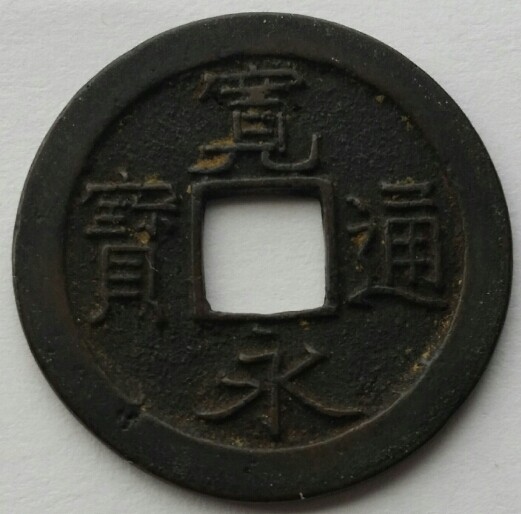
Beginning in 1668, the calligraphy standard was modified so that the legs of Ho no longer touched; these are known as "New Kanei" and encompass a good couple hundred minor varieties. Many of these probably would escape modern numismatists, but among the numerous leisurely pursuits of the Tokugawa aristocracy we can find contemporary numismatic catalogues of the various types, including mint information, nicknames for distinguishing features, and sometimes mintage figures. Trying to collect all 200+ varieties would be an expensive and mind-numbing task, but there are a few major types to collect.


Types without mintmark


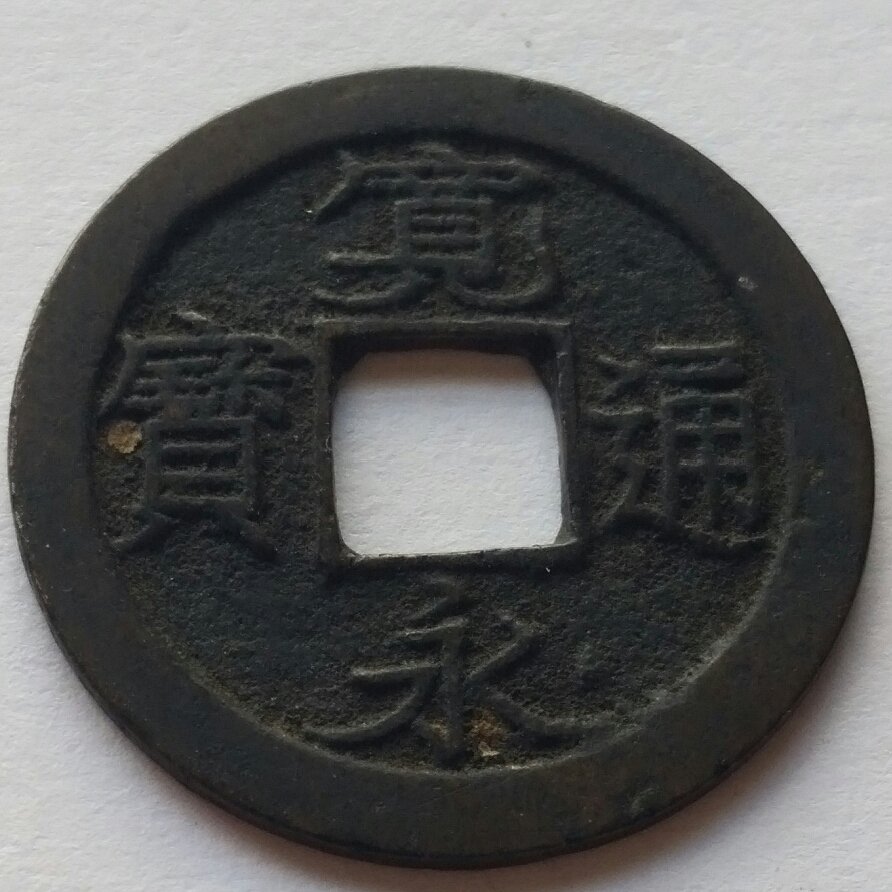
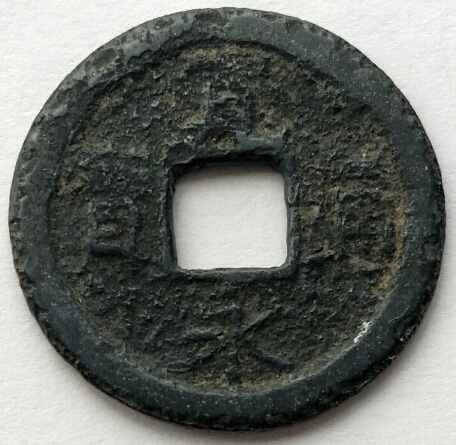
Most Kanei Tsuho do not have any marks on the reverse, but can be distinguished by calligraphy style and metal content. In general, bronze quality started quite good, and became increasingly debased as Japan's copper mines became exhausted. Earlier coins are never magnetic. Coins from the 1700s are either nonmagnetic, semi-magnetic, or magnetic. By the 1800s, there was no copper left for these coins, which were then cast in iron.

I have not read any true explanation of the calligraphy variants, but they are exhaustively documented and traceable to particular mints and very narrow date ranges, thanks to our Japanese numismatists living in the 18th and 19th centuries.


Regular script:
Dai-Nippon---Finn's-Japanese-Type-Set,-1636-To-Date
(I really tried to ID this one, but I couldn't figure out the Hartill #. It is likely early 1700s, uncertain mint.

This one is Hartill #4.144 (Jumantsubo mint, Fukugawa, late 1730s) known to the Japanese as the "Tiger Tail" mon, due to the extended right leg of the upper "Kan", said to resemble a tiger that is about to pounce.
Dai-Nippon---Finn's-Japanese-Type-Set,-1636-To-Date


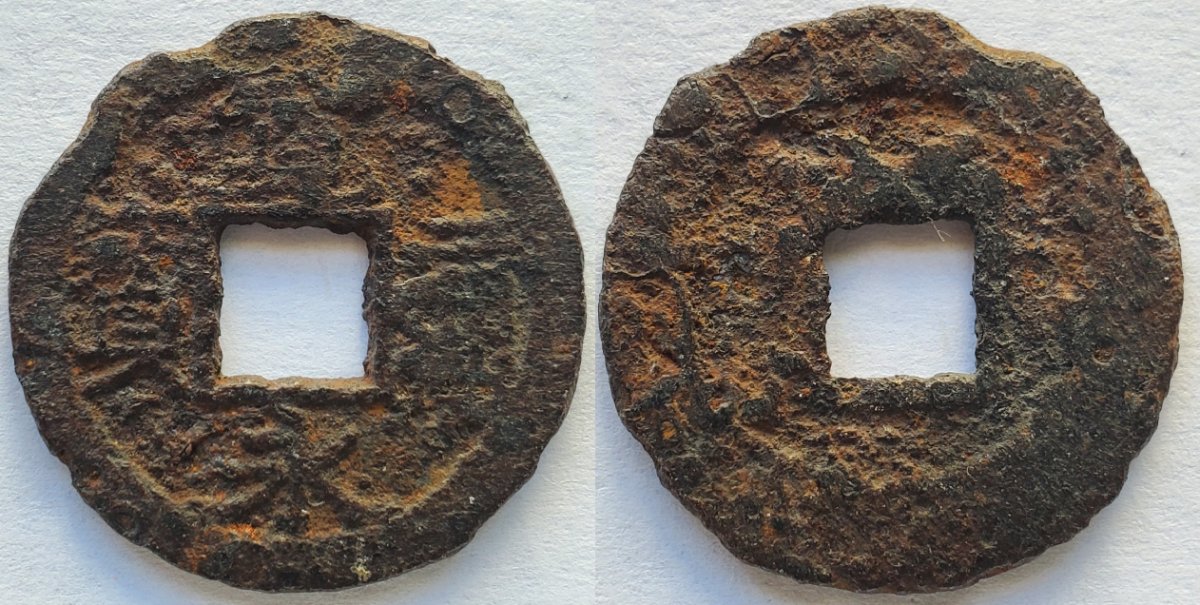
As time wore on, the copper shortage deepened and the 1 mon denomination took the brunt of the cutbacks. By the mid-19th century the Kanei tsuho coins were being made entirely of cast iron with just a trace of copper:
Dai-Nippon---Finn's-Japanese-Type-Set,-1636-To-Date


Types with mintmarks


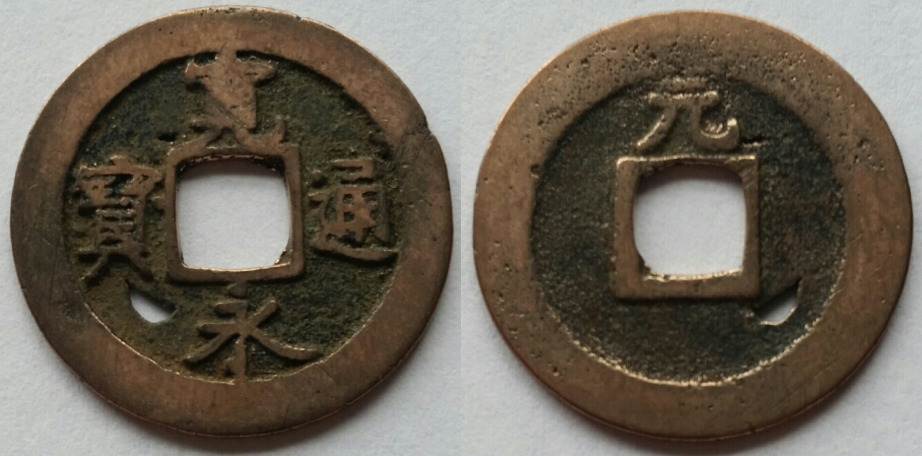
Some Kanei Tsuho bear a character on the reverse, indicating the mint which produced them.

"Bun" Edo Mint, 1668
This is the first New Kanei minted, according to legend the copper was sourced from a massive statue of Buddha that had toppled in an earthquake in 1667
Dai-Nippon---Finn's-Japanese-Type-Set,-1636-To-Date


"Gen" Takatsu Mint, 1740
Dai-Nippon---Finn's-Japanese-Type-Set,-1636-To-Date

"Chou" Nagasaki Mint, 1767
Dai-Nippon---Finn's-Japanese-Type-Set,-1636-To-Date

"Sa" Sado Mint, 1861
This coin ain't a looker, but it is remarkable for being the sole example of a 1 mon coin minted after 1668 with the old style legs. These are extremely inferior coins cast in an alloy that is mostly iron. The mintmark is not visible on my specimen, but the legs are diagnostic.
Dai-Nippon---Finn's-Japanese-Type-Set,-1636-To-Date


Pillar of the Community
Finn235's Avatar
United States
6130 Posts
 Posted 07/20/2020  12:15 am  Show Profile   Bookmark this reply Add Finn235 to your friends list Get a Link to this Reply
Mon Coins - Higher Denominations


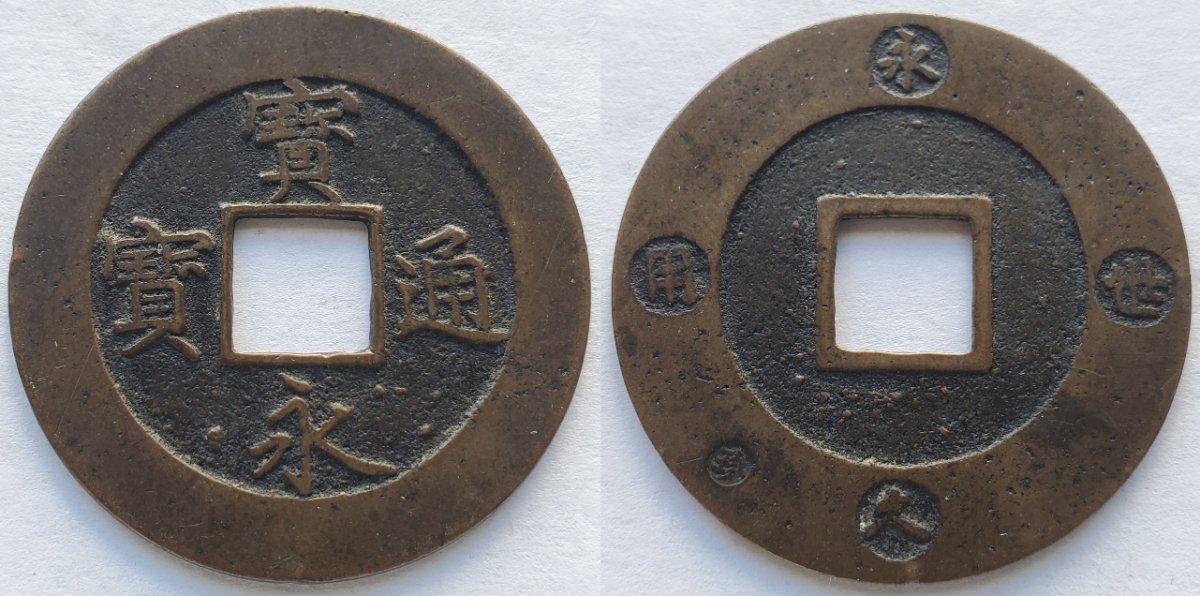
Hoei Tsuho - 10 mon
1708


Dai-Nippon---Finn's-Japanese-Type-Set,-1636-To-Date

As mentioned previously, by the turn of the 18th century Japan's copper mines were struggling to keep up with demand. China had at various times attempted to introduce multiple denominations into the cash economy, to various levels of failure. Hoping to conserve copper with a coin that would be more accepted by the Japanese public, in the 5th year of Hoei, the Shogun Tsunayoshi commissioned these large (37.5mm!) cash coins, containing 3 mon of copper for 10 mon face value. The public rejected them outright, and after spending the rest of the year attempting to force their acceptance, the order was given to withdraw them from circulation at the beginning of 1709. (The motion for withdrawal was facilitated by the death of their primary proponent, Shogun Tsunayoshi, who was murdered by his wife when caught in an affair with another man in early 1709!)


Kanei Tsuho - 4 mon

The withdrawal of the 10 mon coins from circulation certainly did not fix the critical shortage of copper, so 60 years later the Shogunate revisited the concept and aimed a bit lower, introducing a 4 mon coin only very slightly larger than the 1 mon. The coins took immediately and would eventually become more common than the 1 mon coins.

21 waves - 1768
Dai-Nippon---Finn's-Japanese-Type-Set,-1636-To-Date

The first iteration seems to have been a single-year type, and featured 21 waves in a pattern on the reverse. These have no readily apparent significance and were probably aesthetic, but I like to entertain the theory that these waves hearken back to the historical Kamikaze or "Divine Wind" (probably cyclones or tsunamis) which in 1274 and again in 1281 crippled two massive Mongol invasion fleets and spared Japan from the Khanate's territory grab.

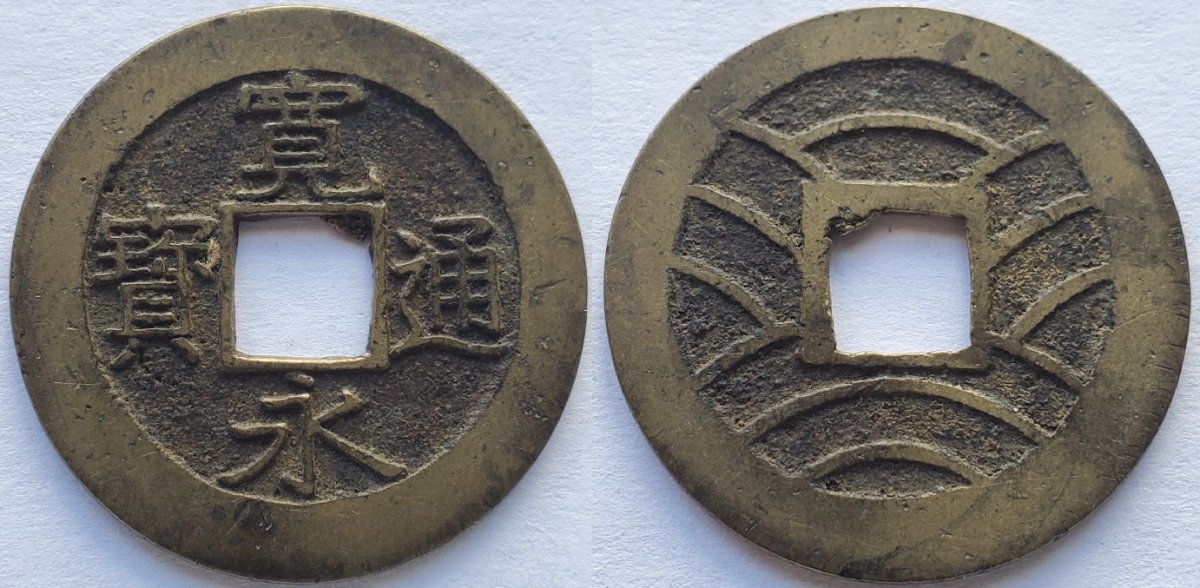
11 waves - 1769 - 1867
Dai-Nippon---Finn's-Japanese-Type-Set,-1636-To-Date

For whatever unknown reason, after the first year of 4 mon production, the reverse was modified to include only 11 waves. Unlike the robust varieties of 1 mon, the 4 mon coin was remarkably stable, displaying only a handful of calligraphy variants early in the series. Even with a far greater face value than their metallic content, they became debased over time. An XRF scan is the most telling (because we all have one, right?) but a quick visual guide is helpful:

Yellowish - Good quality brass; 1760s/70s

Deep reddish - Reasonably pure copper; 1820s

Dark/blackish - High lead content; 1850s

In the 1860s during the chaotic collapse of the Tokugawa currency system, both the Imperial government and local warlords issued Kanei Tsuho 4 mon coins in iron; these often bear mint marks, and are mostly quite scarce.


Tempo Tsuho - 100 mon
1835 - 1870

Large interior hole
Dai-Nippon---Finn's-Japanese-Type-Set,-1636-To-Date

Small interior hole
Dai-Nippon---Finn's-Japanese-Type-Set,-1636-To-Date


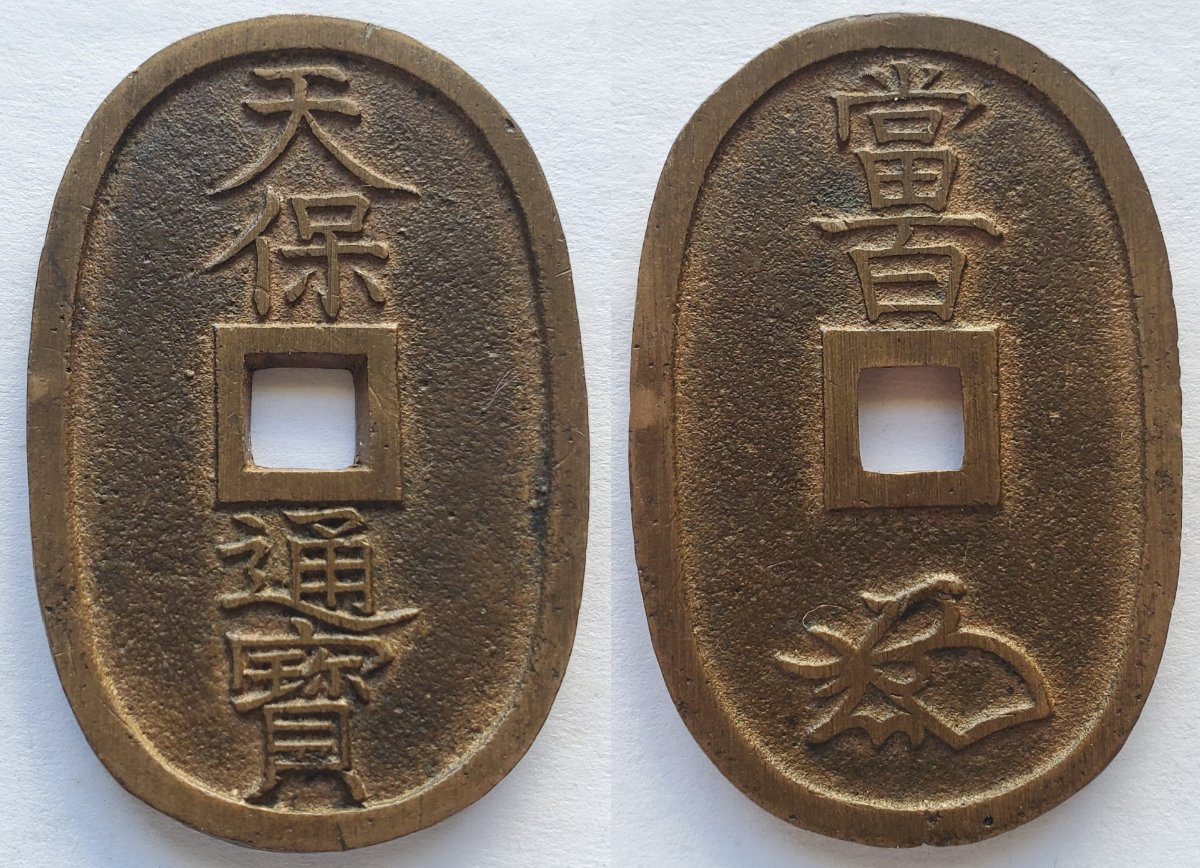
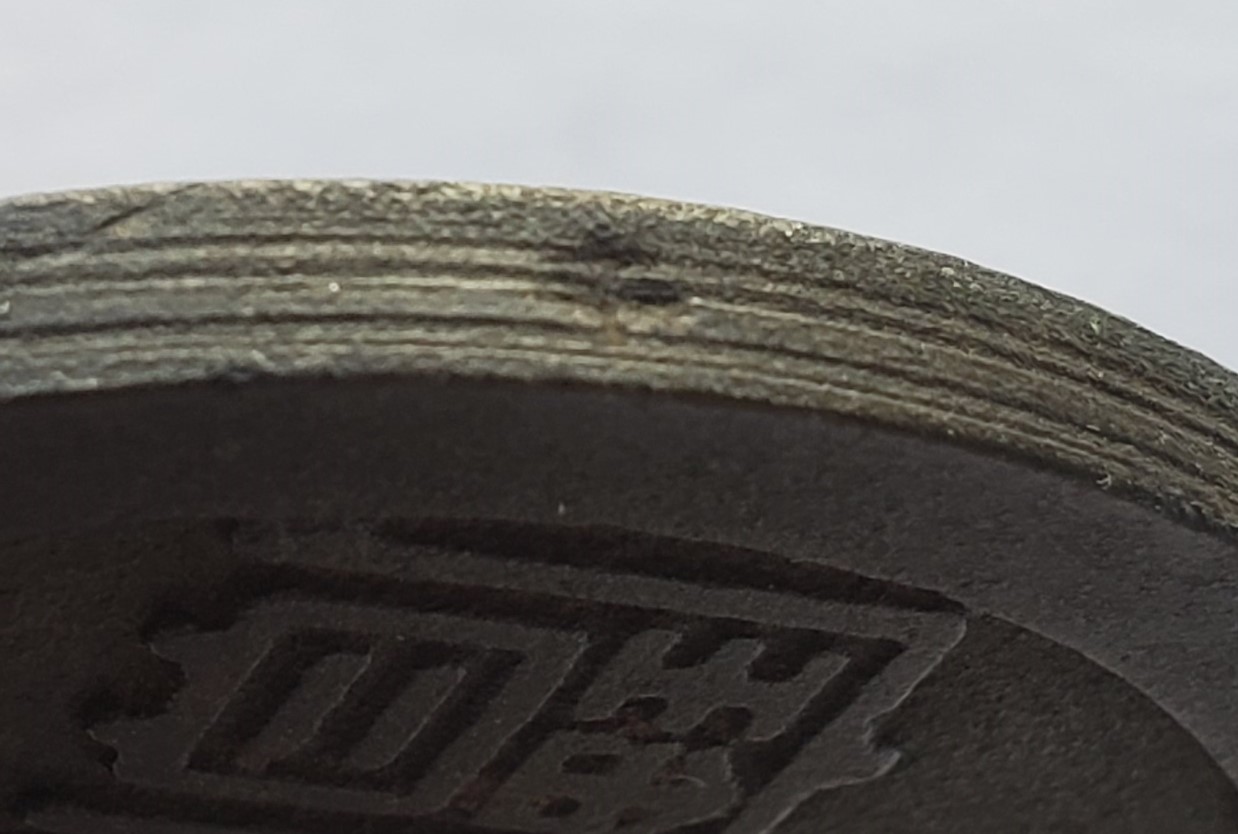
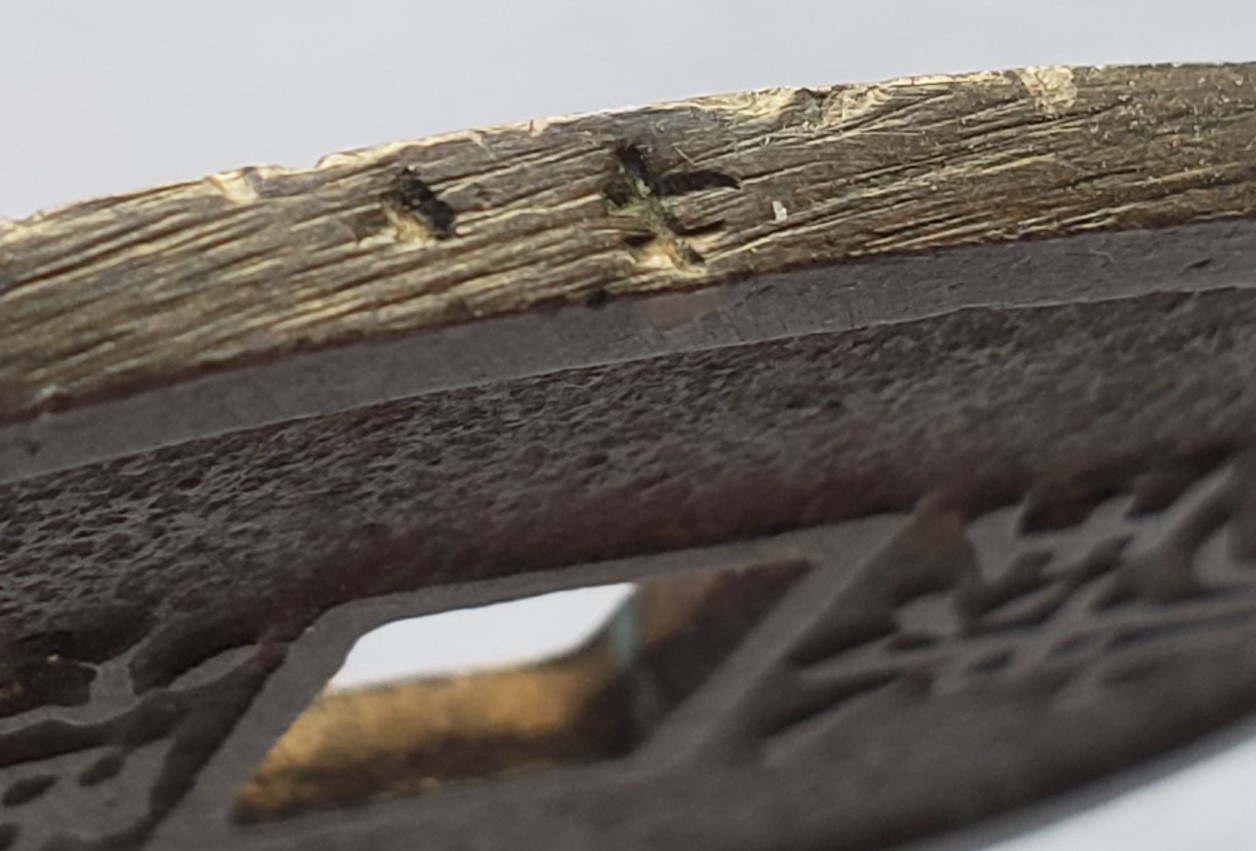
By the early 1800s, the copper shortage was becoming critical. Entirely bypassing any conservative denominations between 4 and 99, the Shogunate introduced massive oval Tenpo Tsuho coins, carrying a value of 100 mon. For whatever reason, these were readily accepted by the public. Production ran for 35 years, with mintages totaling well into the hundreds of millions. Hartill notes that there are well over 100 minor varieties, but only one is actually rare (having a very long left leg of Ho on the obverse that touches the rim). Both contemporary counterfeits and numismatic forgeries abound; genuine coins have very smooth fields, and carry two validation marks on the rim of the coin at 9:00 and 3:00. Contemporary fakes usually have very coarse fields, while modern Chinese forgeries almost always lack validation marks. Even when a photo of the validation marks is not provided, it is important to look for the metal distress that is normally visible on the rim of the coin, usually as a lighter spot.

Closeup of the rim markings:
Dai-Nippon---Finn's-Japanese-Type-Set,-1636-To-Date

(Fun tidbit - In the 1950s, a Japanese snack company used these coins as box prizes. Supply ran out quicker than expected, so they made a number of fake coins to see out their obligation per the promotion. These coins, distinct from modern Chinese phonies, are actually worth more than genuine pieces, much like Henning nickels.)


Bunkyu Eiho - 4 mon
1863 - 1870

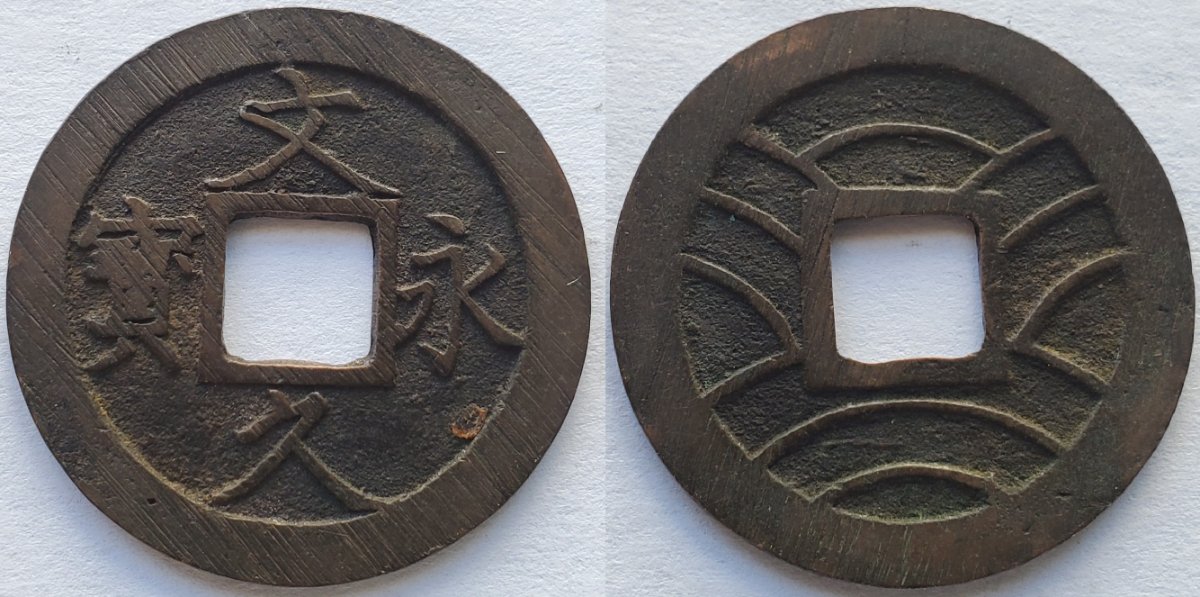
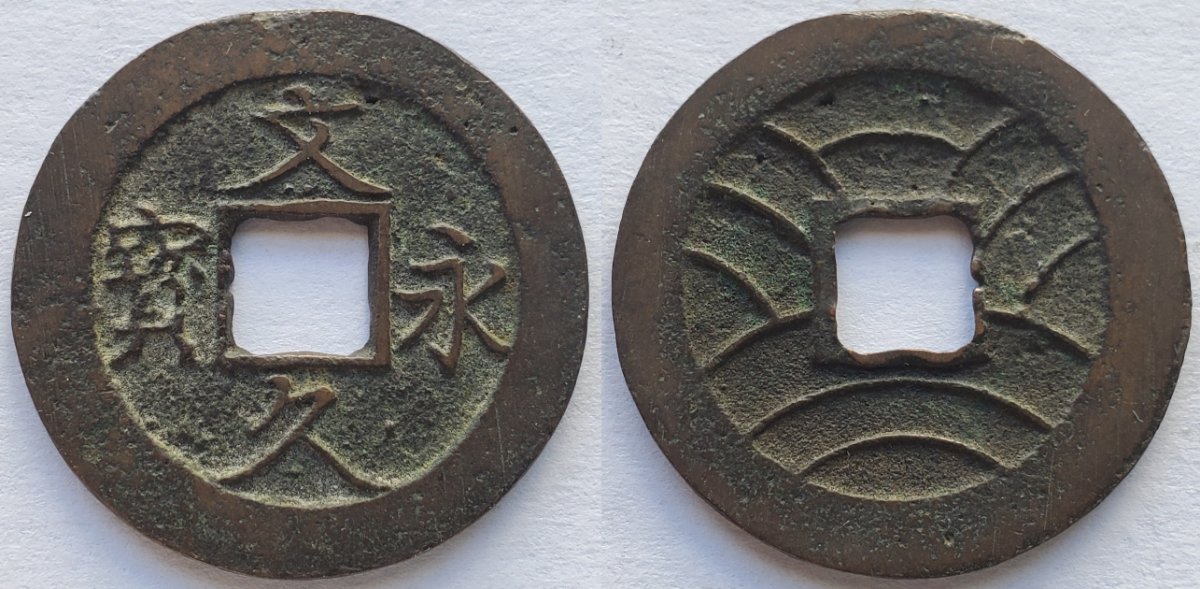
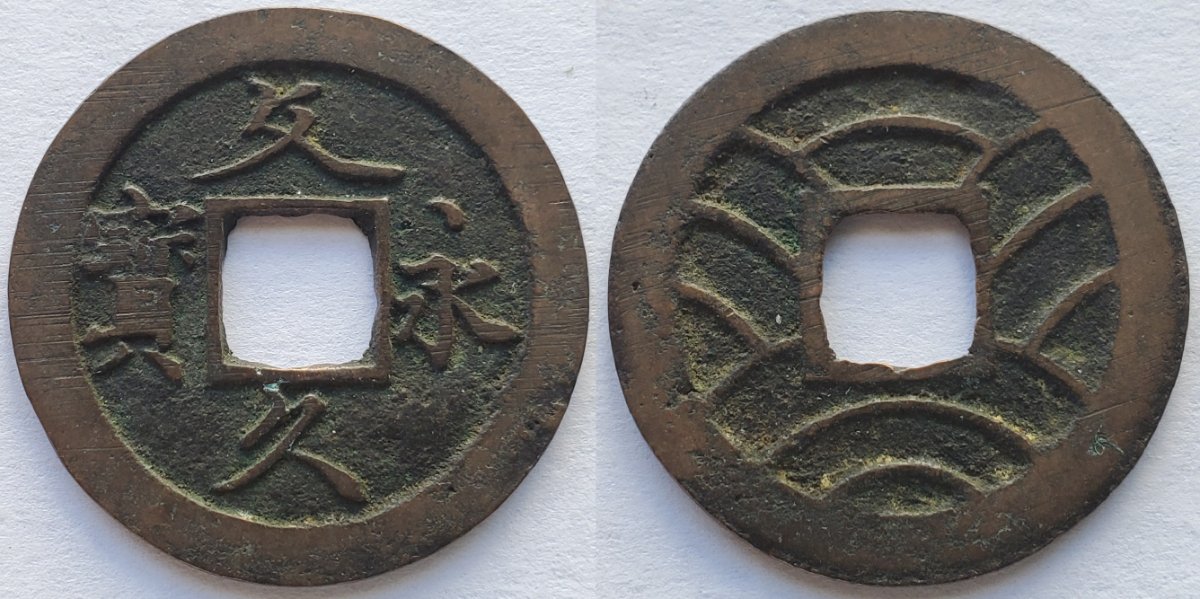
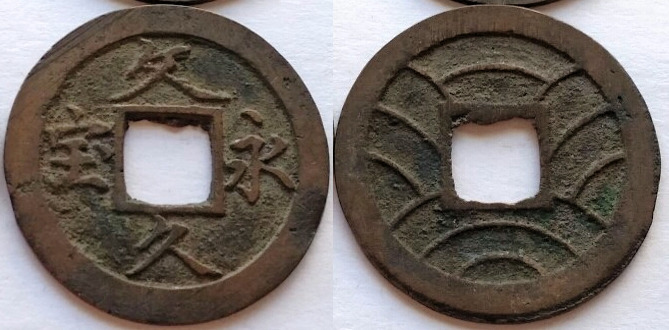
The final new design issued by the waning Tokugawa shogunate, these 4 mon coins followed the pattern of the Kanei Tsuho 11 wave coins, but carried a new inscription meaning "Bunkyu (era) Eternal Treasure." These were made of a dark, high-lead alloy, but are usually well-made and often lightly circulated with visible filing marks. There are 4 varieties, none of which are scarcer than the others:

- Formal script, thick strokes - "Bun" at the top of the coin has a single, horizontal top stroke and appears to be standing upright.
Dai-Nippon---Finn's-Japanese-Type-Set,-1636-To-Date

- Formal script, thin strokes - As above, but the lettering is somewhat thinner and more delicate.
Dai-Nippon---Finn's-Japanese-Type-Set,-1636-To-Date

- Jumping script - "Bun" appears to be slanted somewhat and the top is comprised of two, angled strokes.
Dai-Nippon---Finn's-Japanese-Type-Set,-1636-To-Date

- Jade Ho - As above, but "Ho" at the left side of the coin is of a very simple style.
Dai-Nippon---Finn's-Japanese-Type-Set,-1636-To-Date

Pillar of the Community
Finn235's Avatar
United States
6130 Posts
 Posted 07/20/2020  01:00 am  Show Profile   Bookmark this reply Add Finn235 to your friends list Get a Link to this Reply
Regional, Clan, and Quasi-official coinages


These are a whole domain unto themselves, and I won't go in depth here. All are scarce to extremely rare, and not surprisingly, there are many fakes that are nearly impossible to distinguish from genuine pieces. There are no examples which are cheap, but several are obtainable on a modest budget. I only have one, which is the second most expensive coin in my entire Japanese collection.


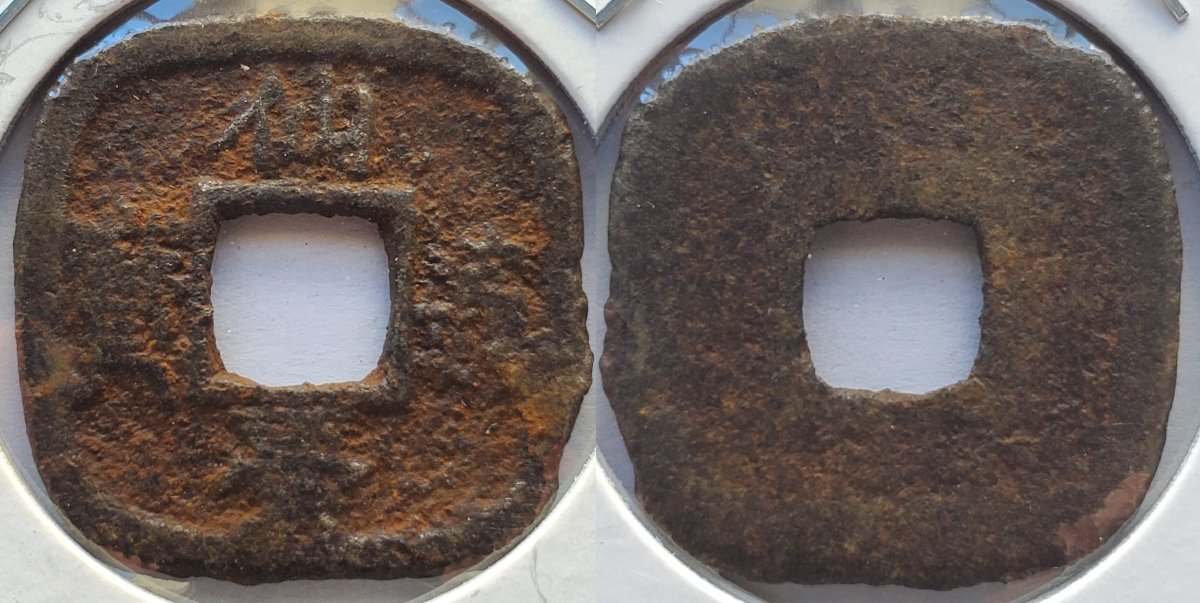
Sendai Tsuho, Iron 1 mon,
1784-1788

Dai-Nippon---Finn's-Japanese-Type-Set,-1636-To-Date

Easily the most affordable of the regional coinage of Edo Japan, these interesting square coins were cast strictly for local use at Sendai, and prohibited to be used outside of that locale. Hartill relates that they were so poorly made that approximately 2% of the total mintage cracked or shattered during transit from the mint.

Extra special thanks to @Half, who picked this coin up for me from a coin shop in Tokyo!


Hakodate Tsuho, Iron 1 mon,
1856-1857


Dai-Nippon---Finn's-Japanese-Type-Set,-1636-To-Date

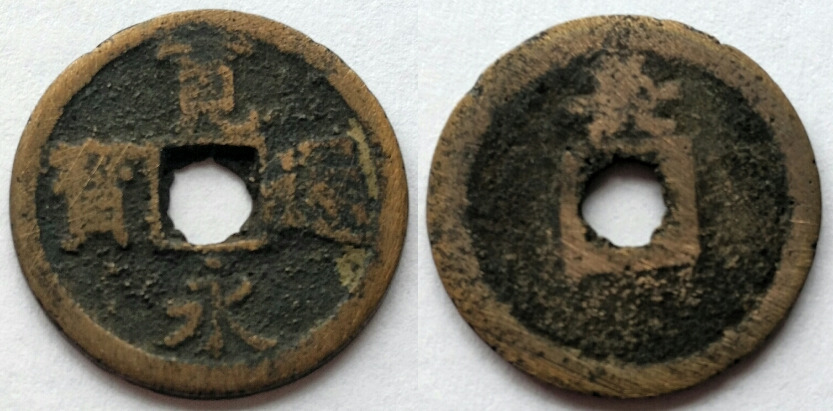
A runner up as the second most common and affordable provincial cash coin, the Hakodate Tsuho were minted on modern day Hokkaido and were not permitted to circulate outside of that island. They are remarkable as being the only Japanese cash coin with a circular central hole, and are almost always poorly cast in a high-iron alloy. Mother coins for the type exist, but Hartill cautions that due to the relatively young age of these coins, a majority of purported Hakodate Tsuho mother coins are likely modern forgeries.


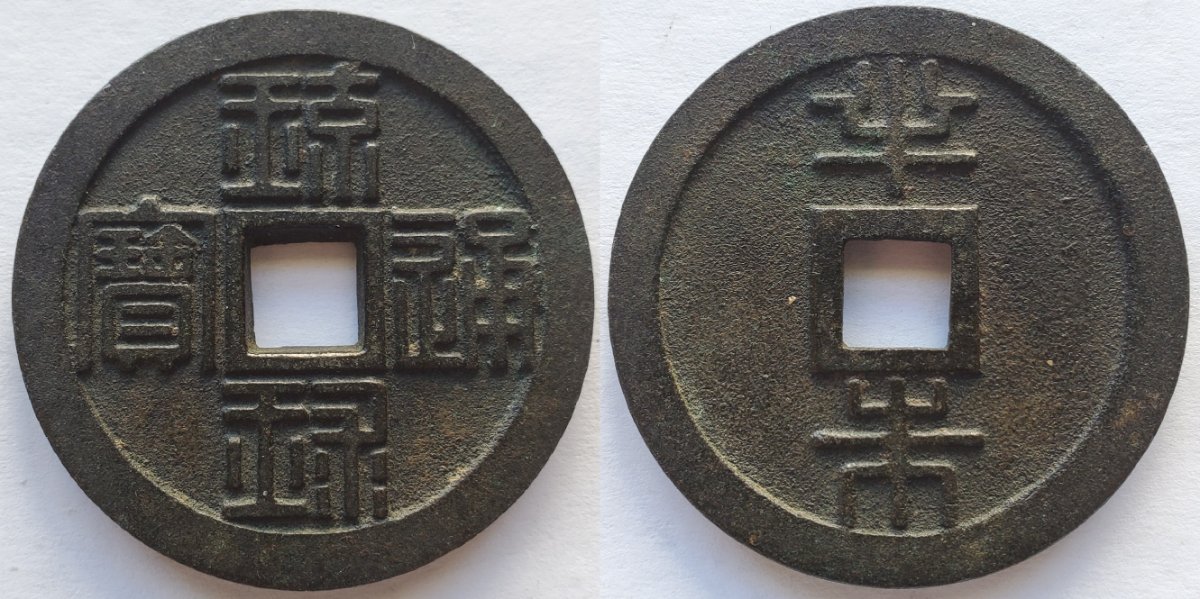
Ryukyu Kingdom, 1/2 Shu
c. 1860-1879


Dai-Nippon---Finn's-Japanese-Type-Set,-1636-To-Date

The Ryukyu Islands were settled from ancient times by a distinctly non-Japanese (probably Austronesian) people. They were "Discovered" by Japan in the 7th century. Many Japanese migrated to the islands to trade and settle, although they were never admitted to Japan, as the Japanese wished to have a "barbarian" tributary kingdom to look down upon. The islands were administered directly by the Japanese Satsuma clan beginning in 1609, although legally they were an independent kingdom and a tributary state of the Qing dynasty until the 1890s. The islands were not subject to Sakoku, but were nevertheless economically tied to Japan, and felt the pain of the faltering monetary system. Sometime in the 1860s, along with a regional copy of the Tempo Tsuho 100 mon, the Ryukyu authorities issued this enormous (43mm!) cash coin. Carrying a face value of 1/2 Shu (1/32 Ryo or 125 mon), it was subject to failed attempts at price fixing, and may have crashed to a "real" value of about 66 mon. Not many were made, and few of those survived mass scrapping during the 1870s while Ryukyu remained in political limbo before its official annexation by Japan in 1879.

These coins are exceptionally well-cast, usually display heavy file marks around the rim, and have a single validation mark at 9:00, next to the character "Ho". The inscription is in seal script and reads "Ryu Kyu Tsu Ho" on the obverse, and "Han Shu" on the reverse. Fakes are plentiful; if you are seeking one for yourself, always avoid the brassy or coppery looking specimens, and AVOID ebay seller Best666666; he has a huge supply of fakes of this type that he feeds out slowly! If you buy one and it does not have the rim validation mark, return it and get your money back!

Dai-Nippon---Finn's-Japanese-Type-Set,-1636-To-Date


Ryukyu 100 Mon
c. 1860-1879


Dai-Nippon---Finn's-Japanese-Type-Set,-1636-To-Date


A more recent purchase, an example of the islands' take on the Tempo Tsuho 100 mon. As with the 1/2 shu, these coins are attractive to counterfeiters, and should not be purchased from untrustworthy sellers. The coin should have "Sa" for Satsuma stamped in the 9:00 and 3:00 position.

Dai-Nippon---Finn's-Japanese-Type-Set,-1636-To-Date
Moderator
Learn More...
jbuck's Avatar
United States
190135 Posts
Pillar of the Community
Finn235's Avatar
United States
6130 Posts
 Posted 07/20/2020  9:46 pm  Show Profile   Bookmark this reply Add Finn235 to your friends list Get a Link to this Reply
Thanks Jbuck!
  Previous TopicReplies: 20 / Views: 8,515Next Topic
Page: of 2

To participate in the forum you must log in or register.


Disclaimer: While a tremendous amount of effort goes into ensuring the accuracy of the information contained in this site, Coin Community assumes no liability for errors. Copyright 2005 - 2026 Coin Community Family- all rights reserved worldwide. Use of any images or content on this website without prior written permission of Coin Community or the original lender is strictly prohibited.
Contact Us  |  Advertise Here  |  Privacy Policy / Terms of Use

Coin Community Forum © 2005 - 2026 Coin Community Forums
It took 0.35 seconds to rattle this change. Forums