











 Posted 06/25/2019 2:49 pm


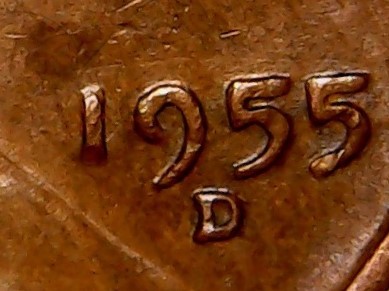
Something to think about when you look at the sites to see what is a doubled die and what is normal. If you have editing software, then you could make a side by side of a your coin and one of the doubled dies your trying to compare with. Sometimes seeing them side by side helps to see why they are or aren't a doubled die.
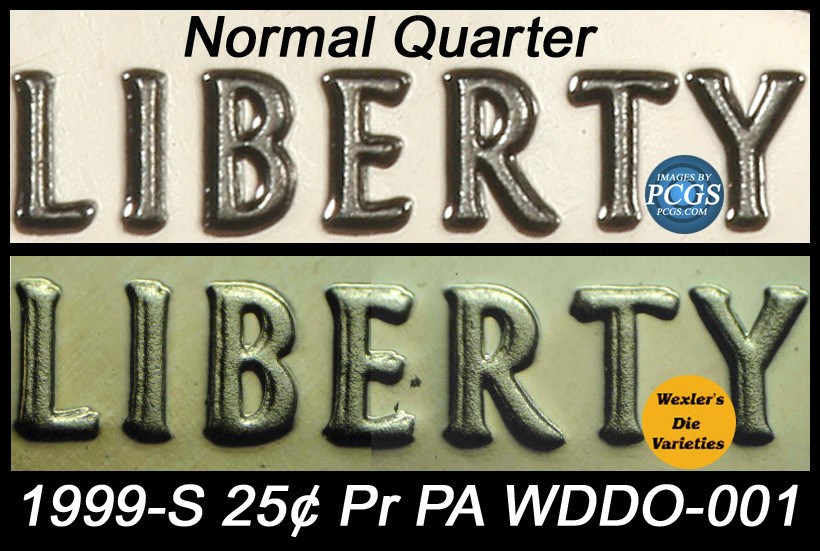
Can you see the difference on these two images? What I did was created a side by side exactly the same width. Then put the images together side by side. Now you can see without transferring your eyes, from a site to your coin. Sometimes doing it not side by side, you loose minor perspective. But seeing them side by side, helps you to focus the differences. This works so many ways. Let say you want to compare small date and a large date side by side:
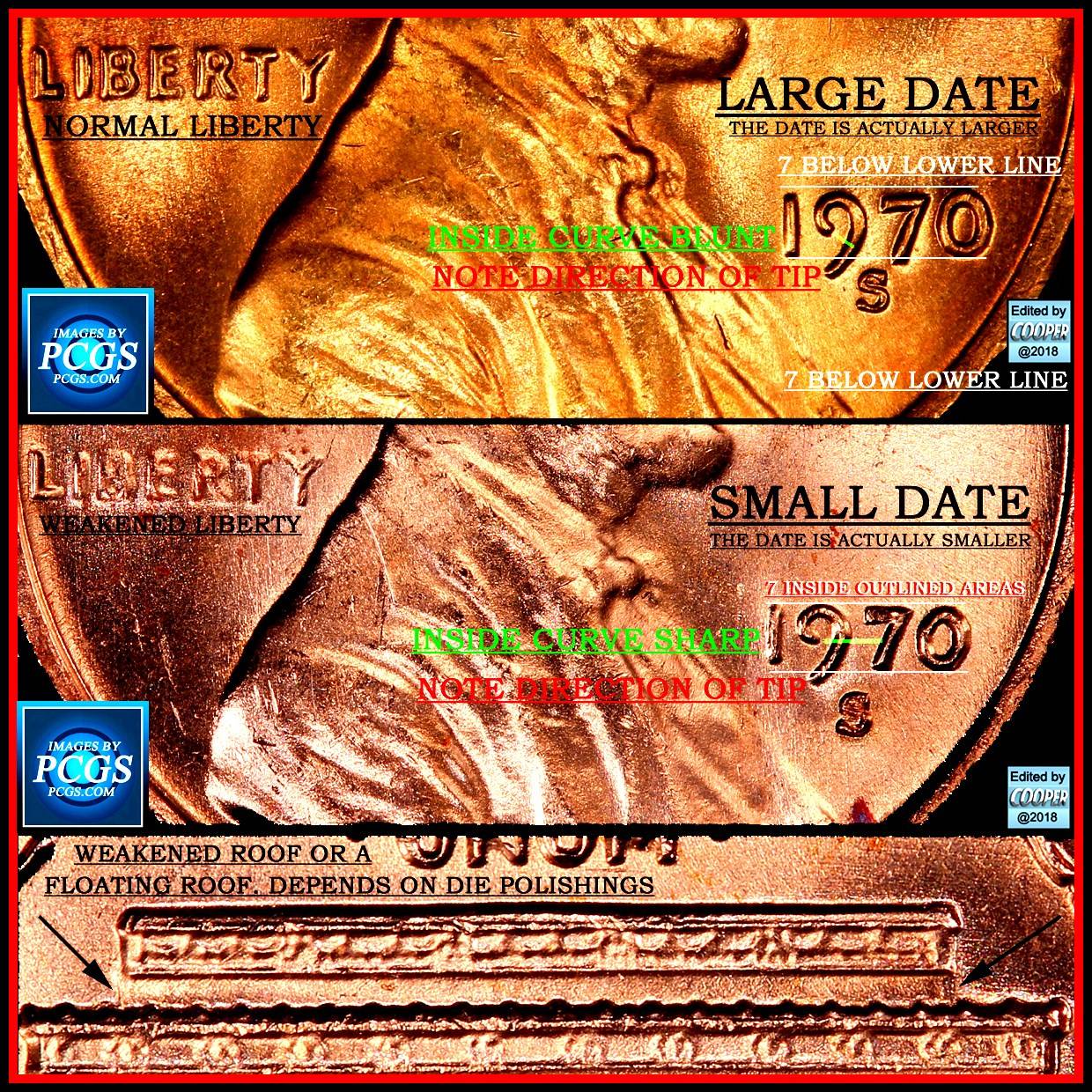
Seeing them side by side helps your eyes to see the differences Now can you see the differences on the small and large date 1970-S?)
Sometimes I use them to compare doubled dies from each other. What does that mean? On the 1972 DDO's there are many. Of the first 8, they are all the same class of doubled dies. Class 1:

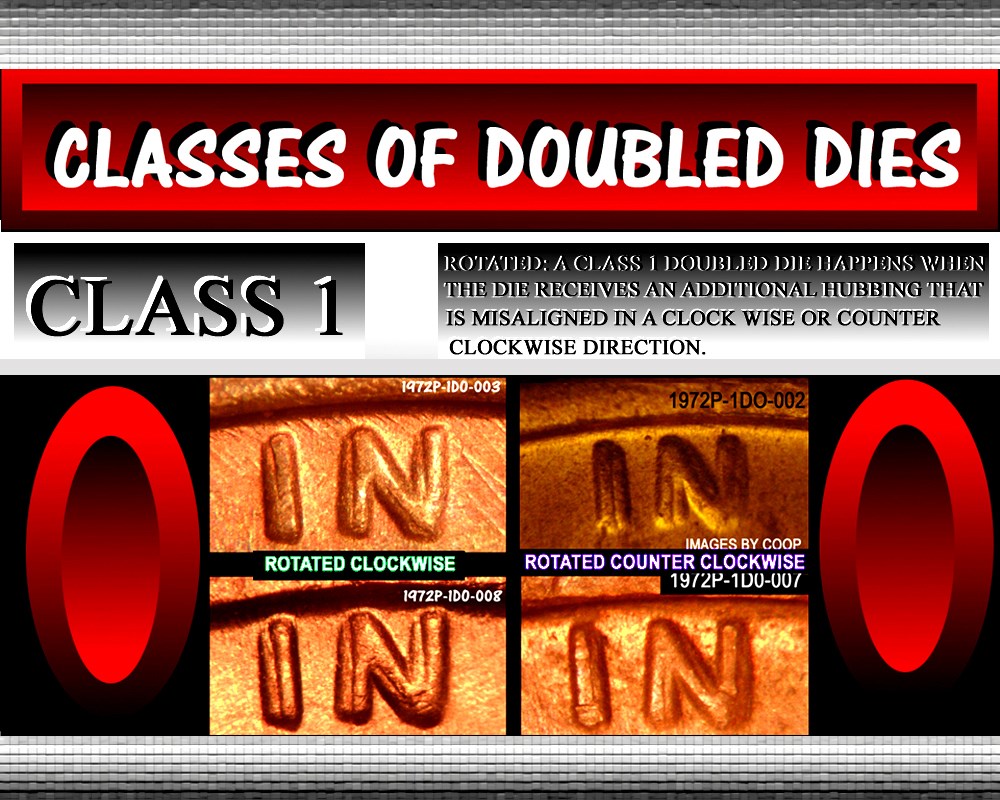
Did you note the small images on the lower page? This is the differences of of the doubled directions. While all the images look the same at first, when you study them for a time, the ones on the right are CCW (Counter-Clock-Wise) and on the left they are CW (Clock-Wise) Well the dies for 1972 are some of each. So matching them up to find out which die you have found. I make side by sides of the ones that are in common:
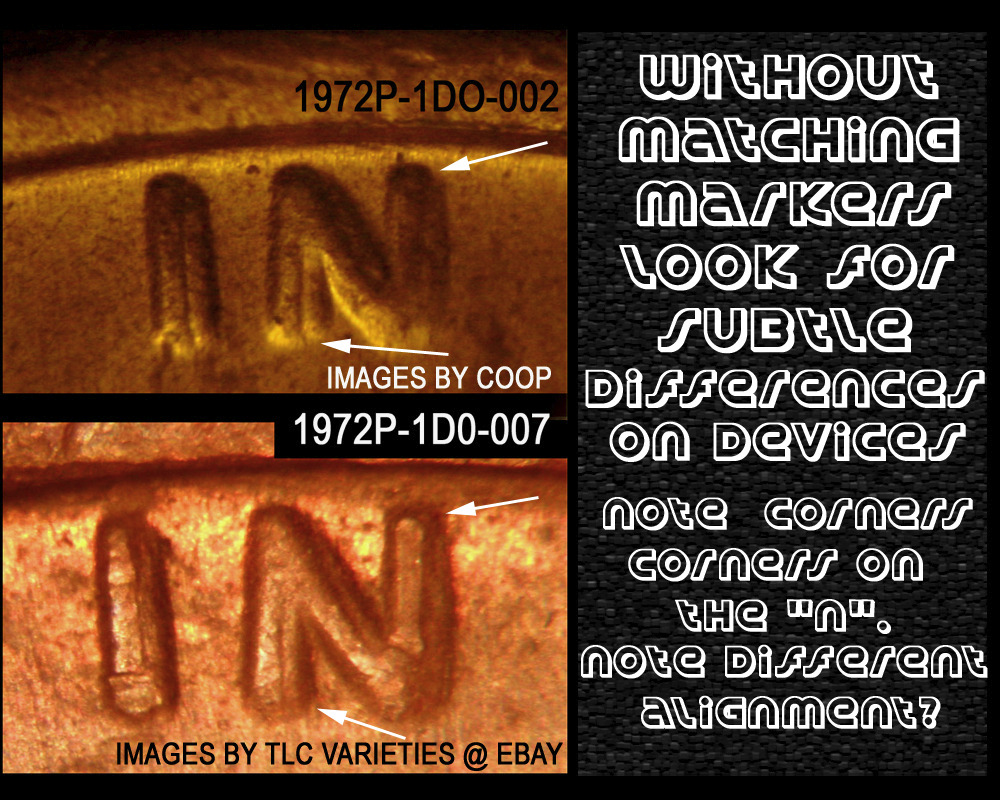
Note that dies 002 &007 are the same direction.
Dies 003 & 008 are the same direction:
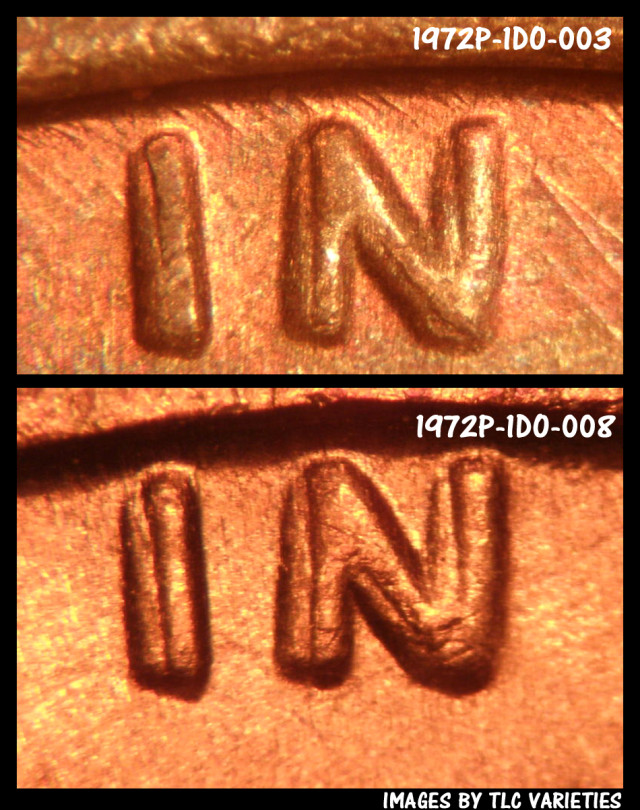
Having images side by side helps you see the differences. One is rotated stronger and the other one is rotated weaker. 002 and 008 are the more stronger rotated examples above. 003 & 007 are rotated less. As you study them side by side, I discovered the 003 and 008 are different on the date.:
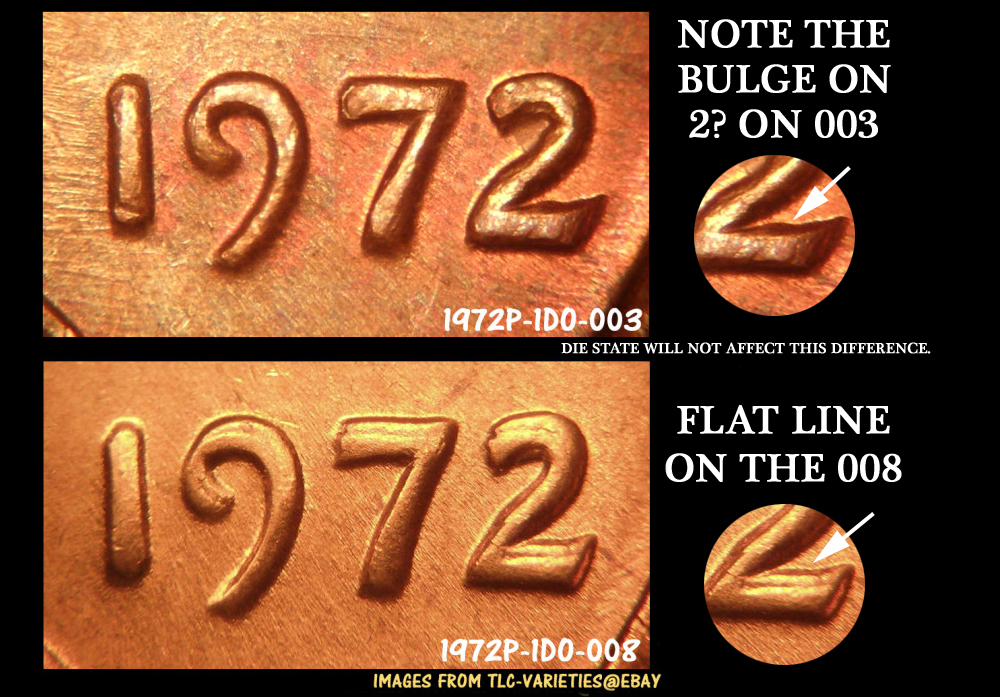
Having them side by side, helped me to see the differences. Another thing I noticed comparing the different doubled dies that year was on the date, the '9' was affected on all 8 of these. Not just to ID them with, but to figure out what was the look of a regular date and a doubled die of the 1-9 dies:
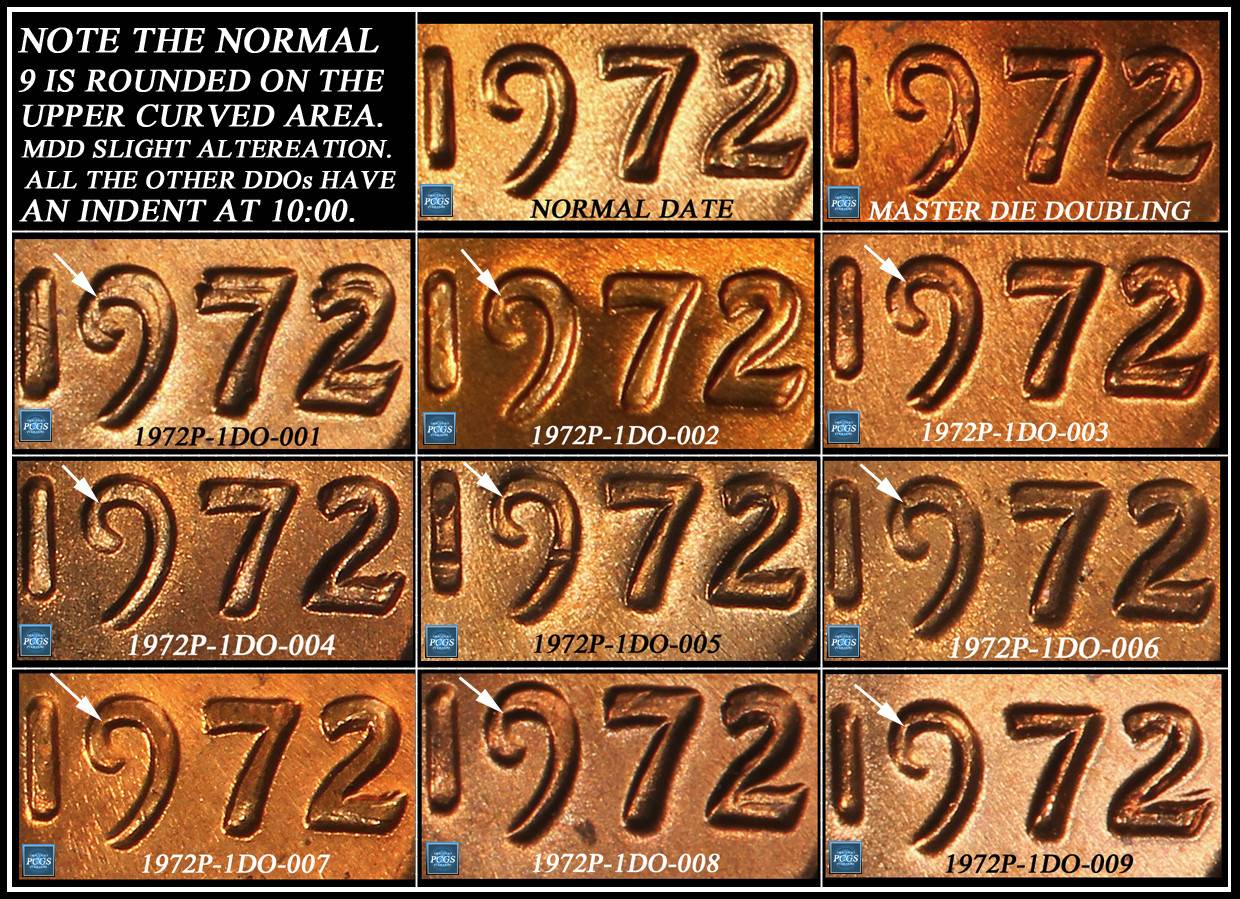
Can you see the images with arrows on the image above? That will help you to tell from that digit, what a regular coin would look like and what a doubled die would look like. Can you see the differences? Now when you see a 1972 cent, you will look there first. If you see the distorted digit on the '9'. that one is a keeper. If not, put it back in circulation.
So in order to start seeing stuff faster, you need to know what is normal and what is a doubled die. Making side by sides helps a lot.
CoopHome : Side by Sides SBS
Can you see the difference on these two images? What I did was created a side by side exactly the same width. Then put the images together side by side. Now you can see without transferring your eyes, from a site to your coin. Sometimes doing it not side by side, you loose minor perspective. But seeing them side by side, helps you to focus the differences. This works so many ways. Let say you want to compare small date and a large date side by side:
Seeing them side by side helps your eyes to see the differences Now can you see the differences on the small and large date 1970-S?)
Sometimes I use them to compare doubled dies from each other. What does that mean? On the 1972 DDO's there are many. Of the first 8, they are all the same class of doubled dies. Class 1:
Did you note the small images on the lower page? This is the differences of of the doubled directions. While all the images look the same at first, when you study them for a time, the ones on the right are CCW (Counter-Clock-Wise) and on the left they are CW (Clock-Wise) Well the dies for 1972 are some of each. So matching them up to find out which die you have found. I make side by sides of the ones that are in common:
Note that dies 002 &007 are the same direction.
Dies 003 & 008 are the same direction:
Having images side by side helps you see the differences. One is rotated stronger and the other one is rotated weaker. 002 and 008 are the more stronger rotated examples above. 003 & 007 are rotated less. As you study them side by side, I discovered the 003 and 008 are different on the date.:
Having them side by side, helped me to see the differences. Another thing I noticed comparing the different doubled dies that year was on the date, the '9' was affected on all 8 of these. Not just to ID them with, but to figure out what was the look of a regular date and a doubled die of the 1-9 dies:
Can you see the images with arrows on the image above? That will help you to tell from that digit, what a regular coin would look like and what a doubled die would look like. Can you see the differences? Now when you see a 1972 cent, you will look there first. If you see the distorted digit on the '9'. that one is a keeper. If not, put it back in circulation.
So in order to start seeing stuff faster, you need to know what is normal and what is a doubled die. Making side by sides helps a lot.
CoopHome : Side by Sides SBS


